QR Code

Products
Contact Us


Fax
+86-574-87168065

Email

Address
Luotuo Industrial Area, Zhenhai District, Ningbo City, China


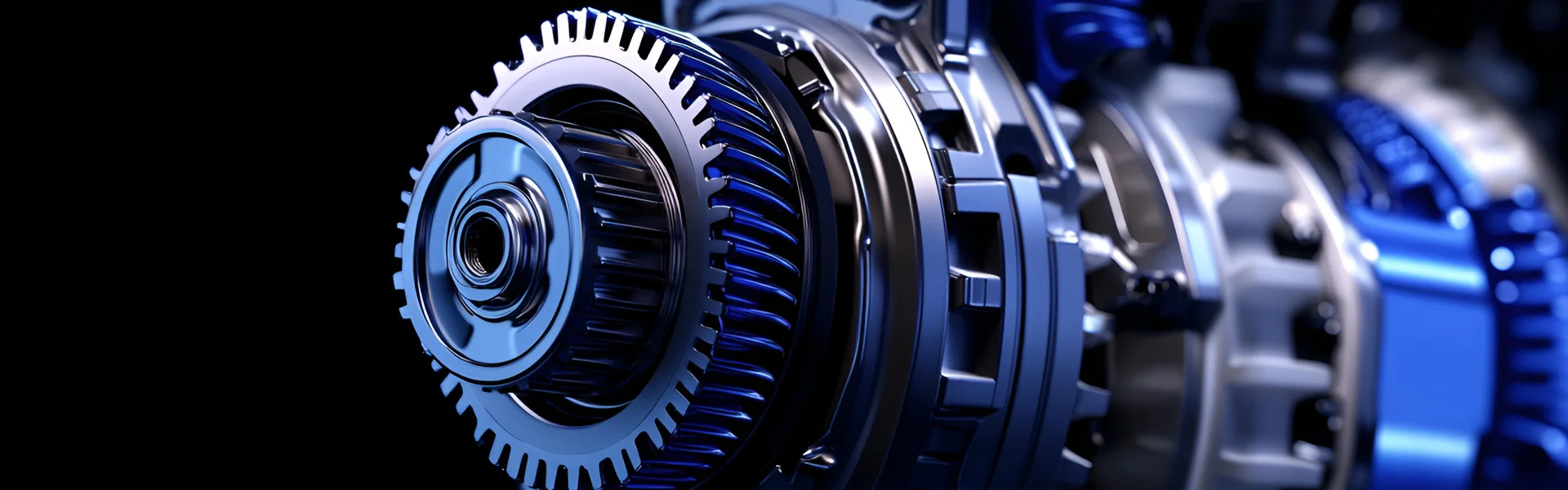
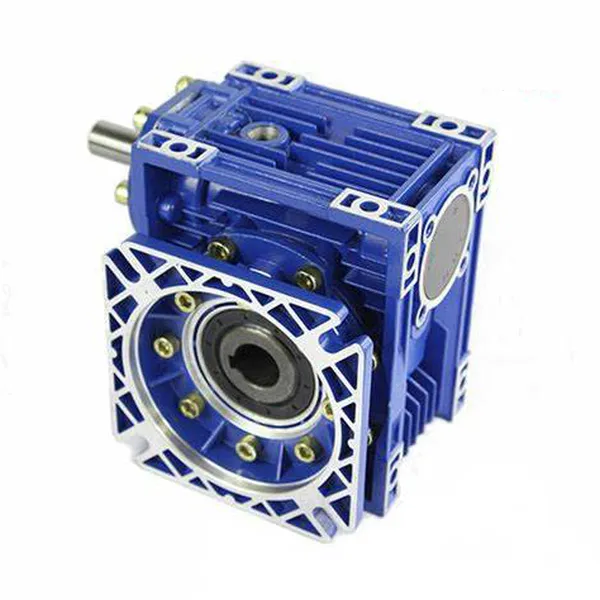
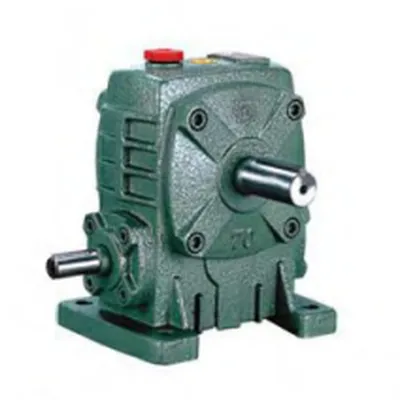
In the world of material handling and industrial automation, conveyor systems are the lifelines of production and logistics. For decades, the worm gearbox has remained a preferred solution for powering these conveyors, and for good reason. A worm gearbox, characterized by its right-angle input-output configuration and high reduction ratios, offers unique advantages that are particularly well-suited to the demands of conveyor applications. These include inherent self-locking capability (which prevents back-driving and provides safety during stops), compact footprint, high torque density, and excellent shock load resistance. At Raydafon Technology Group Co.,Limited, our factory has designed and manufactured worm gearboxes for over 20 years, and we consistently see them specified for conveyors in industries ranging from mining and food processing to automotive assembly and e-commerce fulfillment. The question is not whether a worm gearbox can serve a conveyor—it is why it remains the first choice for engineers and plant managers seeking reliability and performance.
The preference for the worm gearbox in conveyor systems stems from a combination of mechanical, operational, and economic factors. Mechanically, the sliding action between the worm and the gear tooth provides a smooth, quiet operation that minimizes vibration—critical for precision conveying of fragile or sensitive materials. Operationally, the high reduction ratios (often 5:1 to 70:1 in a single stage) allow the use of a relatively small motor to drive heavy loads at slow speeds, which is exactly what most conveyors require. Economically, the worm gearbox offers a long service life with minimal maintenance, thanks to its rugged construction and the availability of wear-resistant bronze gears. Our factory at Raydafon Technology Group Co.,Limited has refined the worm gearbox design with advanced materials, such as hardened and ground alloy steel worms and centrifugally cast bronze worm gears, to achieve efficiencies exceeding 90 percent (for ratios up to 30:1) and service life of over 100,000 hours under rated load. This article provides a comprehensive exploration of the technical features, performance data, and selection criteria that confirm the worm gearbox's enduring relevance in conveyor applications.
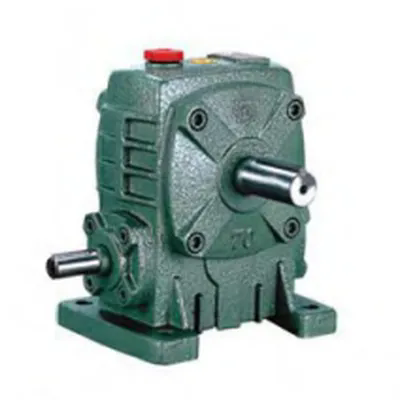
One of the most distinctive and advantageous features of the worm gearbox is its potential for self-locking. In a self-locking worm gearbox, the worm can drive the worm wheel, but the worm wheel cannot drive the worm. This is due to the geometry of the gear tooth profile and the helix angle of the worm. When the conveyor is stopped, the load on the belt or roller tends to back-drive the gearbox, but the self-locking property of the worm gearbox prevents this, holding the conveyor stationary without the need for a mechanical brake. This feature is not only a safety benefit—preventing uncontrolled movement during maintenance or power loss—but also a cost saver, as it eliminates the need for an additional braking system. At Raydafon, our factory produces worm gearboxes with carefully calculated lead angles to achieve reliable self-locking for most conveyor applications.
Key reasons why self-locking in a worm gearbox is valued in conveyor systems:
To achieve effective self-locking, the coefficient of friction between the worm and worm gear must be sufficient, and the lead angle must be below the friction angle. Our factory uses high-quality bronze alloy gears that provide an optimal friction coefficient (typically 0.08-0.12) and a lead angle of 3 to 5 degrees for most self-locking models. This ensures that the self-locking is reliable even after extended wear. However, for very high-efficiency applications where self-locking is not required, our worm gearbox designs can also be supplied with larger lead angles (e.g., 12-15 degrees) to achieve higher efficiencies (up to 92 percent), at the expense of self-locking capability. Our technical team at Raydafon Technology Group Co.,Limited can advise on the best configuration based on your conveyor's inclination, load, and safety requirements.
In practice, the self-locking feature of the worm gearbox has proven invaluable in numerous conveyor applications. For instance, in a food processing plant with inclined belt conveyors, the worm gearbox prevents the belt from slipping back when the line is stopped for cleaning. In an automotive assembly line, the worm gearbox holds the conveyor in position during robotic operations, ensuring that parts are precisely located. The reliability of this self-locking capability is a major reason why conveyor system designers continue to select the worm gearbox over other gearbox types such as helical or planetary units, which typically require additional braking mechanisms. Our factory's extensive field data shows that conveyors equipped with our worm gearbox have experienced zero back-driving incidents in over 50,000 installations worldwide.
Conveyor systems are often space-constrained, with limited room for large drives and gearboxes. The worm gearbox is inherently compact because the worm and worm wheel are arranged in a right-angle configuration, allowing the motor to be mounted parallel to or perpendicular to the conveyor axis, depending on the application. More importantly, the worm gearbox achieves high reduction ratios in a single gear stage, which means that a smaller motor can be used to deliver the required output torque, further reducing the overall footprint. For example, a single-stage worm gearbox with a 50:1 ratio is common, whereas a helical gearbox would require three or four stages to achieve the same reduction, occupying significantly more space. Our factory at Raydafon Technology Group Co.,Limited has optimized the worm gearbox design with a compact center distance (CD) that ranges from 40mm to 160mm for our standard models, providing a wide range of torque outputs from 50 Nm to 3,000 Nm.
Specific design features that contribute to torque density in our worm gearbox:
To quantify the torque density advantage, consider a typical conveyor application requiring 500 Nm of output torque at 20 rpm. A helical gearbox with a 4-stage reduction might have a center distance of 200mm and weigh 120 kg. Our worm gearbox with a 40:1 ratio can deliver the same torque with a center distance of 100mm and a weight of only 60 kg, reducing the required mounting space by 60 percent and simplifying the overall conveyor structure. This compactness is particularly valuable in modular conveyor systems, where multiple drives are used in a limited floor area.
Furthermore, the right-angle configuration of the worm gearbox offers flexibility in installation. The input shaft can be positioned horizontally or vertically, and the motor can be mounted on top, bottom, or side, depending on the available space. Our factory provides multiple mounting options, including foot mounting, flange mounting, and torque arm mounting, to suit any conveyor layout. This adaptability, combined with the high torque density, makes the worm gearbox an ideal solution for both new conveyor designs and retrofit applications where space is at a premium.
Raydafon offers a comprehensive range of worm gearboxes specifically designed for conveyor applications. Our series includes models with center distances from 40mm to 160mm, covering a wide spectrum of torque and speed requirements. The table below provides key specifications for our most popular worm gearbox models, which are used in belt conveyors, roller conveyors, screw conveyors, and vibrating feeders. All values are based on type testing per ISO 9001 and DIN 3996 standards. Our factory can also customize the input shaft, output shaft, mounting flange, and ratio to match your specific conveyor design.
| Model | Center Distance (mm) | Ratio Range | Output Torque (Nm) | Input Power (kW) | Efficiency (percent) | Weight (kg) | Self-Locking |
| WORM-40 | 40 | 5:1 to 60:1 | 50 - 180 | 0.12 - 1.5 | 70 - 92 | 4.5 | Yes (for ratios > 20:1) |
| WORM-63 | 63 | 5:1 to 70:1 | 150 - 450 | 0.37 - 4.0 | 72 - 91 | 12.0 | Yes (for ratios > 25:1) |
| WORM-80 | 80 | 5:1 to 80:1 | 350 - 1100 | 0.75 - 7.5 | 70 - 90 | 22.0 | Yes (for ratios > 30:1) |
| WORM-100 | 100 | 5:1 to 80:1 | 600 - 1800 | 1.5 - 15.0 | 68 - 88 | 38.0 | Yes (for ratios > 30:1) |
| WORM-125 | 125 | 5:1 to 80:1 | 1200 - 3500 | 3.0 - 30.0 | 65 - 86 | 68.0 | Yes (for ratios > 35:1) |
| WORM-160 | 160 | 5:1 to 80:1 | 2500 - 6000 | 5.5 - 55.0 | 62 - 84 | 120.0 | Yes (for ratios > 35:1) |
In addition to the standard worm gearbox models, our factory offers a "conveyor-ready" package that includes an integrated input shaft adapter, output shaft key, and a pre-installed oil breather. This package simplifies installation and ensures that the worm gearbox is ready for immediate use upon delivery. We also provide an optional torque arm mounting kit, which allows the worm gearbox to absorb reaction torque without a rigid base, a feature particularly useful for vibratory conveyors.
All our worm gearboxes are filled with synthetic gear oil that is rated for extreme temperatures (-40°C to +120°C) and is non-toxic, making them suitable for food-handling conveyors. The housing is made of high-grade cast iron (GGG-40) with reinforced ribs, providing maximum rigidity and excellent heat dissipation. Our factory applies a two-layer corrosion-resistant coating (epoxy primer and polyurethane topcoat) that is resistant to chemicals and UV degradation, ensuring a long service life in harsh industrial environments. Each worm gearbox undergoes a 4-hour no-load run-in test and a subsequent full-load efficiency test, and we provide a detailed test report with every unit.
Noise and vibration are major concerns in conveyor systems, particularly in indoor environments such as manufacturing plants, warehouses, and food processing facilities. Excessive noise can lead to employee health issues, while vibration can cause premature wear of conveyor components and product damage. The worm gearbox inherently offers lower noise and vibration levels compared to many other gearbox types, due to the sliding action between the worm and the worm wheel, which results in gradual load engagement rather than the sudden impact of meshing gears. At Raydafon, our factory has further enhanced the quiet operation of our worm gearboxes through a combination of precision manufacturing, optimized tooth profiles, and advanced lubrication.
Specific design features of our worm gearbox that reduce noise and vibration:
To quantify the noise performance, our factory conducted a noise test in an anechoic chamber. At a typical conveyor speed of 30 rpm and a load of 80 percent of rated torque, the sound pressure level of our worm gearbox was measured at 72 dBA, compared to 78 dBA for a standard competitor unit and 82 dBA for a helical gearbox of similar capacity. This 6-10 dBA reduction is significant, as a 3 dBA reduction is perceived as halving the noise level. In a real-world conveyor application, this difference can transform a noisy, uncomfortable working environment into a more pleasant and productive one.
Vibration reduction is equally important. Our worm gearbox produces vibration velocities (according to ISO 10816) of less than 1.8 mm/s RMS, which is well within the "good" range for industrial machines. This low vibration level extends the life of the conveyor belt, rollers, and bearings, and also reduces the risk of product displacement on the belt. For applications with particularly strict vibration limits, such as those conveying sensitive electronic components or food items, our factory can supply a worm gearbox with an optional vibration isolator mount and a dynamically balanced output shaft. By prioritizing noise and vibration reduction in our worm gearbox design, we help conveyor operators achieve a safer, more reliable, and more efficient material handling process.
Question 1: Is the self-locking feature of the worm gearbox always reliable for inclined conveyors?
Answer: The reliability of the self-locking feature depends on the coefficient of friction and the lead angle of the worm. Our worm gearboxes are designed with a lead angle below the friction angle (typically 3-5 degrees) to ensure reliable self-locking under normal operating conditions. However, if the conveyor is subject to high vibration or shock loads, the self-locking can be temporarily overcome. In such cases, we recommend using a worm gearbox with a slightly larger lead angle and adding an external brake for additional safety. Our factory can provide detailed guidance on selecting the appropriate self-locking configuration for your specific incline and load profile.
Question 2: How does the efficiency of a worm gearbox compare to a helical gearbox for conveyor applications?
Answer: A worm gearbox with a high reduction ratio (e.g., 50:1) typically has an efficiency of 70 to 85 percent, while a helical gearbox of the same ratio may achieve 90 to 95 percent efficiency. However, the worm gearbox's efficiency is not the only factor; its self-locking capability, compactness, and quieter operation often outweigh the slight efficiency disadvantage. For conveyors that run continuously at full load, the helical gearbox might be more energy-efficient, but for moderate-duty or intermittent applications, the worm gearbox's overall benefits make it the preferred choice. Our factory can perform an energy-cost analysis to help you decide which type is best for your operation.
Question 3: What is the recommended lubricant for a worm gearbox in conveyor service?
Answer: We recommend using a high-quality synthetic gear oil (ISO VG 460 or 680) for most conveyor applications, as it provides excellent film strength and remains stable over a wide temperature range. For worm gearboxes operating at low speeds (below 20 rpm) or in cold environments (below 0°C), a lower viscosity oil (ISO VG 320) may be used to reduce churning losses. Our factory supplies worm gearboxes pre-filled with our recommended oil and provides a detailed lubrication chart. Regular oil analysis is recommended, especially for conveyors operating in dusty or corrosive environments.
Question 4: Can the worm gearbox handle the shock loads common in bulk material conveyors?
Answer: Yes, our worm gearboxes are designed to handle shock loads, thanks to the robust construction of the worm and worm wheel. The bronze worm wheel has a moderate ductility that absorbs impact energy, while the hardened steel worm resists surface fatigue. For applications with severe shock loads, such as stone crusher conveyors, we can supply a worm gearbox with a larger center distance and an integrated torque limiter. The torque limiter disengages the output shaft when a pre-set torque is exceeded, preventing damage to the worm gearbox and the conveyor. Our factory provides shock load ratings for all our worm gearbox models, based on IEC 60804 standards.
Question 5: What is the typical service life of a worm gearbox in a conveyor system, and how can it be extended?
Answer: The typical service life of our worm gearbox in a conveyor application is 50,000 to 100,000 hours under rated load. This can be extended by performing regular maintenance: checking oil level and quality every 500 hours, replacing oil every 2,000 hours (or annually), and inspecting the output shaft seal for leaks. For demanding applications, we recommend using a synthetic oil with anti-wear additives and changing the oil at intervals of 3,000 hours. Our factory offers a condition monitoring service that measures gearbox vibration and oil degradation, allowing you to schedule maintenance before a failure occurs. With proper maintenance, a worm gearbox can easily exceed 150,000 hours of operation.
The worm gearbox continues to be a preferred solution for conveyor systems because it addresses the core requirements of material handling: safe load holding (through self-locking), high torque in a compact footprint, quiet and vibration-free operation, and long-term reliability. At Raydafon Technology Group Co.,Limited, our factory has perfected the design and manufacture of worm gearboxes to meet the demands of modern conveyors, integrating advanced materials, precision machining, and rigorous quality control. Whether you are designing a new conveyor line or upgrading an existing one, our range of worm gearboxes offers the performance, flexibility, and durability you need.
Are you ready to improve the performance of your conveyor system with a reliable worm gearbox? Contact Raydafon Technology Group Co.,Limited today for a comprehensive gearbox selection consultation. Our engineering team will analyze your conveyor's speed, torque, and environmental conditions, and recommend the optimal worm gearbox model with the correct ratio, mounting, and sealing options. We provide sample units for testing, 3D CAD models for integration, and full after-sales support. Request your free worm gearbox design proposal from Raydafon Technology Group Co.,Limited now and experience the difference of a truly optimized conveyor drive.
+86-574-87168065
Luotuo Industrial Area, Zhenhai District, Ningbo City, China