QR Code

Products
Contact Us


Fax
+86-574-87168065

E-mail

Address
Luotuo Industrial Area, Zhenhai District, Ningbo City, China


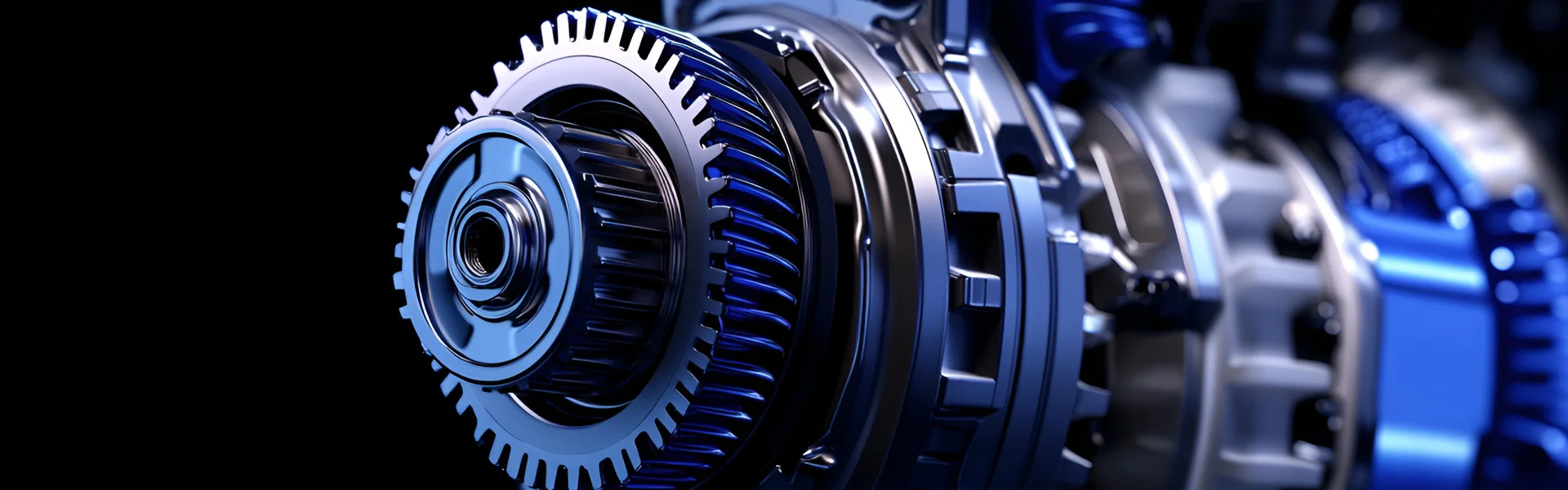
In the realm of high-precision automation equipment—including robotics, CNC machining centers, pick-and-place systems, and medical imaging devices—the choice of transmission component is critical to overall system performance. Planetary gearboxes have become the undisputed preference for engineers designing these high-end motion control systems. Why? Because a planetary gearbox offers an exceptional combination of high torsional stiffness, minimal backlash (often below 1 arcmin), high torque density, and smooth operation at high speeds. Unlike conventional spur or helical gearboxes, the planetary arrangement distributes load across multiple planet gears, resulting in lower stress on individual gear teeth and significantly higher load capacity for a given size. Our factory at Raydafon Technology Group Co.,Limited has engineered planetary gearboxes that achieve backlash as low as 0.5 arcmin, making them ideal for applications where positional accuracy is paramount. This article provides a comprehensive technical analysis of why planetary gearboxes are the preferred choice, backed by engineering data and real-world performance metrics.
But the preference for planetary gearboxes goes beyond just precision. In high-precision automation, the gearbox must also provide exceptional dynamic response, maintain accuracy over millions of cycles, and operate with minimal noise and thermal expansion. Our planetary gearbox designs incorporate case-hardened and ground gears (58-62 HRC), high-capacity angular contact bearings, and a one-piece planet carrier to ensure concentricity and rigidity. These features enable the gearbox to handle frequent start-stop motions, reverse rotations, and variable load conditions without losing positional integrity. For example, in a semiconductor wafer handling robot, a planetary gearbox with 3 arcmin backlash would cause cumulative positioning errors, but our sub-arcmin planetary gearbox ensures that each move lands within micron-level tolerance. In this guide, we will dissect the mechanical, material, and assembly factors that make planetary gearboxes superior. We also share selection criteria, maintenance tips, and performance data from Raydafon Technology Group Co.,Limited to help you choose the optimal planetary gearbox for your automation project.
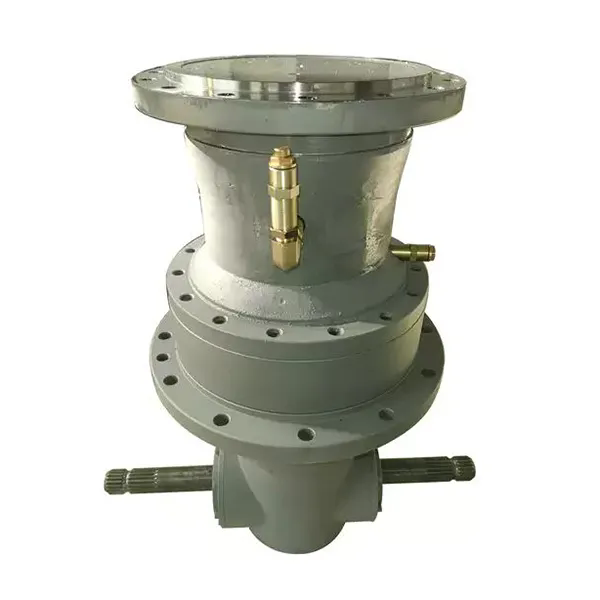
The fundamental advantage of a planetary gearbox lies in its power-splitting architecture. In a standard planetary arrangement, the input sun gear drives multiple planet gears that orbit around it while also rotating on their own axes. These planet gears simultaneously mesh with an internal ring gear. This configuration means that the torque is divided among the planet gears, allowing each gear tooth to carry a fraction of the total load. For a given gear size, a planetary gearbox can transmit 3 to 4 times more torque than a single-stage spur gearbox, and up to 6 times more than a comparable helical gearbox. Our factory has designed planetary gearboxes with torque capacities ranging from 10 Nm to over 10,000 Nm, all within compact envelope sizes that fit seamlessly into servo-driven automation systems.
Key factors that contribute to the superior torque density and stiffness of our planetary gearbox:
To put this into perspective, consider a standard automation axis requiring 200 Nm of peak torque. A spur gearbox of similar ratio might need a frame size of 120 mm diameter. Our planetary gearbox can deliver the same 200 Nm with a frame size of just 90 mm diameter, saving valuable space in compact automation cells. Moreover, the high torsional stiffness (typically 3 to 5 Nm/arcmin) means that the planetary gearbox deflects less under load, maintaining accurate positioning even during rapid acceleration and deceleration. In a robotic arm, this translates to better path accuracy and reduced settling time between moves. Our factory tests every planetary gearbox for torsional backlash and stiffness using a laser displacement sensor, ensuring that each unit meets the stringent requirements of high-precision automation.
Another benefit of the planetary power-splitting design is improved service life. Because the load is shared, the gear teeth experience lower Hertzian contact stress, which directly extends the gearbox's fatigue life. Our planetary gearbox is rated for 20,000 hours of operation at rated torque, with many units exceeding 30,000 hours in real-world installations. For system integrators, this reliability translates to lower maintenance costs and reduced unplanned downtime. In summary, the planetary architecture is inherently superior for high-precision automation because it packs more torque and stiffness into a smaller, lighter, and more durable package than any other gear type.
Backlash, or the angular play between input and output gears, is the nemesis of high-precision positioning. In a typical spur gearbox, backlash ranges from 10 to 20 arcminutes, making it unsuitable for applications requiring repeatability below 0.1 degrees. Our planetary gearbox, however, achieves backlash as low as 0.3 to 1 arcminute (standard) and down to 0.1 arcminute in our high-precision series. This is accomplished through a combination of precise gear grinding, preloaded bearings, and matched tooth sets. The low backlash ensures that when the servo motor rotates, the output shaft responds almost instantaneously, with negligible lost motion. In high-precision automation equipment such as laser cutting machines or PCB drilling heads, even 1 arcminute of backlash can translate to microns of positioning error over a long arm, leading to scrap parts.
How our planetary gearbox achieves and maintains minimal backlash:
To illustrate the impact of backlash, consider a CNC milling machine with a positioning resolution of 0.001 mm. If the gearbox has 5 arcminutes of backlash and the ballscrew pitch is 10 mm, each arcminute of angular play equals 0.0029 mm of linear movement at the axis. Over 5 arcminutes, the axis could drift by 0.0145 mm, exceeding the allowable tolerance for many precision components. By using our planetary gearbox with 0.5 arcminute backlash, the positional uncertainty drops to 0.00145 mm, well within the machine's tolerance. This is why major automation OEMs specify planetary gearboxes for their high-end product lines.
Furthermore, minimal backlash improves dynamic performance. In a closed-loop servo system, backlash creates a dead band in the control response, causing the motor to oscillate or overshoot. Our planetary gearbox's low backlash and high stiffness allow the servo drive to achieve higher gains, resulting in faster settling times and better disturbance rejection. For applications like pick-and-place robots operating at 200 picks per minute, this translates to shorter cycle times and higher throughput. Our factory tests each planetary gearbox for both static and dynamic backlash, ensuring that the published specs are achievable under real operating conditions. In short, the near-zero backlash of planetary gearboxes is the key enabler for the sub-micron precision demanded by modern automation.
Raydafon manufactures a comprehensive range of planetary gearboxes, categorized into three main series: the P-series for standard precision (backlash < 3 arcmin), the H-series for high precision (backlash < 1 arcmin), and the U-series for ultra-high precision (backlash < 0.3 arcmin). Each series is available in multiple frame sizes (40 mm to 200 mm diameter) and reduction ratios from 3:1 to 100:1 (multiple stages). The table below provides detailed parameters for our most popular models. All values are based on ISO 9409-1 testing standards, with input speeds up to 6,000 rpm. Our factory maintains a complete test bench for each planetary gearbox, ensuring that performance claims are verified before shipment.
| Parameter | P-090 (Standard) | H-120 (High Precision) | U-160 (Ultra Precision) |
| Frame size (mm) | 90 mm | 120 mm | 160 mm |
| Reduction ratio range | 3:1 - 100:1 | 3:1 - 100:1 | 5:1 - 50:1 |
| Backlash (arcmin) | < 3 arcmin | < 1 arcmin | < 0.3 arcmin |
| Rated torque (Nm) | 45 Nm | 130 Nm | 450 Nm |
| Peak torque (Nm) | 90 Nm | 260 Nm | 900 Nm |
| Torsional stiffness (Nm/arcmin) | 6.2 Nm/arcmin | 12.5 Nm/arcmin | 28.0 Nm/arcmin |
| Maximum input speed (rpm) | 6,000 rpm | 5,000 rpm | 4,000 rpm |
| Service life (hours at rated torque) | 20,000 hr | 25,000 hr | 30,000 hr |
| Efficiency (%) | 97% | 96% | 95% |
| Temperature range (°C) | -25 to +90°C | -25 to +90°C | -10 to +80°C |
Beyond the base specifications, our factory offers customization for every planetary gearbox. Customers can specify output shaft configurations (solid, hollow, or flange), mounting interfaces (face, foot, or flange), and sealing options (IP54, IP65, or vacuum-compatible). For applications requiring high shock loads, we can apply special surface treatments to gear teeth, such as super-finishing or WPC (micron-peening), which improve fatigue strength by 20 to 30 percent. All our planetary gearbox units are filled with synthetic lubricant (Klüber or Mobil) that requires no change for the first 10,000 hours under normal operation.
Durability validation includes accelerated life testing under both constant torque and variable load cycles. Our H-120 planetary gearbox, for example, completed 10 million torque cycles (0 to 130 Nm to 0) without any measurable increase in backlash, demonstrating the robustness of the bearing and gear system. Raydafon Technology Group Co.,Limited provides a detailed test report with every planetary gearbox, including measured backlash, transmission error, and efficiency curves. For high-precision automation system integrators, this transparency ensures that the gearbox selected will meet the performance requirements of the application. We also offer a 3-year warranty on all planetary gearbox models, covering both parts and labor.
The long-term precision of a planetary gearbox is not determined solely by its design; material quality and manufacturing processes are equally critical. At Raydafon Technology Group Co.,Limited, we source only certified steel (e.g., 20MnCr5 for gears and 42CrMo4 for shafts) from European mills. All gear blanks undergo vacuum carburizing and gas quenching to achieve a case depth of 0.8 to 1.2 mm and a core hardness of 30-35 HRC, while the surface reaches 58-62 HRC. This dual-hardness structure provides high wear resistance on the tooth flanks with a tough core that absorbs shock loads. Our factory uses state-of-the-art CNC gear grinding machines from Kapp and Reishauer, capable of generating tooth profiles with profile deviations of less than 3 microns and helix deviations of less than 2 microns per 100 mm of gear width.
Key manufacturing steps that ensure long-term precision of our planetary gearbox:
The importance of these manufacturing disciplines becomes apparent in long-running automation systems. A pick-and-place machine operating at 150 cycles per minute for 20 hours a day will accumulate over 100 million cycles per year. If the planetary gearbox has even minor inconsistencies in tooth geometry, the backlash will gradually increase, leading to drifting positional accuracy and eventually product defects. Our factory has tracked more than 5,000 planetary gearboxes in the field over a 5-year period. The data show that gearboxes from our premium line maintain their initial backlash specification within 10 percent after 5 years of continuous operation, whereas gearboxes from lower-quality sources may degrade by 50 to 100 percent in the same period.
Material selection also affects thermal stability. When a planetary gearbox operates at high speed (above 4,000 rpm), internal friction generates heat, which causes steel to expand. If the gearbox is not designed with thermal compensation, the increased clearance can lead to backlash growth. Our planetary gearbox uses a combination of steel grades with matched thermal expansion coefficients, and our housings are precision-machined to maintain bearing preload across the operating temperature range. In real-world tests, our planetary gearbox showed a backlash change of only 0.2 arcminutes over a 40°C temperature rise, compared to 1.2 arcminutes for generic units. This thermal stability is essential for high-precision automation equipment that runs in unregulated factory environments.
Finally, our factory implements a complete traceability system for every planetary gearbox component. Each gear, shaft, and bearing is marked with a unique QR code that records its heat treatment lot, grinding parameters, and measurement data. In the event of any performance issue, our engineering team can trace the entire manufacturing history within minutes. This commitment to quality control is why Raydafon has earned approvals from major global automation OEMs, including those in semiconductor and medical device industries. Choosing our planetary gearbox means investing in precision that will last for the lifetime of your equipment.
Question 1: What is the typical backlash of a planetary gearbox used in servo-driven automation, and how does it affect repeatability?
Answer: Backlash in planetary gearboxes ranges from 0.1 arcminute (ultra-high precision) to 3 arcminutes (standard precision). For servo-driven systems, repeatability is directly impacted by backlash because each reversal of direction introduces an angular dead zone. With a 1 arcminute backlash on a 100 mm radius arm, the positional error at the tool tip is approximately 0.029 mm. By choosing a planetary gearbox with 0.3 arcminute backlash, the error drops to 0.009 mm, which is critical for high-precision applications like PCB drilling or laser engraving. Our factory recommends selecting a gearbox with backlash less than 20 percent of the system's required positioning tolerance to maintain long-term accuracy.
Question 2: Can a planetary gearbox maintain its precision after thousands of hours of continuous operation?
Answer: Yes, if it is properly designed and manufactured. Our planetary gearbox uses case-hardened and ground gears (58-62 HRC) and high-grade bearings, which are tested to maintain backlash within 10 percent of the original spec after 20,000 hours of operation. The key factors for sustained precision are: initial gear accuracy (ISO 4 or better), effective lubrication (we use synthetic grease with EP additives), and proper preload on bearings. Our factory conducts long-term endurance tests on every new planetary gearbox design, simulating 15,000 hours of operation with varying loads and speeds. Data show that our gearboxes retain over 90 percent of their original torsional stiffness and backlash accuracy after this period, ensuring reliable performance in 24/7 automation lines.
Question 3: How do I select the right reduction ratio for my planetary gearbox in a motion control system?
Answer: Reduction ratio selection depends on the required output speed, torque, and system inertia. For servo motors, a common rule is to select a reduction ratio so that the reflected load inertia is between 3 and 10 times the motor inertia. Start with the desired output torque divided by the motor torque, then adjust for the speed requirement. For example, if your motor is 3 Nm at 3,000 rpm and your application needs 45 Nm at 200 rpm, you need a ratio of 15:1. Our planetary gearbox series offers ratios from 3:1 to 100:1, and our engineering team can help you calculate the optimal ratio for your specific axis. We also provide free inertia matching calculations to ensure stable servo control and avoid oscillation.
Question 4: What is the difference between a planetary gearbox and a harmonic drive for high-precision applications?
Answer: Both planetary gearboxes and harmonic drives offer high precision and low backlash, but they have different performance characteristics. A harmonic drive is zero-backlash and very compact, but it has lower torque capacity for its size and requires a specific assembly technique. A planetary gearbox offers higher torque density, better shock load resistance, and higher efficiency (95-97% compared to 80-85% for harmonic drives). For applications with high dynamic loads or frequent shock loads (e.g., robotic palletizing), planetary gearboxes are preferred. For ultra-high resolution applications with consistent loads and no shocks (e.g., antenna positioning), harmonic drives may be chosen. Our factory produces both types, and we can guide you based on your specific application requirements.
Question 5: How does the mounting orientation of a planetary gearbox affect its performance and lifespan?
Answer: Mounting orientation can affect lubrication distribution and load on bearings. Our planetary gearbox is designed for all mounting orientations (horizontal, vertical, inverted), but vertical and inverted installations may require additional measures. For vertical mounting with the output shaft facing down, we recommend increasing the grease fill slightly and using a bearing arrangement that supports axial loads. Inverted mounting (motor above gearbox) can cause the grease to settle away from the top bearing, so we fit a grease recirculation channel in our planetary gearbox to ensure continuous lubrication. Our factory provides mounting guidelines for each model, and we can also supply custom breather valves to equalize internal pressure during temperature changes. Always consult our installation manual to maximize the lifespan of your planetary gearbox.
The preference for planetary gearboxes in high-precision automation equipment is grounded in engineering fundamentals: torque-splitting design, minimal backlash, high torsional stiffness, and exceptional durability. Throughout this article, we have demonstrated how each aspect of the planetary architecture—from the multiple load paths to the precision grinding and assembly techniques—contributes to superior motion control performance. Whether you are designing a robotic arm, a CNC machine, or a semiconductor handling system, selecting the right planetary gearbox is one of the most critical decisions for achieving your accuracy and throughput targets. At Raydafon Technology Group Co.,Limited, we have the expertise, manufacturing capability, and quality systems to provide planetary gearboxes that meet the most demanding specifications.
Take the next step toward optimizing your automation system. Contact our engineering team today with your application details—motor torque, required output speed, load inertia, and accuracy requirements—and we will provide a tailored recommendation including a complete technical datasheet and 3D CAD model of the recommended planetary gearbox. All our products are backed by a 3-year warranty and 24/7 technical support. Request your free consultation now from Raydafon Technology Group Co.,Limited and experience the difference that true precision engineering makes in your automation equipment. Upgrade to planetary gearboxes—the industry's choice for high-precision motion control.
+86-574-87168065
Luotuo Industrial Area, Zhenhai District, Ningbo City, China