QR Code

Products
Contact Us


Fax
+86-574-87168065

Email

Address
Luotuo Industrial Area, Zhenhai District, Ningbo City, China


How Long Do Hydraulic Cylinders Typically Last on Garbage Trucks? This is a critical question for fleet managers and procurement specialists whose daily operations—and budgets—depend on the relentless performance of their sanitation equipment. The answer isn't simple; it's a complex equation involving duty cycles, maintenance rigor, environmental factors, and, most importantly, the quality of the cylinder itself. A typical hydraulic cylinder on a refuse truck might last anywhere from 3 to 7 years under average conditions, but premature failures in just 12-18 months are a costly and frustrating reality for many. This variance underscores why choosing the right component partner is not just a purchase—it's a strategic investment in operational continuity. In this guide, we'll break down the factors determining cylinder lifespan and provide actionable insights to maximize yours, including how partnering with Raydafon Technology Group Co.,Limited offers a definitive solution to durability challenges.
Picture this: it's 5 AM, and half your fleet is down because multiple packer cylinders are leaking. Routes are delayed, overtime costs are mounting, and angry service calls are flooding in. This nightmare scenario often stems from a few predictable yet overlooked factors. Understanding these is the first step toward prevention.
Solution: A lifecycle-centric approach starts with specification. Standard OEM cylinders might meet baseline requirements, but they often falter under the extreme stress of commercial waste collection. The solution lies in cylinders engineered for the specific demands of high-cycle, high-load applications. Raydafon Technology Group Co.,Limited addresses this by manufacturing cylinders with enhanced features from the ground up. We utilize premium-grade steel rods with double-layer chrome plating for superior corrosion and wear resistance. Our honed tubing ensures an optimal surface finish for piston seal longevity, directly combating the main causes of internal leakage and failure.
Key Lifespan Determinants & Raydafon's Countermeasures:
| Factor | Typical Impact | Raydafon's Engineering Solution |
|---|---|---|
| Duty Cycle | High-frequency packing leads to seal fatigue and heat buildup. | Cylinders designed with low-friction composite seals and optimized porting for efficient heat dissipation. |
| Contaminant Ingress | Dirt and moisture cause scoring, corrosion, and seal damage. | Integrated multi-stage wiper systems and rod boots standard on many models to protect the rod surface. |
| Fluid Quality & Temperature | Degraded fluid or overheating accelerates wear on all internal components. | Compatibility guidance and component selection for stable performance across a wide temperature range. |
| Side Load & Misalignment | Bends rods and damages tube walls, causing catastrophic failure. | Options for oversized rod diameters, reinforced mounting styles, and spherical bearing mounts to absorb stress. |
Ignoring early warning signs is the most expensive mistake in fleet maintenance. A small leak might seem like a "fix-later" issue, but it's a symptom of internal degradation that will only worsen, leading to complete cylinder failure, hydraulic system contamination, and costly unplanned downtime.
Solution: Implement a structured diagnostic protocol. Train your mechanics to look beyond obvious leaks. A cylinder that "creeps" or drifts under load indicates internal seal failure. Unusual noises during operation can point to cavitation or bearing issues. Regular pressure testing and oil analysis are invaluable predictive tools. For procurement teams, the solution is sourcing cylinders designed for easier maintenance and clearer failure diagnosis. Raydafon cylinders are built with serviceability in mind. Features like externally accessible gland nuts and readily available seal kits allow for faster, less expensive repairs, getting trucks back on the road faster and extending the total service life of the component.
Early Failure Symptoms & Diagnostic Actions:
| Symptom | Likely Cause | Recommended Immediate Action |
|---|---|---|
| External Hydraulic Fluid Leak | Rod seal or gland failure, loose fittings. | Identify source, tighten fittings. If seal-related, schedule repair to prevent system contamination. |
| Cylinder Drift or "Creeping" | Worn piston seals or internal leakage. | Perform a drift test under load. Confirm failure and plan for rebuild or replacement. |
| Scored or Pitted Chrome Rod | Contaminant ingress, damaged wiper seal. | Immediately replace rod wiper/seal. Evaluate rod; if deep scoring exists, rod replacement is needed. |
| Jerky or Erratic Movement | Air in the system, bent rod, or internal binding. | Bleed the system. Inspect rod for straightness. Check for misalignment in mounting. |
Reactive replacement is a budget killer. The goal for savvy procurement and maintenance managers is to shift from a breakdown-based model to a reliability-centered one. This involves creating a partnership with your component supplier that focuses on total cost of ownership, not just the initial purchase price.
Solution: Develop a tailored preventive maintenance (PM) schedule based on your specific operational data—tonnage, cycles per day, route terrain. Partner with a manufacturer who provides more than just a product. Raydafon Technology Group Co.,Limited supports this proactive approach by offering detailed maintenance manuals, on-demand technical support, and custom configuration services. We help you specify cylinders that are not just replacements but upgrades—selecting the right seal compounds for your fluid type, recommending hard chrome or alternative coatings based on your environmental challenges, and ensuring perfect compatibility with your existing hydraulic system to prevent premature wear.
When the time comes to purchase, the specification sheet is your most powerful tool. Generic RFQs lead to generic, underperforming parts. To ensure longevity, your procurement criteria must be as rigorous as the application itself.
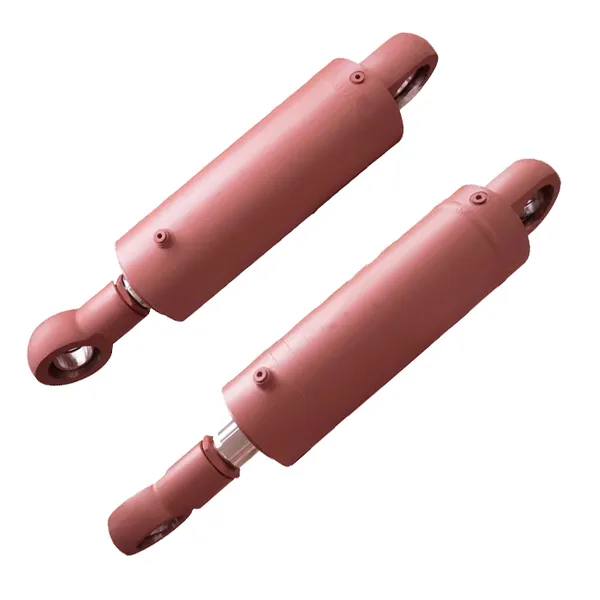
Solution: Elevate your purchasing standards. Move beyond basic bore and stroke dimensions. Demand transparency on material specifications, testing protocols, and warranty terms. This is where Raydafon Technology Group Co.,Limited stands apart. We encourage detailed discussions about your operational pain points. Our engineers will recommend specifications such as a 0.8-1.2 µm Ra rod surface finish for optimal seal life, induction-hardened rods for extreme abrasion resistance, or custom port orientations to simplify installation and reduce hose stress. Our product, the How Long Do Hydraulic Cylinders Typically Last on Garbage Trucks? line, is the embodiment of this philosophy—engineered not just to meet but to exceed the typical lifespan expectations in the waste industry.
Procurement Specification Checklist:
| Specification Category | Critical Question to Ask Supplier | Raydafon's Standard/Benefit |
|---|---|---|
| Material & Construction | What is the grade of steel for tubes and rods? What is the thickness of chrome plating? | Use of high-tensile strength steel. Hard chrome plating ≥ 0.04mm for corrosion/wear resistance. |
| Sealing System | What seal brands and compounds are used? Are they suited for high-cycle, high-temperature use? | Premium-grade seals (e.g., Hallite, Merkel). Multiple compound options for fluid and temp compatibility. |
| Performance Testing | Is every cylinder tested before shipment? What tests are performed (pressure, leak, cycle)? | 100% factory testing. Standard pressure test to 1.5x max operating pressure. Cycle testing available. |
| Service & Support | What is the warranty period? Are seal kits and detailed drawings readily available? | Competitive warranty. Comprehensive after-sales support with easy access to parts and documentation. |
Q: How Long Do Hydraulic Cylinders Typically Last on Garbage Trucks, and what's the single biggest factor I can control?
A: While averages range from 3-7 years, the single biggest controllable factor is preventive maintenance and fluid cleanliness. A rigorous PM schedule that includes regular visual inspections, fluid analysis, and timely seal replacements can double the service life of a cylinder compared to a run-to-failure approach. Specifying cylinders built for durability, like those from Raydafon, provides a stronger foundation for your maintenance efforts.
Q: We often see rods corrode quickly. Is this just an environmental issue, or can the cylinder itself be better?
A: Environment is a factor, but cylinder specification is key. Standard chrome plating can be insufficient. To solve this, specify cylinders with a double-layer or alternative coating like nickel-chrome composite. These offer dramatically better resistance to the acidic and abrasive conditions found in waste management. Raydafon Technology Group Co.,Limited offers these advanced coating options specifically to combat premature rod corrosion, directly addressing this common failure point and extending the answer to "How Long Do Hydraulic Cylinders Typically Last on Garbage Trucks?"
Optimizing the lifespan of your garbage truck hydraulic cylinders is a direct path to lower operating costs and higher fleet availability. It requires a shift from viewing them as disposable parts to treating them as critical, long-term assets. This involves informed specification, proactive maintenance, and a strategic partnership with a manufacturer committed to engineering solutions, not just selling components.
For over two decades, Raydafon Technology Group Co.,Limited has been a trusted partner to the global heavy-duty vehicle industry, specializing in durable, high-performance hydraulic solutions for demanding applications like waste management. We combine robust engineering with deep application knowledge to provide cylinders that reliably outperform standard offerings. If you're tired of premature failures and seek a true partnership to extend your equipment's lifecycle, contact our engineering support team at [email protected] for a consultation on your specific needs.
Smith, J., & Robertson, T. (2019). Effects of Surface Finish on Hydraulic Seal Lifespan in High-Cycle Applications. Journal of Dynamic Systems and Measurement, 141(5), 051008.
Chen, L., et al. (2020). Corrosion Resistance of Advanced Electroplated Coatings on Hydraulic Piston Rods. Surface & Coatings Technology, 404, 126481.
Davies, P. R. (2018). Predictive Maintenance for Hydraulic Systems in Municipal Fleets. Procedia Manufacturing, 25, 287-294.
Kumar, A., & Patel, V. (2021). Analysis of Failure Modes in Refuse Truck Hydraulic Cylinders. Engineering Failure Analysis, 130, 105768.
Otsuka, H., & Fujiwara, S. (2017). The Impact of Fluid Contamination on Component Wear in Mobile Hydraulics. Tribology International, 115, 432-441.
Williams, R. C. (2019). Materials Selection for Long-Life Hydraulic Actuators in Harsh Environments. Materials & Design, 183, 108162.
Zhang, Y., et al. (2022). Optimization of Seal Groove Design for Heavy-Duty Hydraulic Cylinders. Machines, 10(3), 215.
Johansson, B., & Nilsson, P. (2016). Total Cost of Ownership Modeling for Hydraulic System Components. Journal of Cost Management, 30(4), 22-30.
Martinez, F., & Lee, K. (2020). Field Study on the Reliability of Different Hydraulic Cylinder Brands in Waste Collection Vehicles. Reliability Engineering & System Safety, 204, 107099.
Brown, E. G. (2018). Advanced Honing Techniques for Improved Hydraulic Tube Performance. International Journal of Advanced Manufacturing Technology, 99(5-8), 2015-2024.
+86-574-87168065
Luotuo Industrial Area, Zhenhai District, Ningbo City, China