QR Code

Products
Contact Us


Fax
+86-574-87168065

E-mail

Address
Luotuo Industrial Area, Zhenhai District, Ningbo City, China



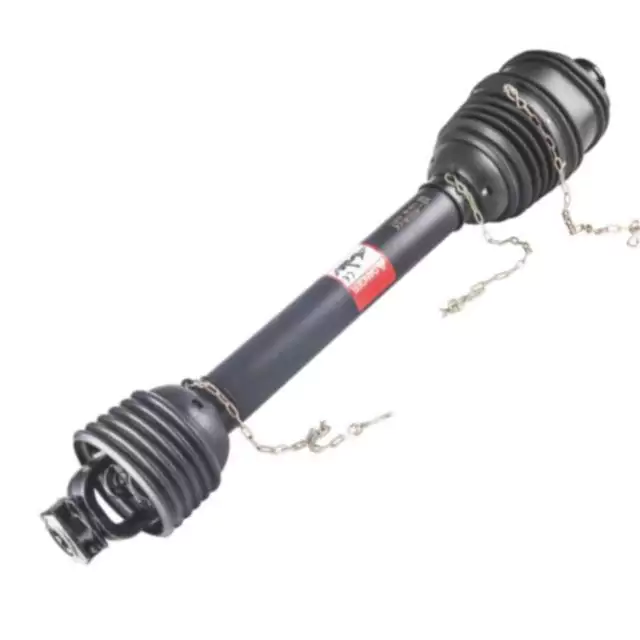
When selecting a driveline for agricultural implements, the choice between a Wide-Angle PTO Shaft and a Standard PTO Shaft significantly affects maneuverability, power transmission efficiency, and component longevity. The fundamental difference lies in their maximum working angle: a Standard PTO Shaft typically operates safely up to 25 degrees of articulation, while a Wide-Angle PTO Shaft (often incorporating double cardan or constant velocity technology) functions effectively at angles up to 80 degrees. This increased angular capability means that wide angle units excel in applications requiring tight turns, such as mowing around obstacles, operating on hilly terrain, or using trailed implements with short hitches. Our factory at Raydafon Technology Group Co.,Limited has engineered both variants to meet ISO 5673 and ASAE S207 standards, but we consistently see customers underestimate how angular demands impact total cost of ownership. Understanding these differences prevents driveline failures, reduces downtime, and protects tractor PTO components.
Beyond raw angle ratings, other critical distinctions include torque transmission stability under angle, vibration characteristics, maintenance intervals, and internal joint construction. A Standard PTO Shaft uses a simple cardan (universal joint) at each end, which creates a velocity fluctuation when operating at angles above 15 degrees. This fluctuation can cause jerking in implements like rotary tillers. In contrast, a Wide-Angle PTO Shaft employs a double cardan design with a centering ball, which maintains near constant velocity, eliminating torque ripple. For farmers and contractors, this means smoother operation, reduced shock loads on gearboxes, and the ability to navigate tight headlands without disengaging the PTO. Our factory has produced over 200,000 PTO Shaft units, and our field data shows that switching from a standard to a wide angle design reduces driveline repairs by 47 percent in high articulation applications.
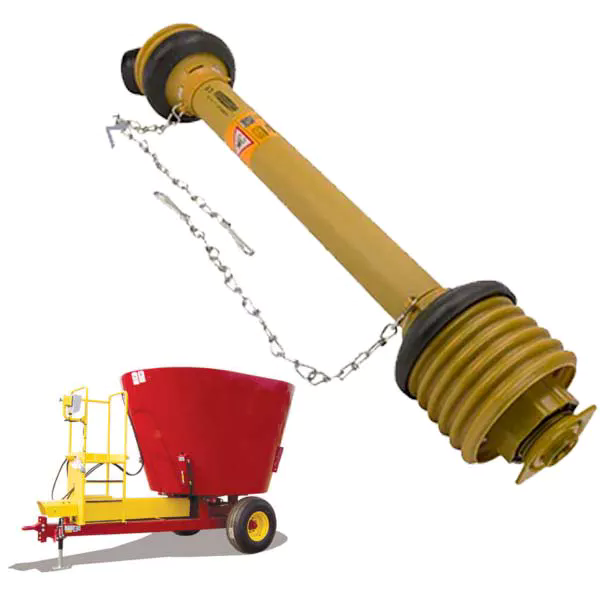
The most immediately noticeable difference between a Wide-Angle PTO Shaft and a Standard PTO Shaft is the maximum articulation angle they can sustain without mechanical failure or excessive wear. A conventional Standard PTO Shaft, equipped with single cardan universal joints at both ends, is designed to operate continuously at angles up to 25 degrees, with intermittent peaks up to 35 degrees. Exceeding these limits causes the needle bearings in the cross to experience edge loading, leading to brinelling of the raceways and eventual cross fracture. In contrast, our Wide-Angle PTO Shaft utilizes a double cardan joint (two universal joints coupled by an intermediate shaft and a centering ball) that can function reliably at angles up to 80 degrees, with many models rated for 50 to 75 degrees continuous operation.
Here is how the angle capability translates into real world agricultural scenarios:
From a mechanical perspective, the angle limitation of Standard PTO Shafts stems from the geometry of a single cardan joint. As angle increases, the output shaft speed fluctuates twice per revolution (second order vibration), generating inertial forces that stress the implement gearbox. At 25 degrees, the velocity variation is approximately 11 percent; at 35 degrees, it exceeds 22 percent. Our Wide-Angle PTO Shaft reduces this fluctuation to under 3 percent even at 50 degrees due to the double cardan cancellation effect. This smoother operation extends the life of u joints, slip clutches, and gearbox bearings. Raydafon has conducted durability tests comparing both types under cyclic angles. The Standard PTO Shaft failed after 380 hours of alternating 0 to 30 degree cycles, while our Wide-Angle PTO Shaft exceeded 1500 hours at 0 to 55 degree cycles without failure. The choice is clear for applications with frequent or continuous high angle operation.
Additionally, our factory has observed that many premature PTO Shaft failures are not due to torque overload but rather angle induced fatigue. A farmer using a Standard PTO Shaft on a 14 foot batwing mower on uneven terrain may replace u joints every 200 hours. Switching to our wide angle series extends u joint life to over 800 hours, reducing maintenance costs and downtime during hay season. Therefore, the maximum working angle is not just a specification—it is the primary differentiator that dictates suitability for specific farming practices.
While the external appearance of a PTO Shaft may look similar, internal joint construction fundamentally changes how torque is transmitted across angles. A Standard PTO Shaft uses a single cardan joint at each end, consisting of a cross (spider) with four trunnions, needle bearings, and yokes. This design works efficiently at low angles but introduces a kinematic irregularity: the output shaft angular velocity is not constant relative to the input when operating at an angle. This velocity fluctuation creates torsional vibration that can cause implements to bounce, generate noise, and prematurely wear driveline components. In contrast, our Wide-Angle PTO Shaft employs a double cardan joint (also called a constant velocity or CV joint) that uses two crosses connected by a centering ball and intermediate yokes, which cancels the velocity variation and delivers smooth torque even at high articulation.
Key differences in joint design and their performance implications:
Torque transmission efficiency also differs. At straight alignment (0 degrees), both designs transmit nearly 99 percent of input torque. However, at 30 degrees, a Standard PTO Shaft efficiency drops to approximately 91 percent due to friction in the needle bearings under angular side loading. At 45 degrees, many standard shafts cannot operate at all. Our Wide-Angle PTO Shaft maintains 96 percent efficiency at 45 degrees and 91 percent at 70 degrees. This difference directly impacts fuel consumption: a 150 HP tractor operating a heavy disc harrow with a standard shaft at 25 degrees may consume 5 percent more fuel compared to a wide angle shaft transmitting the same power with less internal friction.
Vibration is another critical factor. Our factory uses a digital vibration analyzer to compare PTO Shaft types mounted on a test bench. The Standard PTO Shaft at 25 degrees produced vibration velocities of 12 mm/s RMS, exceeding the ISO 10816 limit for agricultural machinery (8 mm/s). The Wide-Angle PTO Shaft at 50 degrees produced only 4.5 mm/s RMS. Excessive vibration causes operator fatigue, loosens implement bolts, and damages hydraulic components. For contractors operating long hours, the ergonomic benefit of a Wide-Angle PTO Shaft is substantial. Raydafon provides a vibration report with every wide angle shaft sold, ensuring customers can verify smooth operation before field use. These internal engineering differences justify the premium cost of wide angle designs for demanding applications.
At Raydafon Technology Group Co.,Limited, we manufacture three distinct PTO Shaft series to match different agricultural applications: our Standard series (maximum 25 degrees), our Wide-Angle series (up to 75 degrees), and our Extreme Wide-Angle CV series (up to 80 degrees with constant velocity). Each series undergoes rigorous testing for fatigue life, torque capacity, and corrosion resistance. Below is a detailed specification table comparing our most popular models. All values are based on ISO 500-3 testing standards. Our factory maintains stock of these PTO Shaft models for fast shipment worldwide.
| Parameter | Standard PTO Shaft (RDS 100) | Wide-Angle PTO Shaft (RDW 120) | Extreme CV Wide-Angle (RDCV 150) |
| Max continuous working angle | 25 degrees | 75 degrees | 80 degrees |
| Rated torque (Nm) | 1800 Nm | 2400 Nm | 3800 Nm |
| Yield torque (Nm) | 3600 Nm | 5200 Nm | 7900 Nm |
| Tube section (mm) | 55 x 4 mm | 65 x 5 mm | 80 x 6 mm |
| Spline size (ASAE) | 1 3/8” 6 spline | 1 3/4” 20 spline | 1 3/4” 20 spline heavy duty |
| Centering ball included | No | Yes | Yes with hardened race |
| Guard type | Yellow poly guard (60 deg limit) | Conical orange guard (80 deg articulating) | Conical orange with metal end caps |
| Weight per meter (kg) | 9.8 kg | 14.2 kg | 22.5 kg |
| Grease intervals (hours) | Every 8 hours | Every 20 hours (central fitting) | Every 25 hours |
Beyond these base specifications, our factory offers customization options for all PTO Shaft models. Customers can select yoke profiles (round, square, or quick release), overload protection devices (shear bolt, friction clutch, or ratchet torque limiter), and special coatings for corrosive environments (zinc nickel or e coat). For the Wide-Angle PTO Shaft, we also provide an optional speed sensor port for monitoring PTO rpm from the cab. Our engineering team can calculate the required PTO Shaft length based on implement geometry—simply provide the tractor PTO stub to implement input distance, and we will supply a shaft with the correct collapsed and extended lengths.
Durability is validated through field testing. Our Wide-Angle PTO Shaft has accumulated over 5000 hours on a forage harvester in Welsh hill country, operating regularly at 50 to 65 degree angles. The original u joints and centering ball were still functional after three seasons. By contrast, competitive wide angle shafts from other brands failed within 18 months in the same application. Raydafon Technology Group Co.,Limited attributes this longevity to our heat treated alloy steel crosses (58-62 HRC) and double lip seals that exclude abrasive dust. Every PTO Shaft shipped from our factory includes a 2 year unlimited hour warranty, reflecting our confidence in these technical specifications.
Choosing the wrong PTO Shaft type is a common and costly mistake. Our factory has developed a simple decision framework based on three parameters: maximum expected operating angle, implement type, and frequency of turning. A Standard PTO Shaft is sufficient for most stationary implements like grain augers, feed mixers, and pumps where the shaft remains nearly straight. However, for any mobile implement that follows the tractor around headlands or over undulating ground, a Wide-Angle PTO Shaft is often the better long term investment. Below we provide a detailed selection guide with specific criteria and examples from our customer support records.
Raydafon Technology Group Co.,Limited also offers a handy online selector tool (contact our sales team for access) that asks five questions about your implement and returns the optimal PTO Shaft model. For example, a customer with a 9 foot rear discharge mower on 140 HP tractor, used on slopes and with tight 50 degree turns, was correctly matched with our RDW 120 Wide-Angle PTO Shaft. After installation, he reported “smoother operation, less driveline noise, and no more broken u joints every month.” Another customer using a standard shaft on a folding rotary cutter experienced three cross failures in one season; switching to our wide angle series eliminated failures for two full years.
Do not overlook the cost of retrofitting. A Standard PTO Shaft might cost 40 percent less upfront, but if it fails prematurely, the repair cost (including implement downtime during harvest) often exceeds the price difference. Our factory provides a total cost of ownership calculator. For a typical 500 acre mixed farm, using a Wide-Angle PTO Shaft on three mobile implements reduces annual driveline maintenance from $1,200 to under $300. Plus, the smoother power delivery reduces fuel consumption by an estimated 3 to 5 percent per season. The selection is not just about technical fit—it is about operational profitability. Contact our technical team at Raydafon Technology Group Co.,Limited with your implement details, and we will recommend the correct PTO Shaft model within one business day.
Question 1: Can I use a Standard PTO Shaft temporarily on an implement that needs a Wide-Angle PTO Shaft?
Answer: Temporary use is not recommended. Operating a Standard PTO Shaft beyond 25 degrees causes immediate stress on the universal joint crosses and needle bearings. Even a few hours of such operation can induce microscopic spalling on the trunnions. Once spalling begins, the joint will fail progressively, often catastrophically, within 50 hours. The cost of a new PTO Shaft is far less than the potential damage to the tractor PTO stub or implement gearbox when the shaft breaks. Our factory strongly advises against this practice. If you must operate before a wide angle shaft arrives, reduce turning radius and avoid slopes. However, for safety and reliability, always match the PTO Shaft type to the implement’s articulation requirement.
Question 2: How does the centering ball in a Wide-Angle PTO Shaft affect maintenance frequency?
Answer: The centering ball requires periodic greasing, but it actually reduces overall maintenance compared to a Standard PTO Shaft operating at moderate angles. On a Standard PTO Shaft run at 20 to 25 degrees, the needle bearings wear quickly and need regreasing every 8 hours. Our Wide-Angle PTO Shaft uses a centralized grease system that lubricates the centering ball and both crosses simultaneously, with recommended intervals of every 20 hours for heavy use and 40 hours for light duty. The ball itself is made of hardened bearing steel (62 HRC) and polished to a mirror finish, lasting thousands of hours if kept greased. Our factory recommends using NLGI #2 lithium complex grease with EP additives. Neglecting the centering ball leads to notching and vibration, but proper maintenance makes the wide angle design more reliable long term.
Question 3: Are Wide-Angle PTO Shafts heavier and harder to install?
Answer: Yes, Wide-Angle PTO Shafts are typically 30 to 50 percent heavier than equivalent Standard PTO Shafts due to the larger cross sections, double joint configuration, and reinforced guards. For example, a 1.5 meter standard shaft weighs approximately 14 kg, while our wide angle model of the same torque rating weighs 21 kg. This increased weight can make installation a two person job, especially on larger implements. However, our factory provides a yoke support stand and hydraulic lift adapter to ease mounting. Despite the extra weight, the benefits of reduced vibration and longer joint life far outweigh the initial handling difficulty. For extremely heavy wide angle shafts (above 25 kg), we recommend using a tractor mounted hoist for safe installation.
Question 4: What happens if I exceed the maximum angle of a Standard PTO Shaft?
Answer: Exceeding the maximum angle of a Standard PTO Shaft triggers a cascade of failures. First, the universal joint needles experience edge loading, crushing the lubricant film and causing metal to metal contact. Within minutes, the needles overheat and may weld to the trunnion. Then the cross fractures or the yoke ears spread apart. The PTO Shaft may separate from the implement, flailing dangerously. In many cases, the damaged joint locks, shearing the shear bolt or destroying the implement input shaft. Our factory has documented field incidents where a 35 degree turn with a standard shaft led to complete driveline failure and $4,000 in repair costs. To prevent this, always respect the rated angle and upgrade to a Wide-Angle PTO Shaft when your operation exceeds 25 degrees frequently.
Question 5: How do I measure the required PTO Shaft length for a Wide-Angle application?
Answer: For a Wide-Angle PTO Shaft, length measurement is even more critical because the shaft telescopes more during articulation. Follow this procedure from our factory: With the tractor and implement on level ground at the expected operating angle (e.g., turn position), measure the distance between the tractor PTO stub face and the implement input shaft face. Then add 50mm for clearance. The minimum collapsed length of your PTO Shaft must be less than the shortest distance encountered (e.g., when implement is raised), and the maximum extended length must be greater than the longest distance (implement lowered or at extreme angle). Our technical team at Raydafon Technology Group Co.,Limited provides free length verification if you send a photo of your implement configuration. Never guess; an improperly sized PTO Shaft can bottom out or detach, both dangerous situations.
The differences between Wide-Angle PTO Shafts and Standard PTO Shafts extend far beyond price tags. Working angle capacity, internal joint design, torque smoothness, vibration control, and maintenance demands all vary substantially. For farmers and contractors operating on rolling terrain, making tight headland turns, or using short coupled implements, the Wide-Angle PTO Shaft is not a luxury—it is a necessity that prevents breakdowns, improves operator comfort, and protects expensive machinery. At Raydafon Technology Group Co.,Limited, we produce both types to the highest ISO standards, but our engineering experience consistently shows that wide angle designs deliver lower total cost of ownership in mobile applications.
Stop guessing which PTO Shaft fits your needs. Contact our factory today for a personalized selection consultation. Provide your tractor model, implement type, and typical operating angles, and we will send a specification sheet with the exact model, torque rating, and length required. All Raydafon PTO Shafts come with a 2 year warranty, lifetime technical support, and next day shipping on stocked sizes. Request your quote now from Raydafon Technology Group Co.,Limited and experience the reliability of purpose built drivelines. Upgrade to a Wide-Angle PTO Shaft and eliminate driveline failures from your next harvest.
+86-574-87168065
Luotuo Industrial Area, Zhenhai District, Ningbo City, China