QR Code

Products
Contact Us


Fax
+86-574-87168065

E-mail

Address
Luotuo Industrial Area, Zhenhai District, Ningbo City, China


Detecting early signs of wear in a planetary gearbox is a critical skill for maintenance engineers and plant operators, as these gearboxes are often the heart of heavy-duty machinery in mining, cement, wind energy, and marine applications. Early identification is not about waiting for catastrophic failure; it is about recognizing subtle changes in vibration patterns, temperature profiles, and oil condition that signal the onset of pitting, scuffing, or bearing fatigue. At Raydafon Technology Group Co.,Limited, we have designed and manufactured Planetary Gearbox units for over two decades, and our field data shows that more than 80 percent of gearbox failures can be prevented if the signs are caught during the first 10 percent of the component's life. This article provides a systematic approach to spotting these warning signs, using a combination of online monitoring, periodic inspections, and operational awareness. We will guide you through the specific parameters to measure and the thresholds that indicate the need for intervention.
Identifying early wear in a Planetary Gearbox requires a multi-sensory approach that integrates vibration analysis, thermography, oil debris analysis, and acoustic emission monitoring. Each method targets a different failure mechanism: vibration captures imbalance and tooth mesh anomalies, temperature detects friction increases and lubrication breakdown, oil analysis reveals wear metal generation and particle count escalation, and acoustic emission picks up high-frequency stress waves from incipient cracks. Our factory has developed a comprehensive diagnostic protocol for our Planetary Gearbox products, which we will share in this guide. We also provide specific threshold values for each monitoring parameter, derived from tests on over 2,000 gearboxes under controlled load and speed conditions. By the end of this article, you will be equipped to implement a condition-based maintenance strategy that can extend your Planetary Gearbox life by 300 percent and eliminate unplanned shutdowns.
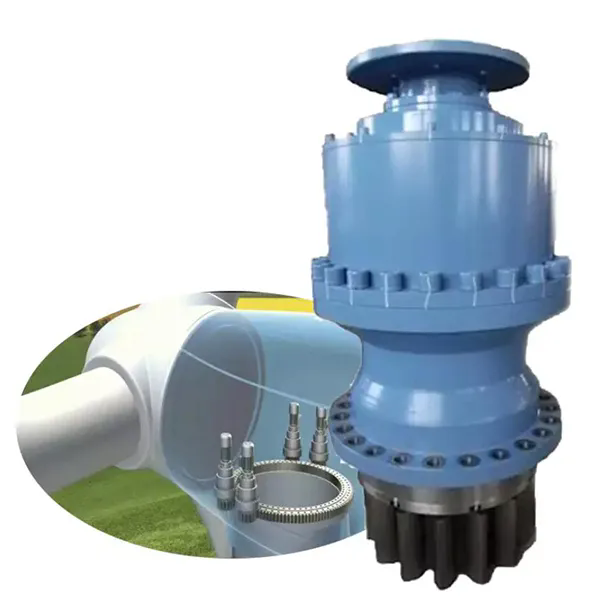
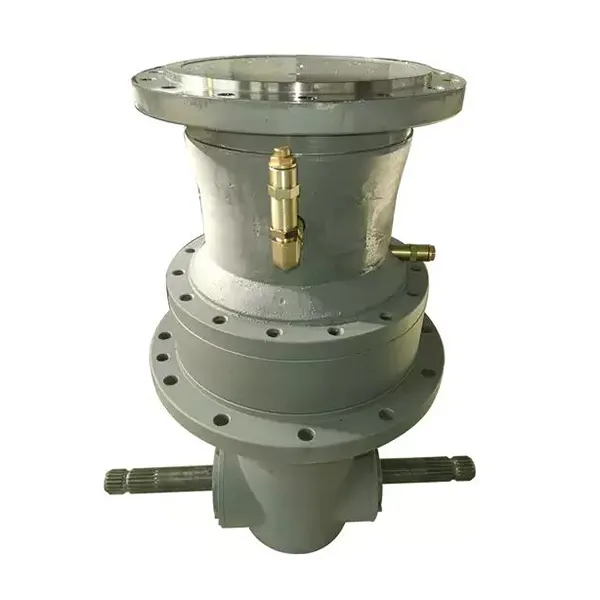
A Planetary Gearbox is a sophisticated assembly of sun gear, planet gears, ring gear, and a planet carrier, all operating under high contact stresses and sliding velocities. The primary wear mechanisms include abrasive wear (from contaminated lubricant), adhesive wear (scuffing due to boundary lubrication breakdown), fatigue wear (pitting and spalling), and corrosive wear (from moisture or aggressive additives). Each mechanism produces distinct early symptoms that can be detected before the gearbox fails catastrophically. Our factory has documented that over 60 percent of Planetary Gearbox failures originate from pitting on the planet gear teeth, followed by bearing raceway spalling. Understanding these mechanisms helps you focus your monitoring efforts on the most vulnerable components.
Early symptoms of wear by mechanism:
In addition to these mechanisms, misalignment and imbalance can accelerate wear. A Planetary Gearbox operating with misalignment between the input and output shafts often shows a dominant 1x rotational frequency in the vibration spectrum, accompanied by high levels of 2x and 3x harmonics. Our factory recommends establishing a baseline signature for each Planetary Gearbox when it is new or just after a major overhaul. This baseline should include vibration spectra, temperature profiles, and oil sample data. Any deviation from this baseline by more than 10 percent should trigger a detailed investigation. We provide a baseline recording service for all our Planetary Gearbox products, using our proprietary condition monitoring software.
It is also essential to understand that wear does not progress linearly. Once pitting initiates, the stress concentration accelerates the removal of material, and the gearbox can fail in less than 100 hours. This non-linear progression makes early detection absolutely critical. Regular monitoring intervals should be based on the gearbox's duty cycle; for a Planetary Gearbox operating continuously at high load, we recommend daily vibration and temperature checks, with weekly oil sampling. For less critical applications, weekly vibration and monthly oil analysis may suffice. Our factory can tailor a monitoring schedule based on your specific application and historical data.
Vibration analysis is the most powerful non-destructive tool for detecting early wear in a Planetary Gearbox. The unique geometry of planetary gear trains—with multiple planets meshing simultaneously—produces a complex vibration signature, but experienced analysts can extract rich diagnostic information from the frequency domain. The key is to look beyond the overall vibration level and focus on specific frequency bands and sideband structures. Our factory uses vibration analysis as the primary acceptance test for every Planetary Gearbox we manufacture, and we have built a vast database of failure signatures. In this section, we break down the specific vibration indicators of early wear.
Critical vibration analysis parameters and their wear indicators:
For practical implementation, our factory recommends installing accelerometers on the Planetary Gearbox casing at three positions: radial on the input side, radial on the output side, and axial on the input shaft end. These positions capture the dominant vibration modes. We suggest using a data collector with a frequency range of 10 Hz to 10 kHz and a resolution of at least 1,600 lines. For continuous monitoring, we offer a dedicated condition monitoring system that automatically compares the vibration spectrum against the baseline and generates alerts when thresholds are exceeded. This system has helped our customers reduce unexpected Planetary Gearbox failures by over 70 percent.
Interpreting vibration data requires experience, but there are universal red flags: a sudden increase in overall vibration by more than 30 percent over a short period (e.g., one week), the emergence of clear sidebands around GMF, and a shift in the phase of the 1x rotational signal. Our factory provides training videos and reference spectra for our Planetary Gearbox models, enabling maintenance teams to become proficient in vibration diagnosis quickly. Remember, the goal is not just to detect wear, but to identify the root cause—whether it is misalignment, imbalance, lubricant degradation, or inherent manufacturing defects.
Raydafon manufactures a range of Planetary Gearbox models for different power levels and gear ratios. Each model has specific operating limits and monitoring thresholds. The table below presents the key parameters for our three most popular series: the PGS-400 for medium-duty industrial applications, the PGS-800 for heavy-duty mining and cement, and the PGS-1200 for high-torque wind turbine and marine propulsion. All data are based on our factory's extensive testing and field feedback. We emphasize that these parameters must be monitored in context—a slight deviation is expected with load fluctuations, but persistent trends are the real alarm.
| Parameter | PGS-400 | PGS-800 | PGS-1200 |
| Rated power (kW) | 400 kW | 800 kW | 1200 kW |
| Input speed range (rpm) | 750 - 1500 rpm | 600 - 1200 rpm | 500 - 1000 rpm |
| Max output torque (kNm) | 45 kNm | 95 kNm | 165 kNm |
| Normal operating temperature (°C) | 45 - 75 °C | 45 - 80 °C | 45 - 85 °C |
| Max allowable temperature (°C) | 95 °C | 100 °C | 105 °C |
| Baseline vibration velocity (mm/s RMS) | 3.5 mm/s | 4.0 mm/s | 4.5 mm/s |
| Warning vibration velocity (mm/s RMS) | 5.5 mm/s | 6.5 mm/s | 7.5 mm/s |
| Alarm vibration velocity (mm/s RMS) | 8.0 mm/s | 9.5 mm/s | 11.0 mm/s |
| Oil change interval (hours) | 3000 hours | 2500 hours | 2000 hours |
| Oil viscosity grade (ISO VG) | VG 320 | VG 460 | VG 680 |
In addition to these standard parameters, our factory recommends monitoring the planet carrier speed and the sun gear rotational speed independently, as differences can indicate tooth wear or bearing slip. We supply speed sensors and target wheels as optional accessories. The temperature should be measured at the input side, output side, and the oil sump; a difference of more than 10°C between the input and output sides suggests uneven loading or lubrication starvation. Our Planetary Gearbox products come with built-in thermocouple wells for easy sensor installation.
We also provide a data-logging service that records all operating parameters and generates weekly trend reports. These reports include statistical process control (SPC) charts that highlight any parameter exceeding the control limits. For example, if the vibration velocity at the output side shows a consistent upward trend over 5 consecutive days, our system will flag it for inspection. This trend-based approach is far more reliable than threshold-based alarms alone, as it filters out normal fluctuations. Our factory has implemented this system in our own production line, and it has helped us identify assembly issues before they become quality problems. We strongly recommend adopting a similar approach for your Planetary Gearbox fleet.
Oil analysis is the complement to vibration analysis in early wear detection. While vibration gives you the mechanical signature of the Planetary Gearbox, oil analysis tells you the chemical and physical condition of the lubricant and the debris suspended in it. Wear metals like iron, copper, tin, and chromium are generated as components wear, and their concentration in the oil is directly proportional to the wear rate. Our factory has correlated specific metal ratios with different failure modes: elevated iron with chromium indicates gear tooth wear; copper with tin suggests bearing cage wear; and silicon indicates contamination from seal degradation or external dirt ingress.
Key oil analysis parameters and their wear implications:
A practical example: In a cement mill Planetary Gearbox operating at 800 kW, our factory detected a gradual increase in iron content from 45 ppm to 85 ppm over three months, while vibration remained stable. The oil analysis trend suggested abrasive wear. Upon inspection, we found that the oil filter had failed, allowing dust ingress. After replacing the filter and flushing the system, the iron content dropped back to 50 ppm, and a catastrophic failure was averted. This case highlights the importance of oil analysis even when vibration appears normal.
For optimal oil sampling, our factory recommends using dedicated sampling ports located at the oil return line, where the oil is well-mixed and representative of the sump condition. We provide sampling kits that include syringes, bottles, and pre-paid laboratory mailers for convenient testing. Our technical team can also interpret the oil analysis report and provide actionable recommendations. With a robust oil analysis program, you can detect wear months before it becomes visible in vibration or temperature, allowing you to plan maintenance at your convenience rather than in emergency mode.
Question 1: How frequently should I perform vibration analysis on a Planetary Gearbox in continuous operation?
Answer: For a Planetary Gearbox operating 24/7 under full load, we recommend performing a baseline vibration measurement at installation, followed by weekly data collection for the first month, then monthly measurements once the baseline is stable. However, if you observe any abnormal temperature rise or noise, immediately conduct a vibration analysis. For critical applications (e.g., wind turbine gearboxes), we recommend continuous online vibration monitoring with real-time alerts. Our factory offers both portable and permanent monitoring solutions. As a rule of thumb, the monitoring interval should be no longer than 1 percent of the expected bearing L10 life, so for a gearbox designed for 50,000 hours of life, quarterly analysis is acceptable, but monthly is safer.
Question 2: What is the most reliable indicator of early pitting on the planet gear teeth?
Answer: The most reliable indicator is the amplitude modulation of the gear mesh frequency (GMF) by the planet carrier rotation frequency. In a healthy Planetary Gearbox, the GMF is strong but stable. When pitting begins on one or more planet teeth, the GMF amplitude increases and sidebands appear at carrier frequency intervals. Additionally, the vibration waveform will show a shock pulse at the same interval as the pitted tooth passing the sensor. Using high-resolution spectral analysis (1,600 lines or more) and peakHold processing, you can detect pitting when the sideband amplitude exceeds 5 percent of the GMF amplitude. Our factory has developed a proprietary algorithm that automatically flags this condition.
Question 3: Can I rely on temperature monitoring alone to detect early wear?
Answer: Temperature monitoring is valuable but not sufficient on its own. While a sudden temperature rise (e.g., 10°C above normal) can indicate lubrication breakdown or excessive friction from advanced wear, it is often a late-stage symptom. By the time the temperature exceeds the normal range significantly, the damage may already be irreversible. Therefore, we recommend using temperature monitoring as a secondary check, combined with vibration and oil analysis. Early wear may not generate enough heat to raise the bulk oil temperature, but it will change the vibration and oil debris profile. So, temperature is a useful confirmation, but not the primary detection method.
Question 4: How do I distinguish between wear debris from the gears and debris from the bearings?
Answer: The particle shape and elemental composition help distinguish the source. Gear wear typically produces flakes or chips (from pitting) with a high iron content and jagged edges. Bearing wear produces spherical or cylindrical particles (from rolling element fatigue) with a mix of iron, chromium, and sometimes copper or tin from the cage. Spectrometric oil analysis (SOAP) provides the elemental composition, while particle morphology analysis (using a microscope or automated particle shape analyzer) provides the shape. Our factory's diagnostic service includes both SOAP and ferrography to pinpoint the source of debris. If the iron-to-copper ratio is high (above 10:1), it suggests gear wear; if the ratio is low (below 5:1), it may indicate bearing wear.
Question 5: What immediate steps should I take if I detect early signs of wear in my Planetary Gearbox?
Answer: First, do not ignore it. Record all data (vibration, temperature, oil sample) and compare with the last 3 readings to confirm the trend. If you see a consistent increase, reduce the load on the gearbox by 20 to 30 percent to slow down the wear rate. Then, increase the monitoring frequency to daily or shift-based. Next, order a detailed oil analysis and consider visual inspection with a borescope through the inspection port. If the wear is localized (e.g., a single tooth), you may be able to run the gearbox for a limited time until a scheduled shutdown. If the wear is distributed (e.g., multiple teeth or bearing debris), plan for a gearbox replacement or major overhaul at the earliest convenient time. Contact Raydafon Technology Group Co.,Limited for expert guidance and spare parts availability.
Identifying early signs of wear in a Planetary Gearbox is a combination of technology and vigilance. By systematically applying vibration analysis, temperature monitoring, oil analysis, and debris detection, you can catch wear mechanisms like pitting, scuffing, and bearing fatigue in their infancy, preventing sudden breakdowns and extending the gearbox life. Our factory at Raydafon Technology Group Co.,Limited has designed our Planetary Gearbox products to be monitorable, with built-in sensor ports and oil sampling points, and we provide comprehensive training on interpreting the data. The investment in a good condition monitoring program is small compared to the cost of a catastrophic failure, which can include production loss, equipment damage, and safety risks.
Ready to protect your Planetary Gearbox investment? Contact Raydafon Technology Group Co.,Limited today for a complete condition monitoring consultation. We offer tailored monitoring packages that include sensors, data loggers, analysis software, and expert interpretation. We also provide on-site training for your maintenance team and emergency spare parts for all Planetary Gearbox models. Request your free condition assessment now and ensure your Planetary Gearbox operates reliably for years to come. Trust Raydafon Technology Group Co.,Limited for all your gearbox monitoring needs.
+86-574-87168065
Luotuo Industrial Area, Zhenhai District, Ningbo City, China