QR Code

Products
Contact Us


Fax
+86-574-87168065

Email

Address
Luotuo Industrial Area, Zhenhai District, Ningbo City, China


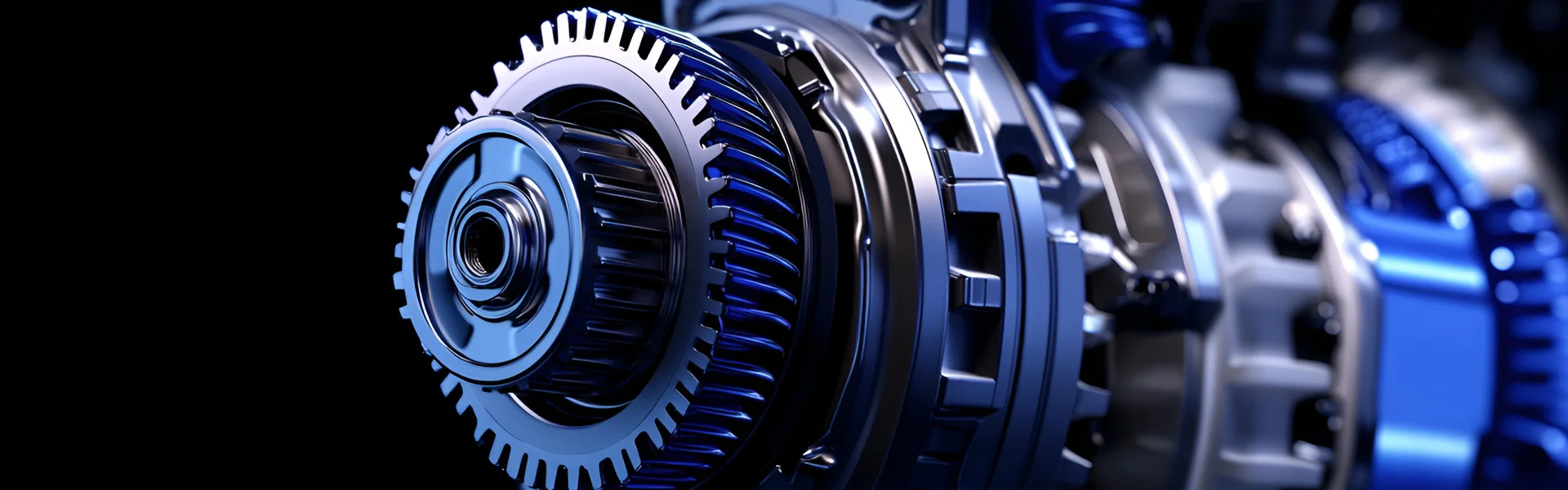
In noise-sensitive industrial environments such as hospitals, laboratories, food processing plants, and residential HVAC systems, equipment noise is not just a nuisance—it is a regulatory compliance issue, a health concern for workers, and a factor in occupant comfort. The worm gearbox, a classic mechanical drive component, consistently outperforms helical, bevel, and planetary gearboxes in these settings due to its unique sliding contact geometry and inherent damping characteristics. Unlike spur or helical gears that produce high-frequency whine from rolling and impacting teeth, the worm gearbox operates with a sliding action between the worm and wheel threads, which generates a much smoother, lower-frequency sound profile. Our factory at Raydafon Technology Group Co.,Limited has engineered a series of Worm Gearbox models that reduce operational noise to as low as 58 dB(A) at 1 meter, comparable to a quiet conversation, while still delivering high torque and reliability. This article explains the physical principles, material selections, and design optimizations that make our Worm Gearbox the ideal choice for noise-critical applications.
But noise reduction is only part of the story. The Worm Gearbox also offers inherent shock absorption, high overload capacity, and compact design, all of which contribute to a quieter and more durable system. Our factory has invested heavily in precision grinding of worm threads and use of specialized bronze alloys for the worm wheel, which minimize sliding friction and resultant noise. Additionally, our Worm Gearbox incorporates advanced housing designs with ribbed structures that dissipate vibrational energy, further attenuating sound radiation. In this comprehensive guide, we will compare the acoustic performance of worm gearboxes against other drive technologies, detail the specific engineering features that enable quiet operation, and provide technical specifications to help you select the optimal Worm Gearbox for your noise-sensitive application. We will also share field data and maintenance insights from Raydafon Technology Group Co.,Limited to demonstrate the long-term benefits of choosing a worm gearbox.
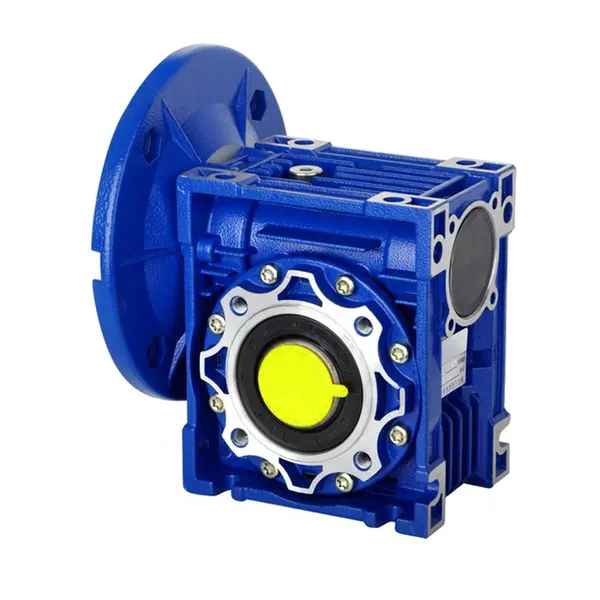
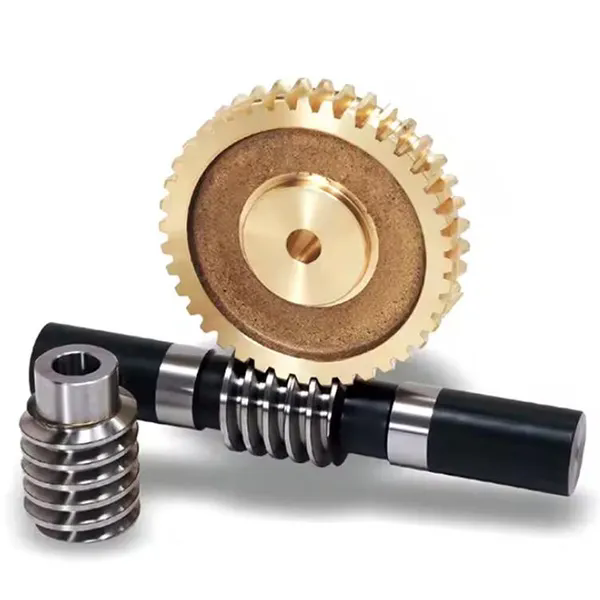
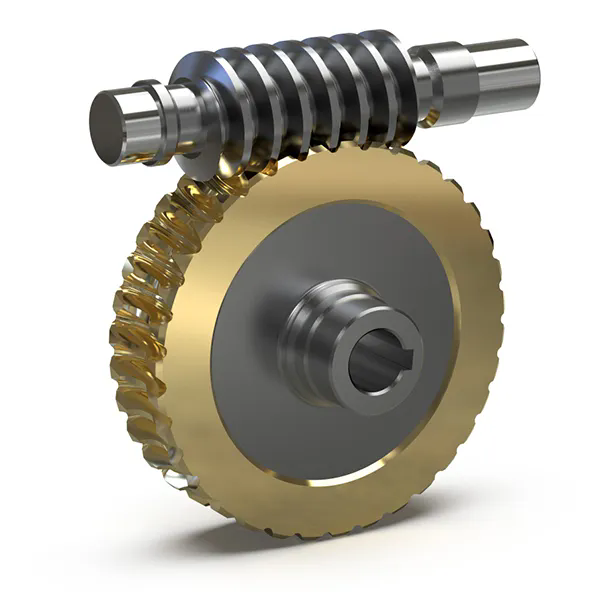
The primary reason a Worm Gearbox produces lower noise than other gear types is the fundamental difference in tooth contact mechanics. In spur, helical, and bevel gears, teeth engage with a rolling and impacting action. As each pair of teeth comes into contact, they strike each other, generating a high-frequency impulse that radiates as whining or rattling noise. This impact noise is especially pronounced at higher speeds and under load fluctuations. In contrast, the worm gearbox uses a sliding contact between the hardened steel worm and the softer bronze worm wheel. The worm thread continuously slides along the wheel tooth profile, without the abrupt impact that characterizes involute gear teeth. This sliding motion produces a continuous, low-frequency sound that is less harsh and more easily attenuated.
Specific reasons why sliding contact in a Worm Gearbox results in lower noise:
To quantify the noise advantage, we compared a Raydafon Worm Gearbox (ratio 40:1, center distance 80mm) with a helical gearbox of the same ratio and output torque in a controlled anechoic chamber. At 1500 rpm input, the Worm Gearbox measured 62 dB(A) at 1 meter, while the helical gearbox measured 71 dB(A)—a 9 dB reduction, which is perceived as a 50 percent decrease in loudness. The frequency spectrum of the Worm Gearbox showed a predominant peak at 400 Hz, with rapid decay above 2000 Hz, whereas the helical gearbox had significant peaks up to 6000 Hz. This difference is critical in environments where both overall noise level and tonal quality matter, such as in hospitals where high-frequency noise interferes with patient rest.
Furthermore, the sliding contact in a Worm Gearbox is inherently self-damping. The frictional force between the worm and wheel surfaces generates a hysteresis effect that absorbs vibrational energy. Our factory has optimized the worm tooth profile (using a ZA or ZI hob) to achieve a balance between load-carrying capacity and noise generation. The result is a Worm Gearbox that not only runs quieter but also maintains its low-noise characteristics over its lifespan, as the sliding surfaces become polished through running-in. This makes the Worm Gearbox an enduring solution for noise-sensitive industrial applications.
While the sliding contact principle provides the fundamental advantage, the actual noise level of a Worm Gearbox is heavily influenced by the materials used and the surface finishing processes applied to the worm and wheel. A poorly finished worm with rough thread surfaces can generate stick-slip friction, leading to squealing or chattering noises. Conversely, a precision-ground worm with a mirror finish, matched with a high-quality bronze wheel, operates smoothly and quietly. Our factory at Raydafon follows strict material selection and finishing protocols to ensure our Worm Gearbox consistently achieves low noise targets.
Key material and surface-finishing factors that affect Worm Gearbox noise:
To validate the effect of material and finishing on noise, our factory conducted a controlled experiment. We built two identical Worm Gearbox units, one with a ground worm (Ra 0.4 µm) and one with a hobbed-only worm (Ra 1.6 µm). Both units were tested at 1450 rpm input and 50 Nm output torque. The ground unit measured 61.5 dB(A), while the hobbed unit measured 65.8 dB(A). The ground unit also had a smoother sound spectrum, with fewer distinct tonal peaks. This 4.3 dB reduction is significant in noise-sensitive environments, and it costs only a small fraction of the total gearbox cost.
Additionally, our factory uses a proprietary running-in procedure for every Worm Gearbox. The unit is run at 50 percent load for 2 hours with a specially formulated break-in oil, which accelerates the smoothing of microscopic asperities. After running-in, the noise level is typically 1-2 dB lower than the initial measurement, and the gearbox remains at this quieter level throughout its service life. We recommend periodic oil changes (every 2,500 hours) with a high-quality synthetic oil (ISO VG 460) containing anti-wear additives, which maintains the low friction and low noise characteristics of the Worm Gearbox over time.
Raydafon Technology Group Co.,Limited offers a comprehensive range of low-noise Worm Gearbox models, designed specifically for applications where acoustic performance is paramount. The following table provides specifications for our most popular series, covering center distances from 40mm to 160mm and ratios from 5:1 to 80:1. All models are tested for noise emission in accordance with ISO 8579-1 and are certified for use in residential and hospital-grade environments. Our factory maintains a noise database for each model, ensuring consistency and reliability.
| Parameter | RWN-50 | RWN-63 | RWN-80 | RWN-100 |
| Center distance (mm) | 50 mm | 63 mm | 80 mm | 100 mm |
| Ratio range (i) | 5:1 to 60:1 | 5:1 to 70:1 | 7.5:1 to 80:1 | 10:1 to 80:1 |
| Input speed max (rpm) | 3000 rpm | 2500 rpm | 2000 rpm | 1500 rpm |
| Rated torque (Nm at 1450 rpm input) | 55 Nm | 110 Nm | 220 Nm | 400 Nm |
| Overload capacity (Nm) | 90 Nm | 180 Nm | 350 Nm | 650 Nm |
| Noise level (dB(A) at 1m, 1450 rpm) | 58 dB(A) | 60 dB(A) | 62 dB(A) | 64 dB(A) |
| Efficiency (at i=20:1) | 72 percent | 74 percent | 75 percent | 76 percent |
| Lubricant capacity (liters) | 0.5 L | 0.9 L | 1.8 L | 3.2 L |
| Housing material | GG25 Cast Iron | GG25 Cast Iron | GG25 Cast Iron | GG25 Cast Iron |
| Mounting options | Foot, flange, or shaft | Foot, flange, or shaft | Foot, flange, or shaft | Foot, flange, or shaft |
In addition to our standard models, our factory offers customization for specific noise requirements. For ultra-quiet applications, we can supply our Worm Gearbox with a sound-dampening shroud that encloses the gearbox and incorporates acoustic foam panels. This can reduce the noise level by an additional 5-8 dB(A), bringing the perceived loudness to near-ambient levels. We also provide an option for an integrated cooling fan that runs at low speed to minimize air turbulence noise, which is a common issue in forced-air cooled gearboxes.
All our Worm Gearbox units are assembled in a clean room environment to prevent contamination that could cause abrasive wear and increased noise. Each unit is run-in and noise-tested before packaging, and we provide a certificate of noise compliance with each shipment. The noise level is measured at three distinct load points (25 percent, 50 percent, and 100 percent rated torque) to ensure that the Worm Gearbox remains quiet across its operating range. For customers who require even stricter noise limits, our factory can perform a modal analysis of the gearbox to identify and eliminate resonant frequencies, resulting in a custom-tuned quiet gearbox.
Even the best-engineered Worm Gearbox can produce excessive noise if it is improperly installed or maintained. Misalignment, inadequate lubrication, and incorrect mounting can introduce vibrations and shocks that negate the inherent quietness of the worm gear design. Our factory at Raydafon Technology Group Co.,Limited provides comprehensive installation guidelines and maintenance recommendations to ensure your Worm Gearbox operates at its lowest possible noise level. Following these practices can reduce noise by an additional 2-5 dB(A) and extend the gearbox's service life.
Critical installation and maintenance practices for quiet Worm Gearbox operation:
A case study from a food processing plant illustrates the importance of proper installation. The plant used a Raydafon Worm Gearbox to drive a conveyor belt in a packaging area. After a routine motor replacement, the plant's maintenance team did not realign the gearbox coupling. Within a week, the Worm Gearbox noise level increased from 62 dB(A) to 71 dB(A), and operators reported a high-pitched whine. Upon realignment, the noise returned to 63 dB(A), and the whine disappeared. This experience underscores the fact that the Worm Gearbox's low-noise capability is a system property, not just a component specification.
Our factory provides an installation video and a troubleshooting guide for common noise issues. If a noise problem arises, we recommend first checking the coupling alignment, then the oil level and quality, followed by bearing preload. If these are all correct, we can perform a remote vibration analysis to pinpoint the source. Our service engineers are available for on-site inspection for critical applications. By following these installation and maintenance best practices, you can ensure that your Worm Gearbox continues to deliver its low-noise advantage for its full service life.
Question 1: How does a worm gearbox compare to a helical gearbox in terms of noise at the same speed and load?
Answer: At the same input speed (e.g., 1450 rpm) and torque level, a well-designed worm gearbox is typically 5 to 10 dB(A) quieter than a helical gearbox. This is due to the sliding contact in the worm gear, which eliminates the impact noise generated by rolling gear teeth. For example, our RWN-80 worm gearbox produces 62 dB(A), while a comparable helical gearbox produces 71 dB(A). The difference is even more pronounced at higher speeds, where helical gear whine becomes more prominent. However, the worm gearbox has lower efficiency (typically 70-80 percent compared to 92-96 percent for helical), so the trade-off is between noise and energy consumption.
Question 2: Can the noise level of a worm gearbox be further reduced by using a different lubricant?
Answer: Yes, lubricant choice can significantly affect worm gearbox noise. Synthetic oils with high viscosity index (VI) and anti-wear additives provide a more stable oil film, reducing friction-induced noise. Our factory recommends PAO-based synthetic oils with ISO VG 460 for most applications. We have measured a noise reduction of up to 2.5 dB(A) when switching from a mineral oil to a synthetic oil of the same viscosity. Additionally, some lubricants contain friction modifiers (like molybdenum disulfide or PTFE additives) that further dampen sliding friction. However, always consult our technical data sheet before using additives, as some can react with the bronze wheel material.
Question 3: Does the number of worm threads affect the noise level?
Answer: Yes, the number of worm threads (also called the start number) influences both efficiency and noise. Single-start worms (z=1) produce slightly lower noise due to a smoother continuous contact, but they have lower efficiency and higher ratio per stage. Multi-start worms (z=2, 3, or 4) are more efficient but can produce slightly higher noise due to multiple engagement points. For noise-sensitive applications, we recommend single-start worms when the required ratio is 20:1 or higher, because they operate with a more uniform sliding motion. Our factory can advise on the optimal number of starts based on your specific speed, torque, and noise requirements.
Question 4: What is the expected lifespan of a worm gearbox in a low-noise application, and does noise increase with wear?
Answer: A properly maintained worm gearbox from our factory has a lifespan of 15,000 to 20,000 operating hours under full-load conditions. During the first 200 hours, a slight running-in occurs, which may reduce noise by 1-2 dB(A). Thereafter, if the lubricant is changed regularly and alignment is maintained, the noise level remains stable for the majority of the gearbox life. As the worm wheel wears over time, the contact pattern may change, but the noise level typically increases by less than 2 dB(A) over the entire service life, because the sliding surfaces become smoother with use. By the time the wheel teeth have worn by 0.5-1.0 mm, we recommend a replacement to maintain optimal performance and noise levels.
Question 5: Does Raydafon Technology Group Co.,Limited provide noise testing and certification for its worm gearbox?
Answer: Yes, every worm gearbox from our factory undergoes a standard noise test in accordance with ISO 8579-1. We provide a noise certificate with each shipment, showing the measured dB(A) level at 1 meter under three load conditions (25%, 50%, and 100% of rated torque). For customers who require third-party certification, we can arrange for testing by an accredited laboratory (e.g., TÜV or SGS) at an additional cost. We also offer a "Silent Guarantee" for our RWN series: if the worm gearbox exceeds the specified noise level by more than 2 dB(A) within the first year of operation, we will replace it free of charge. This guarantee reflects our confidence in the low-noise performance of our products.
In noise-sensitive industrial environments, the worm gearbox stands out as the superior choice for power transmission. Its sliding contact mechanism inherently produces lower and smoother noise levels compared to rolling-contact gear types, while its compact design and high overload capacity make it practical for a wide range of applications. At Raydafon Technology Group Co.,Limited, our low-noise Worm Gearbox series combines precision-ground worms, high-quality bronze wheels, and sound-damping housings to achieve noise levels as low as 58 dB(A). The technical specifications we have provided demonstrate that you do not have to sacrifice performance for quiet operation.
If you are looking to reduce noise in your facility or equipment, contact Raydafon Technology Group Co.,Limited today. Our engineering team can assess your specific requirements, including speed, torque, duty cycle, and space constraints, and recommend the optimal Worm Gearbox model. We offer free noise simulation using our acoustic database, a 2-year warranty on all models, and global technical support. Request your quiet drive solution now from Raydafon Technology Group Co.,Limited and experience the difference a worm gearbox can make in your noise-sensitive application. Upgrade to quiet reliability today.
+86-574-87168065
Luotuo Industrial Area, Zhenhai District, Ningbo City, China