QR Code

Products
Contact Us


Fax
+86-574-87168065

E-mail

Address
Luotuo Industrial Area, Zhenhai District, Ningbo City, China


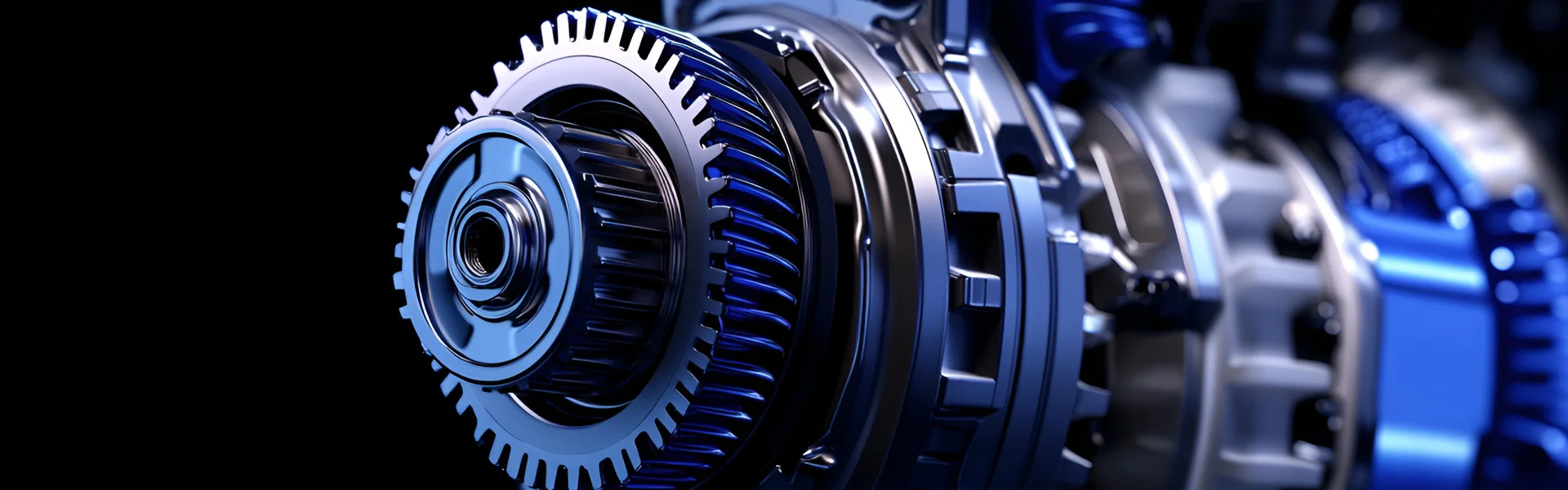
Mechanical efficiency is one of the most critical indicators when evaluating power transmission components. In industrial machinery, automotive systems, automation equipment, and precision instruments, even a small loss of efficiency can translate into higher energy consumption, increased heat generation, and reduced service life. Among various gear types, spur gears have long been recognized for their outstanding mechanical efficiency and stable performance.
At Raydafon Technology Group Co.,Limited, our focus has always been on delivering reliable and high-efficiency transmission solutions. Through decades of manufacturing experience, our factory has accumulated deep expertise in producing Precision Gear solutions that meet strict industrial requirements. By combining optimized gear geometry, controlled material selection, and consistent machining accuracy, our products are designed to help customers achieve long-term operational stability.
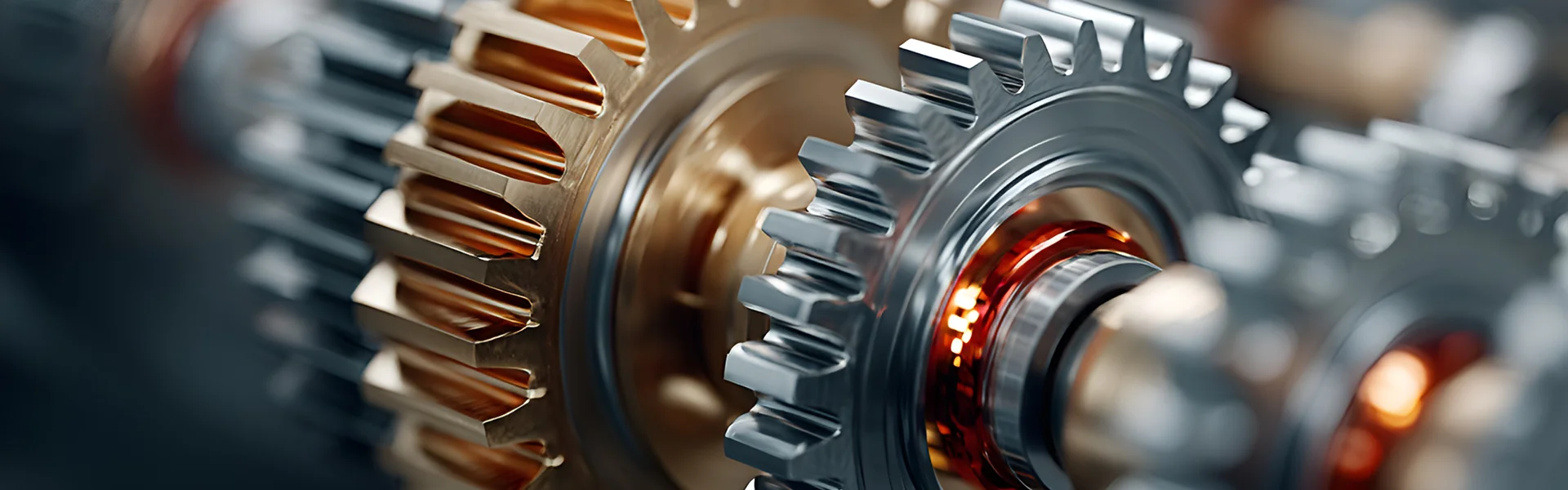
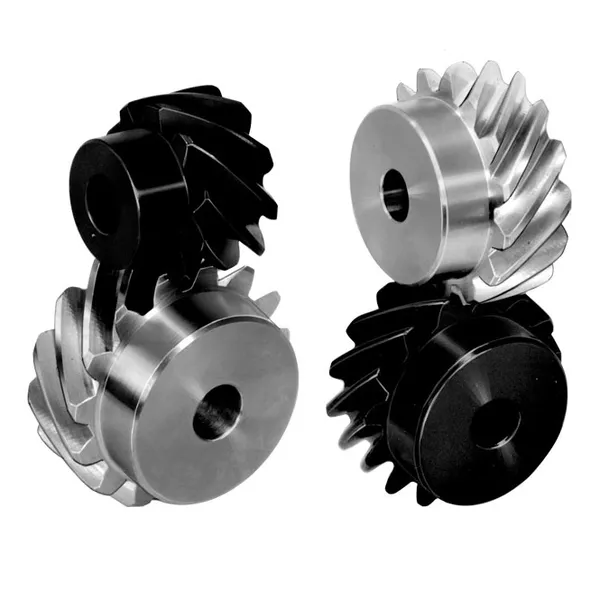
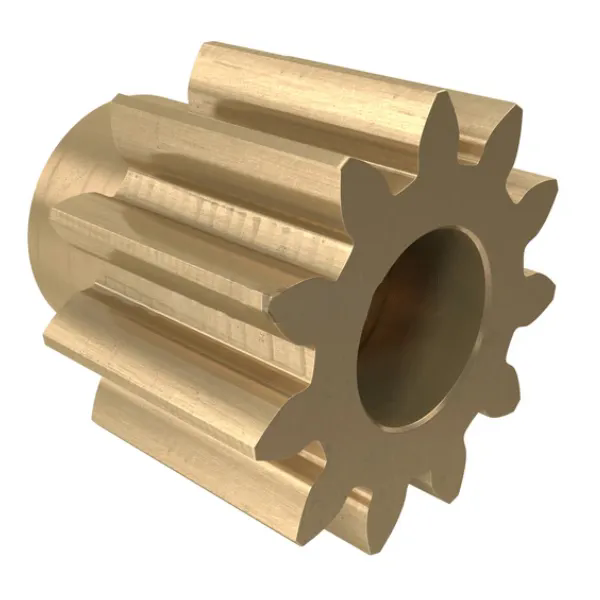
Spur gears are widely regarded as one of the most structurally efficient gear types used in mechanical power transmission. Their defining characteristic is the straight tooth profile, with teeth aligned parallel to the rotational axis. This seemingly simple structure is the primary reason spur gears consistently deliver higher mechanical efficiency compared with many other gear designs.
From an engineering perspective, structural efficiency refers to how effectively a component converts input energy into useful output without unnecessary losses. In spur gears, the tooth engagement process is direct, predictable, and stable. Power is transmitted primarily through rolling contact rather than sliding contact, which significantly reduces friction and heat generation during operation.
At Raydafon Technology Group Co.,Limited, our design philosophy is built around maximizing this inherent structural advantage. Our factory focuses on refining every detail of spur gear structure so that each Precision Gear operates with minimal resistance while maintaining high load-bearing capability.
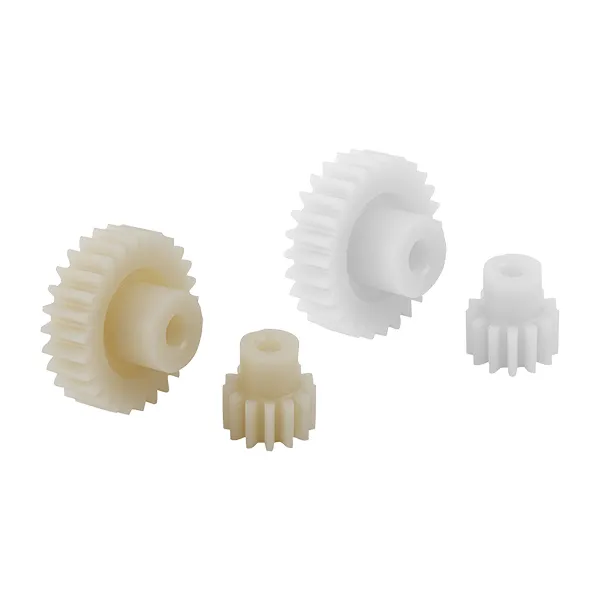
Unlike helical or spiral gears, spur gears engage along the full width of the tooth almost simultaneously. This direct engagement results in efficient torque transmission and minimizes energy losses caused by gradual tooth contact or axial force generation. Because the load is transferred cleanly from one tooth to another, mechanical efficiency remains high even under fluctuating operating conditions.
The absence of axial thrust is another critical structural advantage. Helical gears generate axial forces due to their angled teeth, which must be absorbed by bearings. This additional load increases bearing friction and reduces overall system efficiency. Spur gears eliminate this issue entirely, allowing more input energy to be converted into usable output torque.
Structural simplicity also enhances reliability. With fewer secondary forces acting on the system, spur gears experience less internal stress and slower wear rates. This stability allows our factory to achieve consistent performance across large production batches, ensuring that every Precision Gear meets the same efficiency standards.
| Gear Structure | Primary Contact Type | Force Direction | Impact on Efficiency |
| Spur Gear | Rolling dominant | Radial only | Minimal energy loss |
| Helical Gear | Rolling and sliding | Radial and axial | Increased friction |
| Worm Gear | Sliding dominant | Radial and axial | High energy loss |
This comparison highlights why spur gears remain the preferred choice for applications where efficiency is critical. Conveyors, industrial reducers, packaging equipment, and automation systems all benefit from the structural efficiency of spur gears.
At Raydafon, our factory integrates structural efficiency into every stage of production. From gear blank preparation to final inspection, we ensure that tooth alignment, concentricity, and face width remain within strict tolerances. This attention to structure allows our Precision Gear products to maintain consistent efficiency throughout their service life. By leveraging the inherent advantages of spur gear structure and combining them with controlled manufacturing processes, we help our customers reduce energy consumption, extend equipment lifespan, and achieve stable long-term performance.
Gear geometry plays a decisive role in determining how efficiently power is transmitted. In spur gears, involute tooth profiles ensure constant velocity ratios and smooth engagement. This geometric consistency minimizes energy losses caused by vibration, impact, and misalignment. Our engineering approach focuses on optimizing geometry at every stage. From module selection to pressure angle optimization, our factory maintains tight tolerances to ensure each Precision Gear performs reliably across its service life.
When these parameters are carefully controlled, spur gears achieve higher efficiency than gear types with angled or curved teeth. Helical gears, for example, generate axial forces that increase bearing friction. Worm gears rely heavily on sliding contact, which inherently limits efficiency. Spur gears avoid these disadvantages through geometry alone.
| Parameter | Standard Range | Impact on Efficiency |
| Module | 0.5 to 12 | Ensures correct torque transmission |
| Pressure Angle | 20 degrees | Reduces sliding friction |
| Surface Roughness | Ra 0.8 to 1.6 | Lowers energy loss at contact |
At Raydafon, our factory integrates advanced gear cutting and inspection systems to maintain these parameters consistently. Our Precision Gear solutions are designed not only for initial efficiency but also for stable long-term performance under continuous operation.
Mechanical efficiency is not solely determined by design. Manufacturing quality has an equally important influence, especially over extended service periods. Even well-designed gears can lose efficiency if material quality, heat treatment, or machining accuracy is compromised. Our factory emphasizes process control at every step. From raw material selection to final inspection, our approach ensures that each Precision Gear maintains its efficiency throughout its lifecycle. Raydafon Technology Group Co.,Limited has built its reputation by delivering stable and repeatable quality across large production volumes.
Heat treatment is especially critical. Proper carburizing or induction hardening increases surface hardness without sacrificing core toughness. This balance allows our Precision Gear products to resist wear while maintaining smooth tooth engagement. Over time, this directly translates into sustained mechanical efficiency.
| Item | Specification | Description |
| Material | 20CrMnTi or 42CrMo | High strength and wear resistance |
| Hardness | HRC 58 to 62 | Extended service life |
| Accuracy Grade | DIN 6 to 8 | Stable transmission efficiency |
Through continuous improvement, Raydafon Technology Group Co.,Limited ensures that our factory output meets both performance and reliability expectations. This commitment allows our customers to rely on our Precision Gear solutions in demanding industrial environments.
Spur gears achieve higher mechanical efficiency because of their straight-tooth geometry, minimal sliding contact, and absence of axial forces. When combined with optimized design parameters and precise manufacturing control, they outperform many other gear types in energy transmission efficiency. At Raydafon Technology Group Co.,Limited, our factory integrates design expertise, process control, and quality inspection to deliver Precision Gear products that maintain efficiency over long operating cycles. By choosing the right spur gear solution, manufacturers can reduce energy loss, lower maintenance costs, and improve overall system reliability.
If you are looking for high-efficiency transmission components, our team is ready to support your project with proven manufacturing capabilities and responsive technical service. Contact us today to discuss how our solutions can enhance your equipment performance.
Q1: What design characteristics allow spur gears to minimize power loss during transmission?
Spur gears use straight teeth with parallel alignment to the shaft, allowing torque to be transferred mainly through rolling contact. This design minimizes sliding friction between meshing teeth, reduces heat generation, and ensures that most of the input energy is converted directly into useful mechanical output.
Q2: How does the absence of axial force improve efficiency in spur gear systems?
Because spur gears do not generate axial thrust, bearings are subjected only to radial loads. This significantly lowers bearing friction and wear, reduces parasitic energy losses, and improves overall system efficiency compared with gear types that require axial load compensation.
Q3: In what way does tooth contact behavior influence the efficiency of spur gears?
Spur gear teeth engage in a direct and predictable manner, with load transfer occurring smoothly along the involute profile. This stable contact behavior prevents torque fluctuation, reduces vibration, and maintains consistent efficiency across different operating speeds.
Q4: Why are spur gears often preferred for high-efficiency industrial power transmission?
Their simple structure, high manufacturing accuracy, and minimal friction losses make spur gears ideal for applications where energy efficiency is critical. Industries value spur gears for their ability to deliver reliable performance with low maintenance requirements over long operating cycles.
Q5: How does precision manufacturing contribute to sustained efficiency in spur gears?
High-precision machining, controlled heat treatment, and strict dimensional tolerances ensure smooth tooth engagement and long-term wear resistance. This manufacturing consistency allows spur gears to maintain their designed efficiency throughout extended service life without significant performance degradation.
+86-574-87168065
Luotuo Industrial Area, Zhenhai District, Ningbo City, China