QR Code

Products
Contact Us


Fax
+86-574-87168065

Email

Address
Luotuo Industrial Area, Zhenhai District, Ningbo City, China


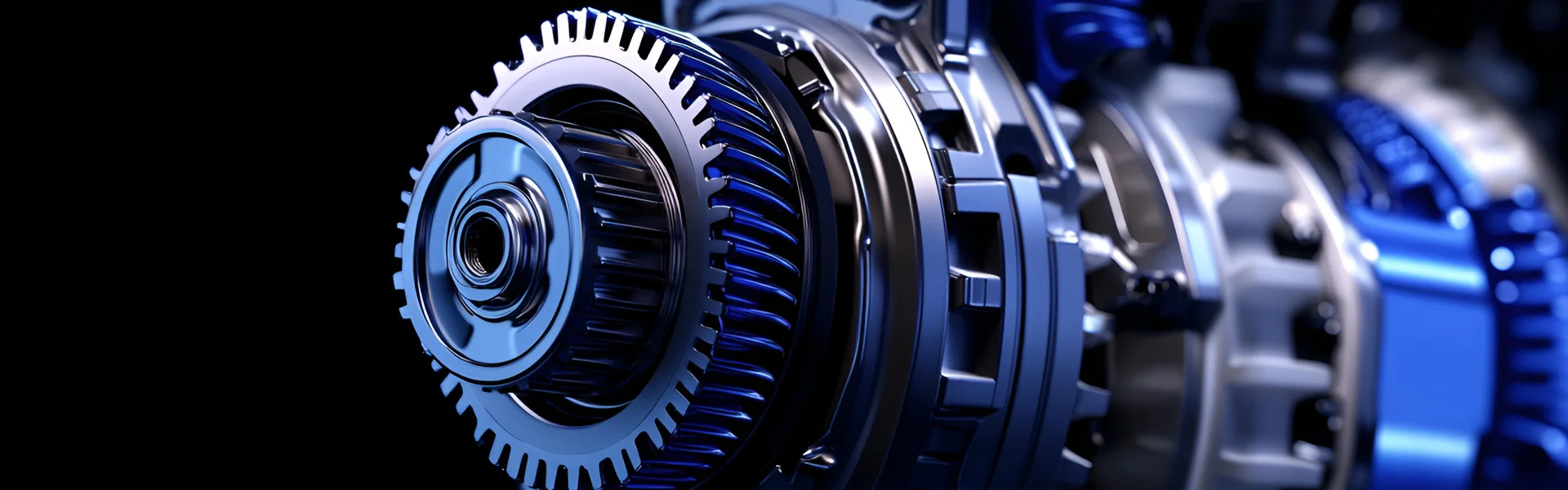
What is the importance of gear ratio in precision gears? It's the silent commander of your machinery, the crucial factor dictating torque, speed, and ultimately, the success of your application. For a purchasing manager sourcing components, a misguided gear ratio means failed prototypes, production delays, and budget overruns. Understanding this core principle is the first step toward specifying parts that deliver performance, not problems. This guide cuts through the complexity, translating engineering concepts into actionable procurement intelligence to ensure your next gear purchase drives efficiency and value.
Simply put, the gear ratio is the relationship between the number of teeth on two meshing gears. It determines how many revolutions the driving gear must make to turn the driven gear once. A higher ratio (e.g., 5:1) increases torque but reduces output speed, ideal for lifting heavy loads. A lower ratio (e.g., 1:2) increases speed but reduces torque, perfect for applications requiring rapid movement. In precision systems, the exactness of this ratio is non-negotiable; even minor deviations can cause vibration, noise, premature wear, and system failure.
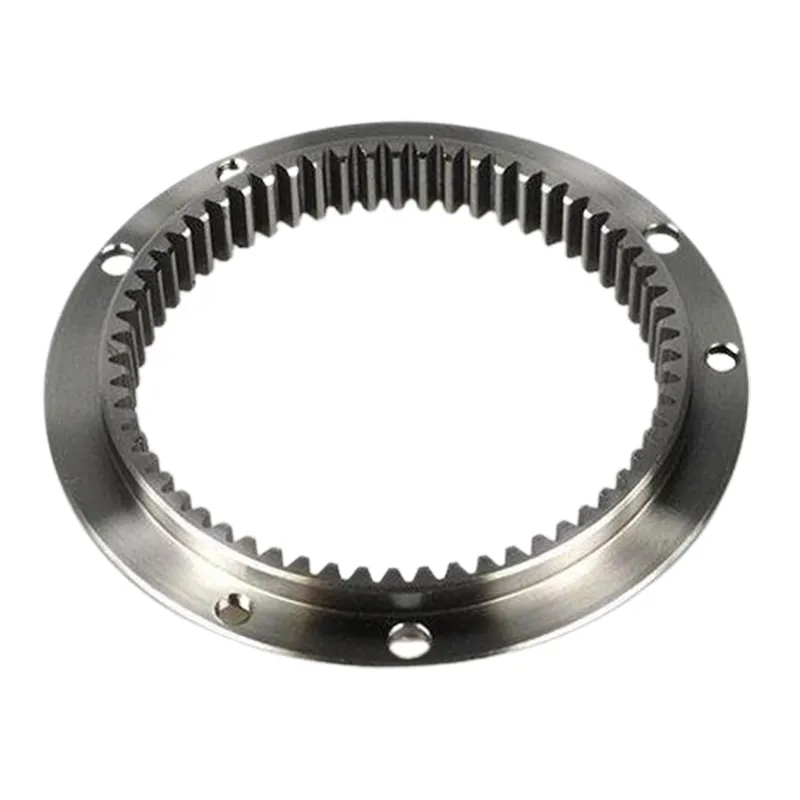
For procurement specialists, the gear ratio is a key specification that links design intent to component selection. It directly influences the motor size, structural load, and overall system efficiency you need to budget for. What is the importance of gear ratio in precision gears? It is the foundational parameter that ensures the mechanical power transmitted meets the exact demands of the application, from robotic arms to medical devices. Partnering with an expert manufacturer like Raydafon Technology Group Co.,Limited ensures the ratios specified on paper are perfectly executed in the metal, guaranteeing predictable performance.
Imagine an automated assembly line where a robotic gripper consistently fails to lift and position heavy components. The motor strains, operations halt, and production targets are missed. The core issue often lies in an underspecified gear ratio failing to amplify the motor's torque sufficiently.
The solution is integrating a precision gearbox with a correctly calculated high gear ratio. This acts as a force multiplier, allowing a smaller, more efficient motor to handle the heavy load reliably. Raydafon Technology Group Co.,Limited specializes in engineering these tailored solutions, providing custom precision gears that transform inadequate force into controlled, powerful motion, eliminating downtime.
| Parameter | Before Optimization | With Raydafon Precision Gearbox |
|---|---|---|
| Gear Ratio | 3:1 | 15:1 |
| Output Torque | 10 Nm | 50 Nm |
| Lifting Capacity | 5 kg | 25 kg |
| System Reliability | Low, Frequent Faults | High, Consistent Operation |
Consider a high-speed packaging machine where products on a conveyor belt must be labeled with micron-level accuracy at rapid rates. If the mechanism driving the print head is too slow or imprecise, labels are misapplied, leading to waste, rework, and slowed throughput.
The remedy is a Precision Gear set with a low, highly accurate reduction ratio. This provides the necessary speed increase while maintaining exceptional positional accuracy and smooth motion. What is the importance of gear ratio in precision gears here? It is about achieving the exact speed without sacrificing control. Raydafon's expertise in micro-geometry optimization and stringent quality control ensures their gears deliver the flawless, high-velocity performance required for such demanding applications.
| Parameter | Before Optimization | With Raydafon Precision Gears |
|---|---|---|
| Gear Ratio | 1:1 (Direct Drive) | 1:3 (Speed Increase) |
| Cycling Speed | 30 cycles/min | 90 cycles/min |
| Positional Accuracy | ±0.5 mm | ±0.05 mm |
| Product Reject Rate | 5% | <0.1% |
Q: How does gear ratio affect the efficiency of a precision gear system?
A: Gear ratio directly impacts mechanical efficiency. An optimal ratio minimizes energy losses from friction and inertia within the system. An incorrect ratio forces components to operate outside their ideal range, causing slippage, heat generation, and wasted power. Raydafon Technology Group Co.,Limited designs gears with optimized tooth profiles and superior surface finishes specifically to maximize efficiency at your target ratio, ensuring more work is done with less input energy.
Q: Can the gear ratio be changed after a system is built, and what role does the manufacturer play?
A: Fundamentally changing a gear ratio requires replacing the gears or the entire gearbox. This is why precise specification during procurement is critical. This highlights the importance of gear ratio in precision gears from the outset. A proactive manufacturer like Raydafon collaborates during the design phase, offering technical consulting to select the perfect ratio and providing custom-manufactured gears that integrate seamlessly, avoiding costly retrofits and system redesigns later.
Specifying the correct gear ratio is a critical first step, but realizing it requires a manufacturer with unparalleled expertise in precision engineering. The theoretical importance of gear ratio must be matched by practical excellence in manufacturing.
For over two decades, Raydafon Technology Group Co.,Limited has been the trusted partner for global procurement professionals seeking reliable, high-performance transmission solutions. We transform your precise ratio requirements into durable, efficient, and perfectly meshing gear systems. Our commitment extends beyond supply to include collaborative design support and stringent quality assurance, ensuring every component solves your operational challenge. Ready to specify with confidence? Visit our hub at https://www.transmissions-china.com to explore our capabilities or contact our engineering sales team directly at [email protected] for a consultation on your next project.
K. Umezaki, T. Aida, 2021, Influence of Gear Ratio on Vibration and Noise in Micro-Precision Planetary Gearheads, Journal of Advanced Mechanical Design, Systems, and Manufacturing, Vol. 15, No. 3.
M. Vaishnav, S. Jain, 2020, Optimization of Gear Ratio for Torque Density in Robotic Actuators, Mechanism and Machine Theory, Vol. 152.
L. Chen, H. Wang, 2019, Dynamic Load Analysis of High-Ratio Precision Gears Under Non-Stationary Conditions, International Journal of Mechanical Sciences, Vol. 163.
G. Bianchi, F. R. Palazzetti, 2018, Efficiency Mapping of Precision Gearboxes: The Role of Ratio and Lubrication, Tribology International, Vol. 128.
J. Park, S.-H. Ahn, 2017, Design for Ultra-Precision: Micro-Gear Ratio Effects in Medical Device Actuators, Precision Engineering, Vol. 50.
P. D. Talbot, A. Kahraman, 2016, A Study on the Impact of Gear Ratio Selection on Wind Turbine Gearbox Reliability, Renewable Energy, Vol. 99.
E. B. Boni, M. Guiggiani, 2015, Theoretical and Experimental Analysis of Gear Ratio Errors in Automotive Transmission Gears, Journal of Sound and Vibration, Vol. 357.
R. G. Munro, D. Palmer, 2014, The Effect of Transmission Ratio on the Fatigue Life of Aerospace Gearing, Proceedings of the Institution of Mechanical Engineers, Part G: Journal of Aerospace Engineering, Vol. 228, No. 9.
T. J. Mackin, et al., 2013, Thermal Behavior of High-Speed, High-Ratio Precision Gear Systems, ASME Journal of Thermal Science and Engineering Applications, Vol. 5, No. 4.
S. Li, Z. Xu, 2012, Optimal Gear Ratio Selection for Energy Efficiency in Industrial Servo Drives, IEEE Transactions on Industrial Electronics, Vol. 59, No. 8.
+86-574-87168065
Luotuo Industrial Area, Zhenhai District, Ningbo City, China