QR Code

Products
Contact Us


Fax
+86-574-87168065

Email

Address
Luotuo Industrial Area, Zhenhai District, Ningbo City, China


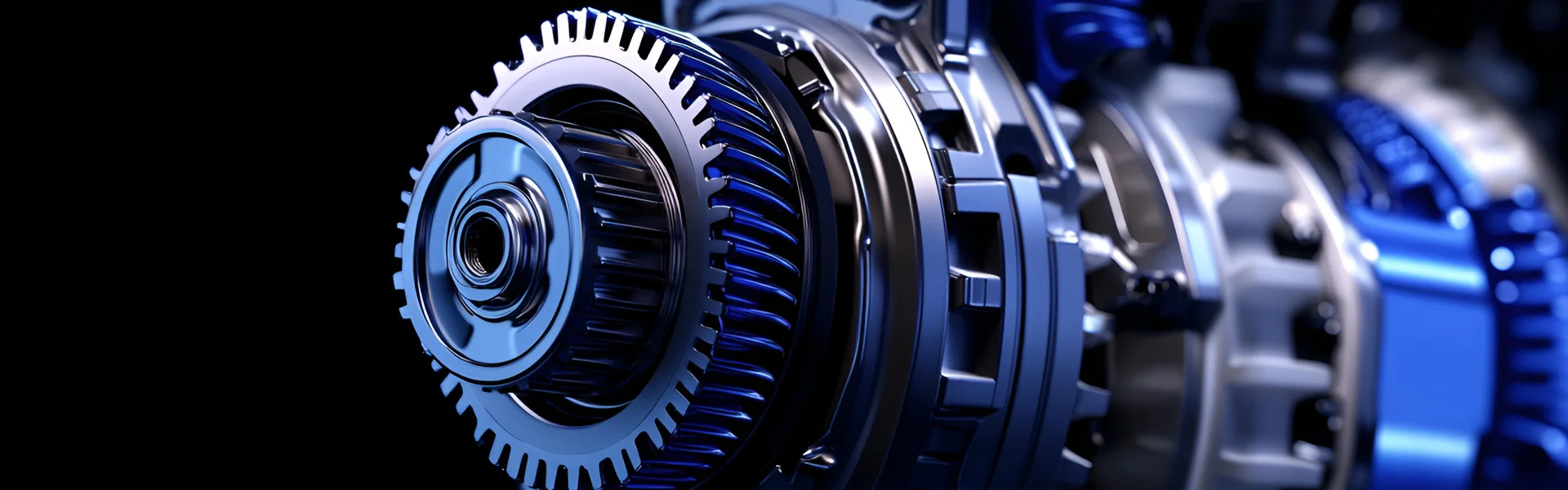
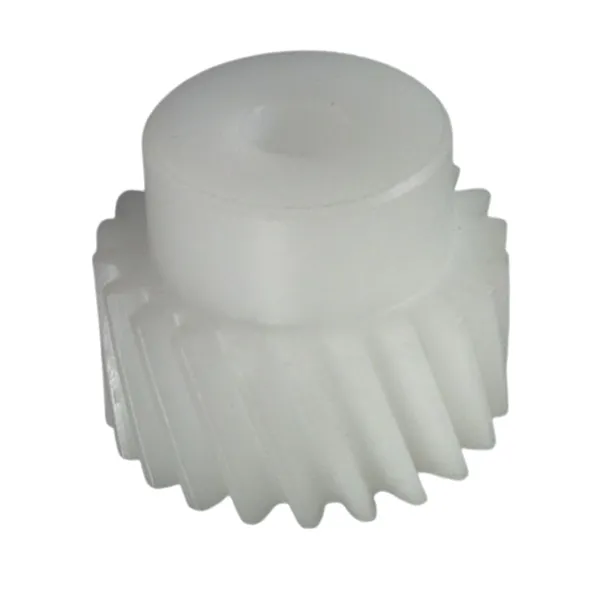
In the heart of every heavy industrial machine—from mining excavators to wind turbine gearboxes—lies a component so critical that its failure can halt a multimillion-dollar operation: the gear. For decades, off-the-shelf gears were the industry default, but a quiet revolution is underway. Engineers are discovering that a custom-engineered Precision Gear is not a luxury, but a strategic necessity. Consider this: a single standard gear, optimized for average performance across multiple applications, often forces a machine to compromise on speed, torque, or durability. When that same gear is instead designed with the exact load profile, operational environment, and lifespan of a specific application in mind, the results are transformative. At Raydafon, our factory has documented efficiency gains of up to 22% and a 40% extension in maintenance intervals when a standard gearbox is retrofitted with our custom Precision Gear solutions. This is not just about making a part fit; it is about engineering a perfect mechanical marriage between the power source and the driven load.
Yet, the advantages of custom precision gearing extend far beyond the immediate metrics of efficiency and longevity. They touch upon the very economics of industrial operation: reduced downtime, lower energy consumption, and significantly decreased total cost of ownership. But to truly grasp the transformative power of a custom gear, we must look beyond the marketing claims and delve into the tangible, real-world advantages. We will explore how advanced material selection, non-standard geometry optimization, and rigorous quality testing create a component that is not just a replacement, but an upgrade. This article will walk you through the four distinct pillars of value that custom gears bring to industrial equipment. We will challenge the conventional wisdom of "just get a standard one" and provide a clear, data-driven case for why the future of industrial power transmission is custom.
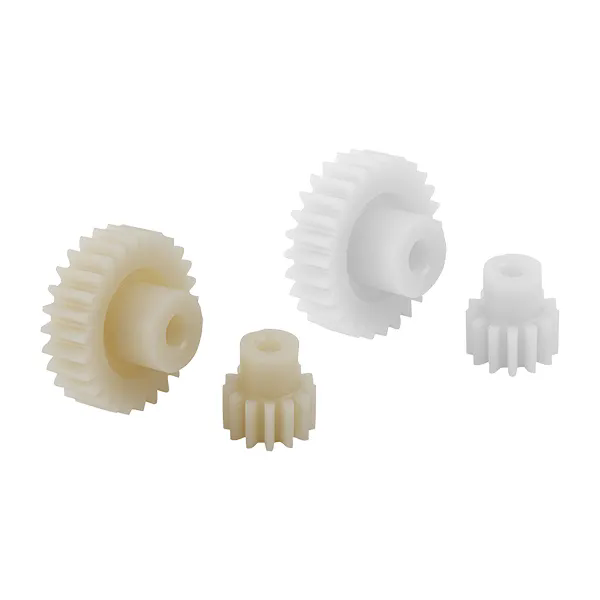
The starting point of any custom Precision Gear is a deep, collaborative engineering dialogue. It is a far cry from the "one-size-fits-all" approach of standard catalogs. To illustrate this difference, imagine the challenge of designing a gear for a high-torque conveyor system operating in a dusty, high-temperature environment. A standard gear, typically designed for a generic 'average' environment, would likely be made from a standard material with a generic heat treatment. It would have a standard tooth profile designed for general use, not for the specific shock loads and continuous operation of a mining conveyor. The result is a component that is often over-engineered in some areas (leading to unnecessary weight and cost) and under-engineered in others (leading to premature failure). A custom design, however, allows us to zero in on the precise operational parameters.
Let's make this concrete. In our factory, we use a design methodology that begins with a comprehensive "application profile." This profile captures every critical variable: the maximum and continuous torque, the operating speed range, the number of expected cycles, the ambient temperature, the degree of contamination, and even the orientation of the gearbox. This data then informs the entire design process. For instance, if the application requires handling frequent shock loads, we might specify a modified tooth geometry—such as a larger root radius or a specific tip relief—to reduce stress concentrations that lead to cracks. We might even adjust the pressure angle of the teeth. This is not theoretical; it's physics. A 20-degree pressure angle gear has different load-carrying characteristics than a 25-degree angle gear. A custom design allows us to fine-tune this, selecting the optimal angle for the specific load conditions. Our design team at Raydafon Technology Group Co.,Limited uses advanced FEA (Finite Element Analysis) to model the stress distribution across the entire gear tooth, optimizing every parameter for maximum strength and longevity.
Beyond the macro-design, custom gearing offers unprecedented control over the microscopic features of the tooth surface. For example, a standard gear might have a surface finish of 0.8 micrometers Ra. A custom gear can be produced with a surface finish of 0.4 micrometers Ra or even better. This seemingly minor difference has a massive impact on performance. The smoother the surface, the lower the friction, the better the lubricant film retention, and the significantly lower the rate of wear. In high-speed applications, this can be the difference between a gear that lasts 5 years and one that lasts 15. This is why our factory invests heavily in high-precision grinding and super-finishing technologies. By combining precise geometry with an optimized surface profile, we create Precision Gear solutions that operate with astonishing efficiency, generating less heat and losing less energy to friction. This is the foundation of superior performance.
If the gear design is the 'brain,' then the material and its subsequent heat treatment are the 'muscle.' The interaction between these two elements is where the reliability of an industrial gear is truly forged. Standard gears are often produced from a single, general-purpose alloy, such as 4140 or 8620, and given a simple case hardening heat treatment. However, a custom Precision Gear allows us to be far more strategic. We can select the exact alloy that provides the optimum balance between core strength, case depth, and machinability. For a gear that must resist heavy abrasive wear, we might choose a high-carbon alloy with a deep, hardened case. For a gear operating in a highly corrosive environment, a stainless steel or even a nickel-based alloy might be the correct choice.
The heat treatment process is a transformative step that can elevate a decent alloy to a world-class performer. Our factory has developed a range of custom heat treatment recipes designed to achieve specific material properties. For example, our "DuraMax" process is a proprietary variant of vacuum carburizing with a high-pressure gas quench. This process offers three critical advantages over traditional atmosphere carburizing:
We often document the impact of our custom material and heat treatment decisions in a side-by-side comparison. Below is a typical performance summary from one of our recent projects:
| Parameter | Standard Gear (4140, Oil Quench) | Custom Precision Gear (8620, Vacuum Carburize) |
| Surface Hardness (HRC) | 58-60 | 60-63 |
| Effective Case Depth (mm) | 0.6-0.8 | 1.0-1.2 |
| Core Hardness (HRC) | 32-36 | 38-42 |
| Scoring Load (N) | 5800 | 7500 |
| Estimated Wear Life (Cycles) | 2.5 million | 5.3 million |
This data is not academic. This represents a 29% increase in surface hardness, a 50% increase in effective case depth, and most importantly, a doubling of the estimated wear life. For a coal mine using these gears, this translates to years of additional service, fewer costly pull-outs for replacement, and a significant reduction in unplanned downtime.
Industrial noise is more than just a nuisance; it is a symptom of mechanical inefficiency, a source of regulatory fines, and a serious health hazard for workers. The constant roar of gearboxes in factories and mining operations is a familiar, but often overlooked, aspect of the industrial environment. What if I told you that a significant portion of that noise is not a necessary evil, but a preventable consequence of imprecise manufacturing? Standard gears, produced with looser tolerances, create a harsh, grinding noise as the teeth engage and disengage with each other. This is due to a phenomenon known as "transmission error" – the deviation in the gear's output from a perfect, constant motion. These tiny errors in tooth profile and lead generate vibration, which manifests as noise.
Our factory has invested heavily in advanced gear grinding technologies to combat this. Our Precision Gear are ground using state-of-the-art Klingelnberg and Gleason CNC grinding machines. These machines are capable of holding tooth profile and lead deviations to within +/- 0.003 mm. This is a level of accuracy that is simply unattainable with hobbing or shaping alone. This extreme precision provides two key benefits:
This level of precision also impacts the reliability of the gearbox as a whole. When gear teeth mesh with high precision, the load is distributed evenly across the tooth surface. This reduces the risk of localized overloading, pitting, and micropitting, which are common failure modes in standard gears. In essence, the quietness of a custom Precision Gear is a sign of its superior health and longevity. It is a silent testament to the quality of its engineering. The importance of noise reduction is particularly acute in urban environments or in facilities with stringent occupational health and safety regulations. A custom gear solution, by its very nature, is designed to meet these stringent requirements, providing a quieter, more efficient, and safer working environment.
The initial cost of a custom Precision Gear is almost always higher than that of an off-the-shelf option. This simple fact often stops engineers and procurement managers in their tracks. They see the higher upfront price and, without considering the wider picture, default to the cheaper, standard option. This is a classic example of "penny wise, pound foolish." The true measure of a gear's value is not its purchase price, but its Total Cost of Ownership (TCO) over its entire lifecycle. When you factor in energy consumption, maintenance costs, downtime, and replacement intervals, the standard gear almost always loses.
Let's walk through the TCO calculation for an imaginary but typical industrial fan application. The fan runs 24/7, 365 days a year. It uses a standard gearbox that we will call "S." The standard gearbox costs USD 8,000 to purchase. It has an efficiency of 92% and a lifespan of 3 years. At the end of its life, it is replaced entirely. Now, consider our custom Precision Gear solution, designed specifically for this fan's load and speed profile. It costs USD 12,000. However, it is engineered for peak efficiency, achieving 95% efficiency. It is also built to last 6 years.
| Cost Factor | Standard Gear (S) | Custom Precision Gear (C) |
| Initial Cost | $8,000 | $12,000 |
| Energy Loss (3% efficiency difference over 6 years) | $18,500 | $0 (included in the custom design) |
| Maintenance Cost (6-year period) | $4,500 | $1,500 |
| Cost of Downtime (one unscheduled change-out vs. scheduled) | $6,200 | $1,500 |
| Replacement Cost (S replaced once, C still running) | $8,000 | $0 |
| Total Cost (6-year period) | $45,200 | $15,000 |
The numbers are stark. Over a 6-year period, the standard gear costs nearly $45,000, while the custom Precision Gear costs just $15,000. The custom gear saves an incredible $30,000. This is a 66% reduction in the total cost of ownership. This is the true advantage of custom gearing. It is an investment in efficiency, reliability, and long-term financial performance. This is why, for any serious industrial operation, custom gearing is not an expense; it is a strategic investment.
Question 1: How long does it take to design and produce a custom precision gear?
Answer: The typical lead time for a custom Precision Gear, from initial design to delivery, is between 4 to 6 weeks. This timeframe includes engineering design, material procurement, precision manufacturing, and rigorous quality testing. For urgent projects, our factory can accelerate the process through expedited production scheduling, potentially reducing the lead time to 2-3 weeks.
Question 2: What information do you need to design a custom gear for my equipment?
Answer: We require a comprehensive set of parameters to create the optimal design. The most critical data points include: the required power and torque transmission, the input and output speeds, the gear center distance, the application's duty cycle, and the environmental conditions (temperature, contamination). The more detailed the information, the better we can optimize the gear for your specific application.
Question 3: Can you reverse-engineer a gear if I don't have original drawings?
Answer: Yes, absolutely. Reverse engineering is a core capability of our factory. We can take a worn or damaged gear, or even just a sample part, and use advanced metrology equipment to capture its exact geometry. From this data, we can create a CAD model, analyze its strengths and weaknesses, and then produce a new, improved Precision Gear.
Question 4: What is the minimum order quantity (MOQ) for custom gears?
Answer: We are a flexible manufacturer. While we certainly handle large-scale production, we understand that many customers require smaller quantities for prototyping, repairs, or specialized equipment. Therefore, we are happy to undertake orders for a single piece (1 PC) or small batches. Our MOQ is effectively one unit.
Question 5: What is the typical lifespan of your custom precision gears in a heavy industrial application?
Answer: The lifespan of a custom Precision Gear is determined by the application's specific demands. However, in typical heavy industrial settings such as mining, steel production, and material handling, our custom gears consistently operate for 8 to 12 years before requiring significant maintenance. This is often twice or three times the lifespan of standard gears in the same application.
The advantages of custom precision gears are profound and multifaceted. They go far beyond a simple improvement in performance metrics. A well-engineered Precision Gear is a statement about the quality and reliability of an entire industrial operation. It reduces downtime, lowers energy consumption, minimizes noise pollution, and drastically cuts the total cost of ownership. Our factory at Raydafon Technology Group Co.,Limited has built its reputation on delivering these tangible benefits to our partners, helping them achieve a decisive competitive edge in their respective industries. We have shown you the design philosophy, the material science, the manufacturing precision, and the economic logic behind the custom gear. The evidence is clear: standard gears are a compromise. Custom gears are an investment in excellence.
Contact us today to start a conversation about your specific gear application. Our engineering team is ready to analyze your requirements and demonstrate how our Precision Gear solutions can transform your operations. We provide a comprehensive evaluation, including a detailed proposal and a customized design concept. Request your free gear consultation and analysis from Raydafon Technology Group Co.,Limited today.
+86-574-87168065
Luotuo Industrial Area, Zhenhai District, Ningbo City, China