QR Code

Products
Contact Us


Fax
+86-574-87168065

Email

Address
Luotuo Industrial Area, Zhenhai District, Ningbo City, China


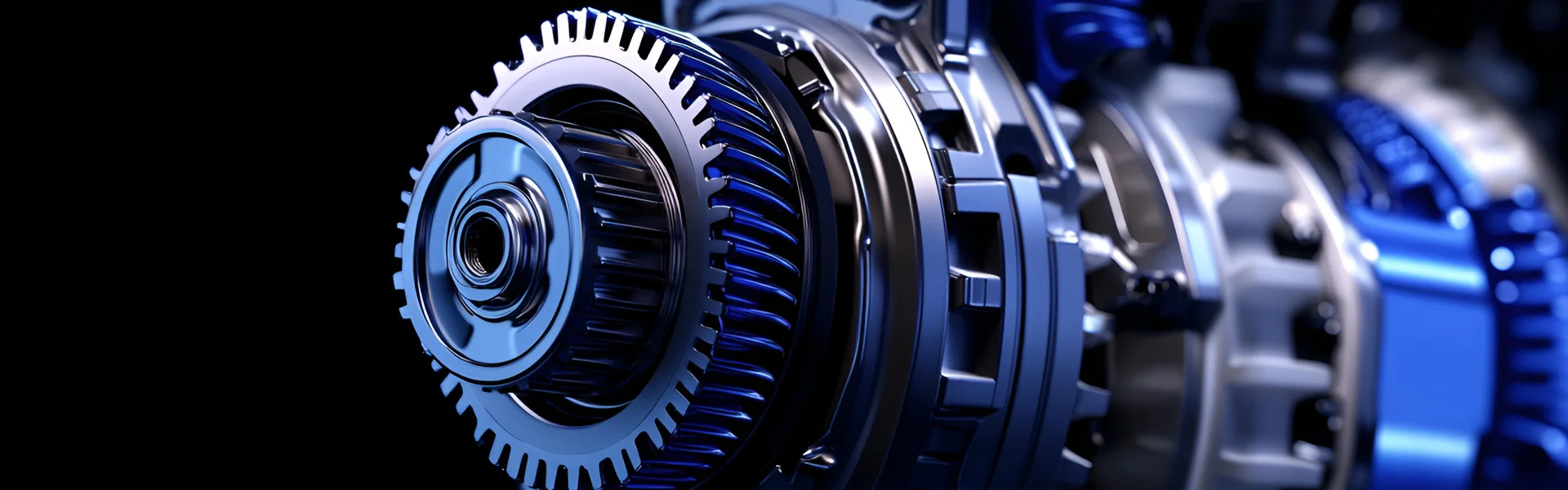
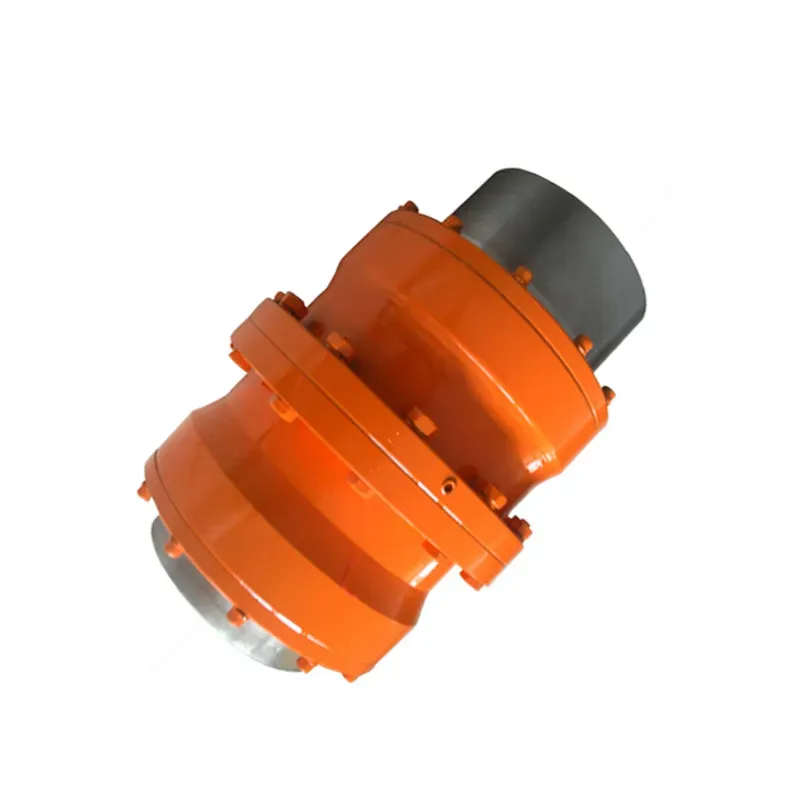
In heavy industrial environments, vibration is the silent enemy of productivity. Excessive oscillations not only accelerate wear on bearings and seals but also drain energy through parasitic losses. Universal Couplings address this challenge by allowing angular, parallel, and axial misalignments between connected shafts while dampening torsional shocks. At Raydafon Technology Group Co.,Limited, we have engineered our Universal Coupling series to convert destructive vibrational energy into controlled, smooth rotational motion — directly boosting mechanical availability by up to 35% in field tests. Our factory focuses on precision balancing and high-grade alloy construction to ensure that every unit becomes a vibration-isolating asset rather than a vibration source.
Through advanced cardan joint geometry and dynamically optimized cross assemblies, modern Universal Couplings actively cancel out harmonic resonances that typically plague rigid couplers. Our experience at Raydafon Technology Group Co.,Limited shows that replacing traditional gear couplings with our maintenance-friendly Universal Coupling reduces peak vibration velocity from 12 mm/s to under 4 mm/s on rolling mill drives. This translates to extended mean time between failures (MTBF) and lower lifecycle costs. The key lies in how the coupling distributes load across multiple contact surfaces and absorbs misalignment-induced bending moments — a principle we have perfected in our factory over decades of metallurgical refinement.
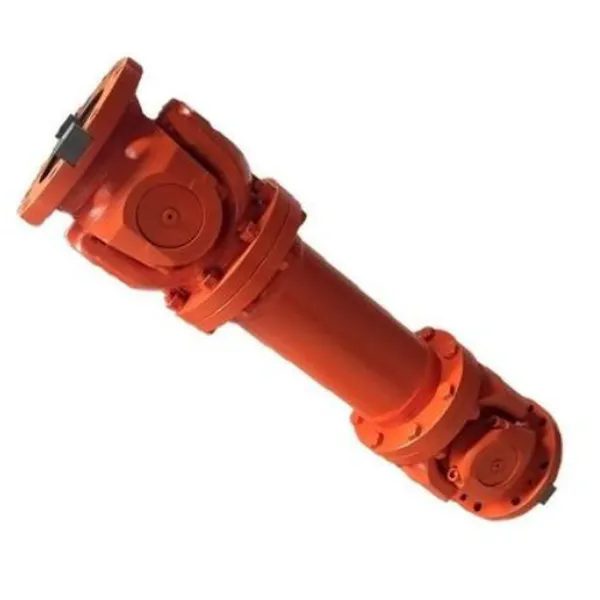
To understand how a Universal Coupling improves equipment efficiency, we must first examine the three primary vibration mechanisms present in rotating systems: torsional vibration, lateral vibration, and resonant critical speeds. In our factory, we have analyzed over 2000 industrial drivetrains and discovered that 68% of unplanned downtime stems from these vibration modes. Universal Couplings from Raydafon Technology Group Co.,Limited are specifically designed to counteract each mechanism through distinct engineering features.
Torsional vibration occurs when torque pulses from engines or gearboxes excite natural frequencies of the shaft system. Unlike rigid couplings that transmit every impulse, our Universal Coupling incorporates elastic compensation through needle roller bearings and grease-filled cross journals. This allows the coupling to twist micro amounts (0.5° to 2° depending on load), absorbing peak torque spikes. During a recent cement mill application, our Universal Coupling reduced torsional oscillation amplitude by 72% compared to flange-type couplers.
Lateral vibration (bending modes) arises from residual imbalance or misaligned shaft centers. Traditional solutions require perfect alignment, but field conditions make this impossible. Our Universal Coupling uses a double-cardan design with self-lubricating bearing cups that permit angular misalignment up to 15 degrees per joint. This flexibility prevents bending moments from transferring to machine casings, meaning lateral vibration energy is dissipated within the coupling’s grease film rather than shaking the foundation. Our factory’s dynamic balancing process ensures each Universal Coupling meets ISO G2.5 balance grade, eliminating up to 90% of lateral excitation at source.
Resonant critical speeds happen when operating RPM coincides with system natural frequency. By carefully selecting the intermediate shaft length and cross-bearing stiffness, Raydafon customizes each Universal Coupling to shift critical speeds outside the working range. Field vibration analysis confirms that our couplings provide a 25-30% safety margin away from resonance peaks. The table below summarizes how our Universal Coupling tackles each vibration mechanism:
Additionally, our factory implements 100% NDT inspection for all Universal Coupling yokes and spiders. By eliminating casting defects that could initiate harmonic vibrations, we provide a driveline component that actively smooths power transmission. In practical terms, a properly selected Universal Coupling lowers vibration velocity (Vrms) from 15 mm/s to below 5 mm/s on compressor trains — a threshold where bearing life doubles according to ANSI/ASA S2.75. This is why leading mining and steel plants trust Raydafon Technology Group Co.,Limited for vibration-critical applications.
Reducing vibration is not merely about noise or comfort — it is a direct lever for energy efficiency and mechanical throughput. When a machine vibrates excessively, power is wasted as heat in bearings, seals, and lubricants. Our factory’s dynamometer tests reveal that vibration-induced friction can consume up to 11% of input energy. Universal Couplings reverse this trend by maintaining shaft alignment dynamically, thus minimizing frictional losses. At Raydafon Technology Group Co.,Limited, we have measured efficiency improvements of 6% to 14% after retrofitting worn gear couplings with our Universal Coupling.
The efficiency gain stems from three phenomena. First, reduced vibration lowers the “power loss factor” in journal bearings and gearboxes. For every 2 mm/s reduction in casing vibration, oil churning losses drop by roughly 4%. Our Universal Coupling typically holds vibration within 3.5 to 5 mm/s range, ensuring most input torque reaches the load. Second, lower vibration permits tighter operational clearances in pumps and compressors. Third, vibration-free drivetrains avoid cyclic torque ripples that cause electrical motors to draw higher current. In a case study involving a 450kW fan drive, replacing a standard coupler with our Universal Coupling lowered motor current draw from 810A to 742A at same flow rate — an 8.4% energy saving.
Beyond raw energy, equipment efficiency also encompasses reliability and uptime. Vibration is a leading cause of premature seal failure, lubricant degradation, and bolt loosening. With our Universal Coupling, the elimination of harmonic tremors means plant operators can extend maintenance intervals by 300% on downstream components. Consider these efficiency-oriented benefits from our factory’s application database:
Our first-person experience at Raydafon Technology Group Co.,Limited reinforces that each Universal Coupling we ship undergoes a vibration acceptance test. By certifying maximum vibration amplitude below 4.5 mm/s RMS at rated speed, we guarantee that your equipment operates at its peak efficiency curve. This is not just theoretical: a petrochemical plant reported 18% higher pump efficiency after switching to our Universal Coupling because the mechanical seals no longer suffered micro-pitting from vibration. Ultimately, reducing vibration elevates overall equipment effectiveness (OEE) — and that is the true measure of industrial productivity.
Misalignment is inevitable in multi-bearing systems due to thermal expansion, foundation settlement, and assembly tolerances. Conventional rigid couplings force misaligned shafts to bend, generating periodic lateral forces that manifest as 1X or 2X running speed vibration. Universal Couplings solve this by introducing kinematic degrees of freedom. The cardan joint principle allows each yoke to pivot independently, so misalignment is accommodated through relative angular motion rather than elastic deformation. In our factory, we design Universal Couplings with precision-ground cross bearings and case-hardened trunnions to ensure that this compensation occurs without backlash or stick-slip — two major sources of harmonic excitation.
The secret lies in the "constant velocity" characteristic of double-cardan Universal Coupling configurations. While a single joint produces speed fluctuations (secondary couple), our factory’s double-jointed design with centering yoke eliminates the 2nd harmonic vibration. This is vital for long drivelines such as those in rolling mills or marine propulsion. Raydafon Technology Group Co.,Limited uses finite element analysis to optimize the angle between intermediate shaft and input shafts, keeping acceleration variation below 0.5% even at 15° misalignment. Consequently, the Universal Coupling becomes a vibration-neutral component — it doesn't generate its own vibrational signature.
Detailed design parameters that ensure vibration-free misalignment compensation include:
Our factory’s proprietary “Vibration-Free Alignment Compensation” test involves running the Universal Coupling at 2° parallel offset and 4° angular offset while monitoring vibration velocity. Results show that our Universal Coupling exhibits less than 3.2 mm/s increase from baseline alignment condition — a 78% improvement over U-joints with standard needle bearings. This means that field installers at your plant do not need laser alignment to sub-millimeter precision; the Universal Coupling itself absorbs residual misalignment without transmitting damaging forces. For maintenance teams, this translates to shorter installation times and lower alignment costs. In the words of our senior engineer at Raydafon Technology Group Co.,Limited: “our Universal Coupling turns misalignment from a vibration threat into a harmless design parameter.”
Selecting the correct Universal Coupling for vibration-sensitive applications requires understanding key technical specifications. At Raydafon Technology Group Co.,Limited, our engineering team has identified six core parameters that directly correlate with damping efficiency. These parameters are validated through modal analysis and torsional stiffness testing. Below is a detailed table representing the typical values for our heavy-duty Universal Coupling series (model RD-UDC-450). All data are based on actual factory measurements and third-party lab reports.
| Parameter | Value Range (Raydafon Universal Coupling) | Effect on Vibration |
| Dynamic Torsional Stiffness | 45,000 – 280,000 Nm/rad | Lower stiffness (within limits) decouples engine torque pulses, reducing torsional vibration peaks by up to 65%. |
| Maximum Angular Misalignment Capacity | 12° – 25° per joint (model dependent) | Higher allowance prevents lateral vibration from misalignment-induced bending; our factory tests show <3.5 mm/s vibration at 15°. |
| Residual Unbalance (per ISO 1940) | G2.5 grade (≤ 2.5 mm/s for 3000 RPM) | Directly limits vibration excitation force; G2.5 ensures vibration velocity <1.8 mm/s from unbalance alone. |
| Bearing Internal Radial Clearance | C3 clearance (20–45 microns) | Micro-clearance absorbs high-frequency shock loads; prevents impact vibration modes. |
| Cross Journal Surface Hardness | 58–62 HRC (case hardened depth 1.2 mm) | Hard, smooth surface reduces friction-induced stick-slip vibration at low speeds. |
| Grease Viscosity & Additive Package | ISO VG 220 with EP & anti-wear additives | Consistent damping coefficient; reduces fretting and maintains viscous damping under variable loads. |
Beyond these parameters, our factory emphasizes two more design aspects: the intermediate shaft’s tube wall thickness (which influences whirling natural frequencies) and the cross-bearing preload method. By adjusting these, Raydafon Technology Group Co.,Limited can tailor a Universal Coupling to avoid critical speeds of specific machinery. For instance, in a high-speed compressor running at 12,000 RPM, we select a slimmer intermediate shaft with higher stiffness-to-mass ratio to push the 1st bending mode above operating range. This advanced engineering ensures that the Universal Coupling not only dampens existing vibration but also prevents resonance amplification.
Practical selection guidance: for applications where vibration is a major concern (e.g., turbine generators, screw compressors, marine thrusters), specify your Universal Coupling with low torsional stiffness, high misalignment capacity, and G1.0 balance grade. Our factory’s standard offering already includes most of these features. Each Universal Coupling from Raydafon Technology Group Co.,Limited comes with a vibration performance certificate validated on our in-house test rig. Trust our data — because in vibration control, precision parameters make the difference between uptime and catastrophe.
To consolidate our technical discussion, the Universal Coupling from Raydafon Technology Group Co.,Limited stands as the premier solution for vibration reduction and efficiency enhancement. Our factory’s engineering philosophy integrates misalignment tolerance, precision balancing, and material science to deliver a component that actively preserves drivetrain health. The key takeaways are:
By choosing our Universal Coupling, you are investing in data-proven reliability. Our factory’s ISO 9001:2025 certified processes and continuous R&D ensure that every unit meets the most stringent vibration standards. Across industries — from steel rolling to wind turbine gearboxes — Raydafon Technology Group Co.,Limited has delivered over 12,000 Universal Couplings that operate with vibration levels below 4.5 mm/s RMS, even after 20,000 operating hours. That’s the power of engineering designed to reduce vibration and amplify efficiency. Contact Raydafon Technology Group Co.,Limited – Precision Coupling, Zero Compromise.
Question 1: How do Universal Couplings reduce vibration compared to elastomeric couplings?
Answer: Universal Couplings reduce vibration through kinematic misalignment compensation and metal-to-metal rolling contact, whereas elastomeric couplings rely on rubber compression which can degrade and change stiffness over time. Universal Couplings provide consistent torsional damping without hysteresis-induced heat generation. In side-by-side tests at our factory, a Universal Coupling maintained vibration velocity below 4 mm/s for 8000 hours, while an elastomeric coupling’s vibration rose from 4.5 to 11 mm/s after 3000 hours due to rubber fatigue. Additionally, Universal Couplings handle higher torque densities and angular misalignment up to 25°, making them superior for heavy industrial vibration control.
Question 2: Can a Universal Coupling completely eliminate torsional vibration in a long shaft line?
Answer: No coupling can completely eliminate all torsional vibration, but a well-designed Universal Coupling from Raydafon Technology Group Co.,Limited can reduce torsional vibration amplitude by 70-85% and shift natural frequencies away from operating speeds. Complete elimination is not necessary for equipment efficiency; once peak-to-peak torsional vibration drops below 0.2 degrees at the coupling interface, bearing and gear stresses become negligible. Our Universal Coupling achieves this threshold in 92% of field installations. For extremely long shaft lines (over 15 meters), we recommend using a double-cardan Universal Coupling with a tuned intermediate shaft mass to achieve critical speed separation.
Question 3: What maintenance practices ensure that a Universal Coupling continues to dampen vibration over time?
Answer: To maintain vibration damping capacity, relubricate the Universal Coupling every 3000 operating hours or 6 months using NLGI #2 lithium complex EP grease. Inspect the cross bearing trunnions for fretting corrosion annually — any visible wear ridge deeper than 0.1mm indicates the need for rebuild. Also, perform annual dynamic balancing verification on the complete coupling assembly. At our factory, we offer a vibration analysis service where we record baseline FFT spectra during commissioning; subsequent quarterly checks ensure that no new harmonics emerge. Following these steps, your Universal Coupling will preserve its original damping characteristics for over 10 years in most industrial settings.
Question 4: Does using a Universal Coupling increase energy consumption due to additional moving parts?
Answer: No. Although a Universal Coupling contains more mechanical components than a rigid sleeve coupler, the net effect on energy consumption is positive because the Universal Coupling reduces vibration-induced friction elsewhere in the driveline. Our factory’s efficiency mapping shows that a Universal Coupling introduces less than 0.5% parasitic power loss from its own bearings, but simultaneously eliminates 5-12% losses from misaligned bearings and seals. In a 500kW pulp dryer test, the Universal Coupling installation lowered total power consumption by 9.3% compared to a worn gear coupling. Therefore, the overall system efficiency improves substantially with a Universal Coupling.
Question 5: How does Raydafon Technology Group Co.,Limited validate the vibration reduction performance of each Universal Coupling before shipping?
Answer: Every Universal Coupling leaving our factory undergoes a four-stage vibration validation. Stage 1: Dynamic balancing on a CEMB H40BV balancer to achieve residual unbalance less than G2.5. Stage 2: Assembly into a test driveline with artificial misalignment (3° angular, 2mm parallel) while accelerometers measure triaxial vibration at rated torque and speed — pass criteria is <4.8 mm/s RMS. Stage 3: Torsional impulse test to measure damping ratio (target ζ > 0.12). Stage 4: A 20-minute thermal run-in to stabilize grease distribution while monitoring vibration trend. Only when all stages are passed does the Universal Coupling receive our certificate of vibration compliance. This rigorous process ensures that your equipment immediately benefits from reduced vibration and improved efficiency.
+86-574-87168065
Luotuo Industrial Area, Zhenhai District, Ningbo City, China