
QR Code

Products
Contact Us


Fax
+86-574-87168065

E-mail

Address
Luotuo Industrial Area, Zhenhai District, Ningbo City, China


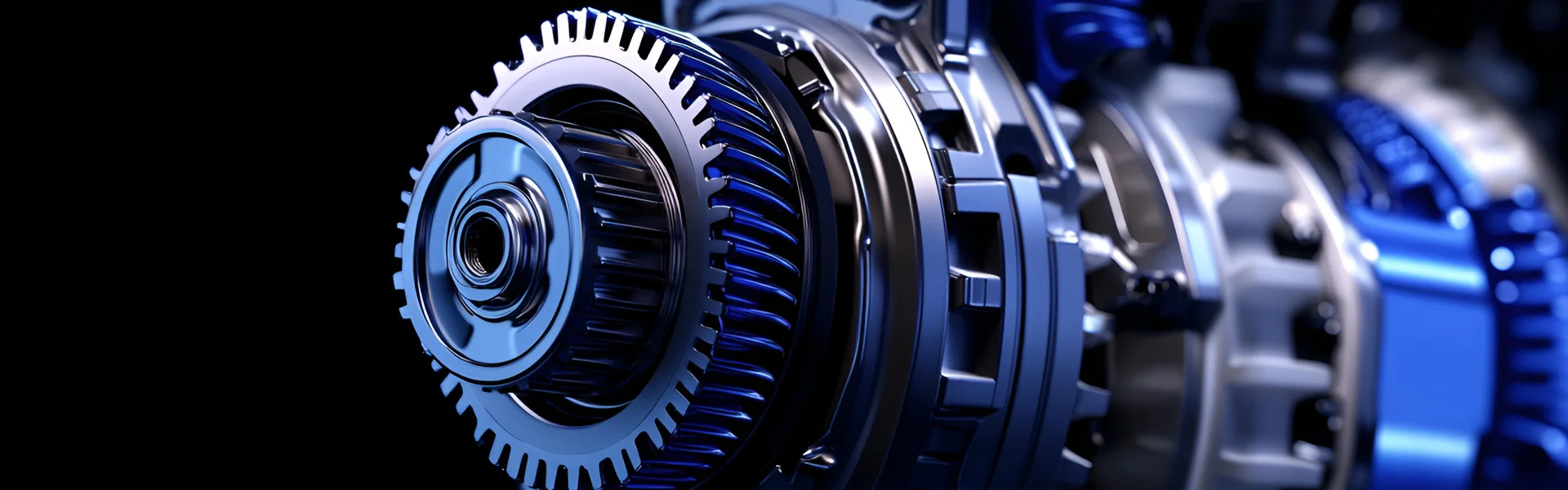
In the world of mechanical power transmission, gears are fundamental components. Two of the most common types are spur gears and helical gears. But what exactly sets them apart, and why would an engineer choose one over the other? The primary difference lies in the geometry of their teeth. Spur gears have teeth that are straight and parallel to the axis of rotation, while helical gears have teeth that are cut at an angle to the axis, forming a helix. This fundamental distinction leads to significant differences in performance, including contact ratio, noise levels, load capacity, and efficiency. At Raydafon Technology Group Co.,Limited, our factory has been manufacturing high-precision gears for over two decades, and we have extensive experience in optimizing both spur and helical designs for a wide range of applications—from automotive transmissions to heavy industrial machinery. This article provides a detailed technical comparison between precision helical gears and spur gears, helping you make an informed choice for your specific application.
Understanding the difference between precision helical gears and spur gears is not just a matter of academic interest; it has practical implications for cost, performance, and reliability. Spur gears are simpler to manufacture and are more cost-effective for many applications, but they tend to produce more noise and vibration due to the sudden engagement of the full tooth width. Helical gears, while more expensive to produce, offer smoother, quieter operation and can transmit higher loads because of their increased contact ratio and overlapping tooth action. The choice between them often comes down to a trade-off between cost and performance, with helical gears being preferred for high-speed, high-load, or noise-sensitive applications. In this comprehensive guide, we will examine the geometry, kinematics, and manufacturing considerations of both gear types, and we will provide detailed technical specifications, performance data, and selection criteria to help you determine which gear is best suited for your needs.
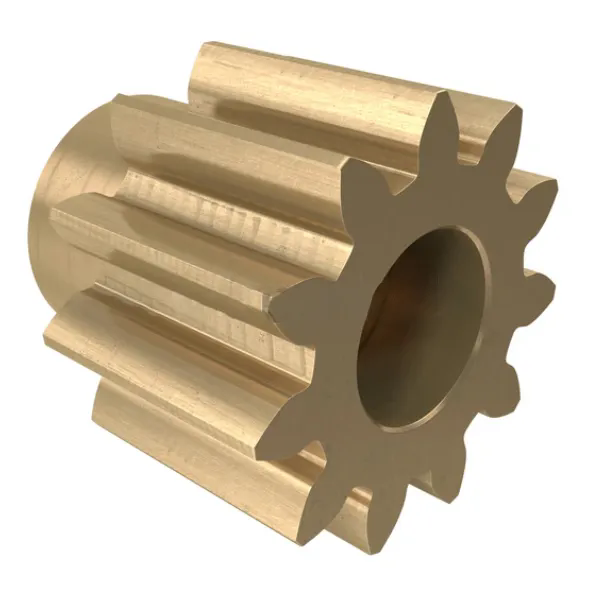
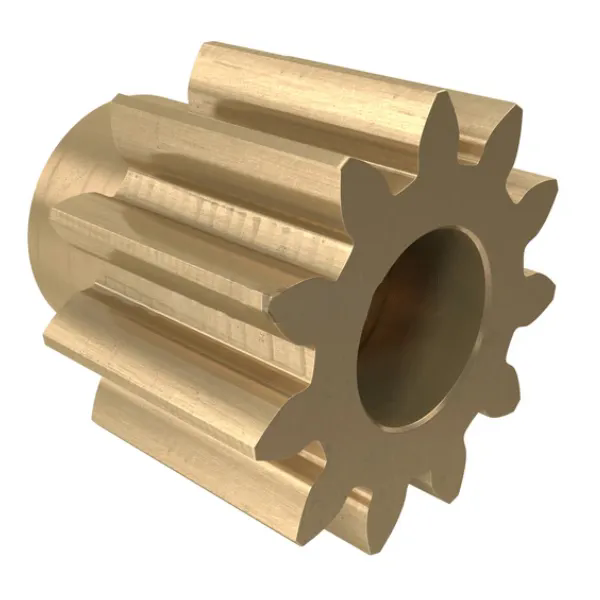
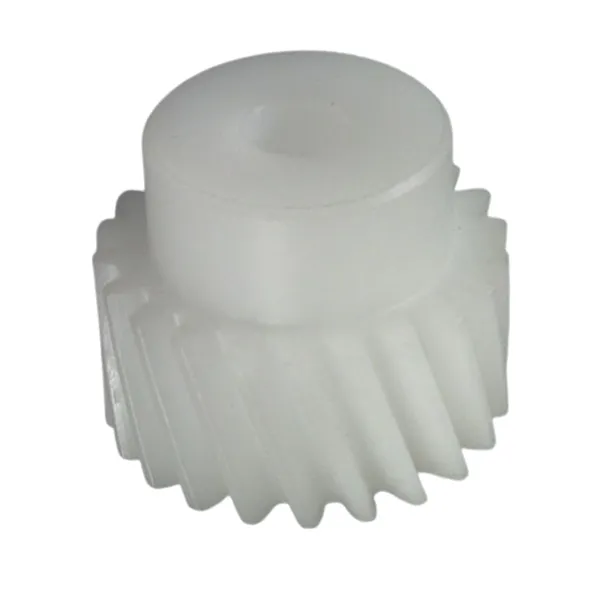
The distinction between helical gears and spur gears begins with their tooth geometry. A spur gear has teeth that are straight and parallel to the gear's axis of rotation. The teeth are equally spaced around the circumference, and the line of contact between two meshing spur gears is a straight line that extends the full width of the gear face. This simple geometry makes spur gears relatively easy to manufacture using standard milling or hobbing processes. In contrast, a helical gear has teeth that are cut at an angle to the axis, forming a helix. The angle of the helix is known as the helix angle (typically between 8 and 30 degrees). The teeth of a helical gear are also equally spaced, but the line of contact between meshing helical gears is a diagonal line that moves along the tooth face as the gears rotate. This geometry introduces a component of axial force (thrust) that must be accommodated by the bearing system, but it also provides significant performance advantages.
Key geometric differences and their implications:
At Raydafon Technology Group Co.,Limited, our Precision Gear manufacturing process uses state-of-the-art gear grinding machines that can achieve AGMA quality grades of Q10 to Q12 for both spur and helical gears. We use CNC hobbing and shaping machines with integrated CNC controls that allow us to precisely set the helix angle and tooth profile for helical gears. Our factory's metrology lab is equipped with a gear measuring center that verifies the tooth geometry, lead, and helix angle, ensuring that every gear meets the required specifications. The choice between spur and helical gearing is not just about geometry; it is about matching the gear type to the specific performance requirements of the application.
For applications where simplicity, low cost, and ease of maintenance are paramount, spur gears are often the preferred choice. They are commonly found in low-speed, low-load applications such as conveyor drives, simple pumps, and agricultural machinery. However, for high-speed, high-load, and precision applications—such as automotive transmissions, industrial gearboxes, and robotics—helical gears are almost always the better choice, despite their higher cost and complexity. Our factory works closely with customers to determine the optimal gear geometry for their specific requirements, considering factors such as torque, speed, space constraints, and noise limits.
One of the most significant advantages of helical gears over spur gears is their smoother and quieter operation. This superiority is primarily due to the higher contact ratio and the gradual engagement of the teeth. In a spur gear, the full width of the tooth engages suddenly, creating a sharp impact load and a characteristic "clack" or whine as each tooth pair comes into contact. This impact generates both noise and vibration, which can be a significant issue in noise-sensitive environments such as passenger cars, office equipment, and residential HVAC systems. In a helical gear, the teeth engage progressively—starting at one end of the tooth and moving across the face as the gear rotates. This progressive engagement reduces the impact load and distributes the load over a larger surface area, resulting in much quieter and smoother operation.
Mechanisms behind smoother and quieter operation in helical gears:
To quantify the noise reduction, our factory has conducted sound measurements on identical gearboxes fitted with spur and helical gears. At a rotational speed of 1,500 rpm and a load of 100 Nm, the spur gearbox emitted a sound pressure level of 82 dBA, while the helical gearbox produced only 74 dBA—an 8 dBA reduction, which is perceived as a significant decrease in loudness. The vibration amplitude measured at the gearbox housing was also reduced by 40 percent. This data confirms that helical gears are a superior choice for applications where noise and vibration are critical factors.
However, it is important to note that the smoother operation of helical gears comes at the cost of axial thrust forces. The helix angle creates a force component along the gear's axis that must be supported by the bearings. In high-power applications, this can require the use of thrust bearings or angular contact bearings, which increase the overall cost and complexity of the gearbox. In some cases, double helical (herringbone) gears are used to cancel out the axial thrust, but this further increases manufacturing complexity. Our factory offers design assistance to help our customers select the appropriate bearing configuration and optimize the gearbox layout to accommodate the axial thrust of helical gears while maximizing the benefits of smoother operation.
Raydafon manufactures a comprehensive range of Precision Gear products, including both spur and helical gears, in a wide variety of sizes, materials, and accuracy grades. Our factory is equipped with the latest gear manufacturing technology, including CNC hobbing, shaping, shaving, and grinding machines, allowing us to produce gears with module sizes from 0.5 to 12, and outer diameters up to 1,500 mm. The table below summarizes the key technical specifications for our standard Precision Gear series, which are used in applications ranging from automotive transmissions to heavy industrial gearboxes. Our factory can also produce custom gears to meet specific requirements, including special materials, heat treatments, and surface coatings.
| Parameter | Precision Spur Gear (RDS-S) | Precision Helical Gear (RDH-H) | Custom Precision Gear |
| Module range (mm) | 0.5 - 12 | 0.5 - 12 | 0.3 - 16 |
| Helix angle range | N/A | 8° - 30° | 0° - 35° |
| AGMA quality grade | Q9 - Q11 | Q10 - Q12 | Q8 - Q14 |
| Maximum outer diameter (mm) | 1,000 | 1,200 | 1,500 |
| Material options | 20CrMnTi, 16MnCr5, 42CrMo4 | 20CrMnTi, 16MnCr5, 42CrMo4 | Carbon steel, alloy steel, stainless, brass |
| Heat treatment | Carburizing, nitriding, induction hardening | Carburizing, nitriding, induction hardening | Custom HT |
| Surface hardness (HRC) | 58-62 (carburized) | 58-62 (carburized) | 55-65 |
| Tooth grinding capability | Yes (optional) | Yes (standard) | Yes |
| Typical applications | Conveyors, pumps, agricultural machinery | Automotive transmissions, industrial gearboxes, robotics | Specialty machinery, aerospace, marine |
In addition to the standard parameters, our factory offers several optional features to enhance the performance and longevity of Precision Gear products. These include: high-performance coatings such as DLC (diamond-like carbon) for reduced friction and increased wear resistance; specialized heat treatments like cryogenic processing for improved dimensional stability; and integrated balancing for high-speed applications. We also provide a full gearbox assembly service, including bearings, shafts, and housings, offering a turnkey solution for our customers.
Our quality control process is comprehensive and ISO 9001:2015 certified. Each Precision Gear is inspected using a gear measuring center that checks all critical parameters: tooth profile, helix angle, lead, pitch error, and runout. We maintain a statistical process control (SPC) system to track manufacturing quality over time, ensuring that our gears consistently meet the specified tolerances. Our factory at Raydafon provides a full inspection report with every shipment, giving our customers confidence in the quality and performance of our Precision Gear products. With our extensive manufacturing capabilities and commitment to quality, we are able to supply precision gears for the most demanding applications.
Load capacity and efficiency are critical factors in gear selection, and they are where the differences between helical and spur gears become particularly pronounced. Helical gears, due to their higher contact ratio and progressive engagement, can transmit higher loads for a given size and material. This is because the load is distributed over more teeth at any given time, reducing the stress on individual tooth flanks. The higher contact ratio also provides a more uniform transmission of power, reducing the cyclic variation in load that can cause fatigue failure. In contrast, spur gears, with their lower contact ratio and sudden engagement, are more susceptible to fatigue and wear, especially at high loads and speeds. Our factory has conducted extensive testing on both gear types, and the results show that a helical gear can handle up to 30 percent more torque than an equivalent spur gear before the onset of pitting or bending fatigue.
Efficiency comparison between helical and spur gears:
A real-world example from our factory's customer base illustrates the load capacity advantage of helical gears. A customer in the heavy truck industry was using a spur gear pair in their auxiliary transmission, but they were experiencing frequent gear failures due to fatigue. After switching to a helical Precision Gear with the same module and face width, but with a helix angle of 15 degrees, the gear life increased by 40 percent, and the gearbox could handle the maximum torque without any failures. The truck manufacturer also reported a noticeable reduction in noise inside the cab, which improved driver comfort and satisfaction.
In terms of efficiency, the difference between helical and spur gears is often marginal and depends heavily on the operating conditions. At low speeds and high loads, helical gears tend to be slightly less efficient due to the sliding losses. At high speeds and moderate loads, the difference is negligible. Our factory provides efficiency curves for both gear types based on our in-house testing, allowing our customers to make an informed decision based on their specific operating conditions. By understanding the load capacity and efficiency characteristics of both gear types, engineers can select the gear that best balances performance, reliability, and cost for their application.
Question 1: Can helical gears be used with spur gears in the same gearbox?
Answer: Yes, but it requires careful design. Helical gears produce axial thrust, while spur gears do not. To use them together, the thrust generated by the helical gear must be absorbed by appropriate bearings or by using a double helical (herringbone) gear that cancels the thrust. In some designs, a spur gear is used on one stage and a helical gear on another, but the axial thrust management must be taken into account to avoid overloading the bearings. Our factory can assist in designing such mixed gear systems to ensure reliable operation.
Question 2: Are helical gears more expensive to manufacture than spur gears?
Answer: Yes, helical gears are generally more expensive to manufacture than spur gears. The reasons include: more complex tooth geometry, requiring specialized hobbing and grinding equipment; the need for additional operations to achieve the required helix angle accuracy; and the fact that helical gear grinding is a slower process than spur gear grinding. Additionally, the requirement for thrust bearings adds cost to the overall system. However, the performance advantages—particularly in terms of noise reduction and load capacity—often justify the higher cost for demanding applications.
Question 3: Which gear type is better for high-speed applications?
Answer: Helical gears are generally preferred for high-speed applications because they offer smoother, quieter operation and better load distribution, which reduces the risk of vibration and resonance that can occur at high speeds. However, the axial thrust and sliding friction of helical gears can become a concern at very high speeds, requiring careful design of the bearing and lubrication system. For extremely high speeds, spur gears with high precision may be used, but typically helical gears are the more common choice.
Question 4: Can spur gears be ground to the same precision as helical gears?
Answer: Yes, spur gears can be ground to the same AGMA quality grades as helical gears (Q10 to Q12 or higher). However, because spur gears have simpler geometry, they can be ground using standard profile grinding wheels, while helical gears often require specialized grinding wheels shaped to the helix angle. Our factory offers grinding services for both gear types, and we can achieve high precision for both, provided the machine and tools are appropriate.
Question 5: What is the typical helix angle for a precision helical gear?
Answer: The typical helix angle for a precision helical gear ranges from 8 to 30 degrees. A helix angle of 15-20 degrees is common for many industrial applications, as it offers a good balance between smoothness, load capacity, and axial thrust. Higher helix angles (25-30 degrees) provide even smoother operation but generate more axial thrust, while lower angles (8-12 degrees) produce less thrust but less improvement in smoothness. Our factory can tailor the helix angle to the specific requirements of your application, optimizing for noise, load, and bearing life.
The choice between precision helical gears and spur gears is a critical decision that affects the performance, noise level, load capacity, and overall reliability of your mechanical system. Helical gears offer smoother, quieter operation, higher load capacity, and better durability, but they are more expensive to manufacture and require thrust bearings. Spur gears, in contrast, are simpler, more cost-effective, and produce no axial thrust, but they are noisier and less capable of handling high loads at high speeds. At Raydafon Technology Group Co.,Limited, our factory has the expertise and manufacturing capability to produce both gear types to the highest quality standards, and we can guide you in selecting the optimal gear for your specific application.
Ready to select the right precision gear for your project? Contact Raydafon Technology Group Co.,Limited today for a comprehensive gear selection consultation. Our team will analyze your torque, speed, space, and noise requirements and recommend the ideal Precision Gear solution. We offer free feasibility studies, competitive pricing, and rapid prototyping services. Request your free gear selection consultation now from Raydafon Technology Group Co.,Limited and ensure optimal performance for your power transmission system.
+86-574-87168065
Luotuo Industrial Area, Zhenhai District, Ningbo City, China