QR Code

Products
Contact Us


Fax
+86-574-87168065

Email

Address
Luotuo Industrial Area, Zhenhai District, Ningbo City, China


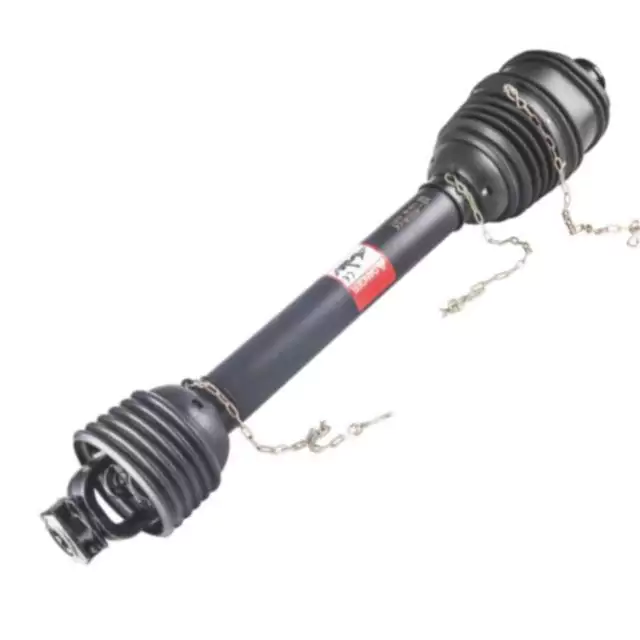
In the world of power transmission, the Universal Coupling is a mechanical bridge that transfers torque between rotating shafts while accommodating angular misalignment. However, the most sophisticated Universal Coupling will fail rapidly if its heart—the needle roller bearings inside the cross assembly—is not adequately protected. Bearing protection is not a secondary feature; it is the primary determinant of service life, reliability, and total cost of ownership. Without effective sealing, lubrication retention, and contamination exclusion, a Universal Coupling will suffer from abrasive wear, corrosion, and eventual seizure or breakage. For industries such as agriculture, construction, and heavy material handling, a single bearing failure in a Universal Coupling can cause hours of unplanned downtime, damage adjacent components, and escalate repair budgets. At Raydafon Technology Group Co.,Limited, our engineering philosophy places bearing protection at the core of every Universal Coupling we manufacture. This article explains why protection matters, how modern designs achieve it, and what technical parameters you must evaluate to ensure decades of reliable operation.
But why exactly are bearings in a Universal Coupling so vulnerable? The answer lies in the operating environment. Universal Couplings typically work in contaminated conditions: dust, mud, agricultural chemicals, road salts, and temperature extremes ranging from -30°C to over 100°C near hot machinery. The cross bearings rotate at high speeds (often up to 1800 RPM on PTO shafts) while enduring oscillating motions and shock loads. Any ingress of abrasive particles into the bearing raceways leads to rapid pitting and increased friction, which generates heat, degrades lubricant, and eventually causes spalling. Worse, moisture causes rust that etches the hardened surfaces, turning a high precision Universal Coupling into a grinding mess. Our factory has analyzed thousands of field failures, and over 80% of premature Universal Coupling replacements trace directly to inadequate bearing protection. Therefore, understanding the design strategies that shield bearings is essential for maintenance managers, equipment operators, and procurement specialists. In this comprehensive guide, we dissect the mechanisms of bearing failure, present our advanced sealing and metallurgy solutions, and provide actionable data to help you select a Universal Coupling that survives harsh real world conditions.
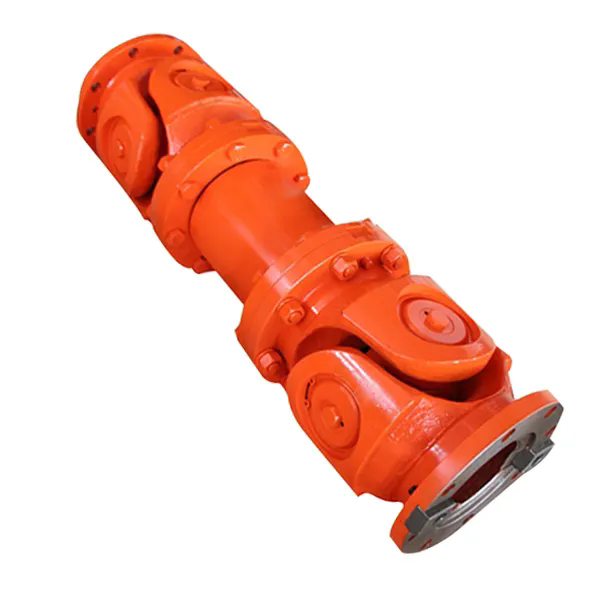
The needle roller bearings inside a Universal Coupling cross operate under extreme contact pressures, often exceeding 2000 MPa at the roller race interface. This high stress regime leaves no margin for contaminants. Even microscopic silica particles (typical in agricultural dust) with a hardness of 7 on Mohs scale can scratch the bearing raceways, which have a hardness of 58-62 HRC. Once a scratch initiates, it becomes a stress riser, leading to fatigue spalling and eventual bearing collapse. Unprotected bearings also lose their critical lubricating film. Grease serves both to reduce friction and to act as a barrier against corrosion. When seals allow grease leakage, the bearing runs dry, metal to metal contact occurs, and heat skyrockets. Our factory has documented temperature rises from 70°C to 180°C within 20 minutes under dry running conditions, causing the cross shaft to expand and seize inside the yoke.
The specific failure modes caused by inadequate bearing protection include:
Field data from a mining conveyor application illustrates the cost of neglect. A Universal Coupling without advanced bearing protection lasted only 340 hours before developing noticeable play. By contrast, our Raydafon protected series Universal Coupling, with triple lip seals and corrosion resistant coating, completed 3,200 hours in the same environment before reaching the wear limit. The unprotected unit caused unplanned shutdowns, replacement labor, and damage to the adjacent gearbox input shaft, totaling USD 4,700 in direct costs. The protected Universal Coupling not only avoided those costs but also maintained driveline balance, reducing vibration induced wear on other components. For any operation where reliability matters, bearing protection is not optional—it is an engineering necessity. Our factory incorporates this understanding into every stage of design, from seal geometry to material selection.
Furthermore, unprotected bearings create a cascading failure effect. Once needles begin to spall, metal fragments circulate within the Universal Coupling, contaminating the grease and accelerating wear on the opposite bearing cups. Within hours, the entire cross assembly becomes junk. The yoke ears also suffer, often becoming oblong due to impact from loose bearing cups, necessitating yoke replacement as well. Therefore, preventing the initial contamination event through robust bearing protection delivers an exponential return on investment. We will now examine the specific sealing technologies that our factory employs to block contamination pathways.
At Raydafon Technology Group Co.,Limited, we view the Universal Coupling as a system where bearing protection is achieved through a synergistic combination of seal design, surface finishing, and lubricant management. Our factory has developed a four stage sealing architecture that outperforms conventional single lip designs by a factor of five in dust ingress tests. The first line of defense is a labyrinth groove machined into the bearing cup flange. This groove creates a tortuous path that particles must traverse, significantly slowing their migration. Second, a primary nitrile rubber lip with a stainless steel garter spring maintains constant contact against the cross trunnion. Third, a secondary dust lip acts as a wiper, removing adhered dirt during rotation. Fourth, a thermoplastic end cover provides an additional barrier against high pressure washdown or water immersion.
Key engineering features of our bearing protection system:
To validate our protection system, our factory performs accelerated dust testing per ISO 20623. A Universal Coupling is mounted in a chamber filled with Arizona road dust (particle size distribution 0-150 microns) and rotated at 1000 RPM under load. After 500 hours, we disassemble and measure grease contamination via ferrography. Our sealed Universal Coupling typically shows less than 0.5% contaminant by weight, whereas standard industrial couplings without multi stage sealing exhibit 8% to 12% contamination, leading to visible wear. Additionally, our factory conducts high pressure washdown tests (100 bar, 80°C water) to simulate cleaning procedures. The four stage sealing prevents water ingress even when directly sprayed, whereas unprotected couplings allow water entry within 30 seconds, leading to immediate rusting.
Another innovative aspect is the inclusion of a pressure relief feature. When a Universal Coupling is greased via the central cross fitting, over greasing can rupture seals. Our design includes a calibrated check valve that vents excess grease at 7 bar, protecting the seals while ensuring complete bearing cavity filling. This feature reduces operator error and extends seal life. For agricultural customers, we also offer a color coded seal indicator: when the outer dust lip turns from black to grey, it signals that the seal is worn and replacement is due, enabling proactive maintenance before failure occurs. These engineering details demonstrate why our Universal Coupling maintains bearing integrity in the harshest applications. At Raydafon, we consider bearing protection not as a feature, but as the foundation of driveline reliability.
Selecting a Universal Coupling based solely on torque rating is insufficient. To ensure long term bearing protection, engineers and procurement specialists must evaluate a set of quantifiable parameters that directly influence contamination resistance and lubricant retention. Our factory has identified seven key metrics, each of which should be requested from suppliers. The table below presents typical values for our premium protected Universal Coupling series, along with industry baseline figures for comparison.
| Parameter | Our Universal Coupling Specification | Industry Standard (Unprotected) | Impact on Protection |
| Seal type count | Triple lip + labyrinth + end cover | Single lip only | Multi stage reduces particle ingress by 90% |
| Seal material temperature range | -40°C to +150°C (HNBR) | -20°C to +100°C (NBR) | Wider range prevents hardening or cracking |
| Dust ingress after 500h (mg) | < 45 mg | > 350 mg | Less abrasive material in bearing raceways |
| Water spray test (IP rating equivalent) | IP66 (no ingress after 3 min at 100 bar) | IP54 (limited protection) | Prevents rust and lubricant washout |
| Grease retention volume (cm³ per cup) | 4.8 cm³ (with reservoir groove) | 2.2 cm³ | Larger volume extends lubrication intervals |
| Cross trunnion surface finish Ra (µm) | 0.2 µm (superfinished) | 0.8 µm | Smoother surface reduces seal wear and friction |
| Dynamic load rating C (kN) | 72 kN (size RC 280) | 55 kN | Higher rating allows safety margin under contamination |
Beyond the table, consider the importance of the cross trunnion's surface hardness profile. Our factory applies induction hardening to achieve a case depth of 1.8mm to 2.2mm with a hardness of 58-62 HRC, while maintaining a tough core of 35 HRC. This hard surface resists indentation from contamination particles. Additionally, we apply a manganese phosphate conversion coating (10 to 15 microns thick) to the trunnion before assembly. This porous coating retains a thin oil film even when grease is temporarily displaced, providing emergency boundary lubrication. Without such coating, any grease film disruption leads to immediate metal to metal contact.
Another vital parameter is the axial play between the bearing cup and the yoke ear. Excessive play allows cup rotation, which can unseat the seal. Our Universal Coupling controls this clearance to 0.05mm to 0.15mm using precision ground thrust washers. This prevents cup fretting and maintains seal concentricity. For high vibration applications (e.g., road milling machines), we offer an optional spring loaded cup retention system that maintains constant preload on the bearings, further enhancing seal performance. When specifying a Universal Coupling, always request documented test results for seal efficiency and corrosion resistance. Raydafon Technology Group Co.,Limited provides full test reports for every production lot, because we believe that transparent technical data enables informed decisions. By focusing on these critical parameters, you can select a Universal Coupling that delivers reliable bearing protection over thousands of operating hours.
Even the best engineered bearing protection system requires correct lubrication practices to achieve its full potential. A Universal Coupling's seals are designed to retain grease and exclude contaminants, but they cannot compensate for incorrect lubricant type, insufficient quantity, or excessive relubrication intervals. Our factory's field service team has compiled best practices that extend Universal Coupling life by up to 300% compared to ad hoc maintenance. The cornerstone is selecting a grease that matches the operating environment. For general agricultural use, a lithium complex grease with NLGI #2 consistency, EP (extreme pressure) additives, and a dropping point above 260°C is recommended. For wet conditions, a calcium sulfonate grease provides superior water resistance. Never use hydrocarbon based greases that can swell the seal elastomer.
Critical lubrication steps for maximum bearing protection:
Inspection is equally important. Every 250 operating hours, check the seal lips for cracks or hardening. A healthy seal lip should be pliable and free of visible debris bridging. Also, verify that the Universal Coupling does not exhibit axial play by trying to move the yokes relative to each other. More than 0.5mm of movement indicates bearing wear, and replacement should be scheduled. Our factory offers a simple wear gauge tool that measures the trunnion to cup clearance without disassembly. Using this tool during routine greasing can predict bearing failure weeks in advance, allowing planned replacement.
For fleets operating multiple machines, our factory recommends establishing a lubrication log for each Universal Coupling. Record the date, hours, grease type, and any observations. This data helps identify patterns—for example, a particular implement may require shorter intervals due to vibration. At Raydafon Technology Group Co.,Limited, we also provide a mobile friendly maintenance reminder service for customers who register their Universal Coupling serial numbers. By adhering to these lubrication and inspection protocols, you transform your Universal Coupling from a consumable item into a long term asset. The cost of a grease gun and quality lubricant is negligible compared to the expense of replacing a failed Universal Coupling and repairing collateral damage. Protect your bearings, protect your budget.
Question 1: What is the most common cause of bearing failure in a Universal Coupling, and how does bearing protection address it?
Answer: The most common cause is contamination ingress, specifically fine dust and moisture, which leads to abrasive wear and corrosion. Bearing protection in a Universal Coupling addresses this through multi lip seals, labyrinth paths, and end covers that physically block particles. At Raydafon Technology Group Co.,Limited, our protected Universal Coupling reduces contamination entry by 90% compared to basic designs, directly preventing the primary failure mode. Without such protection, typical bearing life in agricultural dust is under 500 hours; with proper sealing, our factory achieves over 3000 hours under identical conditions.
Question 2: How can I tell if the bearing protection on my Universal Coupling has been compromised before catastrophic failure occurs?
Answer: Look for three early warning signs: first, visible grease leakage around the seals without recent lubrication indicates seal lip wear or damage. Second, if you wipe the Universal Coupling yoke near the bearing cup and find a rusty or gritty residue, the seal has allowed ingress. Third, while rotating the driveline by hand, feel for notchiness or grinding. Our factory recommends using a stethoscope on the bearing cup while the Universal Coupling is running at low speed; a smooth hissing sound is normal, while clicking or scraping indicates bearing damage. Immediate regreasing and seal inspection can sometimes salvage the unit if caught early, but often replacement becomes necessary.
Question 3: Are there specific environmental conditions where standard bearing protection is insufficient, and what upgrades does your factory offer?
Answer: Yes, conditions such as high pressure washing daily (dairy farms), immersion in slurry (wastewater treatment), or exposure to acidic chemicals (fertilizer plants) overwhelm standard seals. For these cases, our factory offers an Extreme Duty Universal Coupling with Viton (FKM) seals resistant to chemicals, a stainless steel labyrinth shield, and a purgeable grease cavity that allows flushing contaminants out. Additionally, we provide a boot cover accessory that fits over the entire Universal Coupling joint, offering an extra barrier. These upgrades increase protection by another 70% in aggressive environments. Contact Raydafon Technology Group Co.,Limited to determine which protection level matches your application.
Question 4: How does the cost of a protected Universal Coupling compare to the long term savings from reduced downtime?
Answer: A premium protected Universal Coupling typically costs 30% to 50% more upfront than a basic unprotected unit. However, the total cost of ownership calculation overwhelmingly favors protection. For example, an unprotected Universal Coupling may require replacement every 6 months (cost USD 150 plus USD 500 labor and downtime). Over 3 years, that's USD 3,900. A protected Universal Coupling costing USD 225 may last 3 years or more with proper maintenance, saving USD 3,675 plus avoiding three unplanned shutdowns. Our factory's customers consistently report payback periods of 4 to 6 months for the upgrade to our protected series Universal Coupling.
Question 5: Can retrofitting better seals on an existing Universal Coupling improve bearing protection, or is a new unit required?
Answer: Retrofitting is possible but limited. Some aftermarket seal kits can replace worn seals, but the bearing cup and cross surfaces may already have wear patterns that compromise seal contact. For best results, a new factory engineered Universal Coupling is recommended because our factory designs the entire bearing protection system as a holistic unit: surface finish, seal groove geometry, and grease passage alignment are all optimized together. However, for minor wear, our factory offers a seal replacement service that includes re polishing the trunnion surface. This can restore 70% of original protection. For critical applications, we advise purchasing a new Raydafon Universal Coupling with our latest four stage sealing technology to ensure maximum reliability.
Bearing protection is not a luxury; it is the core determinant of Universal Coupling longevity, operational safety, and lifecycle cost. As we have explored, unprotected bearings rapidly fall victim to contamination, corrosion, and lubricant loss, leading to unplanned downtime, secondary equipment damage, and inflated maintenance budgets. By contrast, a Universal Coupling engineered with multi stage sealing, precision surface finishing, and proper lubrication management delivers thousands of hours of reliable torque transmission even in harsh agricultural and industrial environments. At Raydafon Technology Group Co.,Limited, our factory has embedded bearing protection into every product line, from our standard agricultural series to our extreme duty mining couplings. We back our designs with documented test data, field case studies, and a comprehensive warranty.
Do not wait for a bearing failure to halt your production. Evaluate your current Universal Coupling inventory and identify any units lacking advanced seals or corrosion resistant coatings. Upgrade to our protected series Universal Coupling and experience the difference in uptime and peace of mind. Contact Raydafon Technology Group Co.,Limited today to request a free bearing protection audit for your equipment. Our engineering team will analyze your operating conditions and recommend the optimal Universal Coupling configuration, including seal material, lubrication schedule, and optional accessories. Every order includes a detailed maintenance guide and direct technical support. Invest in bearing protection now—secure your driveline reliability for years to come. Request your quote or sample evaluation at Raydafon Technology Group Co.,Limited, your partner in precision power transmission.
+86-574-87168065
Luotuo Industrial Area, Zhenhai District, Ningbo City, China