QR Code

Products
Contact Us


Fax
+86-574-87168065

E-mail

Address
Luotuo Industrial Area, Zhenhai District, Ningbo City, China


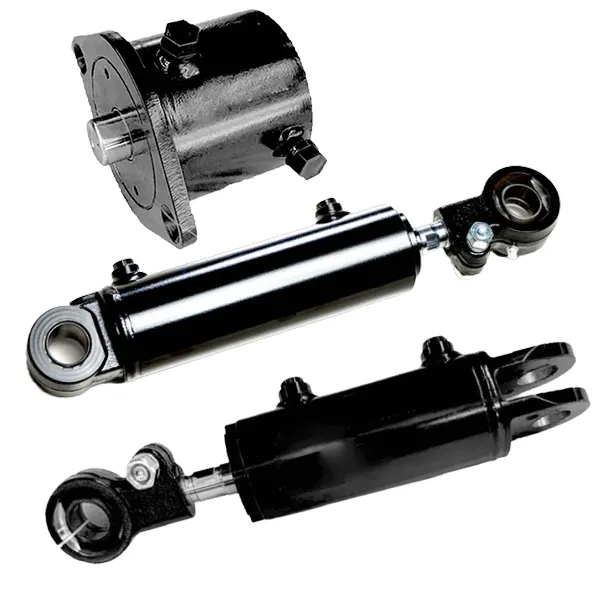
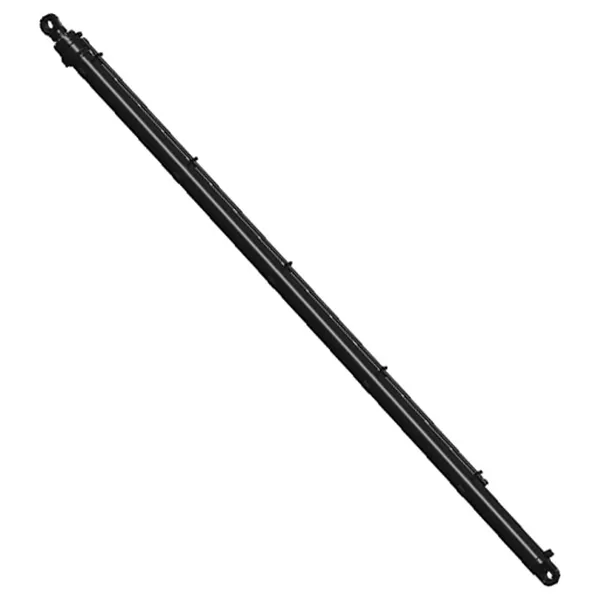
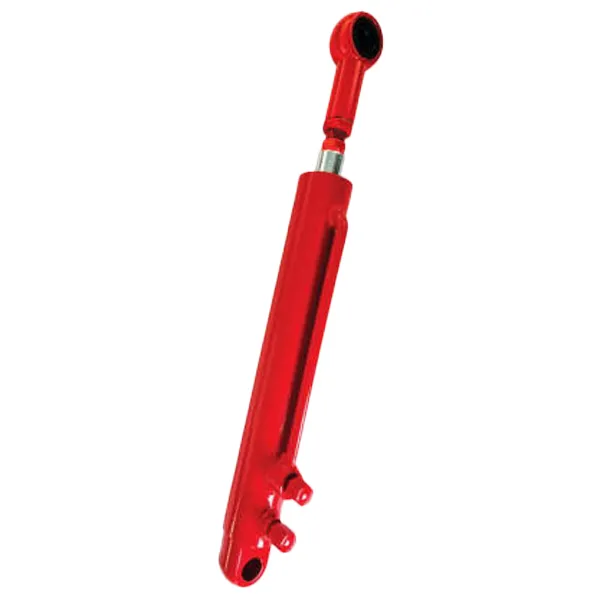
In heavy equipment operations, the hydraulic cylinder acts as the muscular system—without flawless performance, productivity halts. The question “How often should hydraulic cylinders be inspected in heavy equipment?” isn’t merely about ticking a box; it determines whether your fleet delivers peak efficiency or faces catastrophic failure. Industry veterans at Raydafon Technology Group Co.,Limited emphasize that inspection intervals are not one-size-fits-all. Instead, they hinge on machine utilization, operating environment, cylinder type, and OEM guidelines. Standard benchmarks suggest visual inspections before every shift, comprehensive checks every 500 operating hours, and major overhauls aligned with equipment lifecycle data. Proactive maintenance reduces unplanned downtime by up to 70% and extends the service life of every Hydraulic Cylinder by thousands of hours.
Based on two decades of field data and engineering refinement, Raydafon advocates a structured approach: daily walk-arounds catch early leaks or rod damage; monthly diagnostics evaluate seal integrity; quarterly testing measures bypass leakage and drift. For severe applications—mining, forestry, or demolition—intervals must shorten by 30-50%. Our factory-backed protocols ensure that no component is overlooked. Whether you manage excavators, loaders, or industrial presses, understanding inspection frequency is the first step toward asset longevity. This guide merges ISO 13760 standards with real-world shop experience, delivering a clear roadmap for maintenance planners and fleet owners who demand reliability.
Determining the optimal inspection frequency for any Hydraulic Cylinder requires analyzing multiple interdependent variables. At Raydafon, our engineering team categorizes these factors into five core pillars: duty cycle, environmental exposure, cylinder design complexity, fluid condition, and historical failure patterns. Each factor can shorten or extend baseline intervals by substantial margins. Below we break down these factors in a detailed matrix that maintenance professionals rely on.
| Factor Category | Impact on Inspection Frequency | Recommended Interval Adjustment |
| Duty Cycle (Continuous vs. Intermittent) | High-cycle machinery like scrap handlers or continuous miners stress seals and rods exponentially faster. | Inspect every 250-400 hours instead of standard 500 hours. Increase visual checks to daily. |
| Operating Pressure & Shock Loads | Systems operating above 4,000 psi or subjected to impact loads accelerate metal fatigue and seal extrusion. | Perform non-destructive testing (NDT) every 1,000 hours; increase internal leakage tests monthly. |
| Cylinder Bore & Rod Material | Chrome-plated rods vs. nitrided steel; larger bores may hide gradual wear but fail suddenly. | Advanced materials from our factory extend intervals by 20%, but still require bi-annual full teardown checks. |
| Fluid Cleanliness & Filtration | ISO 4406 codes above 18/16/13 dramatically increase abrasive wear on cylinder components. | When fluid cleanliness degrades, shorten inspection to 150-hour intervals for seal inspections. |
| Maintenance History & Age | Cylinders older than 8 years or those with prior rebuilds demand more frequent condition monitoring. | Implement quarterly cylinder drift tests and annual magnetic particle inspection. |
Beyond the tabular data, our factory experience reveals that real-time telematics integrated with cylinder sensors can transform reactive inspections into predictive ones. For fleets equipped with IoT sensors, we recommend cross-referencing temperature spikes and bypass flow rates. For non-instrumented assets, visual inspections every shift should focus on four critical zones: rod surface scoring, weld joint cracking, pin bore elongation, and external seal seepage. A single grain of sand entering a cylinder via a compromised wiper seal can reduce packing life by 80% within 100 operating hours. That’s why Raydafon Technology Group Co.,Limited designs its Hydraulic Cylinder product line with triple-lip wipers and case-hardened rods, yet we still insist that end-users perform “touch, feel, listen” inspections at each startup. In our maintenance seminars, we often state: “A cylinder inspection is not a calendar event; it’s a machine intelligence practice.” To systematize this, integrate daily inspection into your equipment walkaround—it should not take longer than three minutes per cylinder but can prevent a 20-hour unscheduled rebuild.
Heavy equipment rarely operates in pristine conditions. From arctic mining sites to tropical timber yards, environmental aggressiveness is the single largest variable that dictates how often hydraulic cylinders must be inspected. According to field failure analysis conducted by Raydafon Technology Group Co.,Limited, cylinders deployed in harsh environments account for 63% of premature rod seal failures. The underlying reason is that contaminants—abrasive dust, saltwater, extreme temperature cycles—attack the weakest points: the rod surface and the sealing interfaces. Below we list environment-specific inspection accelerators that our technical support team incorporates into site-specific maintenance plans.
Original Equipment Manufacturer (OEM) manuals provide a baseline, but savvy fleet owners combine OEM recommendations with ISO 13760 (hydraulic fluid power - cylinders - methods for determining the friction) and ISO 8139 (pneumatic fluid power - cylinders - inspection and installation). However, these standards often specify “inspection intervals dependent on risk assessment.” That’s where professional interpretation becomes crucial. At Raydafon Technology Group Co.,Limited, we align our Hydraulic Cylinder maintenance protocols with both global standards and component-specific OEM data, then overlay real-world usage to create actionable inspection calendars.
At our factory, we incorporate these guidelines into a digital inspection template that technicians use during preventive maintenance. The template includes torque checks for mounting bolts (ISO 898-1), rod runout measurement, and internal bypass flow using a calibrated orifice. We have observed that combining OEM intervals with ISO condition-monitoring techniques extends cylinder MTBF (mean time between failures) by up to 34%. For example, a customer in aggregate processing followed only OEM 500-hour inspections and averaged 2,200 hours between cylinder failures. After adopting our hybrid standard-plus-condition approach, they reached 3,800 hours MTBF. This demonstrates that inspection frequency is less about a fixed number and more about adaptive thresholds aligned with recognized standards. Moreover, Raydafon Technology Group Co.,Limited offers customized inspection placards for each Hydraulic Cylinder we produce, listing critical inspection checkpoints with ISO references, enabling maintenance crews to comply with both corporate safety mandates and regulatory audits.
Effective inspection is not merely “looking for oil leaks.” Advanced techniques are required to detect internal degradation before it triggers a catastrophic failure. Drawing from our factory engineering labs, we categorize inspection methods into three levels: daily user-level checks, intermediate precision tests, and advanced diagnostic evaluations. Each layer contributes to a comprehensive picture of cylinder health, enabling maintenance teams to schedule interventions rather than suffer breakdowns.
By integrating these methods, Raydafon Technology Group Co.,Limited has helped clients reduce cylinder-related downtime by over 50%. The key is to match the method with the interval: daily checks catch surface issues; monthly tests quantify degradation; annual diagnostics validate structural integrity. Because we design every Hydraulic Cylinder with serviceability in mind, our factory provides inspection ports and test fittings that simplify these procedures. No single method is sufficient; a layered inspection regimen is the only way to answer “how often should hydraulic cylinders be inspected” with confidence.
Failure to adhere to a disciplined inspection schedule often results in a cascade of consequences ranging from costly repairs to life-threatening accidents. Over two decades, Raydafon Technology Group Co.,Limited has compiled data from hundreds of heavy equipment failure analyses. The pattern is consistent: a skipped inspection leads to an undetected issue, which escalates exponentially. Below we detail the primary consequences segmented by severity to emphasize why inspection frequency is non-negotiable.
At Raydafon Technology Group Co.,Limited, we engineer cylinders for longevity, but we also educate our partners that even the best Hydraulic Cylinder will succumb to neglect. Our warranty programs require documented adherence to the inspection intervals we recommend. In fact, our factory offers extended warranty options for customers who utilize our inspection checklist and upload data to our maintenance cloud—demonstrating that proper inspection frequency benefits both reliability and financial predictability. The consequences of neglect are not merely technical; they erode profitability and safety culture.
After examining influencing factors, environmental impacts, standards, inspection methods, and consequences, a clear answer emerges: there is no universal calendar interval. Instead, building a predictive inspection plan involves merging OEM baselines with operational severity and continuous monitoring. Raydafon Technology Group Co.,Limited recommends the following framework: 1) Establish baseline inspection (daily visual, 500-hour comprehensive). 2) Adjust factors using the decision matrix provided earlier in this article. 3) Implement at least one advanced diagnostic method per quarter per high-risk cylinder. 4) Keep digital records to identify component-specific wear trends. our factory service team can assist in creating these tailored plans for any fleet size. The ultimate goal is to move from reactive to proactive—where inspections become predictive analytics that schedule cylinder maintenance before efficiency drops. With disciplined execution, the question “how often should hydraulic cylinders be inspected” transforms into a competitive advantage: maximum uptime, lower repair costs, and safer worksites.
Visual inspections should be performed daily before the first operation, or at the start of each shift. This includes checking the rod surface for scratches, nicks, or rust; inspecting wiper seals for debris buildup; looking for any hydraulic fluid drips at gland seals or welded joints; and verifying that mounting pins and brackets are tight. For equipment operating in extreme dust or corrosive environments, visual inspections should also occur midway through the shift. Raydafon Technology Group Co.,Limited provides laminated inspection cards with our cylinders to guide operators through this 3-minute process. Skipping daily visual checks is the number one contributor to premature seal failure.
Several warning signs demand an immediate inspection regardless of planned schedules: sudden increase in cycle time, which indicates internal bypass; erratic cylinder movement or jerking; abnormal noises like squealing or grinding during extension; visible rod scoring or chrome flaking; elevated cylinder body temperature that cannot be explained by ambient conditions; and any hydraulic fluid contamination visible in sight glass (milky, dark, or metallic sheen). At our factory, we train technicians to treat these as “red flag” events that override routine intervals. Prompt inspection at these signs can limit damage to a simple seal replacement rather than a full cylinder failure.
Duty cycle is a primary multiplier for inspection frequency. Equipment operating continuously at high pressure, such as hydraulic shovels, scrap handlers, or injection molding machines, accumulates cylinder wear cycles up to three times faster than intermittent-use machinery. For high-duty-cycle applications, comprehensive inspections (including drift tests, rod runout, and internal leakage checks) should be performed every 250 to 300 operating hours rather than the typical 500-hour benchmark. Additionally, heavy shock-loading applications like demolition shears require monthly magnetic particle inspection of welded joints. Raydafon Technology Group Co.,Limited duty-cycle calculators help customers translate hours into risk-adjusted inspection calendars, ensuring that a Hydraulic Cylinder in high-cycle service receives appropriate attention.
For marine and offshore applications, where saltwater corrosion and humidity accelerate deterioration, inspections must be intensified. Visual inspections should occur daily with special attention to chrome plating pitting and any rust staining. Monthly, a thorough inspection must include non-destructive testing for pitting corrosion under the rod gland, and the cylinder should be fully extended to inspect the entire rod surface. Every 500 hours or 90 days, a corrosion mapping via ultrasonic thickness gauge is recommended, especially for cylinders with welded trunnions. our factory produces cylinders with enhanced marine coatings, but we always instruct customers to adhere to a maximum 90-day full inspection cycle. Any sign of salt deposit buildup around seals should trigger immediate cleaning and seal replacement.
While telematics and IoT sensors significantly enhance condition monitoring, they do not eliminate manual inspections. Sensors can track cylinder temperature, pressure spikes, cycle counts, and drift in real-time, providing data that flags potential issues early. However, they cannot detect surface rod scoring, loose mounting bolts, or early-stage external seepage. Therefore, the optimal approach is a hybrid: sensors provide continuous data that trigger alerts, while manual inspections at defined intervals verify sensor accuracy and catch non-instrumented faults. Raydafon Technology Group Co.,Limited integrates sensor-ready ports in many of our cylinders, allowing customers to implement predictive analytics while still following a structured manual inspection schedule. Telematics can extend intervals between detailed inspections by up to 20% when combined with robust data analytics, but they never replace the trained eye of a technician.
Ready to optimize your hydraulic cylinder inspection strategy? Our engineering team provides free fleet audits, customized inspection schedules, and OEM-grade replacement cylinders built in our factory. Whether you need a single Hydraulic Cylinder or a comprehensive maintenance partnership, contact us today to schedule a consultation. Request a free inspection guide and let us help you reduce downtime, cut repair costs, and extend component life. Reach out via our website or call our 24/7 support line—your reliability is our priority.
Raydafon Technology Group Co.,Limited – Engineered for Endurance. Ask about our extended warranty packages when you adopt our inspection protocols.
+86-574-87168065
Luotuo Industrial Area, Zhenhai District, Ningbo City, China