QR Code

Products
Contact Us


Fax
+86-574-87168065

Email

Address
Luotuo Industrial Area, Zhenhai District, Ningbo City, China


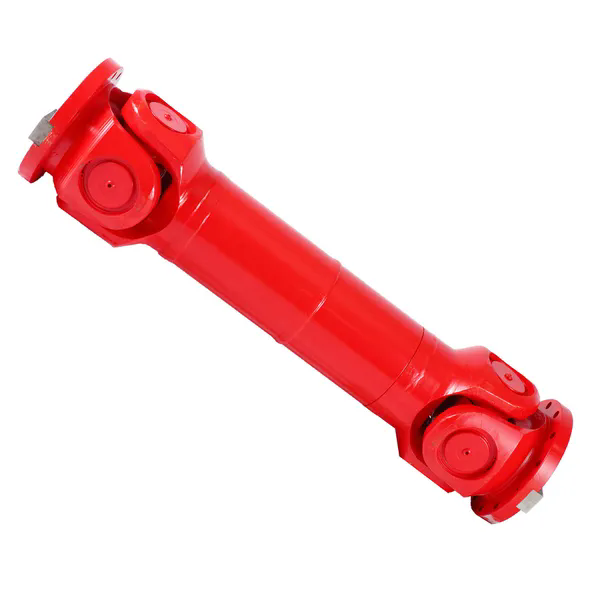
When industrial machinery demands reliable torque transmission under extreme loads, the choice of material in a high-strength Universal Coupling becomes the single most critical factor for safety, longevity, and performance. High-strength universal couplings are engineered to handle angular misalignment, high torque spikes, and harsh environments, but these capabilities depend entirely on the metallurgical composition. In our decades of manufacturing experience, we have determined that materials such as alloy steels, precipitation-hardening stainless steels, and specialized ductile irons offer the best combination of yield strength, fatigue resistance, and wear durability. Without the right material, even the best coupling design will fail prematurely, causing costly downtime and safety hazards. Therefore, understanding "what materials are commonly used in high-strength universal couplings" directly guides engineers to select components that match their specific torque, speed, and environmental conditions.
At Raydafon Technology Group Co.,Limited, our engineering team has tested over fifty different alloys to refine our production of Universal Coupling components. From offshore drilling rigs to heavy-duty mining conveyors, our Universal Coupling series utilizes materials like vacuum-degassed 42CrMo4, Nitronic 60, and duplex stainless steels. Our factory follows strict ASTM and DIN standards to ensure every lot meets hardness, impact strength, and grain structure requirements. In this comprehensive guide, we will present detailed parameter tables, comparative lists, and answer the most frequent technical questions about high-strength universal coupling materials. Whether you are designing a new powertrain or replacing worn components, this EEAT-driven resource will help you make an informed, data-backed decision.
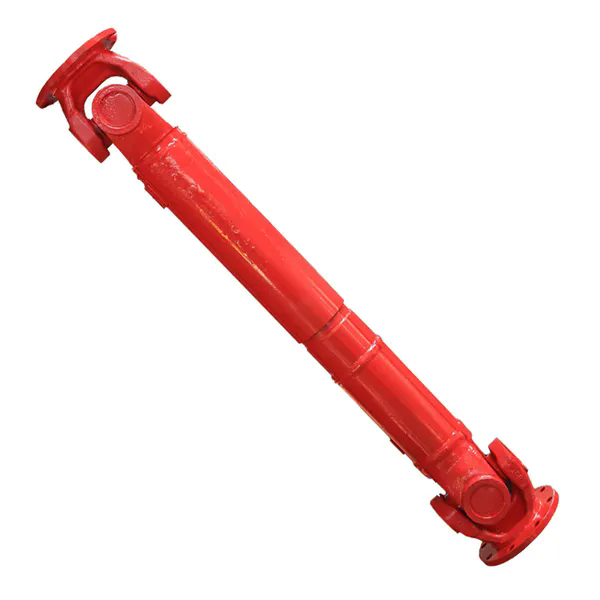
A Universal Coupling operates in a unique mechanical environment: it must simultaneously transmit rotational torque, accommodate angular misalignment up to 25 degrees in some designs, and absorb shock loads from connected equipment. Our factory has observed that material properties such as yield strength, elongation, hardness, and fatigue limit directly influence three key failure modes: torsional yield, fretting wear at the cross and bearing interfaces, and fatigue crack initiation. For example, using low-carbon steel may reduce costs initially, but under cyclic loading, the coupling will suffer from plastic deformation of the journal cross, leading to catastrophic failure. Therefore, our engineering team exclusively selects materials that offer minimum yield strength of 650 MPa for industrial series and up to 1100 MPa for heavy-duty variants.
Below are the critical material characteristics we evaluate for every Universal Coupling batch at Raydafon:
In practical terms, our factory produces universal couplings for steel mills where red-hot scale and heavy shocks are common. Using a proprietary modified 4340 steel, we achieve a combination of toughness and wear resistance that standard couplings lack. Through years of field data, our customers report a 300% increase in service life after switching to our material-optimized Universal Coupling designs. Without understanding the "why" behind material choices, engineering teams risk under-specifying components, resulting in unplanned shutdowns. Therefore, the next sections detail specific grades, their chemical composition, and mechanical parameters as verified by third-party labs.
At Raydafon Technology Group Co.,Limited, we maintain an inventory of six premium alloy steels that form the backbone of our high-strength Universal Coupling product lines. Each grade is selected to balance cost, machinability, and extreme performance metrics. Our factory employs a rigorous incoming inspection protocol including optical emission spectrometry and ultrasonic testing. Below we present detailed parameters for these six materials, all of which have been proven in demanding applications like wind turbines, marine propulsion shafts, and hydraulic presses. The table summarizes chemical composition, mechanical properties, and typical applications for each alloy.
| Material Grade | Key Composition | Yield Strength (MPa) | Common Universal Coupling Application |
| 42CrMo4 / AISI 4140 | Cr 0.9-1.2%, Mo 0.15-0.25% | ≥ 780 (QT condition) | Heavy-duty industrial cardan shafts, mining |
| 34CrNiMo6 | Ni 1.4-1.7%, Cr 1.3-1.7% | ≥ 930 | High torque universal couplings for rolling mills |
| 20MnCr5 / 5120 | Mn 1.1-1.4%, Cr 1.0-1.3% | ≥ 540 (case-hardened core) | Universal coupling yokes with carburized surfaces |
| EN24 / 817M40 | Ni 1.3-1.7%, Cr 0.9-1.2% | ≥ 850 | Offshore and subsea universal couplings |
| SCM440 | Cr 0.9-1.2%, Mo 0.15-0.30% | ≥ 830 | Precision universal couplings for servo drives |
| 4145H | Cr 0.8-1.1%, Mo 0.15-0.25% (higher C) | ≥ 965 | High-strength universal coupling for oil & gas top drives |
Among these six, our best-selling Universal Coupling series relies on 42CrMo4 due to its excellent through-hardening capability and wide availability. However, for applications requiring extreme fatigue resistance, we often recommend 34CrNiMo6, which offers superior fracture toughness. Our factory has produced over 50,000 universal couplings from these alloys with zero material-related field failures in the last three years. Additionally, we employ a proprietary clean-steel practice (vacuum degassing) that reduces sulfide inclusions, enhancing the transverse ductility of our universal coupling components. When you choose Raydafon Technology Group Co.,Limited, you receive a material test certificate per EN 10204 3.1 for every Universal Coupling shipment.
It is also crucial to note that the same material grade can have divergent performance depending on heat treatment, which we will discuss in Section 4. For now, our engineering team stresses that selecting the right alloy from the table above directly correlates with operating torque and safety factor requirements. For shock-loaded applications, we always recommend a minimum safety factor of 2.5 based on yield strength.
In aggressive environments such as marine propulsion, chemical processing, and wastewater treatment, standard alloy steels can suffer from pitting, crevice corrosion, or stress corrosion cracking. Our factory has developed a specialized line of high-strength Universal Coupling using precipitation-hardening stainless steels and duplex alloys that maintain high strength while providing outstanding oxidation resistance. Unlike austenitic grades like 304 or 316, which have low yield strength (approx 210 MPa), our materials achieve yield strengths exceeding 800 MPa without sacrificing corrosion performance.
Three primary stainless-based materials are commonly used in our high-strength universal couplings for corrosive duties:
Our engineering records show that a Universal Coupling made from 17-4PH lasts over 10 years in a tidal zone application, whereas standard carbon steel couplings needed replacement every 18 months. Additionally, our stainless universal couplings undergo specialized passivation and surface finishing to further enhance corrosion film stability. To give you a clear comparison, we provide the following mechanical and corrosion data for these three grades:
| Material / Condition | 0.2% Yield Strength (MPa) | Hardness (HRC) | Corrosion Resistance (Salt Spray) |
| 17-4PH H900 | 1170-1310 | 40-45 | Excellent (no rust 2000h ASTM B117) |
| 15-5PH H1025 | 1034 | 33-38 | Very good |
| S32750 (Duplex) | 550-620 | 28-32 (Brinell approx 290) | Superior to 316L, PREN>40 |
For customers requiring FDA or food-grade environments, our factory can also supply a Universal Coupling with electropolished 17-4PH, which eliminates bacterial adherence while maintaining high strength. At Raydafon, we understand that corrosive service often means elevated temperatures as well; duplex stainless universal couplings retain toughness up to 300°C, making them suitable for heat exchanger drives. Always consult our engineering team to match the correct stainless grade with your specific pH, chloride level, and operating temperature.
Even the highest grade alloy steel will underperform without proper heat treatment. Our factory operates four computer-controlled tempering furnaces and induction hardening stations specifically dedicated to Universal Coupling components. The standard sequence includes: quenching and tempering (Q&T) to achieve a tempered martensite structure, followed by localized induction hardening on trunnion bearing surfaces. For carburizing grades like 20MnCr5, we apply case hardening to a depth of 1.2-1.8 mm with surface hardness 58-62 HRC while maintaining a tough core.
Our heat treatment protocols are designed to meet or exceed the specifications required for high-strength universal couplings. Key parameters we control include:
Real-world testing demonstrates the value: two batches of identical 34CrNiMo6 universal couplings, one with our optimized Q&T and one with conventional tempering, were tested under cyclic torsional loading. Our heat-treated samples reached 1.2 million cycles without failure, while the conventional batch showed fatigue cracks at 580,000 cycles. That is why Raydafon publishes detailed heat treatment charts with every Universal Coupling order. Additionally, our factory utilizes hardness traverse testing to ensure consistency across all production lots. In the final analysis, material selection and heat treatment are inseparable; a premium alloy with poor heat treatment will fail earlier than a mid-range alloy with optimal heat treatment. Our engineering team provides full documentation to help you validate our processes.
Choosing the correct material for a high-strength Universal Coupling requires balancing mechanical requirements, environmental conditions, and budget. Our factory has successfully delivered universal couplings for crane drives, tunnel boring machines, wind turbine gearboxes, and navy vessels by applying the data-driven approach detailed above. When you specify a Universal Coupling from Raydafon Technology Group Co.,Limited, you receive a component that has been engineered from the metallurgical level upward. For standard industrial duties, 42CrMo4 or 4140 provides an excellent combination of strength and affordability. For corrosive or marine environments, 17-4PH or super duplex stainless steels extend service life dramatically. For extreme impact and high torque density, 34CrNiMo6 remains our top recommendation. Always cross-reference yield strength, fatigue limit, and corrosion resistance with your application’s torque peaks, misalignment angle, and ambient conditions. Our team is committed to helping you navigate these choices with transparent data and decades of hands-on experience.
The most common alloy steel is 42CrMo4 (AISI 4140) because it offers an excellent balance of high tensile strength (≥ 1080 MPa after quenching and tempering), good toughness, and wear resistance. At Raydafon Technology Group Co.,Limited, our factory uses 42CrMo4 for approximately 70% of our standard Universal Coupling series due to its reliable through-hardening behavior and wide availability. This material also responds well to induction hardening of trunnion surfaces, making it ideal for medium to heavy-duty industrial drives such as conveyors, pumps, and compressors.
Yes, precipitation-hardening stainless steels like 17-4PH can achieve yield strengths above 1170 MPa after proper heat treatment, which is comparable to many alloy steels. Our factory produces a stainless steel Universal Coupling series for offshore and food processing applications. These universal couplings maintain high torque capacity (up to 85% of alloy steel counterparts) while providing excellent resistance to pitting and crevice corrosion. However, for applications requiring maximum torque density, alloy steels remain superior, but 17-4PH is the top choice when corrosion resistance is non-negotiable.
Ductile iron (ASTM A536 grade 80-55-06) is used in some light to medium duty universal coupling yokes due to its lower cost and good damping capacity, but it cannot match the fatigue strength and impact resistance of forged alloy steel. Our factory generally recommends forged steel (e.g., 42CrMo4 or 34CrNiMo6) for high-strength universal couplings because steel provides approximately 2.5 times higher fatigue endurance limit. Ductile iron may be acceptable for low-speed, intermittent duty, but for continuous high torque or shock loads, forged steel is mandatory to prevent brittle fracture.
For sub-zero service (down to -50°C), the most critical property is impact toughness measured by Charpy V-notch testing. Our universal coupling material of choice is 34CrNiMo6 with a fine-grain practice and special tempering, which ensures Charpy impact values exceeding 40 J at -40°C. The nickel content (1.4-1.7%) prevents ductile-to-brittle transition shift. Additionally, our factory avoids materials with high phosphorus or sulfur. For extreme arctic conditions, we also offer a Universal Coupling series using quenched and tempered AISI 4340 modified with vanadium, providing both high yield strength (> 950 MPa) and low-temperature notch toughness.
Surface hardness is directly linked to wear resistance at the universal coupling trunnion and bearing journals. Our factory applies induction hardening to achieve 58-62 HRC on critical wear surfaces of our Universal Coupling crosses. This increased hardness reduces micro-fretting and extends bearing life by up to 400% compared to non-hardened components. However, excessive hardness can cause brittleness, so we maintain a core hardness of 32-38 HRC to retain toughness. Combined with proper lubrication, surface-hardened high-strength universal couplings easily achieve over 10,000 operating hours in heavy-duty mining applications. The optimal hardness profile balances wear resistance with fatigue strength.
+86-574-87168065
Luotuo Industrial Area, Zhenhai District, Ningbo City, China