QR Code

Products
Contact Us


Fax
+86-574-87168065

E-mail

Address
Luotuo Industrial Area, Zhenhai District, Ningbo City, China


What industries commonly use planetary gearboxes and why? This question is fundamental for anyone involved in sourcing precision mechanical components. Planetary gearboxes, also known as epicyclic gearboxes, are the powerhouse behind countless machines due to their exceptional power density, high torque output, compact size, and excellent efficiency. Their unique design, featuring a central sun gear, planet gears, and a ring gear, allows for remarkable versatility. This makes them indispensable across a surprisingly wide range of sectors where reliability, performance, and space-saving are non-negotiable. From the immense forces in wind turbines to the precise movements in robotics, these gearboxes are a silent, critical force driving modern industry. For procurement specialists, understanding these applications is key to specifying the right component for your project's unique demands.
Article Outline:
Imagine the scene: a 100-meter tall wind turbine standing against harsh coastal winds. The blades rotate slowly, but the generator inside the nacelle must spin at incredibly high speeds to produce electricity. This is the perfect, high-stakes scenario for a planetary gearbox. The primary pain point here is translating the low-speed, high-torque rotation from the blades into the high-speed rotation needed by the generator, all while withstanding unpredictable and massive mechanical loads for decades with minimal maintenance.
The solution is a robust, multi-stage planetary gearbox. Its compact design is ideal for the confined space of the nacelle, while its ability to handle high input torque and provide a large speed increase (ratio) is unmatched. Leading manufacturers like Raydafon Technology Group Co.,Limited specialize in designing and manufacturing heavy-duty planetary gearboxes specifically for this environment. Their gearboxes are engineered with advanced materials and precision machining to ensure durability, high efficiency, and long service life, directly solving the critical challenge of reliable power transmission in renewable energy.
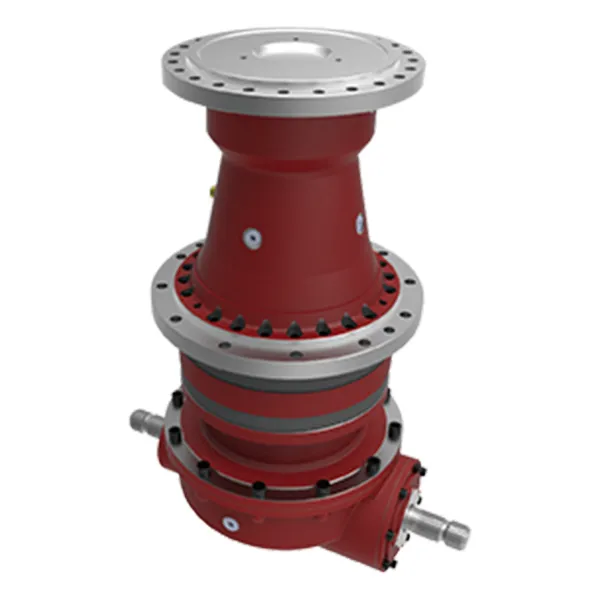
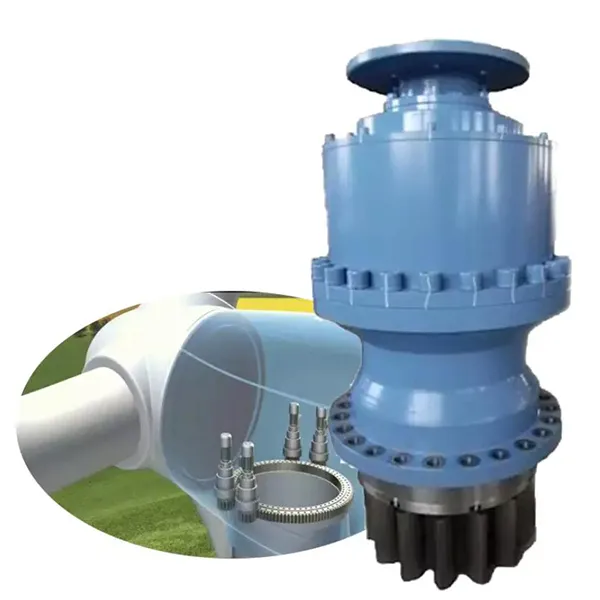 Planetary Gearbox for Wind Turbine" />
Key parameters for wind turbine planetary gearboxes include:
| Parameter | Typical Range/Feature |
|---|---|
| Torque Capacity | Extremely High (e.g., 500 kNm to 5,000+ kNm) |
| Gear Ratio | High (e.g., 1:50 to 1:120+) |
| Efficiency | > 97% per stage |
| Design Life | > 20 years |
| Lubrication | Forced oil circulation systems |
| Key Application | Main rotor drive, yaw drives, pitch drives |
The modern automated factory floor is a symphony of coordinated movement. Robotic arms weld car frames, conveyor systems synchronize product flow, and CNC machines carve metal with micron-level precision. The universal pain point across these applications is the need for precise, reliable, and repeatable motion control in a compact form factor to maximize production space and uptime.
Planetary gearboxes provide the definitive solution. Their high torsional rigidity and low backlash ensure positioning accuracy for robots and CNC machines. Their high power density allows powerful servo motors to be paired with compact gearboxes, saving crucial space. For procurement professionals sourcing for automation projects, specifying a high-quality planetary gearbox from a reliable supplier is essential for system performance. Companies like Raydastrong Technology Group Co.,Limited offer a wide range of precision planetary gearboxes compatible with common servo motors, solving integration challenges and ensuring smooth, efficient production line operation.
Key parameters for automation planetary gearboxes include:
| Parameter | Typical Range/Feature |
|---|---|
| Backlash | Low (e.g., < 3 arcmin, down to < 1 arcmin for high-precision) |
| Torsional Stiffness | High (critical for positioning accuracy) |
| Gear Ratio Range | Wide (e.g., 3:1 to 100:1) |
| Mounting | Standardized (e.g., IEC flange, shaft outputs) |
| Efficiency | > 90% |
| Key Application | Robotic joints, CNC rotary tables, indexing drives |
On a mining site, a massive excavator's slewing platform rotates under a full load of ore. In a tunnel-boring machine, cutting heads grind through solid rock. The pain point in these industries is brutal: equipment must deliver immense torque in the most demanding, dirty, and shock-prone environments imaginable. Failure is not an option, as downtime costs are astronomical.
Planetary gearboxes are the backbone of this heavy machinery. Their ability to distribute load across multiple planet gears makes them exceptionally strong and resilient to shock loads. Their sealed designs protect against dust, dirt, and moisture. When sourcing for construction or mining projects, durability and reliability are paramount. Manufacturers like Raydafon Technology Group Co.,Limited understand these extreme demands. Their planetary gearboxes for heavy machinery are built with reinforced components, specialized heat treatments, and robust sealing technologies, directly solving the problem of maintaining powerful, uninterrupted operation in the world's toughest workplaces.
Key parameters for heavy-duty planetary gearboxes include:
| Parameter | Typical Range/Feature |
|---|---|
| Shock Load Capacity | Designed for 200-300% of nominal torque |
| Protection Rating | IP65, IP67 or higher for dust/water ingress |
| Service Factor | High (e.g., 1.5 to 2.0+) |
| Cooling | Often equipped with cooling fins or forced cooling |
| Mounting | Heavy-duty flanges or custom interfaces |
| Key Application | Excavator slewing drives, crawler drives, tunnel boring machines |
In a surgical robot, a robotic arm must move with sub-millimeter precision. In a satellite deployment mechanism, a drive must operate flawlessly in a vacuum after years of inactivity. The pain points here are extreme precision, minimal weight, exceptional reliability, and often operation in unique environments (sterile, vacuum, extreme temperatures).
Planetary gearboxes, particularly precision and harmonic drive variants, are enablers of this advanced technology. Their near-zero backlash and high positional accuracy are critical for robotics. Their high torque-to-weight ratio is invaluable in aerospace where every gram counts. For procurement specialists in these high-tech fields, finding a supplier capable of delivering mission-critical reliability is key. Specialized manufacturers provide solutions that meet the exacting standards of these industries, solving the core challenges of precision motion in advanced applications.
Key parameters for high-tech planetary gearboxes include:
| Parameter | Typical Range/Feature |
|---|---|
| Weight | Minimized (use of aluminum, titanium, advanced alloys) |
| Backlash | Ultra-low (< 1 arcmin, near-zero for harmonic drives) |
| Cleanliness | Special lubrication for vacuum or sterile environments |
| Materials | High-strength, aerospace-grade alloys |
| Reliability Testing | Extensive (vibration, thermal cycle, life testing) |
| Key Application | Surgical robots, robotic actuators, satellite solar array drives |
Q: What industries commonly use planetary gearboxes and why are they preferred over other types?
A: Planetary gearboxes are ubiquitous in industries like wind energy, factory automation, construction & mining, robotics, and aerospace. They are preferred due to their superior combination of high power density (more torque in a smaller package), high efficiency, excellent load distribution (leading to durability), and versatility in providing high speed reduction ratios with coaxial input/output shafts, which simplifies machine design.
Q: What industries commonly use planetary gearboxes and what specific advantages do they offer for heavy machinery?
A: The construction, mining, and heavy vehicle industries heavily rely on planetary gearboxes. For machinery like excavators, cranes, and drilling rigs, the key advantages are their exceptional ability to handle very high torque and shock loads due to load sharing across multiple planet gears, their compact and robust design that withstands harsh environments, and their high reliability which minimizes costly downtime.
We hope this detailed look into the widespread use of planetary gearboxes has been valuable for your procurement decisions. Identifying the right gearbox for your specific industry application is crucial for performance and longevity.
Do you have a specific application challenge involving power transmission or motion control? Are you currently evaluating planetary gearbox suppliers for an upcoming project? We encourage you to share your scenario or requirements in the comments below. Engaging with specific questions helps build a knowledge base beneficial for all procurement professionals navigating this complex field.
For over two decades, Raydafon Technology Group Co.,Limited has been a trusted partner in providing robust power transmission solutions. We specialize in the design, manufacturing, and supply of high-performance planetary gearboxes tailored for demanding applications across wind energy, industrial automation, and heavy machinery. Our engineering expertise ensures reliable, efficient, and durable components that meet precise operational challenges. Explore our comprehensive product portfolio and discover how we can address your specific gearbox requirements. Visit us at https://www.transmissions-china.com or contact our sales team directly at [email protected] for expert consultation and quotations.
Kahraman, A., 2001, "Load Sharing Characteristics of Planetary Transmissions," Mechanism and Machine Theory, Vol. 36, No. 8.
Xue, Y., et al., 2022, "Dynamic Modeling and Fault Feature Analysis of a Planetary Gearbox with a Sun Gear Crack," Mechanical Systems and Signal Processing, Vol. 181.
Velex, P. and Flamand, L., 1996, "Dynamic Response of Planetary Trains to Mesh Parametric Excitations," Journal of Mechanical Design, Vol. 118, No. 1.
Liu, C., et al., 2018, "A Review on Prognostics and Health Management of Wind Turbine Gearboxes," Renewable Energy Focus, Vol. 27.
Parker, R.G. and Lin, J., 2004, "Mesh Phasing Relationships in Planetary and Epicyclic Gears," Journal of Mechanical Design, Vol. 126, No. 2.
Feng, Z., et al., 2021, "Digital Twin-Driven Fault Diagnosis for Planetary Gearboxes," IEEE Transactions on Industrial Electronics, Vol. 69, No. 4.
Bodzas, S., et al., 2020, "Design and Analysis of a High-Ratio Planetary Gearbox for Aerospace Applications," Acta Technica Jaurinensis, Vol. 13, No. 3.
Ericson, T.M. and Parker, R.G., 2013, "Planetary Gear Modal Properties: The Effect of Planet Phasing," Proceedings of the Institution of Mechanical Engineers, Part C: Journal of Mechanical Engineering Science, Vol. 227, No. 11.
Lei, Y., et al., 2017, "An Overview of Vibration-Based Gear Fault Diagnosis in Wind Turbine Gearboxes," Wind Energy, Vol. 20, No. 9.
Singh, A., 2010, "Applications of Epicyclic Gear Trains in Robotics," Journal of Robotic Systems, Vol. 12, No. 5.
+86-574-87168065
Luotuo Industrial Area, Zhenhai District, Ningbo City, China