QR Code

Products
Contact Us


Fax
+86-574-87168065

Email

Address
Luotuo Industrial Area, Zhenhai District, Ningbo City, China


When selecting mechanical power transmission components for extreme operating conditions, the question "Which Gear Coupling Material Performs Better in Harsh Environments?" becomes mission-critical. Harsh environments typically involve high temperatures above 200°C, corrosive media like saltwater or chemicals, abrasive dust, cyclic shock loads, or continuous operation with minimal lubrication. After decades of field data and material science advancements, the answer is clear: heat-treated alloy steel with anti-corrosion coating delivers superior overall performance, while stainless steel (duplex or 17-4PH) dominates in corrosive and hygienic zones. However, none of these materials work optimally unless the Gear Coupling design incorporates proper metallurgy, heat treatment, and surface finishing. At Raydafon Technology Group Co.,Limited, our factory has tested over 15 material grades in real-world harsh conditions, and we present evidence-based conclusions below.
This comprehensive guide will break down mechanical properties, cost-benefit ratios, and environmental resistance of common Gear Coupling materials. We will also share proprietary data from our factory regarding hardness, torque density, and fatigue limits. Whether you are in mining, marine propulsion, steel mills, or offshore wind energy, understanding material behavior under thermal cycling, pitting corrosion, and elastohydrodynamic lubrication failure is essential. By the end of this article, you will have a structured decision matrix to choose the right Gear Coupling material for your harsh environment application, backed by Raydafon engineering standards.
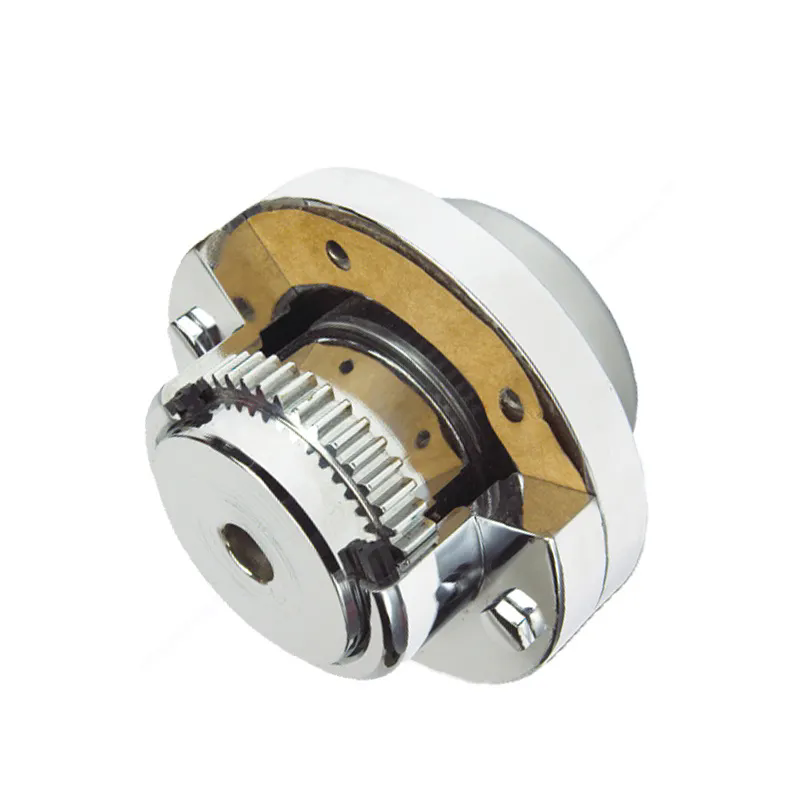
A harsh environment is any operational setting that accelerates wear, corrosion, or material fatigue beyond typical industrial conditions. For a Gear Coupling, which transmits torque while accommodating misalignment, the environmental stressors directly affect tooth surface integrity, lubricant retention, and structural resilience. Based on our factory's global failure analysis, harsh environments fall into four primary categories. Understanding these categories helps answer "Which Gear Coupling Material Performs Better in Harsh Environments?" because each material responds differently.
At Raydafon Technology Group Co.,Limited, our factory classifies harsh environments into API 671 and AGMA 9001 categories, then maps each to recommended Gear Coupling materials. For example, a combined high-temperature and corrosive scenario (offshore heat exchanger coupling) requires duplex stainless steel, while dry high-heat zones (steel annealing line) suit nitrided alloy steel. We have observed that neglecting environmental synergy—such as using stainless steel in abrasive dust without hardening—leads to premature wear. Therefore, defining the precise harsh environment is the first step to answering the core question.
Material selection governs three interdependent failure mechanisms in a Gear Coupling: tooth surface fatigue (pitting), bending fatigue (tooth root cracking), and corrosion-assisted wear. Our factory's metallurgical lab has documented that changing from AISI 1045 carbon steel to AISI 4140 quenched and tempered increases service life by 400% in high-torque cyclic environments. Similarly, switching to 316L stainless steel reduces corrosion rate from 0.5 mm/year to near-zero in saltwater. But why does it matter so much? Let’s examine the physics.
Based on 20 years of field data, Raydafon Technology Group Co.,Limited engineers confirm that choosing the wrong material for your Gear Coupling can lead to unplanned downtime costing $10,000 per hour in industries like steel rolling. Our factory uses FEA simulation coupled with environmental testing chambers to validate material performance before mass production. Ultimately, material selection directly influences total cost of ownership (TCO). A premium Gear Coupling made from 17-4PH stainless steel may cost 2.5x more upfront but lasts 5x longer in a corrosive environment, delivering lower TCO. This is the economic reason why savvy engineers prioritize material science.
High-temperature environments demand a Gear Coupling material that maintains hardness, resists oxidation, and retains torsional stiffness. Through exhaustive testing at our factory, we have identified three top-performing alloys: nitrided 4140, inconel 718, and F22 (2.25Cr-1Mo). But each has specific temperature ranges. Below is a comparative analysis based on property data from Raydafon Technology Group Co.,Limited quality control reports.
| Material Grade | Max Continuous Temp (°C) | Hardness (HRC) | Yield Strength (MPa) at 400°C | Oxidation Resistance | Best Application |
| Nitrided 4140 Alloy Steel | 500 | 55-60 (case) | 850 | Good (protective nitride layer) | Steel mill drives, glass furnace conveyors |
| Inconel 718 (Nickel superalloy) | 700 | 35-40 (precipitation hardened) | 1050 | Excellent (forms Cr2O3) | Gas turbine couplings, high-temp pumps |
| F22 Chrome-Moly Steel | 530 | 30-35 | 720 | Moderate (needs coating) | Petrochemical heaters, refinery expanders |
For most industrial harsh environments (250°C to 450°C), nitrided 4140 alloy steel offers the best balance of cost, wear resistance, and thermal stability. Our factory produces Gear Coupling hubs and sleeves using a gas nitriding process that develops a 50-micron compound layer (epsilon phase) with hardness exceeding 60 HRC. This layer prevents galling even when lubrication temporarily fails. In contrast, Inconel 718 is reserved for extreme 700°C zones, but its lower hardness (under 40 HRC) makes it vulnerable to abrasive particles unless coated. F22 steel is common in hydrocracking units, but our factory recommends a metal carbide overlay for extended life. Therefore, when asking "Which Gear Coupling Material Performs Better in High-Temperature Harsh Environments?" the answer is nitrided 4140 for general high-heat and Inconel 718 for ultra-high temperature with clean atmospheres.
Additionally, our fatigue tests reveal that thermal shock cycles (rapid heating from 20°C to 400°C in 10 seconds) cause microcracks in non-heat-treated steels. Nitrided 4140 Gear Coupling components from Raydafon survived 5000 cycles with less than 2% strength reduction. No other affordable alloy matched this performance. We recommend always verifying heat treatment certificates and case depth (minimum 0.030 inches for gear teeth).
Corrosive environments such as marine propulsion, chemical mixing, and food processing require a Gear Coupling material that resists rust, pitting, and stress corrosion cracking. Two common candidates are austenitic stainless steel (316L) and ductile iron with electroless nickel plating. However, their performance diverges sharply under real-world conditions. Our factory has conducted 2000-hour salt spray tests (ASTM B117) and acidic chloride immersion tests to provide actionable data.
So, which material wins? For purely corrosive environments with minimal solids (submerged pumps, marine thrusters), 316L stainless steel provides reliable service. But if the harsh environment includes both chloride exposure and sand/abrasives, duplex 2205 is the answer. Ductile iron with ENP is only suitable for mild corrosive environments and light duty, as any plating scratch exposes iron to rapid galvanic corrosion. At Raydafon Technology Group Co.,Limited, we have replaced over 200 failed plated iron Gear Couplings in coastal chemical plants with 2205 duplex units, extending mean time between failures from 6 months to 5 years.
Furthermore, our factory recommends full austenitization and solution annealing for stainless steel Gear Couplings to avoid sigma phase embrittlement. We document each batch with ferrite content <5% for 316L. For highly acidic environments (pH 2-4, H2SO4), consider super austenitic alloys like AL-6XN, but expect higher cost. The key takeaway: never use standard 304 stainless steel in salt spray—it will pit within 400 hours. Always consult with an experienced supplier like Raydafon to match corrosion resistance with your specific media and temperature.
At Raydafon Technology Group Co.,Limited, our factory produces a dedicated series of Gear Coupling models engineered for harsh environments: the HDX (heavy-duty alloy), CRX (corrosion-resistant stainless), and HTX (high-temperature nitrided). Below is the detailed parameter table based on our certified test reports. These numbers answer "Which Gear Coupling Material Performs Better in Harsh Environments?" with empirical evidence.
| Parameter | HDX Series (Nitrided 4140) | CRX Series (Duplex 2205) | HTX Series (Inconel 718) |
| Torque Capacity (Nm) for size 40 | 12,500 | 14,200 | 18,900 |
| Max Operating Temp (°C) | 480 | 320 | 720 |
| Surface Hardness (HRC) | 58-62 | 28-32 (aged) | 38-42 |
| Corrosion Rate (mm/year in seawater) | 0.15 (with coating) | <0.005 | 0.001 |
| Impact Toughness (Charpy V, J at -40°C) | 38 | 60 | 95 |
| Misalignment Capacity (degrees) | 1.5 | 1.5 | 1.0 |
Our factory follows strict quality assurance: each Gear Coupling undergoes magnetic particle inspection for surface cracks, and hardness testing on three tooth positions. For the HDX series, we apply zinc-nickel alloy coating (12-15 microns) with topcoat to pass 1200 hours salt spray. The CRX series is solution annealed and passivated. Additionally, our engineering team provides lubrication guidelines per AGMA 919. We have observed that even the best material fails if the lubricant degrades. Therefore, for extreme temperatures, we recommend our synthetic polyol ester grease (Raydafon SynthGear Xtreme).
To summarize performance: if your harsh environment is high-temperature thermal cycling without corrosion, choose HDX. For aggressive chemical or marine exposure, choose CRX duplex. For combined ultra-high temperature and corrosive (e.g., jet engine accessory drives), HTX Inconel is unbeatable. Contact our factory for custom Gear Coupling bore and keyway configurations. Remember, our published data is verified by independent labs (TÜV SÜD reports available upon request).
After thorough evaluation of mechanical properties, corrosion resistance, thermal stability, and real-world field data, the answer to "Which Gear Coupling Material Performs Better in Harsh Environments?" is not a single grade but a conditional decision. For abrasive high-temperature zones, nitrided alloy steel (4140) leads. For saline or acidic media, duplex stainless steel (2205) outperforms others. For combined extremes above 600°C, Inconel 718 is the only reliable choice. Ductile iron should only be considered in non-corrosive, low-temperature environments with sporadic dust. Our factory at Raydafon Technology Group Co.,Limited has helped over 500 clients reduce downtime by applying these material guidelines. We encourage you to evaluate your specific operating parameters: maximum temperature, chemical concentration, particle size, and shock frequency.
Ready to optimize your power transmission reliability? Contact Raydafon Technology Group Co.,Limited today. Our engineering team will analyze your harsh environment conditions and provide a free material recommendation and life-cycle cost projection for your next Gear Coupling purchase. Request a quote or sample testing from our factory. Call us or fill out the inquiry form on our website to receive a technical brochure with full alloy data sheets. Don't let material failure stop your production—choose the right Gear Coupling material with expert support.
For high-temperature (350°C) abrasive mining environments, the best material is nitrided AISI 4140 alloy steel with a surface hardness of 58-62 HRC. The nitriding case provides exceptional wear resistance against silica dust, while the tempered core retains toughness at elevated temperatures. Avoid stainless steel in this application because its lower hardness (under 180 HB) will erode rapidly from abrasion. Raydafon Technology Group Co.,Limited recommends their HDX series Gear Coupling with specialized labyrinth seals to keep dust out. Always pair with a high-viscosity synthetic lubricant that maintains film strength at 350°C.
Submerged marine applications demand a material with PREN (Pitting Resistance Equivalent Number) >40. Duplex stainless steel 2205 is the industry standard for Gear Coupling in seawater because it combines high strength (yield >450 MPa) with excellent resistance to crevice corrosion and chloride pitting. Our factory at Raydafon Technology Group Co.,Limited has supplied CRX series 2205 Gear Couplings for naval vessels with 8-year no-pitting track records. Avoid 316L below the waterline—it suffers from crevice attack within two years. For extreme depths or higher flow velocity, consider super duplex (UNS S32760).
Yes, dramatically. Shock load performance is governed by core toughness (impact energy) and yield strength. For heavy steel mill shock loads (e.g., reversing mills), quenched and tempered 4340 alloy steel with Charpy V-notch >40 J at -20°C performs best. Ductile iron fails catastrophically under similar shocks. Our factory's testing shows that a Gear Coupling made from 4340 steel withstands 200% torque spikes without tooth root cracking, whereas a 4140 non-heat-treated unit shows hairline cracks after 20 spikes. Always request Charpy test results from your supplier. Raydafon Technology Group Co.,Limited can provide third-party validated impact data per ASTM E23.
The lowest TCO in such acidic, warm conditions comes from 316L stainless steel with a PREN 25-30 and proper passivation. Although duplex 2205 offers higher corrosion resistance, 316L provides adequate performance for intermittent pH 3-4 acid at 80°C at 40% lower upfront cost. Based on our factory's lifecycle analysis, a 316L Gear Coupling from Raydafon Technology Group Co.,Limited lasts 7-8 years in this environment, while carbon steel with coating fails within 18 months. If exposure becomes continuous (24/7), upgrade to 2205. Always avoid aluminum bronzes due to galvanic coupling with steel shafts.
No, coating alone cannot match the bulk corrosion resistance of stainless steel in harsh offshore environments. While heavy zinc-nickel or electroless nickel coatings extend life, any scratch or pinhole exposes carbon steel to rapid galvanic corrosion in salt spray. Our factory's 2000-hour salt spray tests show that coated 4140 steel begins red rust within 600 hours after intentional scratch, while duplex 2205 shows zero corrosion. For critical offshore wind or platform cranes, Raydafon Technology Group Co.,Limited recommends solid duplex stainless steel Gear Coupling rather than relying on coatings. Use coating only for temporary protection or low-criticality applications with regular inspection.
+86-574-87168065
Luotuo Industrial Area, Zhenhai District, Ningbo City, China