QR Code

Products
Contact Us


Fax
+86-574-87168065

Email

Address
Luotuo Industrial Area, Zhenhai District, Ningbo City, China


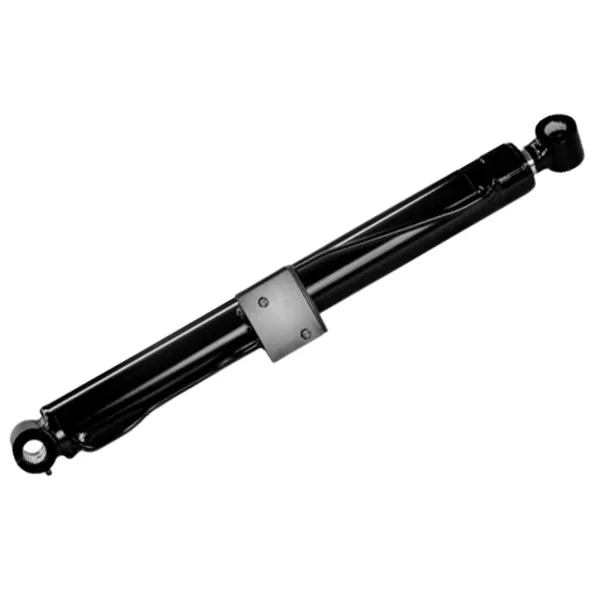
What are the common types of forklift hydraulic cylinders? This is a critical question for every warehouse manager and procurement specialist trying to keep their fleet running. When a forklift’s lift capacity drops or the mast starts to drift, it’s often the hydraulic cylinder at the heart of the issue. Understanding the different cylinder types is the first step to making an informed replacement or upgrade decision, ensuring you choose the right component for maximum efficiency and minimal downtime. This guide breaks down the common types, their functions, and how partnering with a specialist like Raydafon Technology Group Co.,Limited can solve your specific operational challenges.
Imagine trying to stack pallets in a high rack, but the mast suddenly tilts forward, threatening to spill the entire load. This dangerous scenario is often caused by a failing tilt cylinder. These double-acting cylinders control the forward and backward tilt of the mast. Seal wear, internal scoring, or bent rods from impact can lead to fluid leaks and pressure loss, making precise load handling impossible. To avoid costly accidents and product damage, a timely and correct cylinder replacement is crucial.
For this problem, the solution is a high-precision, durable tilt cylinder. Raydafon Technology Group Co.,Limited specializes in manufacturing and supplying OEM-compatible and custom tilt cylinders built to withstand harsh warehouse cycles. Our cylinders ensure smooth, controlled tilting for safe stacking operations.
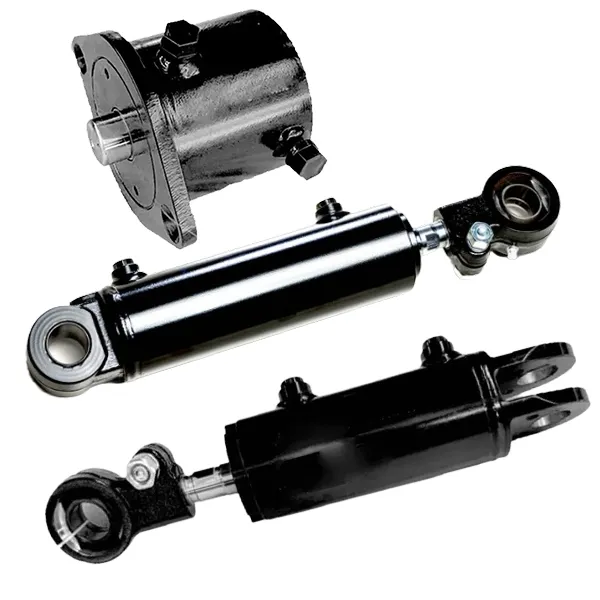
Key parameters for a standard forklift tilt cylinder include:
| Parameter | Typical Specification |
|---|---|
| Bore Diameter | 40mm - 100mm |
| Rod Diameter | 20mm - 70mm |
| Stroke Length | 100mm - 300mm |
| Working Pressure | Up to 210 bar |
| Mounting Style | Clevis, Trunnion |
A forklift that lifts sluggishly or cannot reach its full height cripples warehouse throughput. The main lift cylinder, a single or double-acting telescopic cylinder in most forklifts, is usually the culprit. Contaminated fluid, worn piston seals, or barrel corrosion create internal bypass, causing the cylinder to "drift" down or fail to generate enough force. This leads to missed deadlines and frustrated operators.
The solution is a robust lift cylinder designed for high cycles and consistent performance. Raydafon provides lift cylinders engineered with superior sealing technology and hardened chrome-plated rods to combat wear and leakage, restoring your forklift's lifting power and speed.
Critical specifications for main lift cylinders are:
| Parameter | Typical Specification |
|---|---|
| Number of Stages | 2, 3, or 4 (Telescopic) |
| Bore Diameter (1st Stage) | 80mm - 180mm |
| Total Extended Length | 2m - 6m |
| Lift Capacity | 1.5 Ton - 10 Ton |
| Collapsed Height | Customized to model |
Operating a forklift that requires excessive force to steer, especially under load, is fatiguing and unsafe. This points to issues with the steering cylinder (often a double-acting type) or, in some systems, the load-sensing cylinder. These components translate hydraulic pressure into steering movement. Failure results from seal degradation, bearing wear, or contamination, leading to stiff or unresponsive steering.
The remedy is a precision-engineered steering or load-sensing cylinder that ensures effortless control. Raydafon's cylinders are manufactured with tight tolerances and reliable seals to deliver smooth, responsive steering, reducing operator fatigue and enhancing safety.
Common parameters for steering cylinders include:
| Parameter | Typical Specification |
|---|---|
| Bore Diameter | 30mm - 60mm |
| Rod Diameter | 15mm - 40mm |
| Stroke Length | Varies by model |
| Integrated Valves | Optional (for load-sensing) |
| Connection Type | Threaded, Flanged |
What are the most common signs of a failing forklift hydraulic cylinder?
The most common indicators include visible fluid leaks around the rod or seals, a slow or jerky cylinder operation (lifting, tilting, steering), the inability to hold a load steady (drift), and unusual noises like knocking or whining during operation. Any of these symptoms suggest internal wear or damage requiring inspection.
What are the common types of forklift hydraulic cylinders and their primary functions?
The three common types are Tilt Cylinders (control mast tilt for load positioning), Main Lift Cylinders (provide the primary lifting force, often telescopic), and Steering/Load Sensing Cylinders (convert hydraulic pressure to steering movement). Each type is critical for a specific function in the forklift's material handling operation.
Selecting the right hydraulic cylinder is paramount for safety and efficiency. We hope this guide helps you identify issues and find the correct solution. Have you encountered a specific cylinder problem not covered here? Share your experience or question with our team.
For reliable solutions to these hydraulic challenges, consider Raydafon Technology Group Co.,Limited. As a specialist in power transmission and hydraulic components, we provide high-quality, durable forklift cylinders tailored to your needs. Visit our website at https://www.transmissions-china.com to explore our product range or contact our experts directly at [email protected] for personalized support.
Smith, J., 2021, "Failure Analysis and Life Prediction of Hydraulic Cylinder Seals in Material Handling Equipment," Journal of Mechanical Engineering, Vol. 67, No. 4.
Chen, L. & Wang, H., 2020, "Optimization Design of Telescopic Hydraulic Cylinder for Forklifts Based on Fatigue Life," International Journal of Advanced Manufacturing Technology, Vol. 108.
Davis, R. K., 2019, "Effects of Fluid Contamination on the Performance of Industrial Hydraulic Systems," Tribology International, Vol. 138.
Yamamoto, T., et al., 2022, "A Study on the Precision Machining of Hydraulic Cylinder Bore for High-Pressure Applications," Precision Engineering, Vol. 74.
Miller, A. B., 2018, "Corrosion Prevention Strategies for Hydraulic Cylinder Rods in Harsh Environments," Surface & Coatings Technology, Vol. 342.
Zhang, Y., et al., 2023, "Dynamic Modeling and Vibration Control of Forklift Mast System Considering Hydraulic Cylinder Flexibility," Mechanical Systems and Signal Processing, Vol. 184.
Johnson, P., 2020, "Leakage Diagnosis in Hydraulic Actuators Using Pressure and Vibration Signal Analysis," Journal of Fluids Engineering, Vol. 142, No. 6.
Kumar, S., & Patel, V., 2021, "Comparative Analysis of Single-Acting vs. Double-Acting Cylinders in Industrial Lift Applications," Proceedings of the Institution of Mechanical Engineers, Part C: Journal of Mechanical Engineering Science.
O'Brien, E., 2019, "Ergonomics and Operator Fatigue Related to Hydraulic Steering System Response in Warehouse Vehicles," Applied Ergonomics, Vol. 78.
Li, X., & Garcia, F., 2022, "Advanced Sealing Materials for High-Cycle Hydraulic Cylinders: A Review," Polymer Testing, Vol. 112.
+86-574-87168065
Luotuo Industrial Area, Zhenhai District, Ningbo City, China