QR Code

Products
Contact Us


Fax
+86-574-87168065

Email

Address
Luotuo Industrial Area, Zhenhai District, Ningbo City, China


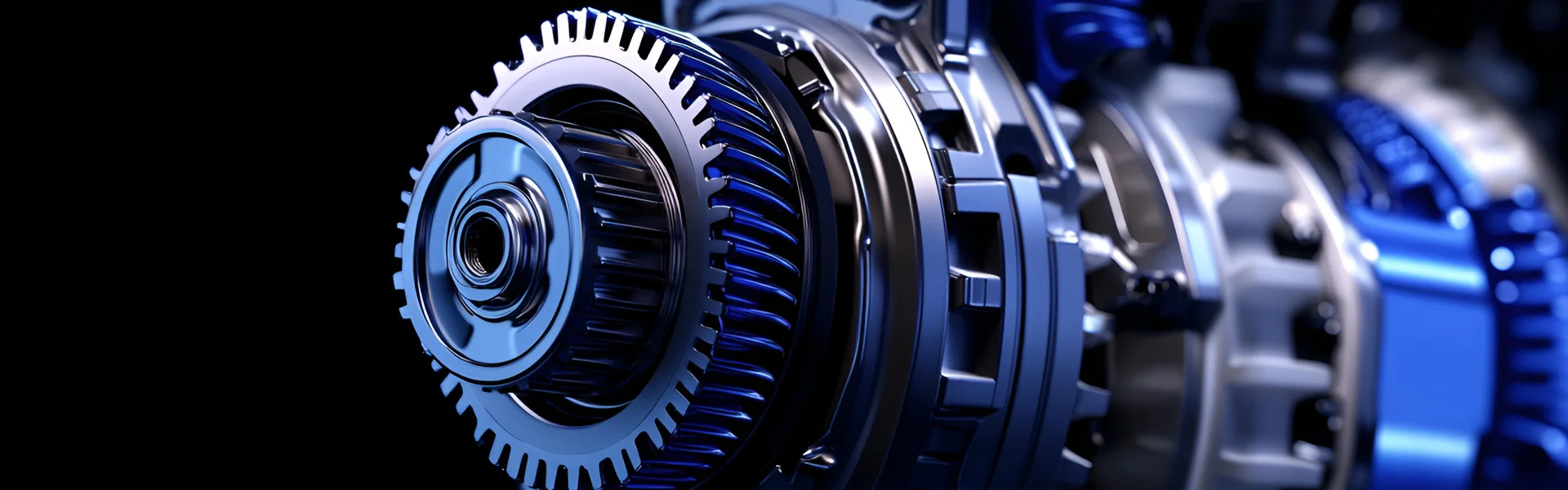
Wear resistance is one of the most decisive factors affecting the service life, efficiency, and reliability of a Worm Gearbox in industrial power transmission systems. In applications such as conveyors, automation lines, lifting equipment, and packaging machinery, continuous sliding contact between worm and gear surfaces inevitably generates friction. The choice of materials directly determines how well these components withstand wear, heat, and long-term mechanical stress.
At Raydafon Technology Group Co.,Limited, material engineering has always been a core part of product development. Through years of industrial experience, our understanding of tribology, metallurgy, and load behavior allows us to optimize every Worm Gearbox for demanding operating environments. From alloy selection to surface treatment, each decision influences performance stability, noise levels, and maintenance cycles.
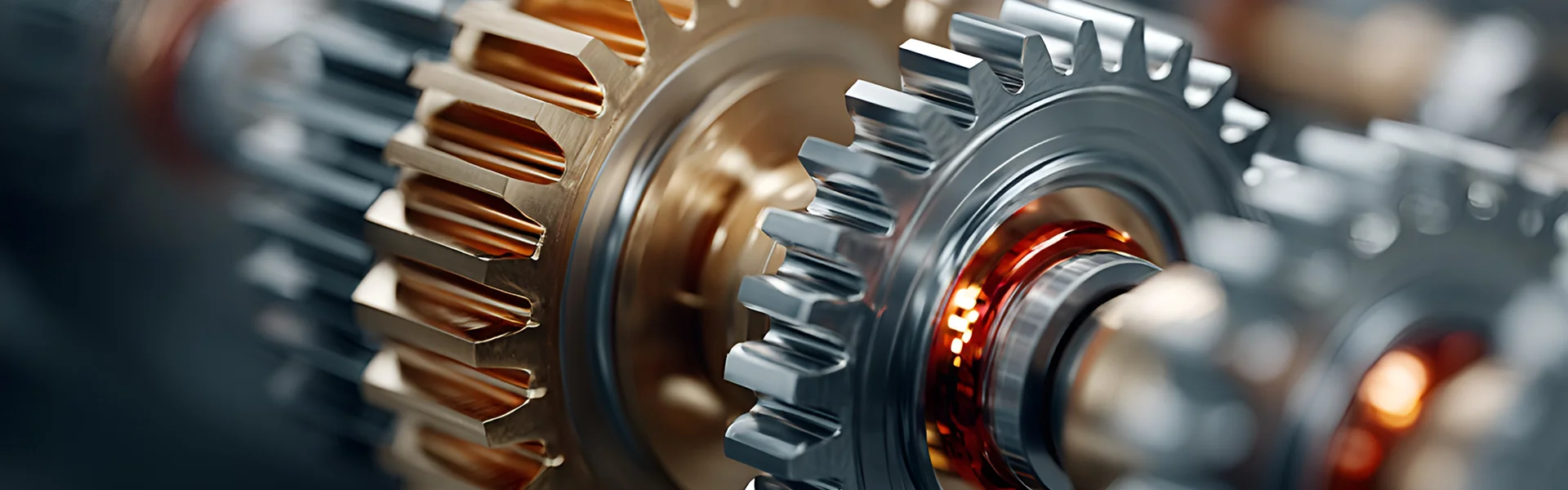
A Worm Gearbox differs fundamentally from spur, helical, or bevel gear systems because torque transmission relies primarily on sliding contact rather than rolling motion. This structural characteristic allows compact design and high reduction ratios, but it also introduces continuous friction at the tooth interface. As a result, material properties become the dominant factor in determining wear resistance and operational stability.
In real industrial environments, a Worm Gearbox is often subjected to fluctuating loads, start stop cycles, thermal variation, and long duty hours. Each of these conditions amplifies surface interaction between the worm shaft and worm wheel. From our engineering perspective, wear resistance is not defined by hardness alone but by how a material responds to friction, heat, and micro deformation over time.
At Raydafon Technology Group Co.,Limited, our material selection process starts by analyzing the expected wear mechanism rather than relying on standardized material charts. Our factory evaluates whether the dominant risk is adhesive wear, abrasive wear, surface fatigue, or thermal softening, then matches material properties accordingly.
Wear resistance in a Worm Gearbox is governed by a combination of mechanical, thermal, and tribological properties. These properties work together rather than independently, which is why balanced material engineering is essential.
Hardness controls resistance to surface deformation and micro cutting. However, in worm gear systems, excessive hardness on both mating components can accelerate damage rather than prevent it.
Our factory typically applies surface hardening to the worm while maintaining a tougher core. This approach ensures dimensional stability while allowing the wheel to adapt microscopically during the running in period.
Tensile and yield strength determine how well a material withstands transmitted torque without permanent deformation. In a Worm Gearbox, insufficient strength leads to tooth deformation, which increases contact stress and accelerates wear.
Raydafon Technology Group Co.,Limited specifies strength values based on real torque curves rather than nominal ratings, ensuring long term performance under variable operating conditions.
The coefficient of friction directly affects heat generation at the contact surface. Lower friction reduces surface temperature, which slows wear progression and protects lubricant integrity.
In our factory, friction behavior is evaluated in combination with lubrication strategy to ensure that the selected materials complement the operating environment.
Heat is an unavoidable byproduct of sliding motion in a Worm Gearbox. If heat is not effectively managed, it accelerates wear through lubricant breakdown, surface softening, and thermal expansion.
Materials with good thermal conductivity dissipate friction heat more efficiently, reducing localized hot spots at the tooth interface.
Thermal stability refers to a material’s ability to maintain mechanical properties at operating temperature. In continuous duty applications, unstable materials may soften, increasing wear rate dramatically.
Our engineering evaluations at Raydafon Technology Group Co.,Limited include temperature rise testing to confirm that selected materials remain within safe operating limits throughout extended service cycles.
Beyond chemical composition, the internal microstructure of a material strongly affects wear resistance. Grain size, phase distribution, and inclusion control all influence how a surface responds to repeated sliding contact.
Non metallic inclusions act as initiation points for micro cracks and surface spalling. Strict material sourcing standards in our factory ensure minimal inclusion content for critical Worm Gearbox components.
Each component in a Worm Gearbox experiences different stress profiles, which is why material selection varies by function.
| Component | Material Type | Key Properties | Wear Resistance Behavior |
| Worm Shaft | Carburized Alloy Steel | High surface hardness, tough core | Resists scoring and surface fatigue |
| Worm Wheel | Phosphor Bronze | Low friction, good thermal conductivity | Controlled sacrificial wear |
| Housing | Cast Iron or Aluminum Alloy | Dimensional stability, heat dissipation | Indirect wear reduction through alignment stability |
At Raydafon Technology Group Co.,Limited, these material combinations are validated through load simulation and endurance testing. Our goal is not to eliminate wear completely, which is unrealistic, but to manage wear in a predictable and controlled manner.
A common misconception is that harder materials always provide better wear resistance. In a Worm Gearbox, this approach often leads to increased friction, noise, and premature failure.
Our factory prioritizes balanced material properties that support stable contact geometry, consistent lubrication films, and gradual wear progression. This philosophy allows each Worm Gearbox to deliver reliable performance across its intended service life.
Through years of application experience, Raydafon Technology Group Co.,Limited has observed that material related wear issues often stem from mismatched operating expectations rather than material quality itself. By aligning material properties with real load profiles, duty cycles, and environmental conditions, wear resistance improves significantly.
This systematic approach ensures that every Worm Gearbox leaving our factory reflects not only sound material science but also practical industrial reliability.
In a Worm Gearbox system, the worm and worm wheel do not operate as independent components. Instead, they function as a tightly coupled tribological pair where material interaction directly defines efficiency, wear rate, and service life. Unlike gear systems dominated by rolling contact, worm drives rely on continuous sliding motion, making the compatibility between mating materials far more critical.
From an engineering standpoint, the worm and worm wheel must be treated as a single mechanical unit rather than separate parts. Even the highest-quality material can fail prematurely if paired incorrectly. This is why material pairing is one of the most decisive factors in long-term performance.
At Raydafon, our design process always begins with pairing logic rather than isolated material strength. Our factory evaluates how materials interact under load, heat, and lubrication, ensuring that each Worm Gearbox achieves stable and predictable wear behavior over its full service cycle.
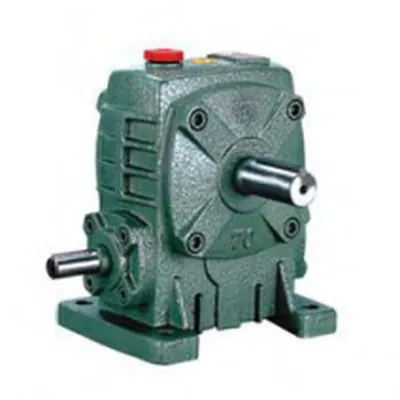
A common misconception in mechanical design is that eliminating wear entirely should be the goal. In reality, for worm gear systems, controlled wear is not only unavoidable but desirable. Proper material pairing ensures that wear occurs gradually and predictably on the sacrificial component, typically the worm wheel, while protecting the worm shaft and maintaining overall transmission integrity.
This principle is fundamental to long-term performance. If both components are excessively hard, surface damage accelerates. If both are too soft, deformation and efficiency loss occur. The correct pairing balances these extremes.
Our factory designs each Worm Gearbox to reach a stable wear equilibrium early in its service life, reducing the risk of sudden performance degradation later on.
Over decades of industrial application, certain material pairings have proven consistently effective for worm gear systems. These combinations are not arbitrary but based on friction behavior, thermal compatibility, and load response.
This is the most widely adopted pairing due to its reliable wear characteristics and efficiency balance.
Raydafon Technology Group Co.,Limited frequently applies this pairing in applications requiring continuous operation and moderate to high torque, as it delivers long service life with predictable maintenance intervals.
For higher load conditions and more demanding environments, nitrided steel paired with aluminum bronze provides enhanced surface durability.
In our factory, this combination is often selected for heavy-duty Worm Gearbox designs where shock loads and long duty cycles are expected.
This pairing prioritizes smooth operation and low noise, making it suitable for precision machinery and automation equipment.
Efficiency in a Worm Gearbox is closely linked to friction behavior, which is determined by material pairing. Poorly matched materials increase friction, leading to excessive heat generation and accelerated wear.
Proper pairing achieves a balance where friction remains low enough to protect surfaces while still allowing sufficient load transfer. This balance directly impacts thermal stability.
Our engineering teams at Raydafon Technology Group Co.,Limited analyze efficiency curves alongside material data to ensure that each Worm Gearbox maintains performance under real operating conditions rather than ideal laboratory assumptions.
Material pairing cannot be evaluated independently of lubrication. Different material combinations interact with lubricants in distinct ways, affecting film formation, viscosity stability, and contamination tolerance.
In our factory, lubrication strategy is developed alongside material selection, ensuring compatibility that enhances wear resistance rather than undermines it.
When material pairing is neglected or incorrectly specified, wear-related failures often occur long before the theoretical service life is reached.
Raydafon Technology Group Co.,Limited has encountered many cases where premature Worm Gearbox failure was traced back to inappropriate material pairing rather than manufacturing defects. These experiences reinforce the importance of engineering-driven material decisions.
When worm and worm wheel materials are properly paired, the benefits extend well beyond wear resistance alone. Long-term performance improvements are cumulative and measurable.
By integrating material science, tribology, and application data, our factory ensures that every Worm Gearbox configuration supports long-term operational stability. This systematic approach allows Raydafon Technology Group Co.,Limited to deliver solutions that meet both immediate performance requirements and long-term reliability expectations.
Even when the correct materials are chosen, the wear resistance of a Worm Gearbox cannot be guaranteed without precise manufacturing processes and appropriate surface treatments. Raw materials only define the potential performance ceiling. It is manufacturing accuracy and surface engineering that determine whether that potential is fully realized in real operating conditions.
In worm drive systems, where sliding contact dominates, surface condition, dimensional accuracy, and subsurface strength directly affect friction behavior and wear progression. Minor deviations in processing can significantly shorten service life. For this reason, manufacturing quality is inseparable from material performance.
At Raydafon Technology Group Co.,Limited, our factory treats manufacturing processes as a continuation of material engineering rather than a separate stage. Each process step is designed to enhance wear resistance and stabilize long-term performance.
Heat treatment is one of the most critical processes for improving the wear resistance of Worm Gearbox components. By modifying the microstructure of metals, heat treatment enhances surface hardness, fatigue resistance, and load-bearing capability while preserving core toughness.
Carburizing introduces carbon into the surface layer of steel, creating a hard outer case while maintaining a tough, ductile core. This combination is ideal for worm shafts that experience high contact stress and continuous sliding.
Our factory controls carburizing depth precisely to ensure consistent wear behavior across production batches.
Nitriding diffuses nitrogen into the steel surface at lower temperatures, forming hard nitrides without significant distortion. This process is particularly valuable for high-precision Worm Gearbox designs.
Quenching and tempering balance hardness and toughness, ensuring that components resist wear without becoming brittle. This balance is essential for maintaining tooth integrity over long service periods.
Manufacturing accuracy directly influences load distribution and contact patterns in a Worm Gearbox. Poor machining results in localized stress concentrations, which accelerate wear regardless of material quality.
Accurate tooth geometry ensures even load sharing across the contact surface. In sliding systems, this uniformity significantly reduces localized wear and surface damage.
Surface roughness plays a crucial role in friction behavior and lubrication film stability. Excessively rough surfaces increase friction and wear, while overly smooth surfaces may struggle to retain lubricant.
Raydafon Technology Group Co.,Limited applies precision grinding and finishing processes to achieve surface conditions optimized for sliding contact.
In addition to traditional heat treatment, advanced surface treatments further enhance wear resistance by modifying surface chemistry and interaction characteristics.
Surface coatings create protective layers that reduce friction and protect against adhesive wear, particularly during initial operation.
Micro-scale surface texturing helps retain lubricant and stabilize the lubrication film under sliding motion. This approach is increasingly applied in high-performance Worm Gearbox designs.
Consistent process control is essential to ensure that wear resistance is repeatable across production volumes. Key manufacturing parameters must be monitored and documented.
| Process Stage | Control Parameter | Typical Range | Effect on Wear Resistance |
| Heat Treatment | Surface Hardness | HRC 58 to 62 | Improves resistance to surface fatigue |
| Machining | Gear Accuracy Grade | DIN 7 to DIN 8 | Ensures uniform load distribution |
| Finishing | Surface Roughness Ra | 0.8 to 1.6 microns | Reduces friction and initial wear |
Advanced manufacturing processes only deliver results when supported by rigorous quality control. Wear resistance is highly sensitive to small deviations, making inspection and testing essential.
In our factory, every Worm Gearbox undergoes systematic inspection to ensure that manufacturing processes consistently support the intended wear resistance characteristics.
When manufacturing processes and surface treatments are aligned with material selection, the result is a Worm Gearbox with predictable wear behavior and extended service life. These benefits compound over time, reducing maintenance costs and improving operational reliability.
By integrating material science, manufacturing precision, and surface engineering, Raydafon Technology Group Co.,Limited ensures that each Worm Gearbox delivers durable, long-term performance. This comprehensive approach transforms material potential into measurable reliability in real industrial applications.
Material selection plays a decisive role in determining the wear resistance of Worm Gearbox components. From fundamental material properties to pairing strategies and surface engineering, every detail influences performance, efficiency, and lifespan. High-quality materials combined with precise manufacturing processes enable predictable wear behavior and reduced maintenance.
With extensive experience and strict quality standards, Raydafon Technology Group Co.,Limited continues to optimize material solutions for diverse applications. Our commitment to engineering excellence ensures that each Worm Gearbox delivers dependable service under real-world operating conditions.
If your project requires stable performance, long service life, and optimized wear resistance, our team is ready to support your selection and customization needs. Contact our factory today to discuss your technical requirements and receive professional recommendations tailored to your application.
Q1: How material selection impacts the wear resistance of Worm Gearbox components?
Material selection determines hardness balance, friction behavior, and thermal performance, which directly control wear rate and service life.
Q2: How material selection impacts the wear resistance of Worm Gearbox components in high-load applications?
High-load conditions require alloy steels and bronze combinations that distribute stress evenly while maintaining controlled wear.
Q3: How material selection impacts the wear resistance of Worm Gearbox components under continuous operation?
Materials with stable microstructures and good heat dissipation reduce thermal degradation during long duty cycles.
Q4: How material selection impacts the wear resistance of Worm Gearbox components when lubrication is limited?
Low-friction materials such as phosphor bronze help minimize surface damage when lubrication conditions are less than ideal.
Q5: How material selection impacts the wear resistance of Worm Gearbox components over long-term use?
Proper material pairing and surface treatment ensure predictable wear patterns, reducing unexpected failures and maintenance costs.
+86-574-87168065
Luotuo Industrial Area, Zhenhai District, Ningbo City, China