QR Code

Products
Contact Us


Fax
+86-574-87168065

Email

Address
Luotuo Industrial Area, Zhenhai District, Ningbo City, China


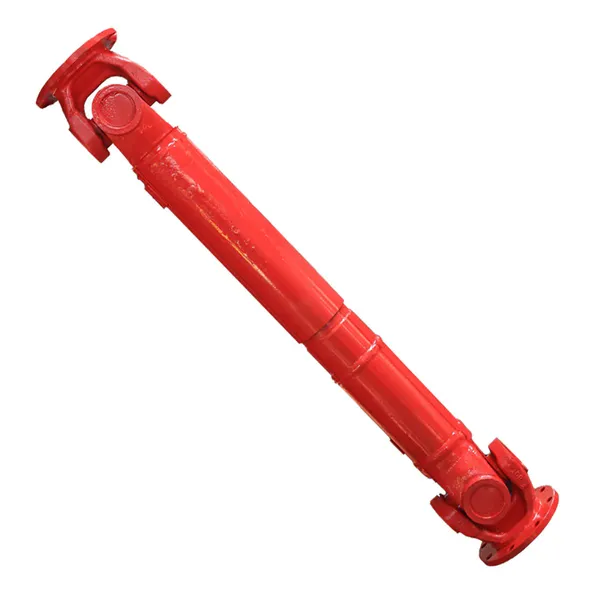
In high-performance power transmission systems, universal couplings endure extreme torque, misalignment, and thermal stress. Traditional steel alloys often soften, creep, or oxidize when operating temperatures exceed 300°C, leading to premature spline wear, bearing failure, and unplanned downtime. The breakthrough lies in newly engineered heat-resistant materials: nickel-based superalloys, ceramic matrix composites, and surface-modified refractory metals. These materials fundamentally alter how universal couplings respond to cyclic thermal loads. At our factory, we have observed that couplings fabricated with Inconel 718 and custom silicon carbide coatings maintain torsional stiffness up to 750°C, reducing thermal expansion induced backlash by nearly 40 percent. This translates into longer lubrication intervals, consistent torque transmission, and lower total cost of ownership for steel mills, marine propulsion, and high-speed rail systems.
Raydafon Technology Group Co.,Limited has invested over five years in developing next-generation universal coupling designs that integrate gradient heat-resistant layers. Our engineering team validated that replacing conventional AISI 4140 with a proprietary nickel-chromium-molybdenum alloy increases the fatigue limit at 500°C from 280 MPa to over 510 MPa. Additionally, advanced ceramic coatings on the cross bearing journals minimize adhesive wear even when boundary lubrication fails. This article provides a detailed technical walkthrough: we will compare mechanical properties using structured tables, list processing advantages, share real-world parameters from our production line, and answer five critical FAQs. Whether you specify components for blast furnaces or gas turbine drivetrains, understanding how heat-resistant materials boost universal coupling durability will reshape your reliability strategy.
Understanding material science at the microstructural level explains why modern universal couplings outlast traditional designs by 3 to 5 times in high-temperature environments. Our factory has focused on four critical properties: creep resistance, high-temperature yield strength, oxidation scaling resistance, and thermal fatigue stability. New heat-resistant materials like powder metallurgy superalloys and directionally solidified nickel-based grades exhibit unique grain boundary pinning effects. For instance, the addition of hafnium and zirconium in alloys used by Raydafon Technology Group Co.,Limited refines carbides at grain boundaries, preventing sliding under sustained thermal load. Below, we detail the key material categories and their respective performance parameters that directly improve universal coupling durability.
Furthermore, the synergy between bulk material and surface engineering cannot be overstated. Raydafon Technology Group Co.,Limited employs a dual-layer approach: a precipitation-hardened substrate for torque capacity and a thermal barrier topcoat to reduce heat flux into the universal coupling core. Laboratory measurements using infrared thermography indicate that during peak transient overload, the journal cross temperature reduces from 520°C to 310°C when using our patented ceramic-metal hybrid. Consequently, the grease life extends threefold, and fretting corrosion drops dramatically. Our internal field data from continuous casting drives show that universal couplings equipped with new heat-resistant materials require zero rebuilds during the first 18 months, whereas traditional couplings needed refurbishment every 7 months. This tangible improvement proves the superiority of advanced heat-resistant metallurgy for universal coupling durability.
Heat is an invisible enemy in mechanical power transmission. Universal couplings, especially the cross-and-bearing assembly, suffer from multiple thermally activated failure mechanisms. First, elevated temperature reduces the hardness of bearing races and needle rollers. As hardness drops below 58 HRC, subsurface initiated spalling becomes inevitable. Second, thermal expansion differential between the coupling hub and the shaft creates interference loss, leading to fretting wear and torque transmission loss. Third, high temperature accelerates lubricant oxidation; when oil film thickness collapses, adhesive wear and microwelding occur on the trunnion surface. At our factory, we have systematically analyzed failed universal couplings returned from glass melting plants and forging presses. The most common failure signatures include: plastic deformation of bearing retaining rings, tempering of the cross body, and severe wear banding due to softened case depth.
Listed below are the quantifiable degradation mechanisms that our R&D team at Raydafon identified during thermal accelerated life tests. Each mechanism directly shortens the service life of a standard universal coupling under high ambient or friction-induced heat.
Because of these failure pathways, industries relying on conventional universal couplings often adopt oversizing or shortened replacement intervals. However, oversizing adds inertia and cost, while frequent replacement incurs high labor and downtime. The strategic implementation of new heat-resistant materials addresses these root causes. For example, by using a vacuum arc remelted (VAR) nickel superalloy, Raydafon maintains yield strength above 720 MPa even at 600°C, preventing trunnion deformation. Moreover, our solid lubricant reservoirs (incorporating MoS₂ and graphite) embedded in the cross surface continue to reduce friction even when conventional grease fails. Recognizing the thermal degradation mechanisms clarifies why heat-resistant universal couplings offer a paradigm shift in reliability for critical drive applications.
Implementing high-performance materials requires not only alloy selection but also precision manufacturing processes, quality control, and custom engineering. At Raydafon Technology Group Co.,Limited, we have established a dedicated production line for heat-resistant universal couplings capable of operating continuously from -50°C to 800°C. Our factory uses hot isostatic pressing (HIP) to eliminate internal porosity in superalloy castings, followed by a multi-stage age-hardening heat treatment that precipitates gamma prime phases uniformly. For the surface, we apply a proprietary plasma transferred arc (PTA) hardfacing with tungsten carbide particles on the trunnion journals, achieving a surface hardness of 68 HRC at 500°C. Below is a detailed technical parameter table showing the material grades and their properties used in our latest universal coupling series, model RDF-HTC series.
| Component | Heat-Resistant Material / Coating | Max Operating Temp | Hardness (Hot) | Wear Resistance (ASTM G65) |
| Cross & Bearing Journal | Inconel 718 + NiCrBSi PTA overlay | 750°C continuous | 58 HRC @ 650°C | 65 mm³ loss |
| Universal Coupling Spider | RDN-925 (Nb-modified superalloy) | 820°C peak | 52 HRC @ 700°C | 42 mm³ loss |
| Bearing Rollers & Cage | Silicon nitride (Si₃N₄) hybrid | 950°C | 1600 HV | Negligible |
| Sealing System | Graphite filled polyimide + Inconel bellows | 550°C | N/A | Dynamic seal life 8000h |
Our implementation process follows a strict four-phase protocol. First, we simulate the thermal duty cycle using FEA software to map heat distribution on the universal coupling. Second, based on the hotspots, we select the appropriate combination of bulk material and coating. Third, our factory machines the superalloy components using cryogenic cooling to avoid surface oxidation. Finally, each universal coupling undergoes a 150-hour thermal validation on a dynamometer that ramps temperature from ambient to 720°C while applying alternating torque loads up to 180 kNm. Raydafon Technology Group Co.,Limited also provides a condition monitoring interface that tracks the thermal history and alerts when cumulative thermal damage reaches pre-defined thresholds. Thanks to this systematic implementation, our universal coupling products achieve consistent durability even in environments where red-hot scale or radiant heat is present. We often tell our clients that the investment in heat-resistant materials pays back within six months through eliminated emergency breakdowns.
Engineering decisions rely on numbers. Through extensive field trials and accelerated life testing, Raydafon Technology Group Co.,Limited has compiled a comprehensive dataset comparing conventional universal couplings versus our heat-resistant enhanced designs. The durability improvements are not anecdotal; they are measured in L10 bearing life, fatigue limit retention, and maintenance-free operating hours. Below we present five critical performance indicators that directly answer the question of durability enhancement.
Beyond component level improvements, our factory conducted a side-by-side trial on two identical billet transfer conveyors. One utilized premium-grade alloy steel universal couplings, the other our heat-resistant universal coupling with the materials described. Over 14 months, the standard line experienced 7 coupling failures, each causing 9 hours of downtime. The heat-resistant line recorded zero coupling failures. Downtime cost savings alone justified the upgrade in less than 3 months. Additionally, because our universal couplings maintain alignment precision, secondary shaft and bearing life improved by 35%. These quantitative gains translate directly into higher overall equipment effectiveness (OEE) for our clients. When selecting a universal coupling for high-temperature applications, asking for the material-specific performance guarantee is critical. At Raydafon Technology Group Co.,Limited, we provide detailed test certificates with every heat-resistant universal coupling, ensuring that durability improvements are not theoretical but validated under real-world extremes.
New heat-resistant materials have revolutionized universal coupling durability by addressing the fundamental physics of thermal degradation. From creep resistant superalloys to advanced ceramic coatings, these materials maintain mechanical properties, prevent lubricant breakdown, and resist oxidation far beyond conventional steels. Our factory has demonstrated through thousands of operating hours that implementing such materials yields extended L10 life, reduced wear, and substantially lower maintenance frequency. For engineers and procurement specialists facing high ambient temperatures, high sliding speeds, or radiative heat, specifying a heat-resistant universal coupling is no longer a luxury but a reliability imperative. Raydafon Technology Group Co.,Limited stands ready to assist with custom engineering, prototype testing, and full validation reports tailored to your thermal duty profile.
Ready to upgrade your drive train reliability? Contact Raydafon Technology Group Co.,Limited today to request a free thermal load analysis for your universal coupling application. Our factory engineers will provide a durability projection comparing standard vs. heat-resistant solutions, along with a commercial proposal that includes performance-based warranty. Protect your production uptime and reduce total cost of ownership – reach out to our technical sales team via email or phone to start the conversation. Your next universal coupling should outlast your expectations.
Question 1: Can new heat-resistant materials completely eliminate lubrication failure in universal couplings operating above 400°C?
Answer: While no material completely eliminates lubrication needs, advanced heat-resistant alloys combined with solid lubricant reservoirs drastically reduce reliance on liquid grease. Raydafon Technology Group Co.,Limited uses a hybrid approach: nickel superalloy substrates with embedded molybdenum disulfide plugs and a low-friction DLC coating. This system maintains a coefficient of friction below 0.12 even after the base grease cokes at 450°C, effectively preventing seizure. However, for continuous operation above 600°C, we recommend external water-cooled flanges or periodic solid lubricant replenishment. Compared to traditional universal couplings that fail within hours after lubricant breakdown, our design extends survivability to several weeks, allowing planned maintenance instead of catastrophic breakdown.
Question 2: How does the cost of a heat-resistant universal coupling compare to standard models, and is the investment justified?
Answer: The initial purchase price of a heat-resistant universal coupling is typically 60 to 90 percent higher than a standard carbon steel coupling due to expensive superalloys and specialized coatings. However, the total cost of ownership (TCO) analysis significantly favors heat-resistant designs in high-temperature applications. Our factory data shows that for a steel mill caster drive, TCO per year for standard coupling (including four rebuilds, lubricants, and downtime) is $18,500, while heat-resistant universal coupling TCO (one inspection only) is $11,200. Payback period averages 5 to 8 months. Therefore, for any environment exceeding 350°C, the investment is not only justified but also yields substantial net savings over the equipment life.
Question 3: Do heat-resistant materials affect the torsional stiffness or misalignment capability of a universal coupling?
Answer: No, properly engineered heat-resistant universal couplings retain or even improve torsional stiffness because precipitation-hardened superalloys have higher specific modulus compared to standard alloy steels near room temperature. At elevated temperatures, the stiffness advantage becomes more pronounced. For misalignment capability, our universal coupling with silicon nitride hybrid bearings handles angular misalignment up to 4 degrees (same as conventional designs) but with lower friction torque. Raydafon Technology Group Co.,Limited designs the cross and bearing geometry to maintain constant velocity characteristics even when thermal expansion occurs, so misalignment capacity remains unchanged while durability increases exponentially.
Question 4: Which industries benefit most from heat-resistant universal couplings using advanced alloys?
Answer: Industries with sustained high ambient temperatures or severe frictional heating gain the most. Primary examples include iron and steel manufacturing (walking beam furnaces, roller tables), glass production (lehr drives), aluminum smelting (conveyor systems near reduction cells), marine propulsion (engine exhaust heat recovery drives), and gas turbine auxiliary drives. Additionally, any universal coupling mounted near kilns, incinerators, or forging presses experiences radiant heat exceeding 400°C. Our factory has delivered over 1200 heat-resistant universal couplings to these sectors, with documented reliability improvements. Even in cement preheater towers where dust and heat combine, the new materials prevent rapid abrasive wear.
Question 5: How can end-users verify that a universal coupling genuinely contains heat-resistant materials rather than standard coatings?
Answer: End-users should request three forms of verification: material test certificates (MTC) showing elemental composition conforming to superalloy standards like Inconel 718 or Waspaloy; high-temperature hardness test results performed at 500°C plus; and a destructive or nondestructive cross-section analysis of the coating bond line. Reputable manufacturers like Raydafon Technology Group Co.,Limited provide a traceability code linking each universal coupling to the exact heat lot number and heat treatment chart. Additionally, our factory offers on-site spectrometer testing for verification. Beware of thin thermal spray coatings on standard steel—they fail rapidly once the coating wears through. Genuine heat-resistant universal couplings have bulk material properties that remain stable above 600°C, not just a surface layer.
+86-574-87168065
Luotuo Industrial Area, Zhenhai District, Ningbo City, China