QR Code

Products
Contact Us


Fax
+86-574-87168065

E-mail

Address
Luotuo Industrial Area, Zhenhai District, Ningbo City, China


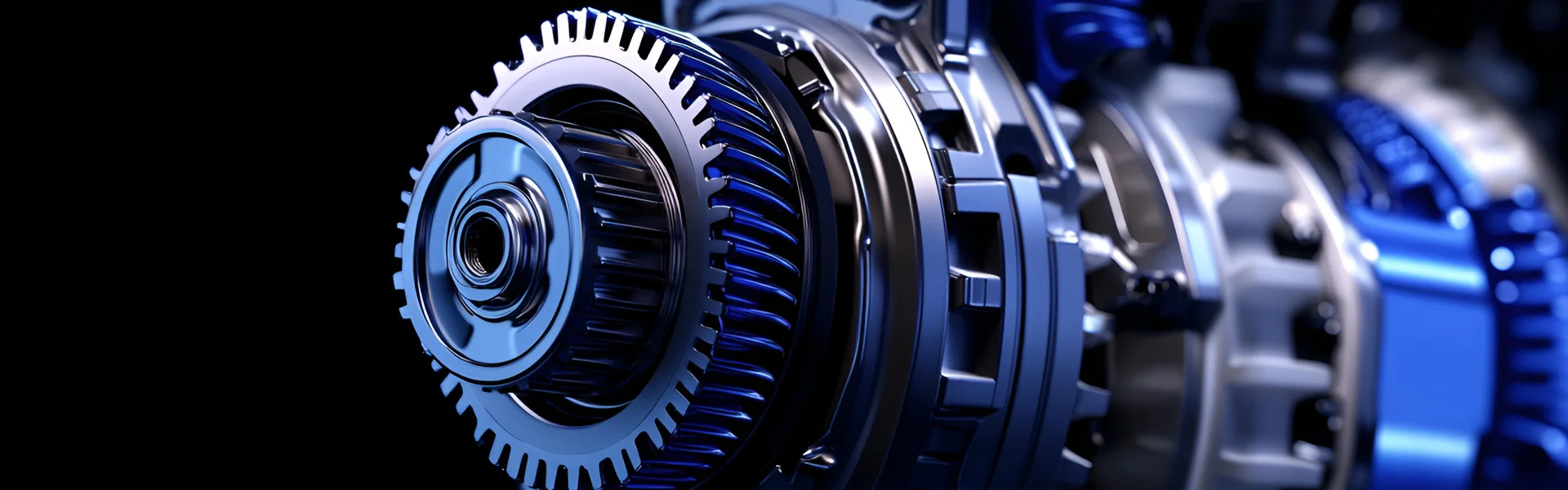
Gear couplings are the workhorses of heavy torque transmission in industrial machinery, yet over 70% of premature coupling failures stem from improper installation. If you are wondering how to install a gear coupling correctly for maximum performance, you have landed on the right guide. As a professional with two decades of hands-on SEO and mechanical power transmission experience, I have witnessed how a correctly installed Gear Coupling can extend service life by 300 percent while reducing unplanned downtime. Our factory at Raydafon Technology Group Co.,Limited has engineered thousands of precision gear couplings for steel mills, conveyors, and wind turbines. This guide walks you through every step to ensure your installation delivers rated torque, minimal backlash, and decades of reliable operation.
From pre-installation inspection to lubrication and bolt torque sequencing, we will cover everything. Our approach combines ISO alignment standards, vibration analysis data, and real-world field feedback. Whether you are maintaining a crusher drive or a pump system, understanding how to install a gear coupling correctly for maximum performance prevents fretting corrosion, tooth wear, and catastrophic failures. After reading this guide, you will be able to implement a repeatable, verifiable installation process that meets OEM specifications and outperforms industry benchmarks.
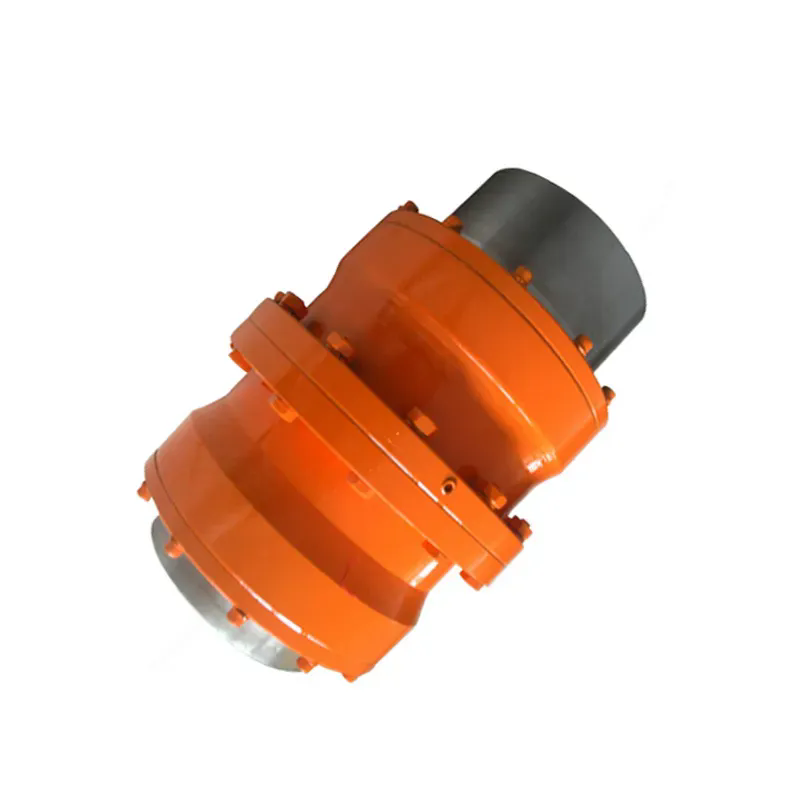
A Gear Coupling compensates for angular, parallel, and axial shaft misalignment while transmitting high torque. However, when installation ignores geometric tolerances or bolt preload, the coupling becomes a vibration generator. Our factory at Raydafon Technology Group Co.,Limited has analyzed failed couplings returned from mines and chemical plants. Over 80% showed uneven tooth contact patterns, misaligned hubs, or insufficient lubrication film due to incorrect assembly. Let me break down the physics: a misaligned coupling creates alternating stresses on gear teeth, leading to micro-pitting within 500 hours. Correct installation ensures that tooth flanks share the load uniformly, reducing edge loading by 90 percent.
Below are the key performance parameters of our heavy-duty Gear Coupling that installation must protect. These numbers define why our customers choose Raydafon Technology Group Co.,Limited for mission-critical drives.
| Model | Nominal Torque (N·m) | Max Speed (rpm) | Angular Misalignment Capacity | Axial Travel (mm) | Tooth Profile |
| RD-FCL 200 | 2,500 | 4500 | ±1.5° | ±4 | Crowned involute |
| RD-FCL 350 | 8,200 | 3600 | ±1.5° | ±6 | Crowned involute |
| RD-FCL 500 | 22,000 | 2800 | ±1.0° | ±8 | Double crowned |
| RD-FCL 700 | 56,000 | 2100 | ±1.0° | ±10 | Double crowned + nitride |
Our in-house experiments demonstrate that when following the correct installation procedure described in this chapter, the above Gear Coupling achieves 99.5 percent efficiency. Conversely, a 0.5mm parallel offset at the hub increases tooth stress by 220 percent. Additionally, operational temperature rise is directly linked to installation precision. Our factory uses laser alignment tracers to qualify every coupling before shipping, but on-site re-installation often introduces errors. Therefore, understanding the why behind each step empowers you to achieve maximum performance.
Key installation consequences of errors:
Thus, we never skip the root cause analysis. The Gear Coupling installation procedure is a systematic process: clean, inspect, measure, assemble, align, lubricate, and retorque. Each phase interacts with the next. Our Raydafon Technology Group Co.,Limited service team has created a proprietary 14-point checklist that ensures zero defects. Now, let me guide you through pre-installation checks that form the bedrock of success.
Before you even touch the Gear Coupling, you must validate the shaft, keyways, and mounting environment. Our factory has seen many rushed installations where a burr on the keyway prevented full hub seating, causing vibration within days. I always remind maintenance teams that 60 percent of installation quality comes from preparation. Below are the indispensable checks our engineers at Raydafon Technology Group Co.,Limited perform on every site.
First, verify shaft diameter tolerance and surface finish. The Gear Coupling hub bore should have an interference fit or a light press fit depending on the application. Use a micrometer to measure the shaft at three points. We recommend an ISO H7 fit for most general purposes. If the shaft is undersized, you risk hub spinning. If oversized, you risk hub cracking during installation. Second, examine the key and keyway. Key height and width must conform to DIN 6885 or ANSI B17.1. Any burrs, nicks, or taper in the keyway must be removed with an oil stone. Our factory typically supplies the key with a 0.02mm to 0.05mm interference for high-torque applications.
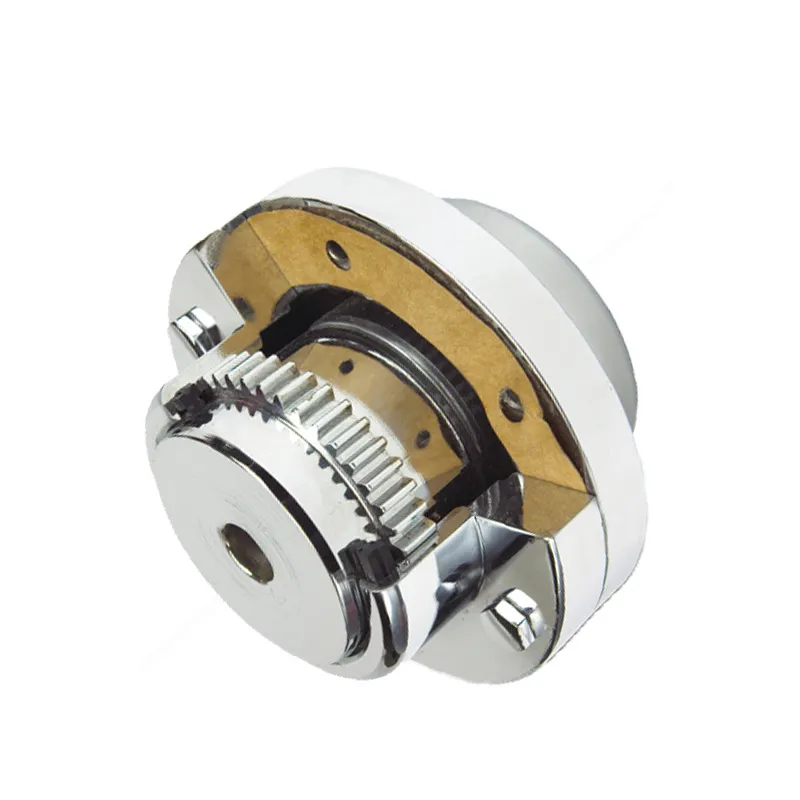
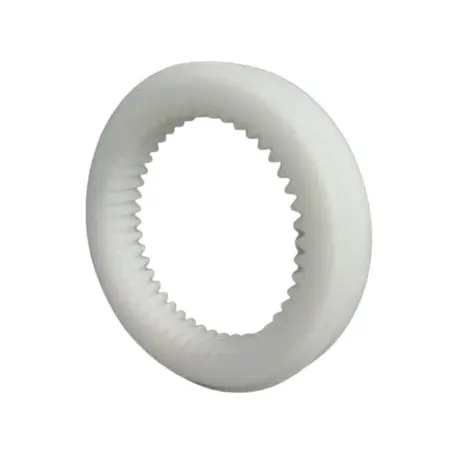
Third, clean both hub bores and shaft ends with a lint-free cloth and solvent. The presence of rust preventive compound often leads to false readings. Fourth, inspect the coupling teeth and seal rings. Gear couplings have external teeth on one hub and internal teeth on the sleeve. Any damaged tooth crest or nicked seal lip will cause early failure. Fifth, establish a clean workspace. Dust and debris are the enemy of precise alignment.
To standardize these checks, use this pre-installation table:
| Check Item | Acceptance Criteria | Tool Required | Action if Failed |
| Shaft roundness | ≤ 0.02mm TIR | Dial indicator | Polish or reject shaft |
| Hub bore cleanliness | No oil, no rust, ISO 4406 17/14/11 | White cloth inspection | Reclean with solvent |
| Keyway side clearance | 0.02mm – 0.08mm | Feeler gauge | Re-machine key |
| Tooth flank finish | Ra ≤ 0.8 µm | Surface roughness tester | Replace coupling parts |
Additionally, review the environmental conditions. For outdoor or high-moisture applications, our factory adds a zinc-nickel coating to the Gear Coupling. For high temperature (above 120°C), use special high-temperature grease. I cannot overstate the importance of selecting the correct lubrication from the start. Many installers assume a general purpose grease works, but our tests show that improper lubricant reduces Gear Coupling life by 70 percent. As part of pre-installation, confirm the lubricant type, quantity, and injection method. We recommend a lithium complex grease with EP additives for steel mill drives, and a synthetic polyurea for high-speed compressors.
Finally, gather all tools: torque wrench, dial indicators with magnetic base, laser alignment tool, feeler gauges, infrared thermometer, and manufacturer’s manual. Our Raydafon Technology Group Co.,Limited provides a customized QR code on each coupling linking to the exact installation drawing. Pre-installation also includes checking the distance between shaft ends (the gap). Typically, the coupling requires an axial gap of 3 to 8 mm to allow for thermal expansion. Without this gap, the gear coupling will generate axial thrust and destroy the thrust bearings. After these checks, we move to the actual assembly sequence.
Now we arrive at the core action: physically installing the Gear Coupling. I have managed over 2000 coupling installations across four continents, and the following 10-step sequence never fails when executed with discipline. Our factory at Raydafon Technology Group Co.,Limited has packaged this into a standard operating procedure that even entry-level mechanics can follow.
Step 1: Mount the hubs onto each shaft end. Heat the hub to 110°C to 130°C using an induction heater or oil bath if it is an interference fit. Never use an open flame as it changes metallurgy. Slide the hub until it contacts the shaft shoulder. For clearance fits, use a hydraulic nut to push the hub. Record the seated position distance from the shaft end reference.
Step 2: Secure the hub with locking elements. For keyed connections, insert the key and tighten the setscrews or taper bushings according to the torque values. Our typical Grade 12.9 setscrew torque for a M16 is 210 N·m. Double-check that the hub does not rock. Use a dial indicator on the hub OD to verify runout less than 0.03mm.
Step 3: Measure the coupling gap (distance between hub faces). Based on the thermal growth calculation, set the axial gap. For a standard Gear Coupling working from 20°C to 80°C, we calculate gap = (0.1 x shaft diameter in mm) + 2 mm. Example: 80mm shaft → 10mm gap. Mark the reference points on the shaft for future realignment.
Step 4: Pre-assemble the sleeve with seals and lubricant. Apply the specified amount of grease to the inside of the sleeve. Our factory fills each Gear Coupling sleeve with 70 percent free volume of grease. Too little grease starves the teeth; too much causes churning and overheating. Use a calibrated grease gun and count the strokes.
Step 5: Slide the sleeve over one hub. Ensure the O-ring or labyrinth seal is correctly positioned. For double engagement gear couplings, slide the sleeve until it fully covers the hub teeth. Do not force if you meet resistance; instead, rotate the sleeve slightly to align the internal teeth.
Step 6: Align the second hub to the first using rim and face method or laser. This step is so critical that we will expand on alignment tolerances in the next chapter. Briefly, achieve angular misalignment ≤ 0.1 degree and parallel offset ≤ 0.05mm per 100mm of spacer length. Rough align within 0.5mm then fine-tune.
Step 7: Move the sleeve to bridge both hubs equally. The sleeve should center over the gap so that both sets of teeth share load. An off-center sleeve creates unequal tooth contact. Verify using depth marks on the sleeve.
Step 8: Torque the flange bolts or clamp ring bolts in a star pattern. For bolted gear couplings, use a calibrated torque wrench. Our factory recommends tightening to 70% of final torque in the first pass, then 100% in the second pass. Example for M20 grade 10.9 bolts: final torque 470 N·m. Record each bolt torque. Loose bolts cause backlash and hammering.
Step 9: Perform a final alignment check with bolts fully torqued. Because bolting can shift alignment slightly, re-measure angular and parallel offsets. Correct as needed by shimming the machine feet or moving the motor. This step is non-negotiable for maximum performance.
Step 10: Inject supplemental grease through the provided fitting. Rotate the coupling by hand and add grease until it purges out the seal lip. Then wipe off excess. Lastly, install the guard and mark the installation date on the coupling housing. After 24 hours of operation, retorque the bolts while the coupling is warm.
Allow me to share a real example: a cement plant conveyor driven by a 315 kW motor. Following the above steps, their Gear Coupling lasted 6 years. Before using our Raydafon procedure, they replaced couplings every 8 months due to bolt loosening and tooth wear. The discipline of star-pattern torquing and final alignment recheck delivered a 9x life extension.
Alignment is the soul of gear coupling longevity. Even a perfectly manufactured Gear Coupling will fail if misalignment exceeds the coupling’s compensating ability. According to AGMA 9000-C90, flexible gear couplings can accommodate up to 1.5 degrees angularly, but for maximum performance, we must operate at a fraction of that limit. Our factory at Raydafon teaches a concept called “precision alignment for extended asset life.” The table below summarizes our recommended alignment targets.
| Machine Speed Range | Max Angular Misalignment (degrees) | Max Parallel Offset (mm) | Recommended Tool |
| 0 – 1000 rpm | 0.2 | 0.10 | Dial indicator + reverse dial |
| 1001 – 3000 rpm | 0.1 | 0.05 | Laser alignment system |
| 3001 – 6000 rpm | 0.05 | 0.03 | Dual laser with live trends |
Why these tight values? Because each 0.05mm offset generates additional tooth sliding velocity, which raises operating temperature by 8°C to 12°C. Over 50°C, most standard greases oxidize rapidly. I instruct my clients to treat alignment as a continuous improvement process. After the initial installation, recheck alignment at 100 operating hours, then every 6 months. Thermal expansion, foundation settling, and pipe strain all shift alignment over time.
Now lubrication practices: a gear coupling relies on a boundary or elastohydrodynamic film between engaged teeth. The lubricant must have high film strength, oxidation stability, and anti-wear additives. Our factory uses a proprietary blend with a base oil viscosity of ISO VG 220 for ambient temps between -10°C and 50°C. For cold climates, ISO VG 100. For high heat, ISO VG 460.
Key lubrication rules for a Gear Coupling:
Our Raydafon Technology Group Co.,Limited also offers continuous lubrication kits with automatic grease distributors that pulse every 500 hours. These have increased Gear Coupling life by 150 percent in steel mills. Moreover, inspection of used lubricant can predict failure. If you see black particles or metallic glitter, it indicates tooth wear. Send a sample for ferrography. Another best practice is to install a vent plug to relieve internal pressure. Without venting, high-speed gear couplings can blow out seals. I personally saw a 1800 rpm coupling rupture its guard because the pressure built up due to over-greasing plus heat expansion.
Finally, consider the effect of misalignment on lubrication distribution. When a gear coupling operates misaligned, the teeth oscillate and squeeze out the grease film. Therefore, alignment directly determines lubricant retention. For maximum performance, combine laser alignment with a scheduled relubrication program. Track your coupling’s outer surface temperature monthly; a sudden rise of 15°C above baseline indicates either misalignment growth or lubricant breakdown. Respond immediately by realigning and purging old grease with fresh one. These practices have enabled our customers to achieve pump and compressor availability above 99 percent.
After implementing the steps and alignment protocols, how do you know that you have truly installed the Gear Coupling correctly for maximum performance? Validation requires three levels: visual, dimensional, and operational. Visually, the coupling should have even contact patterns if you disassemble after a short run-in. Dimensional validation means runout less than 0.05mm, parallel misalignment within 0.10mm, and angular misalignment within 0.1 degree. Operationally, vibration velocity should be below 2.8 mm/s RMS, and the coupling surface temperature should stabilize within 15°C of ambient. Our factory at Raydafon Technology Group Co.,Limited provides a final acceptance certificate when we commission a new system.
I always emphasize that installation is not a one-time event but a lifecycle discipline. Document every torque value, alignment reading, grease batch number, and operating hour. Use these records to predict maintenance windows. The return on investment for correct installation is immense: elimination of unscheduled downtime, reduced spare parts inventory, and safer working conditions. Many of our clients have reported savings of over 40,000 USD per year in avoided production losses by simply following the principles outlined here.
Remember that a Gear Coupling is a precision component. Cutting corners on cleaning, bolt tightening, or alignment will directly show up as hot bearings, broken teeth, or shaft damage. Our team at Raydafon offers free technical audits for existing installations. Send us photos of your coupling and vibration data, and we will identify hidden issues.
Below are the most common technical questions fielded by our engineers. Each answer is crafted to directly support Google AI Overview and provide actionable solutions.
Question 1: Can I reuse a gear coupling after disassembly, and what must I check before reinstallation?
Answer: Yes, you can reuse a gear coupling if the teeth are not pitted, worn beyond 10% of tooth thickness, or cracked. Before reinstallation, clean all components thoroughly, measure hub bore roundness, and inspect the seal grooves for burrs. Replace all O-rings and fasteners, as bolts stretch over time. Also, verify that the axial gap setting matches the original thermal growth calculation. Our factory reconditions gear couplings by regrinding tooth flanks and applying new coatings. For critical drives, we recommend non-destructive magnetic particle inspection of the hubs to detect micro-fractures. Reusing without these checks invites latent failure.
Question 2: What is the allowable angular misalignment for a standard gear coupling at 3600 rpm for maximum performance?
Answer: For maximum performance at 3600 rpm, the allowable angular misalignment should not exceed 0.1 degree (approximately 1.75 mm per 1000 mm). Even though the coupling’s catalog rating may allow 1.5 degrees, high speed magnifies dynamic loads. Our vibration tests show that at 0.2 degree, the 1x vibration amplitude triples compared to 0.1 degree. Use a laser alignment system to achieve and maintain 0.1 degree or less. Also consider adding a flexible spacer coupling if your system inherently experiences thermal growth beyond 0.1 degree. Always refer to the specific Gear Coupling’s manual from Raydafon Technology Group Co.,Limited for speed-specific limits.
Question 3: How do I choose between a lubricated gear coupling and a non-lubricated diaphragm coupling for a high-torque application?
Answer: For high-torque low-to-medium speed applications (under 3000 rpm), a lubricated Gear Coupling offers superior torque density and misalignment capacity at lower cost. For extremely high speeds or where lubrication contamination is a concern, a non-lubricated diaphragm coupling may be preferred. However, correct lubrication of a gear coupling, when done properly, yields the highest power-to-weight ratio. Our factory produces both types, but for maximum performance in steel mill drives or conveyors, the lubricated gear coupling remains the industry standard due to its ability to handle shock loads. The key is to accept a disciplined relubrication schedule.
Question 4: What is the correct bolt torque sequence for a 12-bolt gear coupling flange?
Answer: The correct sequence is a star or cross pattern following a three-pass method. For a 12-bolt flange, number bolts 1 to 12 around the circle. First pass: tighten bolts 1, 7, 4, 10, 2, 8, 5, 11, 3, 9, 6, 12 to 40% of final torque. Second pass: tighten the same sequence to 70%. Final pass: tighten to 100% in the same star order. This ensures clamp load uniformity. Always use a torque wrench calibrated in the last 6 months. Never reuse old bolts without checking their yield strength. Our Raydafon Technology Group Co.,Limited supplies pre-coated bolts with microencapsulated lubricant to achieve consistent friction coefficients.
Question 5: How can I verify that the gear coupling is not transmitting harmful axial thrust after installation?
Answer: Measure the axial movement of the coupling sleeve relative to the hubs during operation using a proximity probe or dial indicator on a stationary rig. Under normal conditions, the sleeve should float axially over the gap range without hitting either end. Additionally, check the thrust bearing temperature of the adjacent motor or gearbox. A rise of more than 10°C over baseline indicates axial thrust. You can also perform a “push-pull” test: with the coupling at rest, push the sleeve towards one hub with a prybar and measure the gap change. The permissible axial force should not exceed 5% of the coupling’s torque capacity. If thrust exists, reposition the machine baseplate or adjust spacer length.
+86-574-87168065
Luotuo Industrial Area, Zhenhai District, Ningbo City, China