QR Code

Products
Contact Us


Fax
+86-574-87168065

Email

Address
Luotuo Industrial Area, Zhenhai District, Ningbo City, China


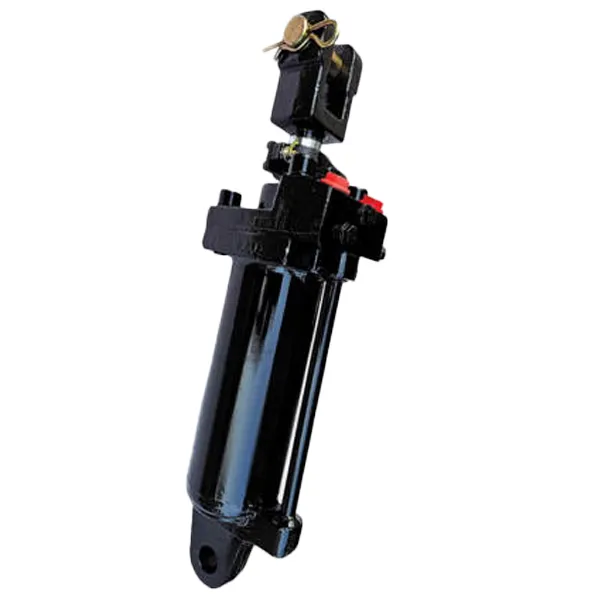
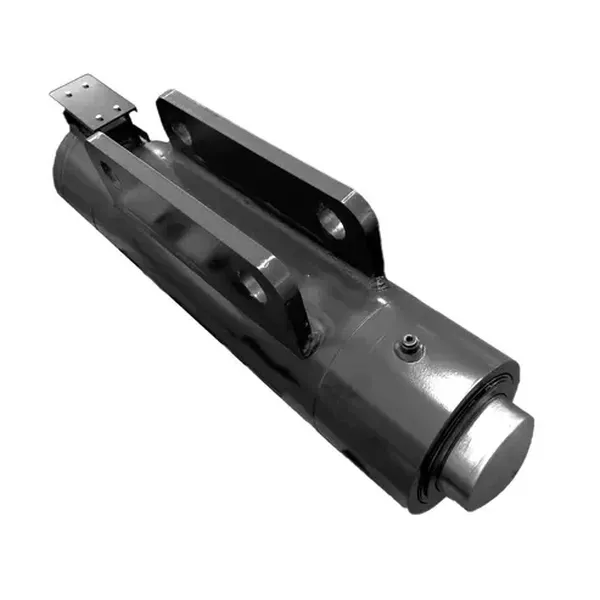
The pressure-bearing capacity of a mobile crane hydraulic cylinder is determined by more than the maximum pressure supplied by the hydraulic pump. It depends on the relationship between working pressure, piston area, piston rod dimensions, cylinder barrel strength, material properties, manufacturing quality, sealing performance, and the mechanical loads transferred through the crane structure. A cylinder must withstand both the hydraulic force generated inside the barrel and the external forces created during lifting, boom extension, and load positioning. Understanding these factors helps crane manufacturers, equipment operators, and maintenance professionals select cylinders that deliver dependable performance under demanding working conditions.
For crane manufacturers and equipment buyers, choosing the right hydraulic cylinder means evaluating the complete operating system rather than comparing pressure figures alone. Raydafon Technology Group Co.,Limited supplies customized hydraulic cylinder solutions for mobile cranes and other heavy equipment. Our product range includes thickened cylinder barrels, high-strength alloy steel components, hard-chrome-treated piston rods, precision sealing arrangements, buffer structures, and multi-stage telescopic configurations. These design and manufacturing considerations help address the structural and operational demands of mobile crane applications, while the final pressure rating must always be established for the specific cylinder model and its intended working conditions.
1. How Do Working Pressure and Piston Geometry Determine Hydraulic Force?
2. Why Do Cylinder Barrel Thickness and Material Strength Matter?
3. How Do Manufacturing Quality, Seals, and Telescopic Design Affect Pressure Capacity?
4. Conclusion: How Can Buyers Evaluate Cylinder Pressure Capacity?
Hydraulic pressure is the starting point when engineers evaluate the force that a cylinder can produce. However, pressure and force are not interchangeable measurements. Pressure describes the force applied over a unit of area, while the resulting cylinder force depends on the effective area exposed to the hydraulic fluid. This distinction is particularly important in mobile crane applications because the cylinder must generate sufficient force to move or support a boom section while operating within the limits of the hydraulic circuit and the crane's structural design.
The basic relationship is straightforward: hydraulic force equals pressure multiplied by effective piston area. In engineering calculations, this is commonly expressed as F = P x A, where F represents force, P represents hydraulic pressure, and A represents the effective area. If pressure is expressed in pascals and area in square metres, the resulting force is measured in newtons. This equation provides a useful starting point for comparing cylinder configurations, but it does not independently establish a safe working load or a complete cylinder pressure rating.
The cylinder bore is the internal diameter of the barrel in which the piston travels. It determines the cross-sectional area on the cap end of the piston. For a circular bore, the piston area increases with the square of the bore diameter. Consequently, a relatively small increase in bore diameter can produce a noticeable increase in theoretical hydraulic force when working pressure remains unchanged.
For example, engineers comparing two cylinder designs should not assume that a larger bore automatically makes one model suitable for every crane. A larger piston area can generate greater force at the same pressure, but it also affects the cylinder's overall dimensions, oil displacement, operating speed, and installation requirements. The hydraulic pump must supply the required flow to move the piston at the intended speed. The crane structure, mounting points, boom geometry, and stability calculations must also accommodate the resulting force.
When assessing bore diameter, our engineering approach considers several connected requirements rather than treating the bore as an isolated specification:
The relationship between bore and force should therefore be considered together with the crane's mechanical advantage. A luffing cylinder, for instance, does not necessarily experience the same force as the suspended load. The boom angle, cylinder mounting position, linkage geometry, and distance between pivot points determine how the external load is transferred to the cylinder. A cylinder selection based only on crane lifting capacity can overlook these important mechanical relationships.
The piston rod affects both the cylinder's mechanical strength and its effective hydraulic area during retraction. On the cap end, pressure acts across the full piston area. On the rod end, the rod occupies part of that area, so the effective hydraulic area is smaller. This means that extension and retraction forces are different even when the same pressure is applied to the cylinder.
The retraction area is calculated by subtracting the piston rod cross-sectional area from the full piston area. A larger rod reduces the available annular area on the rod side. Depending on the circuit arrangement and operating conditions, this influences retraction force and speed. Engineers must also evaluate rod strength under compressive loading, because a crane cylinder may operate with a long exposed rod and significant external forces.
Rod diameter is not selected solely to increase the available hydraulic force. It must provide adequate resistance to compressive stress, bending, side loading, and buckling. The unsupported rod length, end connections, mounting alignment, and cylinder stroke all influence the risk of instability. A slender rod under a high compressive load may buckle before the hydraulic system reaches its theoretical force limit. For this reason, a pressure calculation without a rod stability assessment is incomplete.
Working pressure is the hydraulic pressure expected during normal operation. Pressure-bearing capacity describes the ability of the cylinder assembly to withstand internal pressure without unacceptable deformation, leakage, or structural failure. These concepts are related, but they are not identical. A cylinder's rated working pressure must be supported by the strength of its barrel, end closures, welds, ports, seals, piston, and other pressure-containing components.
Pressure peaks also deserve attention. During rapid stopping, sudden load changes, control valve operation, or impact events, the pressure inside a hydraulic circuit may temporarily rise above its normal operating level. The magnitude and duration of these peaks depend on the hydraulic system design and operating conditions. Engineers should review pressure-relief settings, shock loads, flow restrictions, and the manufacturer's specified pressure limits rather than assuming that the normal gauge reading represents every operating condition.
A useful preliminary evaluation includes the following information:
| Parameter | Engineering significance | Information required for final selection |
| Working pressure | Determines the hydraulic pressure applied during normal operation. | Specified operating pressure and allowable pressure range. |
| Cylinder bore | Determines the full piston area and theoretical extension force. | Actual bore diameter for the selected model. |
| Piston rod diameter | Changes the retraction area and affects rod strength. | Rod diameter, exposed length, and stability calculation. |
| Stroke length | Influences travel, exposed rod length, and installation geometry. | Required stroke and mounting dimensions. |
| Pressure peaks | Can create loads above normal operating conditions. | Relief valve settings and transient pressure information. |
Raydafon offers customization of cylinder diameter, stroke, and interface configuration to match different lifting equipment requirements. These options allow the cylinder configuration to be considered alongside the crane's available hydraulic pressure and installation geometry. Nevertheless, a buyer should request the model-specific rated pressure, test pressure, bore, rod diameter, and approved operating limits before treating any theoretical force calculation as a confirmed product capability.
The cylinder barrel is one of the main pressure-containing components in a mobile crane hydraulic cylinder. Hydraulic fluid acts against the internal barrel surface, creating circumferential and longitudinal stresses in the cylinder wall. The barrel must resist these stresses while maintaining sufficient dimensional stability for the piston and seals to operate correctly. If the wall is inadequately designed for the specified pressure and material properties, the cylinder may experience excessive expansion, permanent deformation, fatigue damage, or failure.
Barrel thickness is therefore a fundamental factor in pressure-bearing design. However, thickness cannot be evaluated independently of the barrel's internal diameter, material strength, manufacturing process, connection design, and applicable safety requirements. Two barrels with the same nominal wall thickness may have different pressure capabilities if their material grades, heat treatments, weld details, or manufacturing quality differ. A reliable assessment requires engineering calculations and verification against the actual design specification.
When hydraulic pressure acts inside a cylindrical barrel, the wall is subjected to stress. In simplified thin-wall analysis, circumferential stress is related to internal pressure and the ratio between the cylinder diameter and wall thickness. As internal pressure increases, the stress in the barrel wall also increases. Increasing wall thickness can reduce the calculated stress for a given pressure and diameter, provided that the material and geometry remain suitable.
Real crane cylinders may not meet the assumptions used in a basic thin-wall calculation. Thick-walled cylinder analysis may be more appropriate when the wall thickness is significant relative to the internal diameter. Engineers must also account for local stress concentrations around ports, welded joints, end connections, and changes in wall geometry. These areas can become critical even when the main barrel section has sufficient nominal strength.
A thickened barrel is one of the product construction features described by Raydafon. It is intended to support the structural demands associated with heavy-load lifting and pressure fluctuations. However, the term thickened does not establish a numerical pressure rating. Buyers should obtain the actual wall thickness, material specification, design calculation, and pressure test documentation for the proposed cylinder configuration.
Material selection influences how the barrel and other structural components respond to internal pressure, repeated loading, vibration, and environmental exposure. High-strength alloy steel is used in demanding hydraulic applications because suitable grades can provide a combination of strength, toughness, and fatigue resistance. The exact performance depends on the selected steel grade, heat treatment, cleanliness, manufacturing route, and quality inspection.
When evaluating material suitability, engineers should consider more than the material's nominal tensile strength. Yield strength is important because it indicates the stress level at which permanent deformation begins under specified test conditions. Tensile strength describes the maximum stress reached during a tensile test. Toughness is relevant when components may experience impact or fluctuating loads. Fatigue resistance matters because crane cylinders repeatedly extend and retract during service.
Material verification should include the following points:
Our factory uses high-strength alloy steel components in its mobile crane cylinder product offering. The use of an appropriate alloy steel grade can support the strength and durability required in heavy-duty service, but the final design must still be validated against the pressure, load, and fatigue conditions of the specific crane.
The piston rod transfers force between the piston and the external crane structure. During operation, it may be subjected to axial compression, tension, bending, and repeated changes in load direction. A rod that is strong enough in a simple tensile calculation may still be unsuitable if its unsupported length creates a buckling risk or if the mounting arrangement introduces significant side loading.
Rod buckling is particularly important for long-stroke cylinders. As the rod extends, the unsupported length increases and its resistance to lateral instability may decrease. The risk depends on rod diameter, material properties, end support conditions, effective length, and the applied compressive force. Engineers commonly use column stability calculations to assess this condition. The correct method depends on the rod geometry and actual boundary conditions.
The piston rod surface also affects service reliability. Raydafon's product information identifies hard-chrome-treated piston rods as a product feature. A properly specified hard-chrome surface can improve wear resistance and help protect the rod against corrosion and damage during repeated seal contact. Surface condition is important because scratches, corrosion pits, or local damage can accelerate seal wear and create leakage paths.
Hydraulic cylinders contain joints that connect the barrel with end components and other structural parts. These joints must transfer mechanical loads while maintaining pressure integrity. Weld quality is therefore a major part of the overall pressure-bearing assessment. Incomplete fusion, porosity, cracks, excessive undercut, or inconsistent weld geometry can reduce joint reliability and create local stress concentrations.
Raydafon's product information identifies multi-pass welding as part of its cylinder construction approach. Multi-pass welding can be used to build up a joint through successive weld layers, but the number of passes alone does not prove joint strength. The welding procedure, base material, filler material, preheat requirements, heat input, welder qualification, inspection method, and post-weld treatment all influence the result.
For a technically complete procurement review, buyers should ask for the applicable welding procedure, inspection requirements, and pressure test records. Depending on the cylinder design and project specification, inspection may include visual examination and other suitable non-destructive testing methods. The required inspection scope should be established by the design code, customer specification, and risk level of the equipment.
Pressure capacity is ultimately a property of the complete pressure-containing assembly, not just the barrel wall. The barrel, piston rod, end caps, ports, welds, and mounting components must work together under the expected loading conditions. A stronger barrel cannot compensate for an inadequately designed connection, and a high-strength rod cannot correct a weak mounting arrangement. This is why material selection, wall thickness, welding, and structural calculations must be reviewed as a connected engineering process.
Even when the hydraulic pressure and structural dimensions appear suitable on paper, manufacturing quality determines whether a cylinder can consistently achieve its intended performance. Dimensional accuracy, surface finish, concentricity, welding consistency, seal installation, and assembly cleanliness all affect how the cylinder behaves under pressure. These factors are especially important in mobile cranes because their cylinders operate under repeated load cycles, vibration, changing boom positions, and demanding outdoor conditions.
Pressure-bearing capacity should not be confused with the ability to hold pressure for a short period during a test. A cylinder also needs to maintain sealing performance, move smoothly, resist wear, and tolerate the repeated loading associated with normal crane operation. Raydafon Technology Group Co.,Limited describes its mobile crane cylinder construction with precision sealing components, double-lip sealing arrangements, dust rings, buffer structures, and precision inner-wall treatment. These features address different aspects of cylinder operation and should be evaluated as part of the complete design.
The inner surface of the cylinder barrel forms the running surface for the piston seals. If the bore is out of round, tapered beyond the permitted tolerance, or has an unsuitable surface finish, the seals may not maintain consistent contact around the circumference. This can cause internal leakage, uneven wear, increased friction, or unstable movement. Poor dimensional accuracy may also affect piston guidance and create local loading inside the cylinder.
Precision inner-wall treatment helps provide a suitable running surface for the piston and sealing system. The required finish is determined by the seal material, cylinder design, operating pressure, fluid, speed, and contamination conditions. A surface that is too rough can accelerate seal wear, while an unsuitable surface texture can also affect lubrication and sealing behaviour. The correct specification must therefore be selected for the actual seal arrangement rather than assuming that the smoothest possible surface is always best.
Manufacturing inspection should verify the bore diameter, roundness, straightness, surface finish, and other dimensional requirements defined in the drawing. The piston and guide components should also be checked for compatibility. These measurements help reduce the likelihood of uneven contact and excessive friction during operation.
Seals prevent hydraulic fluid from escaping between components that move relative to one another or remain fixed under pressure. In a mobile crane cylinder, piston seals separate the two working chambers, while rod seals control leakage where the piston rod passes through the gland. Static seals protect joints between components. Dust rings help prevent external contaminants from entering the cylinder as the rod retracts.
A sealing system must be matched to the pressure, temperature, hydraulic fluid, movement speed, surface finish, and expected contamination level. A seal that performs well in one application may not be suitable for another if the pressure peaks, fluid chemistry, temperature range, or movement profile differ. Seal material selection and geometry therefore need to be considered alongside the cylinder's structural design.
The product information describes precision seal matching, double-lip sealing, and dust rings. These arrangements are intended to reduce leakage risk and limit the entry of contaminants. However, no seal configuration should be treated as maintenance-free. Seal wear can result from contamination, damaged rod surfaces, pressure spikes, incorrect installation, fluid incompatibility, or misalignment.
During cylinder evaluation, buyers should request details about the seal materials, pressure suitability, temperature limits, fluid compatibility, and replacement requirements. If the crane operates in dusty construction sites, ports, or outdoor environments, the dust exclusion arrangement deserves particular attention. Contamination can damage the rod surface and sealing lips, leading to leakage and a decline in operating reliability.
Hydraulic cushioning helps control piston movement as it approaches the end of a stroke. Without suitable deceleration, a moving piston assembly may reach the end of travel with excessive impact energy. Repeated end-of-stroke impact can increase stress on mechanical components, seals, mounts, and the crane structure. A buffer structure is therefore relevant to the durability and operating stability of the cylinder.
Raydafon's product description identifies a buffer structure and precision inner-wall treatment as features intended to support smooth extension and retraction. The specific cushioning arrangement, adjustment method, and allowable operating range should be confirmed for the selected model. A buffer does not increase the cylinder's rated pressure by itself. Instead, it helps manage movement near the stroke limit and can reduce damaging impact conditions when correctly designed for the application.
Engineers should review several operating details when assessing cushioning performance:
Mobile cranes often require a long working stroke while keeping the retracted cylinder length within the available installation space. A multi-stage telescopic cylinder addresses this packaging challenge by using several nested stages that extend in sequence. This configuration can provide a long overall stroke without requiring a single cylinder barrel of the same extended length.
However, a telescopic cylinder has more complex engineering requirements than a simple single-stage cylinder. Each stage has its own effective area, wall dimensions, sealing arrangement, and guidance conditions. Depending on the design, the stages may extend in a defined sequence and may produce different force and speed characteristics as the cylinder moves through its travel. The effective hydraulic area can change from one stage to another, so engineers must evaluate the force available at each stage rather than relying on one calculation for the entire cylinder.
Raydafon offers multi-section telescopic configurations for equipment such as engineering cranes, off-road cranes, and truck cranes. The product range also includes crane-related hydraulic cylinder solutions for different lifting functions. Our telescopic design options are intended to accommodate multi-stage boom arrangements, but the stage count, individual stage dimensions, sequence, and pressure limits must be specified for each application.
For a telescopic cylinder, the following details should be reviewed before confirming pressure suitability:
A cylinder may be correctly manufactured and still experience premature failure if it is installed incorrectly or used outside its design conditions. Misaligned mounting points can introduce side loads that the piston rod and seals are not intended to carry. Incorrect pin dimensions, unsuitable support brackets, or interference during boom movement can create additional mechanical stress. These conditions may cause uneven wear, rod damage, leakage, or structural failure.
Operating conditions also influence long-term reliability. Frequent pressure cycling can contribute to fatigue. Rapid changes in load can create transient pressure peaks. High operating temperatures may affect hydraulic fluid viscosity and seal properties, while low temperatures can change fluid flow characteristics and increase starting resistance. Dust, moisture, and corrosion can damage exposed surfaces and shorten component life.
Our customization service covers cylinder diameter, stroke, and interface form to suit mainstream and non-standard lifting equipment. This is important because the cylinder must fit the crane's geometry and operating requirements, not merely match a nominal pressure value. Before production, our technical team needs the crane tonnage, working pressure, required stroke, and interface information. Additional drawings and operating details help clarify the load path, mounting conditions, and telescopic requirements.
A complete verification process should bring together design calculations, material documentation, dimensional inspection, welding quality checks, seal compatibility, and pressure testing. The test pressure and test procedure must follow the approved design and applicable requirements; they should not be guessed from the normal working pressure. Buyers should also establish whether the supplied test records apply to the exact model and configuration being purchased.
For this reason, manufacturing quality and system integration are not secondary considerations. They determine whether the theoretical pressure capability can be translated into dependable operation over repeated crane duty cycles. A suitable cylinder is one whose complete design, production quality, installation arrangement, and operating limits are matched to the equipment in which it will work.
The pressure-bearing capacity of a mobile crane hydraulic cylinder is determined by the combined performance of its hydraulic, structural, and sealing systems. Working pressure and piston area establish the theoretical hydraulic force, while rod diameter and unsupported length influence retraction performance and buckling resistance. Barrel thickness, material strength, weld integrity, and end connections determine whether the pressure-containing assembly can withstand the applied loads. Surface finish, seals, cushioning, telescopic stage geometry, and installation alignment then influence how reliably the cylinder performs in real crane operations.
When comparing suppliers, buyers should request more than a general statement about heavy-duty construction. The most useful technical information includes the model-specific rated working pressure, test pressure, bore, rod diameter, stroke, wall thickness, material grade, stage configuration, seal specification, mounting dimensions, and relevant inspection records. These details allow the cylinder to be evaluated against the crane's hydraulic circuit, boom geometry, duty cycle, and safety requirements.
Raydafon Technology Group Co.,Limited provides customized hydraulic cylinder solutions for mobile cranes, bridge hoisting, plant construction, dock transshipment, and other heavy-equipment applications. Our product features include high-strength alloy steel components, thickened cylinder barrels, hard-chrome-treated piston rods, precision sealing arrangements, buffer structures, multi-pass welding, and multi-stage telescopic options. If your project requires a replacement cylinder or a custom configuration, contact our team with your crane tonnage, working pressure, stroke, mounting dimensions, and interface requirements. We can review the application details and discuss a suitable cylinder configuration based on the actual equipment specifications.
No. A larger bore increases the piston area and can produce greater theoretical hydraulic force at the same pressure, but it does not automatically increase the cylinder's structural pressure rating. The barrel wall thickness, material strength, welds, end connections, seals, and design calculations must all support the specified pressure. A larger bore may also increase the required oil flow and affect cylinder speed, installation dimensions, and the forces transferred to the crane structure. Buyers should evaluate bore diameter together with the complete cylinder design rather than treating it as an independent measure of pressure capacity.
Engineers should evaluate the rod's diameter, material properties, unsupported length, end support conditions, compressive load, and possible side loading. Tensile strength alone is not sufficient because an extended rod may be vulnerable to buckling under compression. The assessment should include an appropriate column stability calculation and a review of mounting alignment throughout the cylinder stroke. Rod surface condition and corrosion protection also matter because damage can accelerate seal wear. The final rod specification should be verified against the actual crane geometry and the cylinder manufacturer's design documentation.
Working pressure is the pressure specified for normal operation within the intended hydraulic system. Test pressure is a controlled pressure used during a defined inspection or verification procedure to assess the cylinder's pressure integrity. Test pressure is not the same as the allowable continuous operating pressure, and a successful pressure test does not authorize the cylinder to operate continuously at that test level. The correct test value, duration, procedure, and acceptance criteria must come from the approved design specification and applicable requirements for the particular cylinder.
Each telescopic stage can have a different effective piston area, internal diameter, wall thickness, rod or stage geometry, and overlap condition. As a result, the available hydraulic force and extension speed may change as the cylinder moves through its sequence. The extended stages may also have different stability and guidance requirements because their exposed lengths and support conditions change. Engineers should check the pressure limits, force, buckling resistance, overlap, seals, and mounting conditions for every stage rather than applying one calculation to the complete telescopic assembly.
Buyers should request a technical drawing, model-specific rated working pressure, test pressure and test procedure, bore and rod diameters, stroke, barrel wall thickness, material grade, stage configuration where applicable, mounting and port details, and seal specifications. Material certificates, dimensional inspection records, welding inspection documentation, and pressure test reports may also be required depending on the project specification. The documents should identify the exact cylinder model and configuration being supplied. If the cylinder is a replacement, the buyer should also confirm compatibility with the crane's hydraulic circuit, mounting points, operating sequence, and load requirements.
For mobile crane projects that require dependable hydraulic performance, selecting the cylinder by pressure rating alone is not enough. A technically suitable solution must match the required force, structural loads, operating stroke, mounting geometry, and service conditions. Raydafon Technology Group Co.,Limited welcomes inquiries from crane manufacturers, equipment distributors, maintenance contractors, and engineering companies. Send our team your application details and technical drawings to discuss a customized hydraulic cylinder solution for your equipment.
+86-574-87168065
Luotuo Industrial Area, Zhenhai District, Ningbo City, China