QR Code

Products
Contact Us


Fax
+86-574-87168065

Email

Address
Luotuo Industrial Area, Zhenhai District, Ningbo City, China


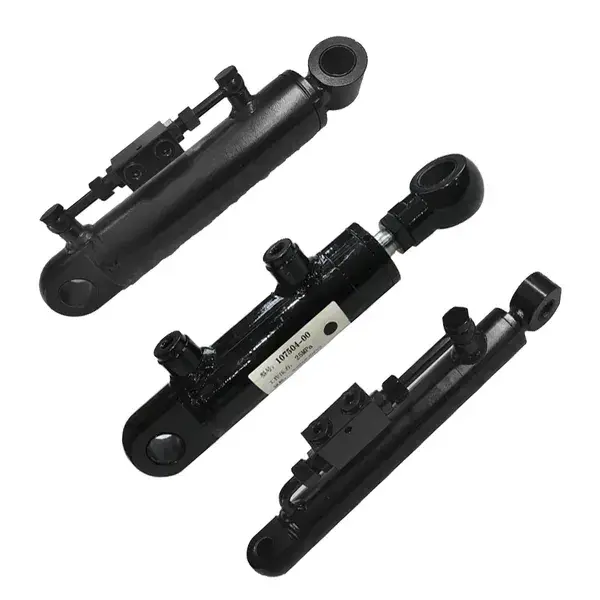
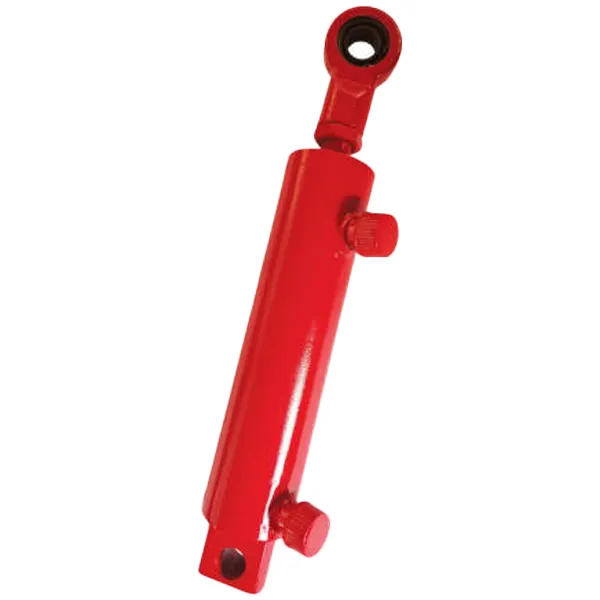
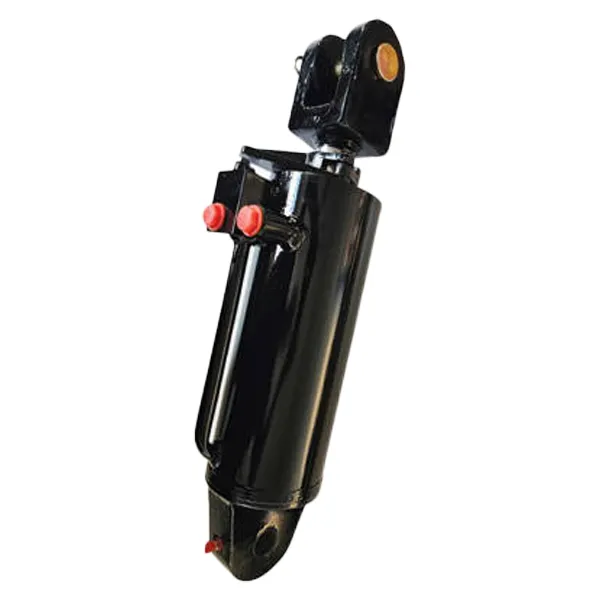
An excavator's arm curls through a bucket of heavy clay, and the machine does not hesitate. The force that lifts that bucket originates in a diesel engine, which drives a hydraulic pump, which pressurizes oil, which enters a hydraulic cylinder. Inside the cylinder, that pressurized oil acts on a piston, and the piston pushes a rod, and the rod pushes the bucket linkage. The hydraulic cylinder is the component that converts the pressure of the oil into the mechanical force that moves the arm. For a procurement manager sourcing Excavator Hydraulic Cylinders, understanding how this conversion works is not an academic exercise. It determines whether the cylinder you specify will deliver the force the machine requires, whether it will survive the pressure and shock loads of excavation, and whether the excavator will perform as its design intends.
This guide is written for buyers who are sourcing Excavator Hydraulic Cylinders for OEM production, aftermarket replacement, or fleet maintenance. We will explain the physical principle behind the conversion of pressure into force, the formula that relates pressure, piston area, and force, the internal components that make the conversion possible, the factors that affect the efficiency of the conversion, and the criteria for selecting the right cylinder for a specific excavator application. We will also provide detailed product parameters from our factory at Raydafon Technology Group Co.,Limited. Whether you are specifying a boom cylinder, an arm cylinder, or a bucket cylinder, this guide will help you understand the force conversion and select a cylinder that meets the machine's requirements.
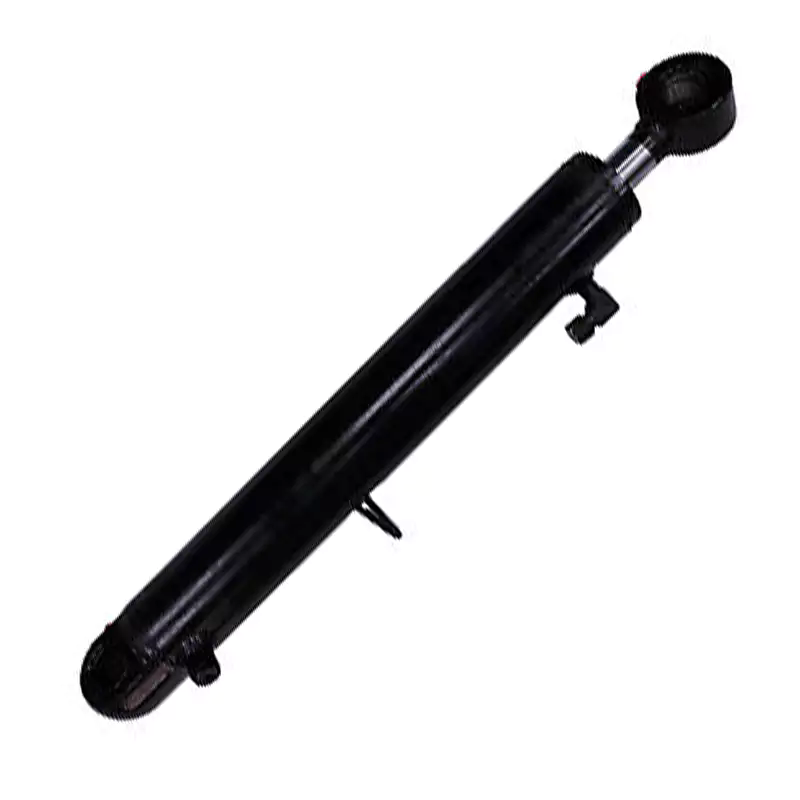
The conversion of hydraulic pressure into mechanical force is governed by Pascal's law. This law states that pressure applied to a confined fluid is transmitted undiminished in all directions and acts with equal force on equal areas. In an excavator hydraulic cylinder, the pressurized oil enters the cylinder barrel and acts on the surface of the piston. Because the piston has a defined area, the pressure on that area produces a force. The force is perpendicular to the piston surface, and it pushes the piston along the axis of the cylinder. The piston is connected to the rod, so the force is transmitted to the rod, and the rod transmits it to the machine linkage. The table below summarizes the key elements of this principle.
| Element | Description | Role in Force Conversion |
| Pressurized Oil | Hydraulic fluid under pressure from the pump | Carries the energy to the cylinder |
| Piston Area | The surface area of the piston exposed to the oil | Determines the force for a given pressure |
| Piston | Moving element inside the barrel | Converts pressure into linear force |
| Rod | Connects the piston to the machine linkage | Transmits the force to the load |
| Barrel | Contains the pressurized oil and guides the piston | Maintains the pressure and the direction of force |
At Raydafon Technology Group Co.,Limited, our factory manufactures Excavator Hydraulic Cylinders that are designed around this principle. We understand that the force conversion is only as good as the pressure containment and the mechanical integrity of the cylinder. Our engineering team works with the principle of Pascal's law to optimize the piston area, the rod diameter, and the pressure rating for each application.
The force produced by an excavator hydraulic cylinder is calculated using the formula: Force = Pressure × Area. The pressure is the hydraulic pressure supplied by the pump, typically measured in bar or MPa. The area is the effective area of the piston, measured in square millimeters or square centimeters. For a cylinder extending, the effective area is the full area of the piston. For a cylinder retracting, the effective area is the piston area minus the rod area, because the rod occupies part of the piston surface. The table below provides an example calculation for a typical excavator bucket cylinder.
| Parameter | Value | Unit |
| Bore Diameter | 120 | mm |
| Piston Area (extend) | 11,310 | mm² |
| Rod Diameter | 80 | mm |
| Rod Area | 5,027 | mm² |
| Piston Area (retract) | 6,283 | mm² |
| Operating Pressure | 250 | bar (25 MPa) |
| Extend Force | 282.8 | kN |
| Retract Force | 157.1 | kN |
At our factory, we provide force calculations for every Excavator Hydraulic Cylinder we supply. We can help you determine the required bore diameter and rod diameter for your specific load and pressure. Our goal is to ensure that the cylinder delivers the force the machine requires without over-sizing the cylinder or exceeding the pressure limits of the system.
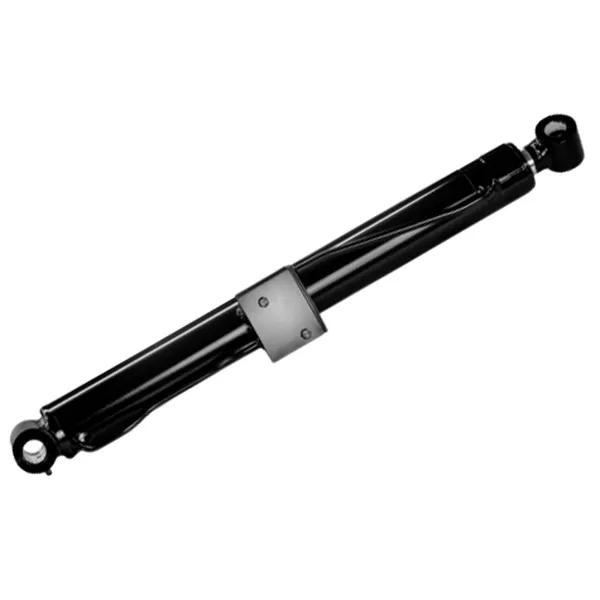
The conversion of pressure into force is made possible by a set of internal components that work together to contain the pressure, transmit the force, and maintain the alignment of the moving parts. The cylinder barrel contains the pressurized oil and provides the surface against which the piston seals. The piston separates the extend and retract chambers and transmits the force to the rod. The rod transmits the force to the machine linkage and must resist buckling under the compressive load. The seals prevent the oil from leaking past the piston and the rod. The guide rings keep the piston and rod aligned and prevent metal-to-metal contact. The end caps close the barrel and provide the mounting points. The table below summarizes these components and their functions.
| Component | Function | Material |
| Barrel | Contains pressurized oil, guides piston | Seamless steel tube |
| Piston | Separates chambers, transmits force | Steel or ductile iron |
| Rod | Transmits force to linkage | Hardened chrome-plated steel |
| Piston Seal | Prevents oil leakage across piston | Polyurethane, PTFE |
| Rod Seal | Prevents oil leakage along rod | Polyurethane, PTFE |
| Guide Rings | Maintain alignment, prevent metal contact | PTFE, bronze-filled PTFE |
| End Caps | Close barrel, provide mounting | Steel or ductile iron |
At Raydafon, our factory manufactures these components to precise tolerances to ensure efficient force conversion. We use high-quality materials and precision machining to minimize friction and leakage. Our goal is to provide our customers with cylinders that convert pressure into force efficiently and reliably.
Not all the pressure supplied to an excavator hydraulic cylinder is converted into useful force. Several factors reduce the efficiency of the conversion. The first is friction between the piston seal and the barrel, and between the rod seal and the rod. This friction consumes some of the force. The second is internal leakage past the piston seal. If the seal is worn or damaged, oil can bypass the piston, reducing the force that reaches the rod. The third is pressure drop in the hydraulic lines and fittings. The pressure at the cylinder is lower than the pressure at the pump. The fourth is the back pressure on the return side of the cylinder. This back pressure opposes the movement of the piston and reduces the net force. The table below summarizes these efficiency losses.
| Factor | Effect on Force | Mitigation |
| Seal Friction | Reduces net force | Low-friction seal materials, proper lubrication |
| Internal Leakage | Reduces force at rod | High-quality seals, regular inspection |
| Line Pressure Drop | Reduces pressure at cylinder | Proper hose sizing, minimal fittings |
| Back Pressure | Opposes piston movement | Proper valve sizing, return line design |
| Mechanical Friction | Reduces force at linkage | Proper lubrication of pins and bushings |
At our factory, we design our Excavator Hydraulic Cylinders to minimize these efficiency losses. We use low-friction seal materials, precision-machined surfaces, and high-quality guide rings. We also provide guidance on hose sizing and system design to help our customers reduce pressure drop and back pressure. Our goal is to help our customers achieve the maximum useful force from their hydraulic system.
Matching the cylinder to the excavator's force requirements is a systematic process. The first step is to determine the maximum load that the cylinder must move. This includes the weight of the attachment, the weight of the material in the bucket, and the dynamic forces of acceleration and digging. The second step is to determine the available hydraulic pressure from the excavator's pump. The third step is to calculate the required piston area using the formula: Area = Force / Pressure. The fourth step is to select the bore diameter that provides the required area. The fifth step is to select the rod diameter that provides adequate buckling resistance. The sixth step is to verify that the selected cylinder fits the mounting points and the available space. The table below summarizes this matching process.
| Step | Action | Data Required |
| 1 | Determine maximum load | Attachment weight, material weight, dynamic factors |
| 2 | Determine available pressure | Pump specification, relief valve setting |
| 3 | Calculate required piston area | Force / Pressure |
| 4 | Select bore diameter | Standard bore sizes |
| 5 | Select rod diameter | Buckling analysis |
| 6 | Verify mounting and space | Machine drawings |
At Raydafon, our factory works with our customers to match the cylinder to the excavator's requirements. We can provide force calculations, buckling analysis, and mounting recommendations. Our goal is to ensure that the cylinder we supply delivers the required force and fits the machine correctly.
Evaluating a supplier of Excavator Hydraulic Cylinders requires a focus on manufacturing capability, material quality, testing, and technical support. The supplier must have the capability to machine, weld, and assemble cylinders to the required tolerances. They must use high-quality materials that can withstand the pressure and shock loads of excavation. They must test every cylinder for pressure integrity and leakage. And they must provide technical support to help you select the right cylinder for your application. The table below summarizes the evaluation criteria.
| Evaluation Criterion | What to Look For | Why It Matters |
| Manufacturing Capability | CNC machining, welding, assembly | Ensures dimensional accuracy and structural integrity |
| Material Quality | Certified steel, hard chrome rod | Ensures durability under pressure and shock |
| Testing | Pressure test, leak test, cycle test | Verifies performance and reliability |
| Technical Support | Force calculation, buckling analysis | Helps select the right cylinder |
| Project Experience | Excavator OEM or aftermarket references | Demonstrates capability and reliability |
At our factory, we have been producing Excavator Hydraulic Cylinders for over a decade. We use certified materials, precision machining, and rigorous testing to ensure that our cylinders deliver reliable performance. Our technical team is available to assist with force calculations, buckling analysis, and cylinder selection. We invite you to evaluate us against these criteria and to consider us as your partner for Excavator Hydraulic Cylinders.
The following table provides the key product parameters for our Excavator Hydraulic Cylinders. These cylinders are designed for boom, arm, and bucket applications on excavators ranging from 5 to 50 tons. Our factory can also produce custom cylinders to meet specific requirements.
| Parameter | Specification Range | Notes |
| Bore Diameter | 60 - 200 mm | Custom sizes available |
| Rod Diameter | 40 - 140 mm | Selected for buckling resistance |
| Stroke Length | 400 - 2,000 mm | Custom strokes available |
| Operating Pressure | Up to 350 bar | Higher pressures available |
| Barrel Material | ST52, E355 seamless steel | High strength, pressure containment |
| Rod Material | 20MnV6, 42CrMo4 | Hard chrome plated |
| Seal Material | Polyurethane, PTFE, NBR | Selected for pressure and temperature |
| Mounting Type | Clevis, Flange, Trunnion | Custom mountings available |
| Operating Temperature | -30°C to +100°C | High-temperature options available |
| MOQ | 10 pieces | Negotiable for large orders |
| Lead Time | 3 - 6 weeks | Depends on quantity and customization |
At our factory, we manufacture our Excavator Hydraulic Cylinders to meet these specifications and more. We can customize the bore, rod, stroke, pressure rating, and mounting to suit your specific requirements. Our quality control system includes inspection of raw materials, in-process inspection, and final inspection before shipment. Our goal is to provide our customers with high-quality Excavator Hydraulic Cylinders that convert pressure into force efficiently and reliably.
Question 1: What is the formula for calculating the force of an excavator hydraulic cylinder?
Answer: The force is calculated as Pressure × Area. For the extend stroke, the area is the full piston area. For the retract stroke, the area is the piston area minus the rod area. For example, a cylinder with a 120mm bore and a 250 bar pressure produces an extend force of approximately 282.8 kN. Our engineering team can provide the exact calculation for your specific cylinder.
Question 2: Why is the retract force lower than the extend force?
Answer: The retract force is lower because the rod occupies part of the piston area on the retract side. The effective area for the retract stroke is the piston area minus the rod area. Since the effective area is smaller, the force produced at the same pressure is lower. This is a normal characteristic of a double-acting hydraulic cylinder.
Question 3: What factors reduce the force that reaches the excavator bucket?
Answer: Several factors reduce the force that reaches the bucket. Seal friction, internal leakage, pressure drop in the hoses and fittings, back pressure on the return side, and mechanical friction in the linkage all consume some of the force. Proper cylinder design, high-quality seals, and correct system sizing can minimize these losses.
Question 4: How do I choose the right bore size for my excavator cylinder?
Answer: The bore size is determined by the required force and the available pressure. Calculate the required piston area by dividing the force by the pressure. Then select the standard bore size that provides at least that area. Verify that the rod diameter provides adequate buckling resistance. Our technical team can help you with the calculation and selection.
Question 5: Can a hydraulic cylinder be repaired, or does it need to be replaced?
Answer: In many cases, an Excavator Hydraulic Cylinder can be repaired. The most common repair is the replacement of the seals. If the rod is bent or the barrel is damaged, the repair may be more extensive. At Raydafon Technology Group Co.,Limited, we offer a full repair and reconditioning service for our cylinders. We can restore a cylinder to like-new condition at a fraction of the cost of a new cylinder.
An excavator hydraulic cylinder converts hydraulic pressure into mechanical force through the principle of Pascal's law. The pressurized oil acts on the piston area, producing a force that is transmitted through the rod to the machine linkage. The force is calculated as Pressure × Area, and it depends on the bore diameter, the rod diameter, and the operating pressure. The efficiency of the conversion is affected by seal friction, internal leakage, pressure drop, and back pressure. By understanding these factors and matching the cylinder to the excavator's force requirements, buyers can specify a cylinder that delivers the performance the machine needs. At Raydafon Technology Group Co.,Limited, our factory manufactures Excavator Hydraulic Cylinders that are designed for efficient force conversion and reliable performance.
Whether you are sourcing cylinders for OEM production, aftermarket replacement, or fleet maintenance, we invite you to contact us to discuss your requirements. We can provide force calculations, samples, and customized solutions. Our commitment to quality and customer satisfaction has made us a trusted partner for excavator hydraulic cylinder buyers around the world.
Contact Raydafon Technology Group Co.,Limited today to discuss your Excavator Hydraulic Cylinder requirements and discover how our cylinders can deliver the force your machine needs.
+86-574-87168065
Luotuo Industrial Area, Zhenhai District, Ningbo City, China