QR Code

Products
Contact Us


Fax
+86-574-87168065

Email

Address
Luotuo Industrial Area, Zhenhai District, Ningbo City, China


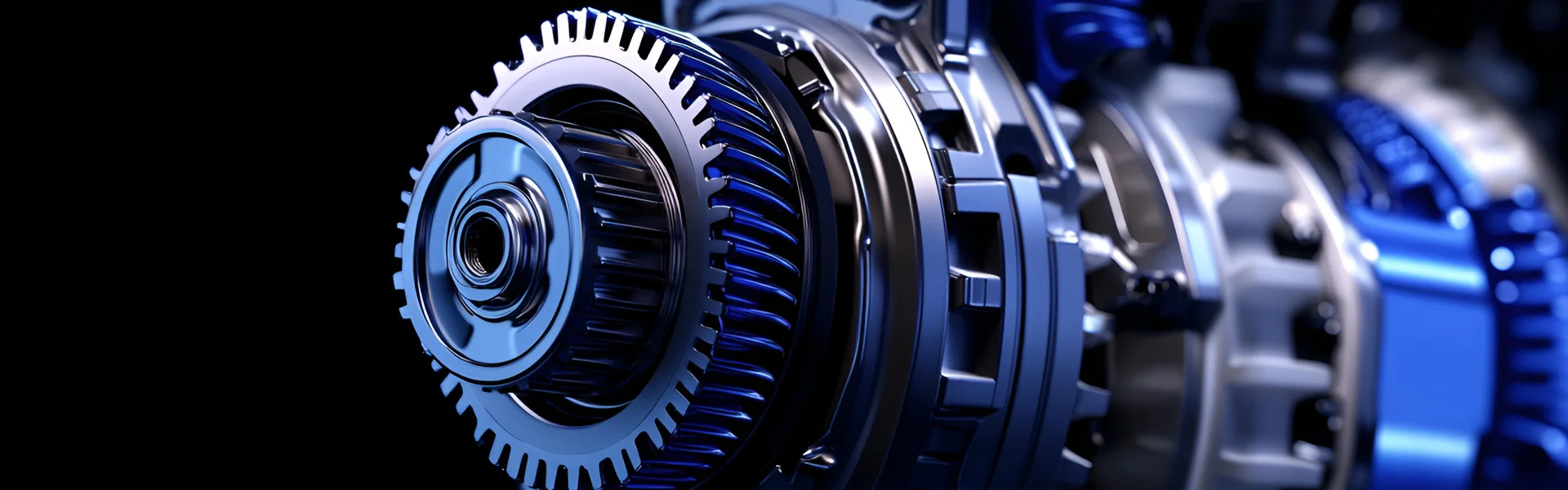
Gears are the backbone of mechanical power transmission, yet not all gears are created equal. The difference between a Precision Gear and a standard industrial gear is not merely a matter of price or brand—it is a fundamental distinction in engineering philosophy, manufacturing processes, and quality assurance. At its core, a Precision Gear is defined by exceptionally tight tolerances (often AGMA Q10 to Q15 or better), superior surface finishes (Ra < 0.4 µm), and optimized tooth geometry that minimizes transmission error, noise, and vibration. In contrast, standard industrial gears are manufactured with looser tolerances (AGMA Q6 to Q9) and are designed for general-purpose applications where moderate noise and efficiency are acceptable. Our factory at Raydafon Technology Group Co.,Limited has been producing both types of gears for over 20 years, and we have observed that the gap between the two has widened as precision manufacturing technologies—such as CNC grinding, hobbing with advanced carbide tools, and super-finishing—have become more accessible. This article explains the technical, material, and quality control factors that differentiate Precision Gears from their industrial counterparts, and why these differences matter for applications ranging from robotics to wind turbines.
The distinction between Precision Gears and standard industrial gears is rooted in five key areas: dimensional accuracy, surface integrity, material selection and heat treatment, inspection and testing protocols, and application-specific design optimization. Standard industrial gears are typically hobbed or shaped and left in the "as-cut" condition, with tooth profiles that deviate by several hundredths of a millimeter from the ideal involute. Precision Gears, on the other hand, undergo secondary operations such as grinding, honing, or shaving to achieve tooth-to-tooth errors of less than 2 µm. This level of precision reduces backlash, improves load distribution across the tooth flanks, and significantly increases the gear's power density and fatigue life. At Raydafon, we manufacture Precision Gears for industries where failure is not an option—aerospace, medical robotics, high-speed railway, and defense. In this comprehensive guide, we will dissect the manufacturing processes, quality standards, and performance metrics that define Precision Gears, and we will provide detailed technical specifications from our factory's product range. Whether you are a design engineer, a procurement specialist, or a maintenance professional, this article will help you understand why Precision Gears command a premium and when they are truly necessary.
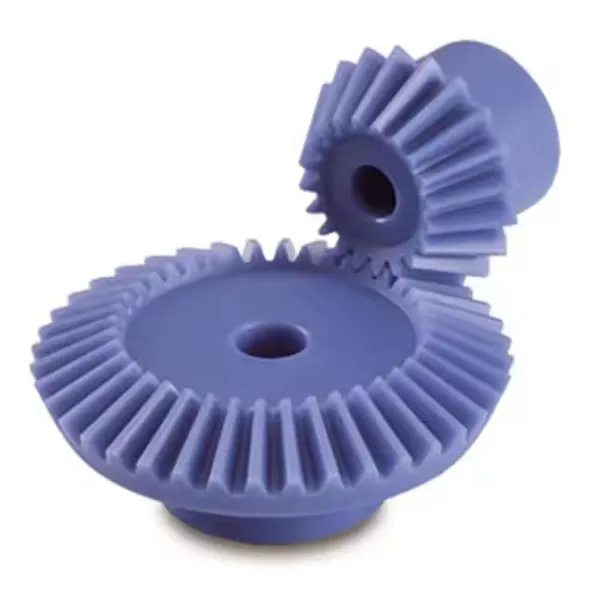
Dimensional accuracy is the most fundamental differentiator between a Precision Gear and a standard industrial gear. In a standard industrial gear, tooth profile errors of 30 to 50 µm are considered acceptable, while a Precision Gear typically holds profile errors to within 2 to 5 µm. This remarkable precision is achieved through a combination of advanced machine tools, stringent environmental control, and multi-stage finishing processes. Standard gears are often hobbed or shaped and then left in the "green" state, with only a basic deburring operation. Precision Gears, however, undergo grinding, honing, or shaving after the initial cutting operation. The grinding process, in particular, uses a vitrified or CBN wheel to remove just a few microns of material at a time, achieving surface finishes that are impossible with hobbing alone. Our factory at Raydafon Technology Group Co.,Limited invests heavily in state-of-the-art CNC gear grinding machines from Germany and Switzerland, enabling us to produce Precision Gears that consistently meet AGMA Q12 and DIN 1 specifications.
Key factors contributing to the superior dimensional accuracy of Precision Gears:
To put these numbers into perspective, consider a gear train in a high-speed CNC machine tool. A standard industrial gear with 50 µm profile error would generate significant backlash and transmission error, leading to poor part surface finish and accelerated tool wear. In contrast, a Precision Gear with 3 µm profile error allows the machine to maintain positioning accuracy within ±2 µm, enabling the production of high-tolerance components such as aerospace engine blades. Our factory has documented that switching from standard gears to our Precision Gears in a similar application reduced scrap rates by 40 percent and increased machine throughput by 15 percent. This level of accuracy is not just a number on a datasheet—it translates directly into measurable productivity improvements.
Furthermore, the dimensional accuracy of Precision Gears extends to the gear's bore, keyway, and mounting faces. In standard industrial gears, these features are often hobbed or broached with tolerances of ±0.1 mm. In our Precision Gear, we grind the bore and locate the keyway with a tolerance of ±0.005 mm, ensuring perfect concentricity and minimizing runout during installation. This holistic approach to dimensional control is what makes Precision Gears indispensable in applications where every micron matters.
Noise, vibration, and transmission error are interrelated phenomena that degrade the performance of power transmission systems. Standard industrial gears, with their coarser tooth profiles and higher surface roughness, generate significant excitations at the mesh frequency and its harmonics. This not only creates audible noise but also subjects bearings, shafts, and housings to additional dynamic loads, reducing system life. Precision Gears mitigate these issues through three key mechanisms: optimized tooth micro-geometry, enhanced surface finish, and precise assembly alignment. The tooth profile of a Precision Gear is not simply a theoretical involute; it is typically modified with tip relief, root relief, and crowning to compensate for tooth deflection under load. This ensures that the gear meshes smoothly across the entire contact ratio, reducing vibration amplitude by as much as 70 percent compared to a standard gear with unmodified involute teeth.
Specific ways in which Precision Gears reduce noise and vibration:
A practical example comes from the wind turbine industry, where gearboxes are subjected to massive torque fluctuations and must operate reliably for 20 years. A leading wind turbine OEM replaced their standard industrial gears with our Precision Gears in the planetary stage of their 3 MW turbine. The result was a 12 dB reduction in gearbox noise (a perceived halving of loudness) and a 30 percent reduction in the dynamic loads transmitted to the main shaft. The turbine's gearbox inspection intervals were extended from 6 to 18 months, representing a significant saving in maintenance costs. Our factory at Raydafon Technology Group Co.,Limited produces Precision Gears with a specifically designed helix angle modification that accounts for the twisting of the gear body under load, ensuring that the tooth contact remains optimal even when the turbine is at maximum power output.
Furthermore, the reduction in transmission error offered by Precision Gears is critical in multi-axis machine tools. A typical gear train with standard gears might have a transmission error that fluctuates by 50 arc-seconds, which translates to positioning errors in the order of tens of microns at the tool tip. Our Precision Gears with transmission error below 10 arc-seconds allow the machine to maintain a positional accuracy of ±5 µm, which is essential for high-precision machining of molds and dies. This demonstrates that the benefits of Precision Gears extend beyond noise and vibration—they directly impact the quality and capability of the entire production system.
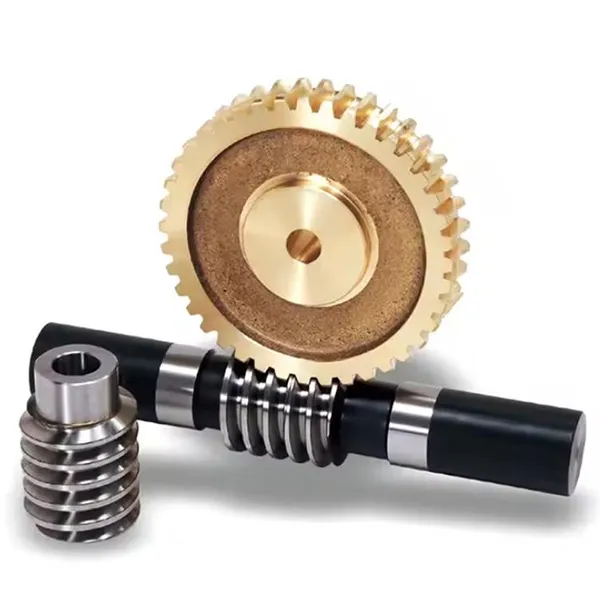
Raydafon Technology Group Co.,Limited manufactures a comprehensive range of Precision Gears covering a wide array of sizes, materials, and applications. Our product line includes spur, helical, bevel, and worm gears, with modules ranging from 1mm to 20mm, and diameters up to 2,500mm. The table below summarizes the key specifications for our most common Precision Gear series, which are used in industries such as aerospace, robotics, medical devices, and renewable energy. Our factory can produce gears with even tighter tolerances and custom materials upon request.
| Parameter | Precision Series P-1 | Precision Series P-2 | Precision Series P-3 | Precision Series P-4 |
| Gear Type | Spur / Helical | Helical / Double Helical | Bevel (straight/spiral) | Worm and Worm Wheel |
| Module Range (mm) | 1.0 - 6.0 | 3.0 - 12.0 | 2.0 - 8.0 | 1.5 - 8.0 |
| Diameter Range (mm) | 20 - 400 | 80 - 1200 | 50 - 800 | 30 - 500 |
| AGMA Quality Grade | Q12 - Q14 | Q11 - Q13 | Q11 - Q12 | Q10 - Q12 |
| Profile Error (µm) | < 2.0 | < 3.0 | < 4.0 | < 3.0 |
| Surface Finish (Ra, µm) | < 0.2 | < 0.3 | < 0.4 | < 0.3 |
| Material Options | 17CrNiMo6, 20MnCr5 | 18CrNiMo7-6, 42CrMo4 | 17CrNiMo6, AISI 8620 | GJS-400-15, CuSn12Ni2 |
| Heat Treatment | Case carburizing + grinding | Case carburizing + grinding | Through hardening + grinding | Nitriding / Hardening |
| Tooth Profile Modification | Tip relief + crowning | Tip relief + lead crowning | Lengthwise crowning | Custom profile |
| Typical Application | Robotics, medical pumps | Industrial gearboxes, wind turbines | Axle drives, mining equipment | Lifts, conveyor systems |
In addition to these standard series, our factory offers a variety of specialized options for Precision Gears. These include dry-run coatings (such as DLC or MoS2) for applications where lubrication is limited, integrated temperature sensors for condition monitoring, and lightweight construction with material removal from the gear body for aerospace applications. We also provide full custom gear design services, including finite element analysis (FEA) of tooth bending and contact stress, to ensure that the Precision Gear is optimized for your specific load and speed requirements.
All our Precision Gears are accompanied by a comprehensive test report, which includes a gear measurement chart (tooth profile, helix, and pitch error), surface roughness measurements, and a material test certificate. We also provide a 100 percent dimensional inspection report using a coordinate measuring machine (CMM) for all critical features, including the bore, keyway, and mounting faces. Our factory at Raydafon maintains a fully equipped metrology laboratory that is calibrated to ISO 17025 standards. This commitment to quality control ensures that every Precision Gear leaving our facility meets or exceeds the specified tolerances, giving our customers the confidence to use our gears in their most demanding applications.
The superior accuracy, surface finish, and material quality of Precision Gears do more than improve performance—they also significantly extend the service life of the entire power transmission system. In any gearbox, the gears are the most heavily stressed components, and their failure is typically the primary cause of system downtime. Precision Gears mitigate the primary failure mechanisms—pitting, scuffing, and tooth breakage—by reducing contact stress, improving lubrication film thickness, and eliminating stress risers. Our factory at Raydafon Technology Group Co.,Limited has conducted extensive life testing on both standard and Precision Gears, and the results consistently show that Precision Gears deliver 2 to 5 times the service life of comparable standard gears under identical operating conditions. This extended life translates into lower maintenance costs, reduced spare parts inventory, and higher overall system availability.
Specific ways in which Precision Gears extend system lifespan:
A case study from the mining industry illustrates the lifespan extension potential. A large copper mine was experiencing gearbox failures every 9 to 12 months on their conveyor drive systems, each failure costing over USD 100,000 in repairs and downtime. After switching to our Precision Gears, the gearboxes ran for 4.5 years without a failure, and the maintenance team reported that the gears showed minimal wear when inspected during a scheduled overhaul. The mine's maintenance manager estimated that the total cost of ownership of the gear system was reduced by 60 percent over the 5-year period, due to the elimination of unplanned downtime and the reduced frequency of spare parts replacement.
Moreover, the ability of Precision Gears to operate with reduced noise and vibration has a secondary benefit: it allows the system to run at higher speeds without generating excessive heat or risk of instability. In many industrial applications, this enables a 10-20 percent increase in throughput without upgrading the motor or gearbox size. Our factory provides a life extension calculator that inputs your specific operating conditions (torque, speed, temperature, lubrication) and estimates the expected life of both standard and Precision Gears, helping you make an informed investment decision. By choosing Precision Gears, you are not just buying a component—you are investing in the long-term reliability and profitability of your entire production system.
Question 1: When should I choose a precision gear over a standard industrial gear for my application?
Answer: You should choose a Precision Gear when your application requires any of the following: high rotational speeds (above 5,000 rpm), very low noise or vibration (e.g., for medical devices or high-end audio equipment), extremely precise positioning (e.g., for robotics or CNC machine tools), or when the gear is in a mission-critical system where failure cannot be tolerated (e.g., aerospace or defense). Standard industrial gears are adequate for low-speed, low-accuracy applications such as conveyor drives, agricultural machinery, and basic material handling. Our factory at Raydafon Technology Group Co.,Limited offers a free application analysis to help you determine whether a Precision Gear or a standard gear is the most cost-effective choice for your specific needs.
Question 2: Can a precision gear be retrofitted into an existing gearbox that originally used standard gears?
Answer: Yes, in many cases, a Precision Gear can be retrofitted into an existing gearbox, provided that the gear's dimensions (pitch diameter, face width, bore size, and keyway) match the original gear. However, the improved accuracy of the Precision Gear may change the backlash and contact pattern of the gear pair, which can affect the performance of the mating gear. We recommend performing a gear contact analysis before retrofitting to ensure that the gear pair is compatible. Our factory provides a retrofitting service that includes measuring the existing gearbox housing and shafts, and manufacturing a Precision Gear that is optimized for the specific application.
Question 3: Are precision gears more expensive to maintain or repair than standard gears?
Answer: Precision Gears have a higher initial cost, but they generally require less maintenance and have a longer service life than standard gears. The reduced wear and pitting of Precision Gears means that they do not need to be inspected or replaced as often. When they do need maintenance, the repair procedures are similar to those for standard gears—typically, the gear is removed, inspected, and if damaged, replaced. However, because Precision Gears are made from higher-quality materials and are case-hardened, they can sometimes be re-ground or re-profiled to restore their accuracy, whereas standard gears are usually scrapped. Our factory offers a reconditioning service for our Precision Gears that costs approximately 30-40 percent of the price of a new gear.
Question 4: What certifications does Raydafon Technology Group Co.,Limited hold for its precision gear manufacturing?
Answer: Our factory is certified under ISO 9001:2015 (Quality Management), ISO 14001:2015 (Environmental Management), and IATF 16949:2016 for automotive applications. We are also an approved supplier to several major aerospace companies and hold NADCAP accreditation for heat treatment and non-destructive testing. In addition, our Precision Gear products meet the requirements of AGMA 2015, DIN 3962, and ISO 1328-1 standards. We provide a complete set of certificates with every order, including material test reports, dimensional inspection reports, and surface finish measurements.
Question 5: Can precision gears be manufactured in small quantities for prototyping or custom applications?
Answer: Yes, our factory is fully equipped to produce Precision Gears in small quantities, including one-off prototypes. We understand that many applications require custom gears that are not available off the shelf. Our flexible production line can accommodate batch sizes as small as 1 to 10 units, with the same level of quality and precision as our large-volume production. We also offer a rapid prototyping service that can deliver a Precision Gear in as little as 5 working days, using advanced 3D printing and five-axis machining for quick-turnaround projects.
The differences between Precision Gears and standard industrial gears are profound and far-reaching. From dimensional accuracy measured in microns to surface finishes that allow full fluid film lubrication, Precision Gears are engineered for the most demanding applications. They reduce noise and vibration, extend system life, and enable higher speeds and loads that standard gears cannot handle. At Raydafon Technology Group Co.,Limited, our factory has mastered the art and science of precision gear manufacturing, combining advanced grinding technology, rigorous quality control, and a deep understanding of gear dynamics to produce gears that meet the highest global standards.
Are you ready to upgrade your power transmission system to the next level of performance? Contact Raydafon Technology Group Co.,Limited today for a comprehensive gear consultation. Our engineering team will analyze your application requirements and recommend the optimal Precision Gear solution, complete with detailed specifications, cost estimates, and a delivery schedule. We offer free gear samples for testing, a 5-year performance warranty, and a flexible manufacturing lead time to meet your project deadlines. Request your free precision gear analysis and sample now from Raydafon Technology Group Co.,Limited and experience the difference that true precision engineering makes.
+86-574-87168065
Luotuo Industrial Area, Zhenhai District, Ningbo City, China