QR Code

Products
Contact Us


Fax
+86-574-87168065

Email

Address
Luotuo Industrial Area, Zhenhai District, Ningbo City, China



A tipper truck raises its bed perhaps twenty times a day. A tailgate cylinder opens and closes a few dozen times per shift. A garbage truck hydraulic cylinder, by contrast, may complete three hundred to five hundred packing cycles in a single shift, every working day, for a decade. That difference in duty cycle is the starting point for understanding why a refuse vehicle cylinder is not simply a heavier version of a general commercial vehicle cylinder. The load profile is different, the contamination environment is different, the sealing strategy is different, and the mounting geometry is different. A buyer who specifies a standard tipper cylinder for a packer application will see premature seal failure, rod scoring, and cracked mounts within the first year.
This guide is written for procurement managers and fleet engineers who are sourcing Garbage Truck Hydraulic Cylinders for refuse bodies, rear loaders, front loaders, and side loaders. We will compare the refuse cylinder with other commercial vehicle cylinders across duty cycle, environment, load profile, mounting, and sealing. We will provide a specification checklist for ordering and an evaluation framework for supplier selection. We will also provide detailed product parameters from our factory at Raydafon Technology Group Co.,Limited. Whether you are specifying cylinders for a new refuse body build or sourcing replacement units for a municipal fleet, this guide will help you understand what makes the refuse cylinder different and how to specify it correctly.
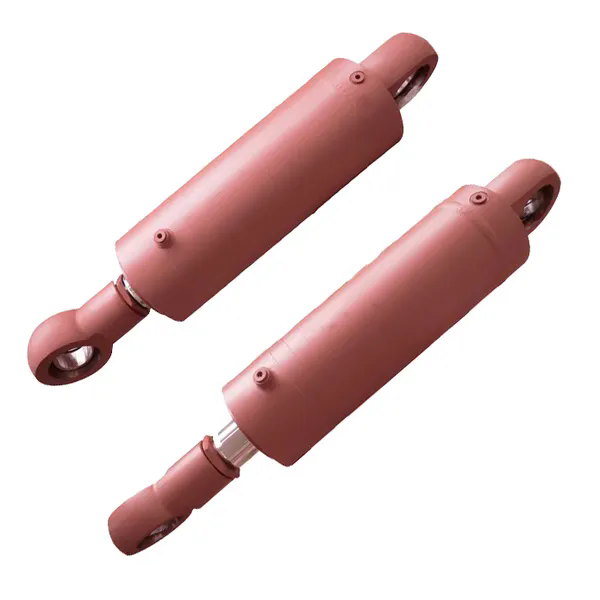
The duty cycle is the first and most fundamental difference. A general commercial vehicle cylinder is designed for intermittent operation. A tipper cylinder raises the bed, holds it while the load discharges, and lowers it. The complete cycle may take two to three minutes, and the cylinder may perform ten to thirty cycles in a working day. A garbage truck hydraulic cylinder operates on a completely different rhythm. A rear loader packer cylinder completes a full extend-retract cycle in eight to fifteen seconds, and the operator may repeat that cycle continuously for hours. Over a single shift, the packer cylinder can accumulate three hundred to five hundred cycles. Over a year, that number reaches tens of thousands.
This duty cycle difference has direct consequences for the cylinder design. The seals must resist wear at a rate that a tipper cylinder never experiences. The rod surface must resist abrasion from continuous sliding contact with the wiper. The hydraulic oil must dissipate heat from continuous flow. The cylinder body must resist fatigue from pressure cycling. The table below compares the duty cycles of common commercial vehicle cylinders.
| Cylinder Application | Typical Cycles per Day | Cycle Duration | Annual Cycle Estimate |
| Tipper cylinder | 10 - 30 | 2 - 3 minutes | 3,000 - 9,000 |
| Tailgate cylinder | 20 - 60 | 30 - 60 seconds | 6,000 - 18,000 |
| Snow plow cylinder | 50 - 150 (seasonal) | 5 - 15 seconds | 5,000 - 15,000 (seasonal) |
| Garbage truck packer cylinder | 300 - 500 | 8 - 15 seconds | 75,000 - 125,000 |
| Garbage truck ejector cylinder | 10 - 30 (long stroke) | 3 - 5 minutes | 2,500 - 7,500 |
The packer cylinder is the extreme case. It is the component that must survive the highest cycle count, and it is the component that most often defines the maintenance interval for the refuse body. At Raydafon, our factory designs our Garbage Truck Hydraulic Cylinder range around this duty cycle. We select seal compounds, rod coatings, and guide materials that are rated for the continuous cycling that a packer application demands. Our goal is to provide cylinders that match the operating rhythm of the vehicle, not the rhythm of a general commercial truck.
The refuse environment is the second major difference. A tipper truck carries soil, gravel, or construction debris, and the cylinder is exposed to dust and grit. A garbage truck carries municipal solid waste, which includes food waste, liquids, glass, plastics, and organic matter that decomposes. The leachate that forms inside the refuse body is acidic, and it carries fine abrasive particles that attack the rod surface and the wiper seal. The cylinder is mounted under the body, where it is exposed to this leachate, to road spray, and to the wash-down that the vehicle receives at the end of each shift.
This environment changes the sealing strategy in three ways. First, the wiper seal must be more aggressive. A standard wiper removes dust. A refuse-duty wiper must remove wet, sticky leachate without allowing it to migrate past the rod seal. Second, the rod coating must resist chemical attack as well as abrasion. Hard chrome plating at 25 to 30 microns is a minimum. For severe duty, a ceramic or nickel-ceramic coating may be specified. Third, the seal material must resist the acidic leachate. Polyurethane is common, but the compound must be selected for hydrolysis resistance. The table below maps the contaminants to the sealing countermeasure.
| Contaminant | Source | Sealing Countermeasure |
| Leachate (acidic) | Decomposing organic waste | Hydrolysis-resistant polyurethane, double wiper |
| Fine grit | Glass, soil, ash | Hard wiper lip, chrome or ceramic rod coating |
| Road spray | Wet roads, wash-down | Robust wiper, sealed rod end |
| Chemical cleaners | End-of-shift wash-down | Chemical-resistant seal compound |
| High pressure jets | Depot cleaning | Shielded rod, protective boot |
At our factory, we have seen the consequences of a standard sealing strategy applied to a refuse cylinder. A fleet that used a tipper-grade cylinder in a rear loader reported rod scoring and seal leakage within eight months. The rod had been attacked by leachate that bypassed a single-lip wiper. When the cylinder was replaced with a refuse-duty unit with a double wiper and a ceramic-coated rod, the service interval extended beyond three years. This is not an unusual story. It is the reason why the Garbage Truck Hydraulic Cylinder is specified as a separate product category. Our factory designs our refuse cylinders with the sealing strategy that the environment requires, and we work with our customers to confirm that the specification matches the duty.
The load profile of a refuse cylinder is more complex than the load profile of a tipper cylinder. A tipper cylinder sees a largely static load: the weight of the bed and the load, applied gradually as the bed is raised. A packer cylinder sees a dynamic load that changes throughout the packing stroke. The load begins low as the packer blade contacts the loose refuse. It rises sharply as the refuse is compacted against the ejector plate. It may spike when a rigid object, such as a steel bar or a concrete block, is caught between the blade and the body. Then it drops as the blade retracts. This cycle repeats every eight to fifteen seconds, all day. The table below describes the load phases of a typical packer cycle.
| Phase | Duration | Pressure Range | Cylinder Stress |
| Blade approach | 2 - 3 seconds | 30 - 60 bar | Low, accelerating load |
| Initial compaction | 3 - 5 seconds | 80 - 160 bar | Rising load, rod in compression |
| Peak compaction | 2 - 4 seconds | 180 - 250 bar | Peak load, side load possible |
| Relief or reversal | 1 - 2 seconds | Spike to 280 - 300 bar | Pressure spike, shock load |
| Blade retract | 2 - 3 seconds | 40 - 80 bar | Tension load, rod in tension |
The ejector cylinder has a different load profile. It is a long-stroke cylinder that pushes the compacted load out of the body. The load is high but relatively steady, and the cycle is slow. The challenge for the ejector cylinder is not cycle frequency but side load. The compacted load is not uniform, and the ejector plate can bind against the body walls. This imposes a bending load on the rod that a tipper cylinder does not experience. The rod diameter and the guide length must be selected to resist this bending, and the mounting must allow for slight misalignment. At Raydafon Technology Group Co.,Limited, our factory analyses both load profiles when we design a Garbage Truck Hydraulic Cylinder. We select the rod diameter for buckling and bending, the seal for the pressure spikes, and the mounting for the misalignment that the application allows.
The mounting geometry of a refuse cylinder is driven by the space available under the body and by the need to accommodate misalignment. A tipper cylinder is typically mounted in a trunnion or a clevis at the front of the bed, with a well-defined arc of motion. A packer cylinder is often mounted inside the body structure, where the available space is tight and the alignment is less precise. The ejector cylinder is mounted horizontally along the length of the body, and it must tolerate the deflection of the body under load. These differences affect the rod design and the mounting design. The table below compares the mounting and rod characteristics of common commercial vehicle cylinders.
| Cylinder Type | Typical Mounting | Rod Design Focus | Key Difference |
| Tipper cylinder | Trunnion or clevis | Buckling resistance | Static load, well-defined arc |
| Tailgate cylinder | Clevis | Compact size | Short stroke, low load |
| Packer cylinder | Flange or clevis, internal | Fatigue and side load | High cycle, pressure spikes |
| Ejector cylinder | Flange, horizontal | Bending and buckling | Long stroke, side load from load binding |
The rod design for a refuse cylinder must account for the side load that the application imposes. A packer rod may be subjected to bending as the blade contacts an uneven load. An ejector rod may be subjected to bending as the ejector plate binds. In both cases, the rod diameter must be larger than a simple buckling calculation would suggest, and the guide length must be sufficient to resist the bending moment. At our factory, we design our Garbage Truck Hydraulic Cylinder rods with an increased diameter and an extended guide to resist side load. We also specify a rod coating that resists the abrasion that side load produces. Our goal is to provide a rod that survives the load profile of the refuse body, not just the axial load of a tipper application.
Before ordering a Garbage Truck Hydraulic Cylinder, the buyer should complete a specification checklist that captures the differences described in this article. The checklist should cover the duty cycle, the environment, the load profile, the mounting, and the sealing. The table below provides a practical checklist that can be used in a request for quotation.
| Checklist Item | What to Specify | Why It Matters |
| Duty cycle | Cycles per shift, shifts per day | Determines seal and rod life requirement |
| Working pressure | Continuous and peak pressure | Determines body and seal rating |
| Load type | Packer, ejector, or tailgate | Determines rod design and mounting |
| Environment | Leachate, wash-down, road spray | Determines rod coating and wiper type |
| Mounting | Flange, clevis, trunnion, dimensions | Determines fit and misalignment tolerance |
| Sealing | Wiper type, seal compound, rod coating | Determines service life in refuse duty |
| Testing | Pressure test, cycle test, leak test | Provides evidence of reliability |
At Raydafon Technology Group Co.,Limited, our factory uses this checklist when we quote a Garbage Truck Hydraulic Cylinder. We ask our customers for the duty cycle and the environment before we recommend a sealing strategy. We ask for the mounting dimensions before we design the rod. We provide the test report with the shipment. Our goal is to ensure that the cylinder we supply is specified for the refuse application, not adapted from a general commercial vehicle design.
Evaluating a supplier of refuse cylinders requires a focus on application knowledge, material selection, testing, and after-sales support. The supplier must understand the difference between a refuse cylinder and a general commercial vehicle cylinder, and must be able to explain the sealing and rod design choices that the application demands. They must use materials that are rated for the duty cycle and the environment. They must perform pressure testing and cycle testing on the finished cylinder. And they must provide after-sales support, including spare parts and technical assistance. The table below summarizes the evaluation criteria.
| Evaluation Criterion | What to Look For | Why It Matters |
| Application knowledge | Experience with refuse bodies, packer cycles | Ensures the design matches the duty |
| Material selection | Refuse-grade seals, chrome or ceramic rod | Ensures service life in the environment |
| Testing | Pressure test, cycle test, leak test reports | Provides evidence of reliability |
| After-sales support | Spare parts, technical support, warranty | Reduces fleet downtime |
| Fleet references | Municipal or private refuse fleet experience | Demonstrates capability and reliability |
At our factory, we have been supplying Garbage Truck Hydraulic Cylinders to refuse body builders and municipal fleets for over a decade. We understand the packer and ejector load profiles, and we design our cylinders for the refuse duty cycle. Our technical team is available to help with specification and troubleshooting. We invite you to evaluate us against these criteria and to consider us as your partner for refuse vehicle hydraulics.
Question 1: Can a tipper cylinder be used as a replacement for a garbage truck packer cylinder?
Answer: A tipper cylinder is not a suitable replacement for a packer cylinder. The tipper cylinder is designed for a low duty cycle and a static load, while the packer cylinder must withstand hundreds of cycles per shift and frequent pressure spikes. A tipper cylinder used in a packer application will experience premature seal failure, rod scoring, and possible body fatigue. Always specify a cylinder that is rated for the refuse duty cycle.
Question 2: What is the typical working pressure of a garbage truck hydraulic cylinder?
Answer: The typical working pressure for a packer cylinder is 180 to 250 bar, with peak pressure spikes of 280 to 300 bar during compaction. The ejector cylinder operates at a similar pressure but with a slower cycle and a longer stroke. The cylinder body and seals must be rated for the peak pressure, not just the continuous pressure. Our factory specifies the pressure rating based on the peak pressure in the application.
Question 3: Why does the rod coating matter more on a refuse cylinder than on a tipper cylinder?
Answer: The rod coating on a refuse cylinder is exposed to acidic leachate, fine grit, and frequent wash-down, in addition to the continuous sliding contact with the wiper. A standard chrome coating may not resist this combination. A thicker chrome coating, or a ceramic or nickel-ceramic coating, provides better resistance to corrosion and abrasion. The coating choice should be matched to the environment and the duty cycle.
Question 4: How often should a garbage truck hydraulic cylinder be inspected?
Answer: A refuse cylinder should be inspected at every scheduled vehicle service, and the rod and wiper should be checked weekly for signs of leakage or contamination. The hydraulic oil should be tested at the recommended interval, and the cylinder should be pressure tested annually. Because the packer cylinder accumulates cycles quickly, the inspection interval should be based on cycle count rather than calendar time where possible.
Question 5: What causes side load on a garbage truck hydraulic cylinder, and how is it handled?
Answer: Side load on a refuse cylinder is caused by uneven loading in the body, by the ejector plate binding against the body walls, and by misalignment in the mounting. It is handled by increasing the rod diameter, extending the guide length, and selecting a mounting that allows slight misalignment. The rod coating and the guide material must also be selected to resist the wear that side load produces.
A Garbage Truck Hydraulic Cylinder differs from other commercial vehicle cylinders in four fundamental ways: the duty cycle is an order of magnitude higher, the environment is more corrosive and abrasive, the load profile is more dynamic and includes side load, and the mounting geometry is tighter and less precise. These differences demand a different sealing strategy, a different rod design, and a different specification process. A buyer who treats the refuse cylinder as a heavy-duty tipper cylinder will see premature failures and higher fleet maintenance costs. A buyer who specifies the cylinder for the refuse duty will see the service life that the application requires.
At Raydafon Technology Group Co.,Limited, our factory designs and manufactures Garbage Truck Hydraulic Cylinders for the refuse duty cycle. We use refuse-grade seals, corrosion-resistant rod coatings, and rod designs that resist side load. We test every cylinder before shipment and provide the test data to our customers. Whether you are building new refuse bodies or maintaining an existing fleet, we invite you to contact us to discuss your cylinder requirements and to review our specifications.
Contact Raydafon Technology Group Co.,Limited today to discuss your Garbage Truck Hydraulic Cylinder requirements and discover how our refuse-duty cylinders can reduce fleet downtime and extend service life.
+86-574-87168065
Luotuo Industrial Area, Zhenhai District, Ningbo City, China