QR Code

Products
Contact Us


Fax
+86-574-87168065

Email

Address
Luotuo Industrial Area, Zhenhai District, Ningbo City, China


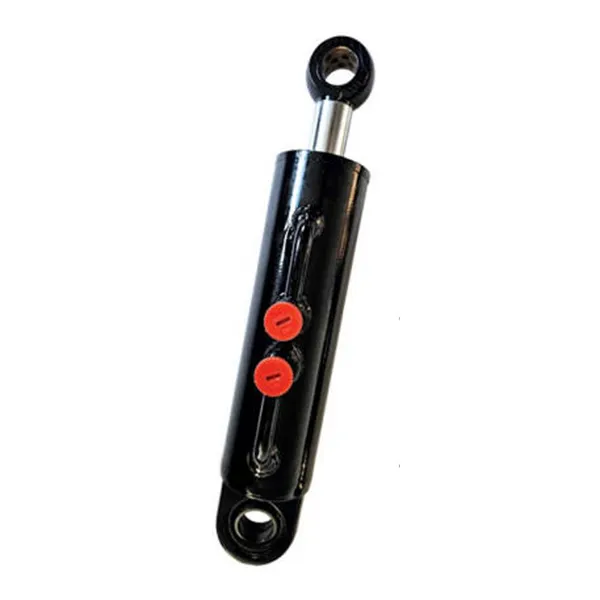
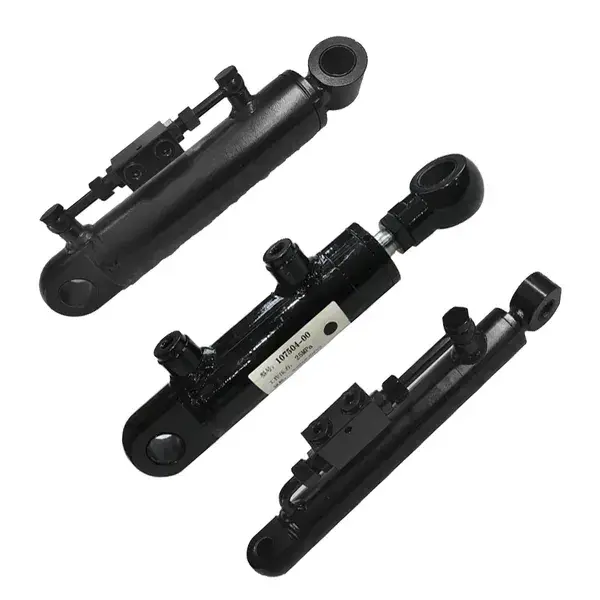
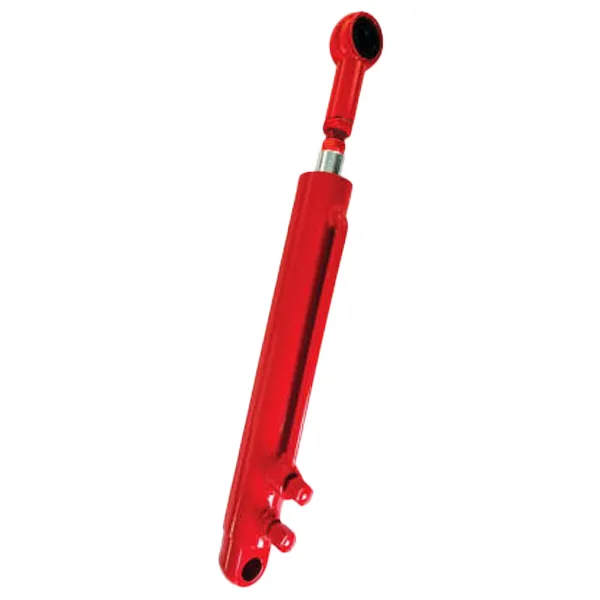
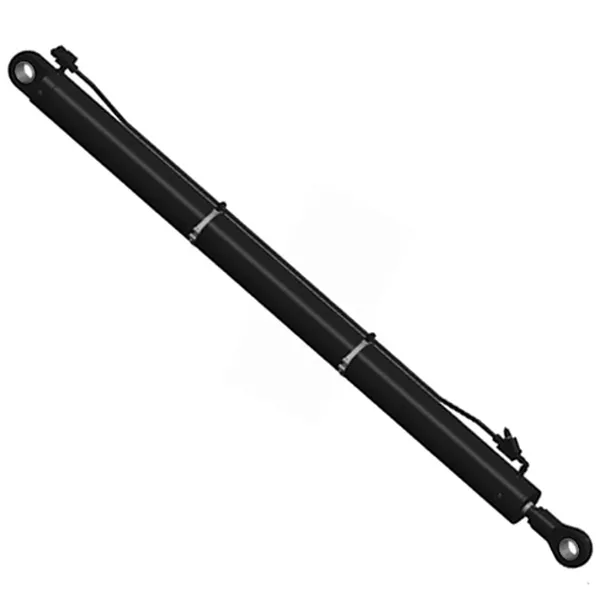
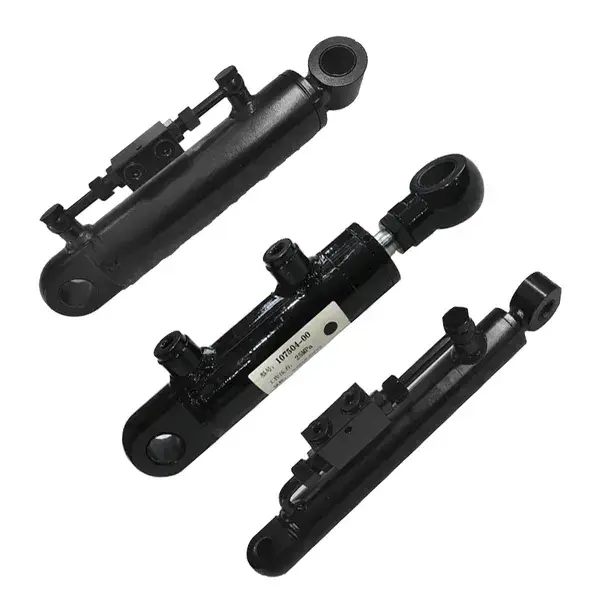
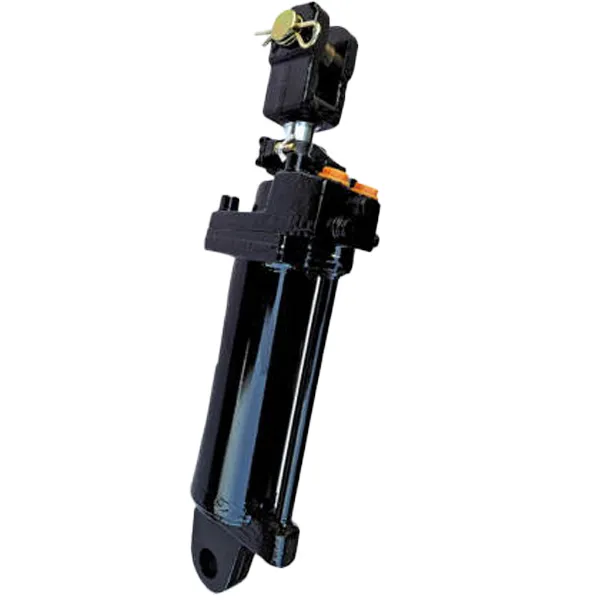
An excavator's digging cycle is a coordinated sequence of three motions: the boom raises and lowers, the arm extends and retracts, and the bucket curls and dumps. Each of these motions is powered by a dedicated Excavator Hydraulic Cylinder. The boom cylinder lifts the entire front attachment; the arm cylinder controls the reach and crowd force; the bucket cylinder rotates the bucket for digging and dumping. Together, these three cylinders convert hydraulic pressure into the precise, powerful movements that define excavator performance. For procurement managers and maintenance engineers, understanding which cylinder is responsible for which motion is essential for selecting the right replacement part, diagnosing performance problems, and specifying the correct cylinder for a new machine or attachment.
This guide is written for buyers who are sourcing Excavator Hydraulic Cylinders for boom, arm, and bucket applications. We will explain the function of each cylinder, the loads they carry, the design features that distinguish them, and the specifications that matter for selection. We will also provide detailed product parameters from our factory at Raydafon Technology Group Co.,Limited. Whether you are replacing a failed cylinder, specifying a cylinder for a new attachment, or building a maintenance inventory, this guide will help you identify the right cylinder for each position.

An excavator has three primary hydraulic cylinders on the front attachment, each responsible for a distinct motion. The boom cylinder is mounted between the machine's upper frame and the boom. It raises and lowers the boom, which in turn lifts or lowers the entire arm and bucket assembly. The arm cylinder is mounted between the boom and the arm. It extends and retracts the arm, controlling the reach of the attachment and the crowd force applied to the bucket. The bucket cylinder is mounted between the arm and the bucket linkage. It curls and dumps the bucket, controlling the digging and dumping motions. The table below summarizes the position and function of each cylinder.
| Cylinder | Mounting Position | Primary Motion | Load Characteristic |
| Boom Cylinder | Upper frame to boom | Raises and lowers the boom | Highest load, lifting entire attachment |
| Arm Cylinder | Boom to arm | Extends and retracts the arm | High crowd force, reach control |
| Bucket Cylinder | Arm to bucket linkage | Curls and dumps the bucket | Moderate load, high cycle frequency |
At Raydafon, our factory manufactures Excavator Hydraulic Cylinders for all three positions. We understand that each position has different load requirements, stroke lengths, and mounting configurations. Our engineering team can help you identify the correct cylinder for your machine model and application.
The boom cylinder carries the heaviest load of the three cylinders because it lifts the entire front attachment: the boom, the arm, the bucket, and the payload. When the excavator is lifting a full bucket at maximum reach, the boom cylinder is subjected to a combination of compressive load, bending moment, and hydraulic pressure. The cylinder must be sized to handle this load with an adequate safety factor, and its rod must be designed to resist buckling. The boom cylinder is typically the largest and most robust of the three cylinders. The table below summarizes the load factors that affect the boom cylinder.
| Load Factor | Effect on Boom Cylinder | Design Requirement |
| Attachment Weight | Constant load from boom, arm, and bucket | Large bore, thick rod |
| Payload Weight | Variable load from the material in the bucket | High pressure rating, robust seals |
| Reach Moment | Load increases with distance from the machine | Buckling-resistant rod design |
| Dynamic Forces | Shock loads from digging and travel | Cushioning, relief valves |
At our factory, we manufacture boom cylinders with large bore diameters and thick rods to handle the heavy loads of excavator applications. We use high-strength steel and precision machining to ensure that the cylinder can withstand the combined stresses of lifting and digging. Our engineering team can calculate the required bore and rod size for your specific machine and attachment.
The arm cylinder is responsible for extending and retracting the arm, which controls the reach of the attachment and the crowd force applied to the bucket. The arm cylinder must balance two requirements: it must provide enough force to crowd the bucket into the material, and it must provide enough stroke to reach the required digging depth. The arm cylinder is typically smaller than the boom cylinder but larger than the bucket cylinder. Its design must account for the bending moments created by the arm's length and the forces applied at the bucket. The table below summarizes the design considerations for the arm cylinder.
| Design Consideration | Effect on Arm Cylinder | Requirement |
| Crowd Force | Force required to push the bucket into the material | Sufficient bore size, high pressure rating |
| Reach | Stroke length required to extend the arm | Long stroke, buckling-resistant rod |
| Bending Moment | Moment from the arm length and bucket forces | Thick rod, robust mounting |
| Cycle Frequency | Repeated extension and retraction | Durable seals, wear-resistant rod coating |
At Raydafon Technology Group Co.,Limited, our factory manufactures arm cylinders with the bore size, stroke length, and rod diameter required for each machine model. We use finite element analysis to verify the structural integrity of the cylinder under the bending moments and crowd forces of the arm application. Our goal is to provide arm cylinders that deliver reliable performance and long service life.
The bucket cylinder is different from the boom and arm cylinders in several ways. First, it operates through a linkage mechanism, which multiplies the force and changes the motion characteristics. The linkage allows a relatively small cylinder to generate a high curling force at the bucket. Second, the bucket cylinder operates at a higher cycle frequency than the other two cylinders. In a typical digging cycle, the bucket curls and dumps many times, while the boom and arm may move less frequently. Third, the bucket cylinder is exposed to more abrasive conditions, as it is closest to the material being handled. The table below summarizes the differences.
| Feature | Boom Cylinder | Arm Cylinder | Bucket Cylinder |
| Operation | Direct | Direct | Through linkage |
| Cycle Frequency | Low | Moderate | High |
| Load Type | Lifting | Crowd and reach | Curling and dumping |
| Exposure | Moderate | Moderate | High (abrasive material) |
| Typical Size | Largest | Medium | Smallest |
At our factory, we manufacture bucket cylinders with wear-resistant rod coatings and durable seals to handle the high cycle frequency and abrasive conditions. We also offer linkage-matched cylinders to ensure that the force and motion characteristics meet the requirements of the specific bucket and linkage design. Our engineering team can help you select the right bucket cylinder for your application.
When comparing Excavator Hydraulic Cylinders across the boom, arm, and bucket positions, buyers should evaluate several key specifications. These include the bore diameter, the rod diameter, the stroke length, the operating pressure, the mounting type, and the seal type. The bore diameter determines the force output; the rod diameter determines the buckling resistance; the stroke length determines the range of motion; the operating pressure determines the force capacity; the mounting type determines the fit with the machine; and the seal type determines the durability. The table below provides a comparison of the typical specifications for the three cylinder positions.
| Specification | Boom Cylinder | Arm Cylinder | Bucket Cylinder |
| Bore Diameter (mm) | 120 - 200 | 100 - 160 | 80 - 130 |
| Rod Diameter (mm) | 80 - 140 | 60 - 100 | 50 - 90 |
| Stroke Length (mm) | 800 - 1,500 | 1,000 - 1,800 | 600 - 1,200 |
| Operating Pressure (bar) | 250 - 350 | 250 - 350 | 250 - 350 |
| Mounting Type | Clevis, pin | Clevis, pin | Clevis, pin |
| Seal Type | Polyurethane, PTFE | Polyurethane, PTFE | Polyurethane, PTFE |
At Raydafon Technology Group Co.,Limited, our factory manufactures Excavator Hydraulic Cylinders to meet these specifications and more. We can customize the bore, rod, stroke, pressure rating, and mounting to suit your specific machine model. Our quality control system includes inspection of raw materials, in-process inspection, and final inspection before shipment. Our goal is to provide our customers with high-quality cylinders that meet their performance requirements.
Evaluating a supplier of Excavator Hydraulic Cylinders requires a focus on manufacturing capability, material quality, testing, and technical support. The supplier must have the capability to machine, weld, and assemble cylinders to the required tolerances. They must use high-quality materials that resist wear and fatigue. They must test every cylinder for pressure and leakage. And they must provide technical support to help you select the right cylinder for each position. The table below summarizes the evaluation criteria.
| Evaluation Criterion | What to Look For | Why It Matters |
| Manufacturing Capability | CNC machining, welding, honing, assembly | Ensures dimensional accuracy and quality |
| Material Quality | Certified steel, hardened rods, chrome plating | Ensures durability and wear resistance |
| Testing | Pressure testing, leakage testing, cycle testing | Verifies performance and reliability |
| Technical Support | Application engineering, cylinder selection | Helps choose the right cylinder |
| Project Experience | Excavator OEM references | Demonstrates capability and reliability |
At our factory, we have been producing Excavator Hydraulic Cylinders for over a decade. We have CNC machining, welding, and honing capabilities in-house. We use certified materials and perform pressure and leakage testing on every cylinder. Our technical team is available to assist with cylinder selection and application engineering. We invite you to evaluate us against these criteria and to consider us as your partner for Excavator Hydraulic Cylinders.
The following table provides the key product parameters for our Excavator Hydraulic Cylinders. These cylinders are available for boom, arm, and bucket positions across a range of excavator sizes. Our factory can also produce custom cylinders to meet specific requirements.
| Parameter | Specification Range | Notes |
| Bore Diameter | 80 - 200 mm | Depends on position and machine size |
| Rod Diameter | 50 - 140 mm | Selected for buckling resistance |
| Stroke Length | 600 - 1,800 mm | Depends on position and machine geometry |
| Operating Pressure | Up to 350 bar | Higher pressures available |
| Barrel Material | ST52, E355 | Seamless steel tube |
| Rod Material | 20MnV6, 42CrMo4 | Hard chrome plated |
| Seal Material | Polyurethane, PTFE, NBR | Selected for temperature and application |
| Mounting Type | Clevis, pin, flange | Custom mounting available |
| Operating Temperature | -30°C to +100°C | High-temperature options available |
| MOQ | 10 pieces | Negotiable for large orders |
| Lead Time | 4 - 8 weeks | Depends on quantity and customization |
At our factory, we manufacture our Excavator Hydraulic Cylinders to meet these specifications and more. We can customize the bore, rod, stroke, pressure rating, and mounting to suit your specific machine model. Our quality control system includes inspection of raw materials, in-process inspection, and final inspection before shipment. Our goal is to provide our customers with high-quality cylinders that meet their performance requirements.
Question 1: Which cylinder is responsible for lifting the boom?
Answer: The boom cylinder is responsible for lifting the boom. It is mounted between the machine's upper frame and the boom, and it raises and lowers the entire front attachment. The boom cylinder is typically the largest and most robust of the three excavator cylinders because it carries the heaviest load.
Question 2: Which cylinder controls the digging reach?
Answer: The arm cylinder controls the digging reach. It is mounted between the boom and the arm, and it extends and retracts the arm to position the bucket and apply crowd force. The arm cylinder determines how far the bucket can reach and how much force it can apply to the material.
Question 3: Which cylinder curls and dumps the bucket?
Answer: The bucket cylinder curls and dumps the bucket. It is mounted between the arm and the bucket linkage, and it operates through the linkage to rotate the bucket. The bucket cylinder operates at a higher cycle frequency than the other two cylinders and is exposed to more abrasive conditions.
Question 4: Can I use the same cylinder for boom, arm, and bucket positions?
Answer: No, the three cylinders are not interchangeable. Each position has different load requirements, stroke lengths, and mounting configurations. The boom cylinder is the largest, the arm cylinder is medium, and the bucket cylinder is the smallest. Using the wrong cylinder can lead to poor performance, premature failure, and safety hazards. Always use the cylinder specified for the position.
Question 5: How do I identify the correct cylinder for my excavator model?
Answer: To identify the correct cylinder for your excavator model, consult the machine's parts manual or contact the manufacturer. You will need the machine model, the serial number, and the position (boom, arm, or bucket). At Raydafon Technology Group Co.,Limited, we can help you identify the correct cylinder by cross-referencing the OEM part number or by measuring the existing cylinder.
The boom, arm, and bucket of an excavator are each powered by a dedicated Excavator Hydraulic Cylinder. The boom cylinder lifts the entire attachment; the arm cylinder controls reach and crowd force; the bucket cylinder curls and dumps the bucket. Each cylinder has different load requirements, stroke lengths, and mounting configurations, and they are not interchangeable. Understanding the function of each cylinder is essential for selecting the right replacement part, diagnosing performance problems, and specifying the correct cylinder for a new machine or attachment. At Raydafon Technology Group Co.,Limited, our factory manufactures Excavator Hydraulic Cylinders for all three positions, with the bore, rod, stroke, and pressure rating required for each application. We use high-quality materials, precision machining, and rigorous testing to ensure that every cylinder we produce delivers reliable performance.
Whether you are replacing a failed cylinder, specifying a cylinder for a new attachment, or building a maintenance inventory, we invite you to contact us to discuss your requirements. We can provide technical data, samples, and customized solutions. Our commitment to quality and customer satisfaction has made us a trusted partner for excavator owners and operators around the world.
Contact Raydafon Technology Group Co.,Limited today to discuss your Excavator Hydraulic Cylinder requirements and discover how our cylinders can keep your machine moving.
+86-574-87168065
Luotuo Industrial Area, Zhenhai District, Ningbo City, China