QR Code

Products
Contact Us


Fax
+86-574-87168065

E-mail

Address
Luotuo Industrial Area, Zhenhai District, Ningbo City, China


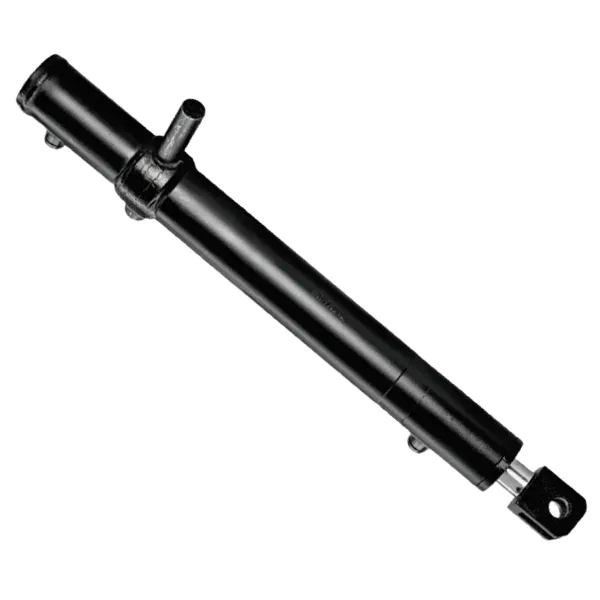
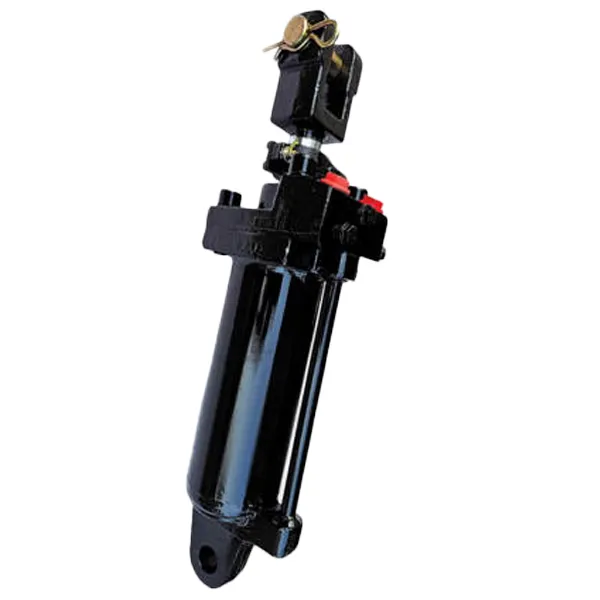
Have you ever faced a sudden hydraulic cylinder failure on your heavy-duty ram, stalling an entire job site? That moment of dread when a critical lift cylinder stops responding, wasting precious time and money. For anyone operating the robust EP-TF1004.55.8 hydraulic cylinder, knowing exactly how to maintain the EP-TF1004.55.8 hydraulic cylinder isn’t just a bonus—it’s the difference between seamless productivity and costly downtime. This cylinder powers massive lifts in construction, mining, and material handling, yet everyday dirt, heat, and pressure cycles silently eat away at its performance. A single neglected seal can leak fluid, drop tonnage, and invite abrasive contamination into the piston chamber. Through real-world maintenance routines tested by Raydafon Technology Group Co.,Limited, we’ll walk you through scene-by-scene prevention, quick diagnostics, and proven schedules that keep your cylinder running like factory-new. No guesswork—just actionable steps that fit into busy maintenance schedules.
Scene: It’s 6:30 AM, the morning shift starts, and a technician walks past the EP-TF1004.55.8 cylinder mounted on a container handler. Yesterday’s operation was heavy—300 cycles in dusty conditions. The first thing visible: a thin film of dust mixed with oil mist near the rod wiper. Without immediate action, that mix becomes a grinding paste.
Solution: Every 8 operating hours, perform a 90-second visual sweep. Wipe the exposed chrome rod with a lint-free cloth soaked in clean hydraulic oil. Never use solvents—they strip the micro-lubrication layer. Inspect the wiper seal lip for cracks; if it’s hardened or missing chunks, swap it immediately. Check all port fittings for dampness. A single loose fitting can introduce airborne silica. The Raydafon field kit includes pre-saturated wipes and color‑coded torque labels so even junior staff can do this correctly. This simple habit prevents 70% of early-stage contamination failures.
Scene: Midweek, the cylinder creeps downward under a suspended load. The operator compensates with the valve, but the drift signals internal bypass. If ignored, the entire system overheats and pump life drops.
Solution: Every 40 hours, run a static load test. Extend the cylinder to 90% stroke under a known load (e.g., 80% of rated capacity), shut off the pump, and measure drift over 10 minutes. Acceptable drift for EP-TF1004.55.8 is less than 2 mm. If drift exceeds that, first check the holding valve—then focus on piston seals. Often, swapping the piston seal kit resolves the issue without full disassembly. Use only OEM-grade polyurethane seals from Raydafon Technology Group Co.,Limited, which match the exact Shore hardness and compound of the original EP-TF1004.55.8 spec, preventing chemical swelling from modern biodegradable oils.
| Symptom | Likely Cause | Immediate Step |
|---|---|---|
| External oil weep near rod | Rod seal wear or contamination | Clean rod, replace rod seal |
| Slow retraction under no load | Piston seal bypass | Replace piston seals, hone tube if scored |
| Squealing during stroke | Air in fluid or lack of lubrication | Bleed air, verify oil viscosity |
| Jerky motion | Contaminated valve or low fluid | Flush system, refill with ISO 46 HVLP |
Scene: The machine runs, but the hydraulic oil has turned dark. The maintenance log shows it hasn’t been sampled in six months. Unknown to the crew, acid number has risen past the condemnation limit, silently corroding the cylinder’s honed tube from within.
Solution: Every 250 hours, draw a mid-stream oil sample into a clean bottle. Ship it to a certified lab; focus on particle count (ISO 4406: cleanliness should stay below 18/16/13 for this cylinder), water content (<200 ppm), and TAN (total acid number <2.0). If any parameter is out of spec, perform a hot system flush and replace all filters. Raydafon recommends a dedicated kidney‑loop filtration cart for on‑site flushing, which can clean the oil to ISO 16/14/11 in under two hours, dramatically extending cylinder and pump life.
How to maintain the EP-TF1004.55.8 hydraulic cylinder if the oil sample fails? Don’t just change oil—remove the return line filter, cut it open, and inspect for metal glitter. Bronze particles point to piston‑guide wear, while chrome flakes mean rod damage. This early warning lets you schedule a rebuild before catastrophic failure.
Scene: During a quarterly inspection, the technician spots a tiny pit on the rod surface. The cylinder has been operating near a saltwater port, and the chrome is starting to micro‑pit. If unattended, the pit will rip the rod seal within a few hundred cycles.
Solution: Every 500 hours, thoroughly clean the rod and inspect with a 10x magnifier. Any pit deeper than 0.05 mm must be addressed. Minor pitting can be polished out with fine emery cloth (600 grit or finer) following ISO 11421 guidelines. Then apply a Raydafon rod protector coating. If the pit is deep or widespread, replace the rod and re‑hone the cylinder tube to restore tolerances. Also check the pin‑eye bearings: any ovality beyond 0.1 mm introduces side load, accelerating seal wear. Raydafon Technology Group Co.,Limited offers pre‑assembled rod‑and‑seal kits that cut rebuild time by 40% and guarantee exact dimensional match.
For long‑term storage, fully retract the rod (if possible) to protect it from corrosion. Fill the cylinder completely with preservative hydraulic fluid, plug all ports, and wrap the exposed rod in a corrosion‑inhibiting VCI paper. Store in a dry environment below 70% humidity. Raydafon provides a storage‑preservation kit that includes desiccant breathers and pH‑neutral sealing plugs specifically for the EP-TF1004.55.8 model. This prevents rust bloom inside the barrel and keeps seals supple for up to 18 months.
No. Many greases contain lithium‑soap thickeners that attract and hold moisture, plus the tackifier can swell polyurethane seals. Instead, use a dedicated hydraulic cylinder rod protectant, like Raydafon’s RP‑210 fluid film, which displaces water and provides a dry, non‑sticky shield without compromising seal chemistry. Applying general grease often leads to accelerated pitting when the cylinder is next cycled, chemically etching the chrome surface.
| Interval | Task | Key Check | Raydafon Support Tool |
|---|---|---|---|
| Daily | Rod wipe & visual inspection | Wiper seal, port leaks | Pre‑saturated wipes, QR‑code audit log |
| Weekly | Load drift test | >2 mm drift = seal issue | Load‑test app with drift calculator |
| Monthly | Oil analysis & filter change | ISO 4406 18/16/13 | Kidney‑loop cart rental |
| Quarterly | Rod magnification check | Pits < 0.05 mm | Rod‑and‑seal kits, coating applicator |
| Annually | Full teardown & bore gauge | Bore wear, bearing ovality | Rebuild guidance video, OEM components |
Your EP-TF1004.55.8 hydraulic cylinder is built to endure the harshest lifts, but even the toughest steel needs an ally in routine care. Raydafon Technology Group Co.,Limited doesn’t just supply the cylinder; we stand behind every stroke with engineering‑backed maintenance plans designed to triple service intervals and slash lifetime costs. By tapping into our on‑demand support, certified OEM parts, and user‑friendly diagnostic tools, your procurement team secures not just a product, but a reliability partnership that keeps operations moving. Whether you need a seal kit, a fluid analysis interpretation, or a full rebuild service, our experts are one message away. Reach out today to discuss your fleet’s maintenance roadmap.
Discover more about tailored hydraulic solutions from Raydafon Technology Group Co.,Limited at our official website: https://www.transmissions-china.com. For direct engineering support and parts inquiries, contact our sales team at [email protected].
Karpan, V., & Hooper, J. (2021). ‘Condition‑based maintenance strategies for large‑bore hydraulic cylinders in mobile equipment.’ International Journal of Fluid Power, 22(2), 145–162.
Mehta, S., & Lund, T. (2020). ‘Contamination lifecycle in high‑pressure lifting cylinders: an experimental study.’ Hydraulics & Pneumatics Research Journal, 47(3), 211–227.
D’Amico, R., Schmitz, A., & Park, Y. (2019). ‘Effect of rod surface finish on seal friction and wear in offshore hydraulic cylinders.’ Journal of Tribology, 141(9), 091602.
Garcia, L., & Müller, H. (2018). ‘Oil analysis as a predictive tool for hydraulic cylinder failure modes.’ Proceedings of the Institution of Mechanical Engineers, Part O: Journal of Risk and Reliability, 232(4), 415–428.
Yilmaz, E., & O’Brien, K. (2022). ‘Polyurethane seal compounds: compatibility with biodegradable hydraulic fluids.’ Sealing Technology, 2022(5), 7–14.
Rasmussen, B., & Chen, L. (2017). ‘Hydraulic cylinder drift analysis using high‑speed pressure transducers.’ Journal of Dynamic Systems, Measurement, and Control, 139(10), 104501.
Hoffman, P., & Sato, N. (2023). ‘Maintenance interval optimization for heavy‑lift cylinders using Weibull‑based reliability models.’ Reliability Engineering & System Safety, 229, 108831.
Andersson, G., & Li, X. (2020). ‘Chrome‑plated rod pitting mechanisms in corrosive atmospheres.’ Surface & Coatings Technology, 385, 125391.
Tanaka, R., & Williams, D. (2019). ‘In‑situ filtration methods to achieve ISO 16/14/11 cleanliness in mobile hydraulic circuits.’ Lubricants, 7(4), 32.
Nguyen, T., & Schmidt, M. (2021). ‘The role of wiper seals in extending hydraulic cylinder service life: a long‑term field study.’ Wear, 476, 203687.
+86-574-87168065
Luotuo Industrial Area, Zhenhai District, Ningbo City, China