
QR Code

Products
Contact Us


Fax
+86-574-87168065

Email

Address
Luotuo Industrial Area, Zhenhai District, Ningbo City, China


Specifying a Garbage Truck Hydraulic Cylinder by bore and stroke alone is a common procurement mistake. The operating pressure determines the force the cylinder can produce, the wall thickness and rod diameter required to contain that force, the seal package that keeps the system leak-free, and the fatigue life of the barrel and welds. A cylinder that is rated for 160 bar but installed in a 250 bar system will not fail on the first cycle. It will pass the initial test, enter service, and then fail through fatigue, seal extrusion, or rod buckling at a point that is difficult to predict and expensive to repair. The correct approach is to start with the system pressure, then apply the application peak pressure, then select a cylinder whose rated pressure, test pressure, and burst pressure provide the required margin.
This guide is written for procurement teams sourcing Garbage Truck Hydraulic Cylinders for refuse collection bodies, rear loaders, front loaders, side loaders, and compaction mechanisms. It explains how to read the system pressure, how to account for peak pressure, how to translate those values into a cylinder specification, and how to verify the supplier's pressure rating before an order is placed. The content is organized around the questions a buyer should ask, and it includes the product parameters and documentation that a reliable supplier should provide. Our factory at Raydafon Technology Group Co.,Limited manufactures Garbage Truck Hydraulic Cylinders for refuse equipment, and the guidance below reflects the engineering and procurement checks we apply to the products we supply.
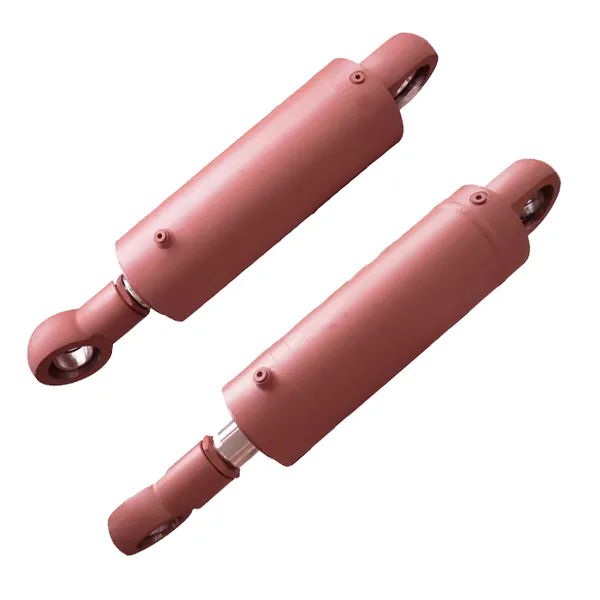
The first step is to read the garbage truck's hydraulic system, not the cylinder catalogue. The system pressure is set by the pump and the relief valve, and it is the maximum pressure that the cylinder can see during normal operation. On a refuse truck, the main hydraulic system often operates in the 160 to 250 bar range, with the relief valve setting defining the upper limit. The cylinder must be rated for at least the relief valve setting, because the relief valve is the component that protects the system from overpressure. If the cylinder is rated below the relief setting, the relief valve will not protect it.
The decision sequence below describes how a buyer should read the system and translate it into a cylinder requirement.
The table below presents a typical pressure map for refuse truck hydraulic functions.
| Hydraulic Function | Typical System Pressure | Typical Peak Pressure | Procurement Note |
| Body lift | 180-220 bar | 240-260 bar | Rated pressure should exceed peak |
| Compaction | 200-250 bar | 260-300 bar | High cycle; check seal and fatigue |
| Tailgate | 160-200 bar | 220-240 bar | Moderate duty; check rod buckling |
| Push-out blade | 200-250 bar | 260-300 bar | High force; verify barrel and welds |
At Raydafon, we ask our customers for the relief valve setting and the peak pressure of the application before recommending a Garbage Truck Hydraulic Cylinder. We do not select a cylinder from a generic pressure table. We match the cylinder rating to the system, and we document the assumption in the quotation. The goal is to avoid a cylinder that is technically within specification but operationally marginal.
For a buyer, the system pressure reading is the foundation of the specification. A supplier that accepts the relief setting and the peak pressure as inputs is a supplier that understands the application. A supplier that asks only for the bore and stroke is a supplier that may be leaving the pressure risk to the buyer.
Peak pressure matters more than nominal pressure because the cylinder's structural and sealing limits are tested by the peak, not the average. A refuse truck's hydraulic system experiences pressure spikes when the compaction cycle reaches a hard stop, when the body lift starts against a full load, or when a tailgate closes against an obstruction. These spikes can exceed the relief valve setting for short periods because the relief valve has a response time and because the hydraulic fluid is not perfectly incompressible. The cylinder must be able to withstand these peaks without permanent deformation, seal extrusion, or weld cracking.
The pressure profile below describes the four pressure levels that a buyer should distinguish when specifying a cylinder.
The table below shows how the four pressure levels relate to the cylinder rating and the safety margin.
| Pressure Level | Typical Relationship | Effect on Cylinder | Procurement Check |
| Nominal system pressure | Baseline | Normal fatigue cycling | Confirm the duty cycle |
| Relief valve setting | 110-120% of nominal | Occasional exposure | Confirm the cylinder rating exceeds it |
| Peak pressure | 120-130% of relief setting | Short duration stress | Confirm the burst margin covers it |
| Test pressure | 150% of rated pressure | Proof test, no permanent deformation | Request the test report |
At our factory, we rate our Garbage Truck Hydraulic Cylinders against the peak pressure of the application, not against the nominal pressure. We verify the barrel wall thickness, the rod diameter, the weld size, and the seal package against the peak pressure and the test pressure. The goal is to provide a cylinder that survives the spikes that occur in real refuse collection, not just the steady-state pressure in a catalogue.
For a buyer, the peak pressure should be stated in the purchase order. A supplier that rates the cylinder only for the nominal pressure is a supplier that has not accounted for the application reality. A supplier that asks for the peak pressure and the duty cycle is a supplier that is designing for the field.
A Garbage Truck Hydraulic Cylinder should carry three pressure ratings: the rated pressure, the test pressure, and the burst pressure. The rated pressure is the pressure at which the cylinder can operate continuously without exceeding the design stress. The test pressure is the pressure used in the factory proof test, typically 1.5 times the rated pressure, and it must not cause permanent deformation. The burst pressure is the pressure at which the cylinder would fail catastrophically, and it should be at least 2.5 to 3 times the rated pressure for a safety margin. The table below presents a typical rating set for a refuse truck cylinder.
| Rating | Typical Value | What It Proves | Documentation |
| Rated pressure | 250 bar | Continuous operation within design stress | Product datasheet |
| Test pressure | 375 bar | No permanent deformation or leakage | Factory proof test report |
| Burst pressure | 625 bar or higher | Safety margin against catastrophic failure | Design calculation or type test |
| Peak pressure allowance | 300 bar | Short-duration spikes without damage | Application review |
The rated pressure should be selected against the relief valve setting and the peak pressure. If the relief valve is set at 250 bar and the peak pressure can reach 300 bar, a cylinder rated at 250 bar is marginal. A cylinder rated at 300 bar or higher provides the margin needed for the peak. The test pressure and the burst pressure then confirm that the cylinder can survive the proof test and the unexpected overload.
At Raydafon Technology Group Co.,Limited, we provide the rated pressure, the test pressure, and the burst pressure for every Garbage Truck Hydraulic Cylinder we supply. We also provide the proof test report and the design calculation on request. The goal is to give buyers a complete pressure rating set, not a single number that is difficult to interpret.
For a buyer, the pressure rating set should be compared across suppliers. A supplier that provides only a rated pressure is giving you less information than a supplier that provides the test and burst ratings. The comparison should also include the peak pressure allowance, because the peak is what the cylinder will actually experience in service.
Operating pressure changes the cylinder's internal design because the pressure determines the wall thickness, the rod diameter, the weld size, the seal type, and the material grade. A cylinder rated at 160 bar and a cylinder rated at 300 bar may look similar from the outside, but the internal design is different. The higher-pressure cylinder uses a thicker barrel, a larger rod, a stronger end cap, and a seal package with back-up rings to prevent extrusion. The table below summarizes the design changes that accompany an increase in operating pressure.
| Design Element | At 160-200 bar | At 250-300 bar | Procurement Implication |
| Barrel wall thickness | Standard seamless tube | Thicker wall or higher-strength tube | Confirm the tube specification |
| Rod diameter | Standard rod for buckling | Larger rod for buckling and seal support | Check the buckling calculation |
| End cap and weld | Standard weld size | Larger weld or threaded end cap | Request the weld procedure |
| Seal package | Single seal with wiper | Composite seal with back-up ring | Confirm the seal pressure rating |
| Material grade | ST52 or equivalent | Higher yield strength or thicker section | Request the material certificate |
The seal package is the component that changes most visibly with pressure. At 160 bar, a single polyurethane seal with a wiper may be sufficient. At 300 bar, the seal must be supported by a back-up ring to prevent extrusion into the clearance gap. The back-up ring material and the seal geometry must be selected for the pressure and the temperature. A seal package that is adequate at low pressure will fail at high pressure through extrusion, and the failure will appear as a leak that is difficult to diagnose.
At our factory, we select the barrel, rod, weld, and seal package against the rated pressure and the peak pressure of the application. We do not use a single design for all pressure classes. The goal is to provide a Garbage Truck Hydraulic Cylinder that is designed for the pressure it will actually see, not a derated version of a higher-pressure design or an uprated version of a lower-pressure design.
For a buyer, the internal design changes are a reason to request the design calculation and the seal specification. A supplier that can explain why the barrel wall and the seal package are appropriate for the pressure is a supplier that has designed the cylinder. A supplier that provides only a catalogue page is a supplier that may be relying on a generic design.
Procurement should verify the pressure requirement, the cylinder rating, the design calculation, and the test documentation before an order is placed. The checklist below provides the verification steps for a Garbage Truck Hydraulic Cylinder.
| Verification Step | What to Request | Acceptance Criterion |
| System pressure confirmation | Relief valve setting and peak pressure | Documented by the truck builder |
| Cylinder rating | Rated, test, and burst pressure | Rated exceeds peak; burst at least 2.5x rated |
| Design calculation | Barrel wall, rod buckling, weld strength | Calculated for the peak pressure |
| Seal specification | Seal type, material, back-up ring | Rated for the pressure and temperature |
| Proof test report | Factory test at 1.5x rated pressure | No permanent deformation or leakage |
| Material certificate | Tube and rod material traceability | Matches the design specification |
At Raydafon Technology Group Co.,Limited, we provide these documents for the Garbage Truck Hydraulic Cylinders we supply. We also review the application pressure with the customer before the order is confirmed, so that the cylinder rating is matched to the system rather than selected from a generic table. The goal is to make the pressure specification traceable from the relief valve setting to the factory test report.
For a buyer, the verification should also include a review of the supplier's pressure test equipment and the calibration of the test gauges. A proof test report is only meaningful if the test equipment is calibrated and the test procedure is documented. A supplier that provides a test report without the calibration record is a supplier that is providing incomplete evidence.
Question 1: What is the difference between the operating pressure and the rated pressure of a hydraulic cylinder?
Answer: The operating pressure is the pressure the cylinder sees in the application, set by the pump and the relief valve. The rated pressure is the pressure at which the cylinder is designed to operate continuously without exceeding its design stress. The rated pressure should be equal to or higher than the operating pressure, and it should account for the peak pressure spikes that occur in service. A cylinder rated below the operating pressure is a cylinder that is being used outside its design limit.
Question 2: Why does peak pressure matter if the relief valve is set correctly?
Answer: The relief valve has a response time, and the hydraulic fluid is not perfectly incompressible, so short pressure spikes can exceed the relief setting when a cylinder reaches a hard stop or encounters a sudden load. The peak pressure can be 10% to 30% above the relief setting. The cylinder must be rated for the peak, not just the relief setting, to avoid permanent deformation, seal extrusion, and weld fatigue.
Question 3: Is a higher operating pressure always better for a garbage truck hydraulic cylinder?
Answer: Higher pressure allows a smaller cylinder to produce the same force, which can reduce weight and cost. But higher pressure also increases the stress on the barrel, the rod, the seals, and the welds, and it requires a heavier and more expensive design. The correct pressure is the one that meets the force requirement with an adequate safety margin, not the highest pressure the pump can produce.
Question 4: How do I verify that a supplier's cylinder is rated for my system pressure?
Answer: Request the rated pressure, the test pressure, and the burst pressure, and compare them to the relief valve setting and the peak pressure of the application. Request the design calculation for the barrel wall, the rod buckling, and the weld strength, and confirm that it uses the peak pressure as an input. Request the proof test report and the calibration record for the test gauges. A supplier that provides this documentation is a supplier that can support the pressure claim.
Question 5: What happens if I install a cylinder with a lower pressure rating than the system requires?
Answer: A cylinder with a lower pressure rating may pass the initial test and enter service, but it will be operating outside its design limit. The likely failure modes are seal extrusion, barrel deformation, weld cracking, and rod buckling. The failure may occur during a peak pressure event, which is exactly when the cylinder is needed. The result can be a hydraulic leak, a loss of function, and a safety risk. The cylinder should always be rated for at least the peak pressure of the system.
Choosing the operating pressure for a Garbage Truck Hydraulic Cylinder is a sequence, not a single selection. Read the relief valve setting, identify the peak pressure of the application, select a cylinder whose rated pressure exceeds the peak, confirm the test pressure and burst pressure margins, and verify the internal design and the documentation. A cylinder that is rated only for the nominal pressure may pass the first test but fail in service. A cylinder that is rated for the peak pressure and supported by a design calculation and a proof test report is a cylinder that can be relied upon in refuse collection. Our factory at Raydafon Technology Group Co.,Limited manufactures Garbage Truck Hydraulic Cylinders with pressure ratings matched to the application, and we provide the design and test documentation that buyers need to verify the selection. If you are sourcing a cylinder for a refuse truck, contact our team to discuss the system pressure and the peak pressure of your application.
Contact Raydafon Technology Group Co.,Limited today to discuss your Garbage Truck Hydraulic Cylinder requirements and to request the pressure rating, design calculation, and proof test documentation for your application.
+86-574-87168065
Luotuo Industrial Area, Zhenhai District, Ningbo City, China