QR Code

Products
Contact Us


Fax
+86-574-87168065

Email

Address
Luotuo Industrial Area, Zhenhai District, Ningbo City, China


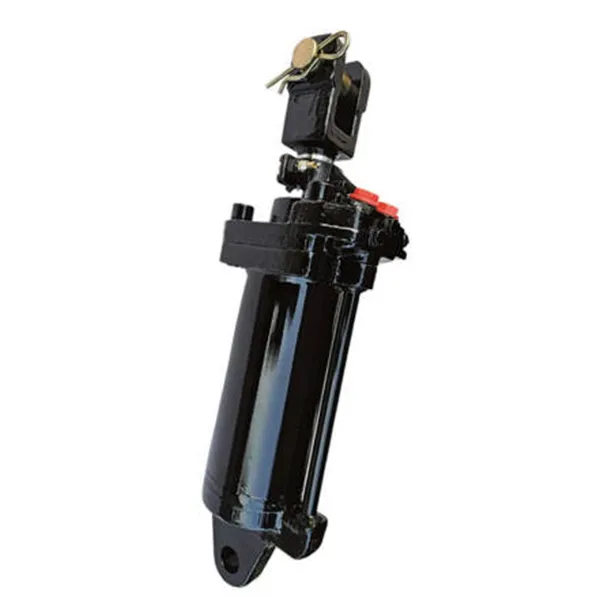
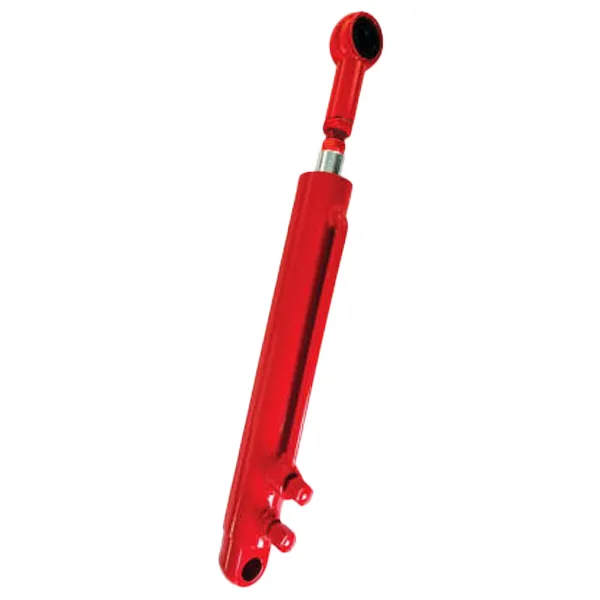
Walk around any working farm and you will see hydraulic cylinders in action everywhere: the front loader lifting a bale, the three-point hitch raising a plough, the steering linkage turning the front wheels, and the tipping trailer emptying a load of grain. In each of these applications, the cylinder is almost always double-acting. A double-acting Tractor Hydraulic Cylinder uses hydraulic pressure to move in both directions—extension and retraction—rather than relying on gravity or a return spring. This single design feature is why double-acting cylinders dominate agricultural equipment. They provide positive control in both directions, which is essential for precise implement positioning, safe lowering of heavy loads, and responsive steering. For procurement managers sourcing Tractor Hydraulic Cylinders for OEM production or aftermarket supply, understanding why double-acting designs are the standard is the first step in selecting the right cylinder for each application.
This guide is written for buyers who need to specify Tractor Hydraulic Cylinders for agricultural machinery. We will explain the working principle of the double-acting cylinder, the specific agricultural applications where it is used, the performance advantages it delivers, the key specifications to include in a purchase order, and the criteria for evaluating a supplier. We will also provide detailed product parameters from our factory at Raydafon. Whether you are equipping a new tractor model, supplying replacement cylinders for a dealer network, or designing a specialized implement, this guide will help you make an informed decision that balances performance, durability, and cost.
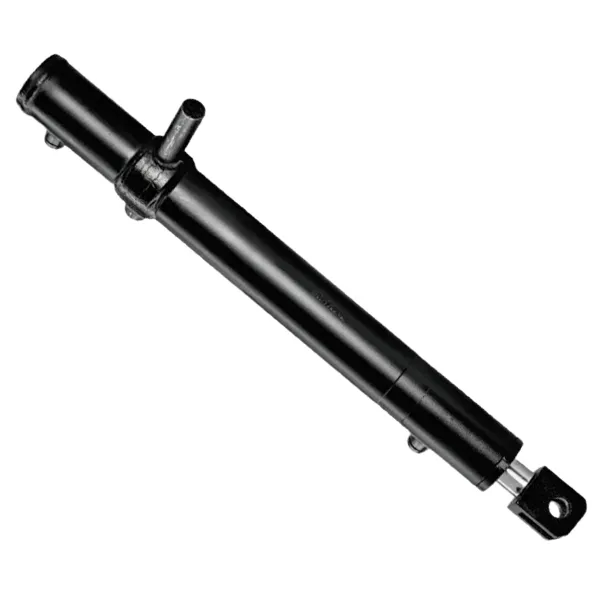
A double-acting hydraulic cylinder has two hydraulic ports: one on the cap end (the blind end) and one on the rod end. Pressurized fluid admitted to the cap end pushes the piston and extends the rod. Pressurized fluid admitted to the rod end pushes the piston in the opposite direction and retracts the rod. Because the rod occupies part of the rod-end area, the retraction force is slightly lower than the extension force for the same pressure, but the cylinder can still generate substantial force in both directions. This is the fundamental difference from a single-acting cylinder, which has only one port and relies on gravity, a spring, or an external load to return the piston to its starting position. The table below compares the two designs.
| Feature | Double-Acting Cylinder | Single-Acting Cylinder |
| Number of Ports | Two (cap end and rod end) | One (cap end only) |
| Extension Force | Pressure × piston area | Pressure × piston area |
| Retraction Force | Pressure × (piston area - rod area) | None (relies on gravity or spring) |
| Directional Control | Positive control in both directions | Control in one direction only |
| Typical Agricultural Use | Loaders, three-point hitches, steering, tipping trailers | Simple lifting, return-to-position mechanisms |
At Raydafon Technology Group Co.,Limited, our factory manufactures both double-acting and single-acting Tractor Hydraulic Cylinders. We understand that the choice between them depends on the application's requirements for control, force, and cost. For most modern agricultural equipment, the double-acting design is the standard because it provides the positive control that operators need in the field.
Double-acting Tractor Hydraulic Cylinders are used in a wide range of agricultural applications, each with its own requirements for force, stroke, and mounting. The most common applications are the front loader, the three-point hitch, the steering system, and the tipping trailer. Each application places different demands on the cylinder, and each requires a different specification. The table below summarizes the typical applications and their requirements.
| Application | Function | Typical Bore Size | Typical Stroke | Key Requirement |
| Front Loader | Lifting and tilting the bucket | 63 - 100 mm | 500 - 800 mm | High force, shock resistance |
| Three-Point Hitch | Raising and lowering implements | 50 - 80 mm | 200 - 400 mm | Precise position control |
| Steering | Turning the front wheels | 40 - 70 mm | 100 - 250 mm | Responsive, low friction |
| Tipping Trailer | Raising the trailer bed | 80 - 120 mm | 800 - 1,200 mm | High force, load holding |
| Implement Depth Control | Adjusting plough or cultivator depth | 50 - 70 mm | 150 - 300 mm | Precise control, durability |
At our factory, we manufacture Tractor Hydraulic Cylinders for all these applications. We work with our customers to determine the bore size, stroke, mounting, and sealing requirements for each application. Our engineering team can assist with the selection process and provide detailed technical data for your project.
The double-acting design delivers several performance advantages that are essential for modern agricultural equipment. The first advantage is positive control in both directions. The operator can extend and retract the cylinder with precision, which is essential for applications such as three-point hitch positioning and implement depth control. A single-acting cylinder relies on gravity to retract, which makes precise control difficult and can be unsafe when lowering heavy implements. The second advantage is faster cycle times. Because the cylinder is powered in both directions, the return stroke is as fast as the extend stroke. This improves productivity in applications such as front loader work, where the operator must raise and lower the bucket repeatedly. The third advantage is improved safety. The double-acting cylinder can hold a load in position without relying on a mechanical lock or a check valve, and it can lower the load in a controlled manner. The table below summarizes these advantages.
| Advantage | Description | Benefit for Agricultural Equipment |
| Positive Control | Powered in both extension and retraction | Precise implement positioning |
| Faster Cycle Times | Return stroke is powered, not gravity-driven | Higher productivity |
| Improved Safety | Controlled lowering of heavy loads | Reduced risk of accidents |
| Load Holding | Can hold position without mechanical lock | Stable operation on slopes |
| Better Controllability | Flow control in both directions | Smooth, predictable operation |
At Raydafon Technology Group Co.,Limited, our factory designs our Tractor Hydraulic Cylinders to deliver these advantages in the field. We use high-quality seals, hard chrome plated rods, and precision-machined barrels to ensure smooth, reliable operation. Our cylinders are tested for cycle life and leak performance before shipment.
When purchasing Tractor Hydraulic Cylinders, the buyer should include detailed specifications in the purchase order to ensure that the cylinder meets the performance and durability requirements of the application. The key specifications are the bore diameter, the rod diameter, the stroke length, the operating pressure, the mounting type, the port size, the seal type, and the rod coating. The table below summarizes these specifications and their importance.
| Specification | Typical Range | Importance |
| Bore Diameter | 40 - 120 mm | Determines lifting force |
| Rod Diameter | 20 - 70 mm | Determines buckling resistance |
| Stroke Length | 100 - 1,200 mm | Determines range of motion |
| Operating Pressure | 100 - 250 bar | Determines force and stress |
| Mounting Type | Clevis, Flange, Threaded | Determines fit with equipment |
| Port Size | G1/4" - G3/4" | Determines flow rate and speed |
| Seal Type | Polyurethane, PTFE, NBR | Determines durability and temperature range |
| Rod Coating | Hard Chrome, Ceramic | Determines wear and corrosion resistance |
At our factory, we work with our customers to ensure that all specifications are clearly defined and understood before production begins. We provide samples and technical drawings for approval. Our quality control system includes inspection of raw materials, in-process inspection, and final inspection before shipment. Our goal is to deliver Tractor Hydraulic Cylinders that meet or exceed our customers' expectations.
Evaluating a supplier of Tractor Hydraulic Cylinders requires a focus on manufacturing capability, material quality, sealing technology, testing, and technical support. The supplier must have the capability to machine, weld, and assemble cylinders to the required tolerances. They must use high-quality materials from certified suppliers. They must have expertise in sealing technology for agricultural applications, where dust, mud, and temperature extremes are common. They must test every cylinder for leakage and performance. And they must provide technical support to help buyers select the right cylinder for each application. The table below summarizes these evaluation criteria.
| Evaluation Criterion | What to Look For | Why It Matters |
| Manufacturing Capability | CNC machining, welding, assembly equipment | Ensures dimensional accuracy and structural integrity |
| Material Quality | Certified steel, material traceability | Ensures strength and durability |
| Sealing Technology | High-quality seals, rod wipers, corrosion-resistant rods | Ensures reliable operation in field conditions |
| Testing | Pressure testing, cycle testing, leak testing | Verifies performance and reliability |
| Technical Support | Application engineering, product selection | Helps select the right cylinder |
At Raydafon Technology Group Co.,Limited, our factory has been manufacturing Tractor Hydraulic Cylinders for over a decade. We use certified materials, precision machining, and advanced sealing technology. We test every cylinder before shipment. And our technical team is available to assist with product selection and application engineering. We invite you to evaluate us against these criteria and to consider us as your partner for Tractor Hydraulic Cylinders.
The following table provides the key product parameters for our double-acting Tractor Hydraulic Cylinders. These cylinders are designed for front loaders, three-point hitches, steering systems, and tipping trailers. Our factory can also produce custom cylinders to meet specific requirements.
| Parameter | Specification Range | Notes |
| Type | Double-Acting | Single-acting also available |
| Bore Diameter | 40 - 120 mm | Custom sizes available |
| Rod Diameter | 20 - 70 mm | Selected for buckling resistance |
| Stroke Length | 100 - 1,200 mm | Custom strokes available |
| Operating Pressure | Up to 250 bar | Higher pressures available |
| Mounting Type | Clevis, Flange, Threaded | Custom mountings available |
| Port Size | G1/4" - G3/4" | SAE ports available |
| Seal Material | Polyurethane, PTFE, NBR | Selected for temperature and contamination |
| Rod Coating | Hard Chrome (20-30 µm) | Ceramic coating optional |
| Operating Temperature | -30°C to +100°C | High-temperature options available |
| MOQ | 50 pieces | Negotiable for large orders |
| Lead Time | 3 - 5 weeks | Depends on quantity and customization |
At our factory, we manufacture our Tractor Hydraulic Cylinders to meet these specifications and more. We can customize the bore, rod, stroke, mounting, and sealing to suit your specific requirements. Our quality control system includes inspection of raw materials, in-process inspection, and final inspection before shipment. Our goal is to provide our customers with high-quality Tractor Hydraulic Cylinders that meet their performance and durability requirements.
Question 1: Why are double-acting cylinders preferred over single-acting cylinders in tractors?
Answer: Double-acting cylinders provide positive control in both directions, which is essential for precise implement positioning, fast cycle times, and safe lowering of heavy loads. Single-acting cylinders rely on gravity or a spring to retract, which makes precise control difficult and can be unsafe when lowering heavy implements. For most modern agricultural equipment, the double-acting design is the standard.
Question 2: What is the difference between the extension force and the retraction force of a double-acting cylinder?
Answer: The extension force is calculated as pressure multiplied by the full piston area. The retraction force is calculated as pressure multiplied by the piston area minus the rod area, because the rod occupies part of the piston area on the rod side. This means the retraction force is slightly lower than the extension force for the same pressure. When specifying a cylinder, both forces must be sufficient for the application.
Question 3: How do I select the right bore size for my tractor hydraulic cylinder?
Answer: The bore size is determined by the required force and the available system pressure. Calculate the force needed for the application, then divide by the system pressure to find the required piston area. From the area, calculate the bore diameter. Always add a safety factor to account for shock loads and friction. Our engineering team can help you with this calculation.
Question 4: What maintenance does a tractor hydraulic cylinder require?
Answer: Tractor hydraulic cylinders require regular inspection for leaks, rod damage, and seal wear. Keep the rod clean and free of dirt and mud. Check the hydraulic fluid level and quality. Replace the seals at the recommended interval or when leakage is detected. Inspect the mounting pins and bushings for wear. Proper maintenance extends the life of the cylinder and ensures reliable operation.
Question 5: Can a double-acting cylinder be used in a single-acting application?
Answer: Yes, a double-acting cylinder can be used in a single-acting application by plugging one port and venting the other. However, this is not always the most cost-effective solution because the double-acting cylinder is more complex and more expensive than a single-acting cylinder. For simple lifting applications where gravity return is sufficient, a single-acting cylinder is usually the better choice. Our technical team can advise on the most appropriate cylinder type for your application.
Double-acting Tractor Hydraulic Cylinders are the standard for modern agricultural equipment because they provide positive control in both directions, faster cycle times, improved safety, and better controllability. From front loaders and three-point hitches to steering systems and tipping trailers, the double-acting design delivers the performance that farmers and equipment operators demand. For procurement managers, selecting the right cylinder requires a clear understanding of the application requirements, the key specifications, and the criteria for evaluating a supplier. At Raydafon Technology Group Co.,Limited, our factory has the expertise and the capability to manufacture double-acting Tractor Hydraulic Cylinders that meet the most demanding requirements. We use high-quality materials, precision machining, and advanced sealing technology to ensure reliable performance in the field.
Whether you are equipping a new tractor model, supplying replacement cylinders for a dealer network, or designing a specialized implement, we invite you to contact us to discuss your requirements. We can provide samples, technical data, and customized solutions. Our commitment to quality and customer satisfaction has made us a trusted partner for agricultural equipment manufacturers around the world.
Contact Raydafon Technology Group Co.,Limited today to discuss your Tractor Hydraulic Cylinder requirements and discover how our double-acting cylinders can improve the performance and reliability of your agricultural equipment.
+86-574-87168065
Luotuo Industrial Area, Zhenhai District, Ningbo City, China