QR Code

Products
Contact Us


Fax
+86-574-87168065

Email

Address
Luotuo Industrial Area, Zhenhai District, Ningbo City, China


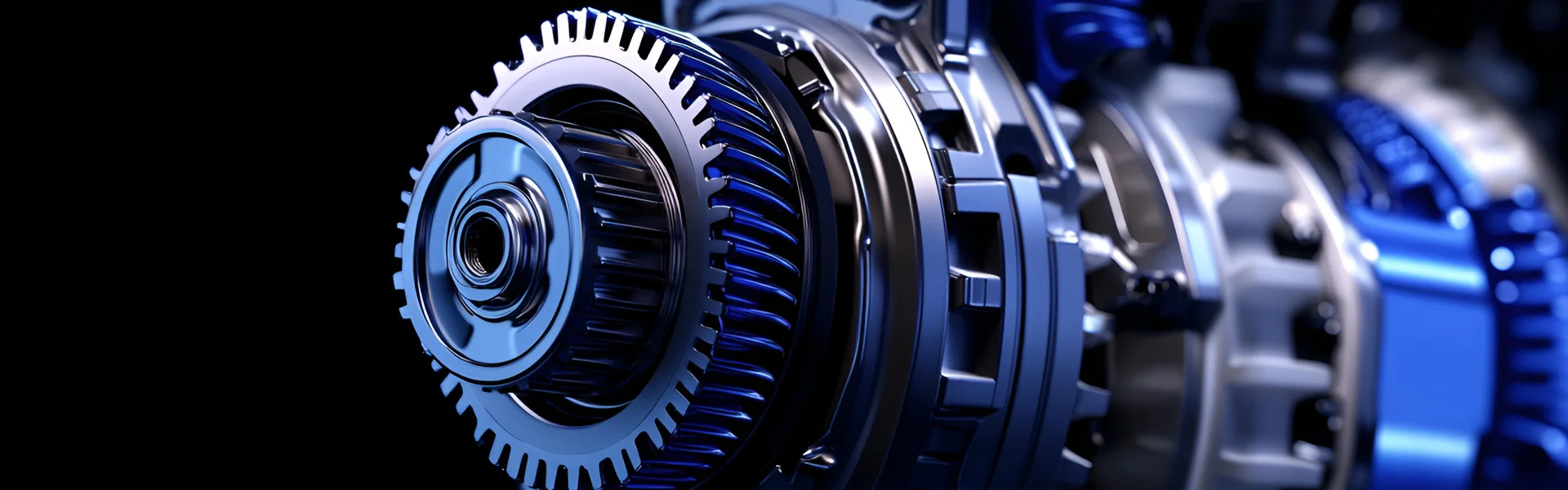
In modern industrial systems, power transmission efficiency directly defines productivity, reliability, and operating cost. Among various gear solutions, the helical gear stands out for its smooth operation, high load capacity, and long service life. Understanding how efficiency at the gear level impacts the entire machine is essential for engineers, equipment buyers, and maintenance managers.
At Raydafon Technology Group Co.,Limited, our focus is not only on manufacturing high-accuracy gear components, but also on optimizing how each Precision Gear performs within real-world mechanical systems. Drawing on decades of engineering experience and continuous production feedback from our factory, we help customers achieve higher output stability and lower lifecycle costs through refined gear efficiency.
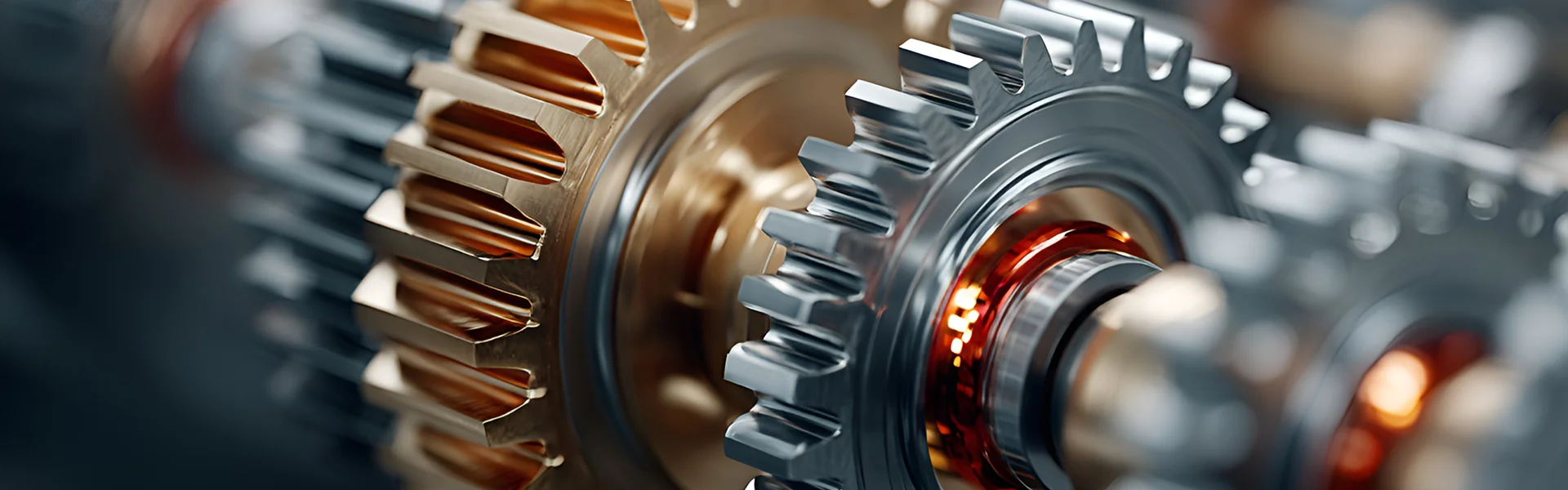
Helical gear efficiency refers to the ratio between transmitted mechanical power and the input power at the gear interface. Unlike spur gears, helical gears engage gradually through angled teeth, which results in smoother torque transfer and reduced vibration. However, this sliding contact also introduces friction, making efficiency a result of careful engineering balance.
From our production experience at Raydafon Technology Group Co.,Limited, efficiency is never determined by a single factor. It is the combined outcome of geometry, surface finish, material properties, lubrication behavior, and load conditions. When our factory designs a Precision Gear for demanding environments, each of these parameters is evaluated as part of a system rather than in isolation.
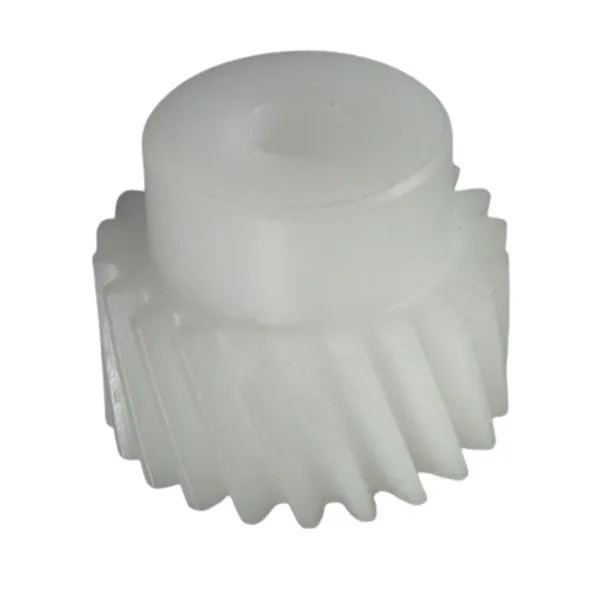
Higher efficiency means less energy lost as heat, lower wear rates, and more stable torque output. In heavy-duty machinery, even a small efficiency improvement in a Precision Gear can translate into measurable energy savings and extended maintenance intervals.
| Application Type | Load Condition | Typical Helical Gear Efficiency |
| Light automation equipment | Low to medium load | 96 to 98 percent |
| Packaging and conveying systems | Medium load | 94 to 97 percent |
| Heavy industrial machinery | High continuous load | 92 to 95 percent |
Helical gear efficiency is not an isolated mechanical metric. It directly shapes how a complete machine behaves during daily operation, long-term service, and peak load conditions. When a gear system operates efficiently, mechanical power is transmitted with minimal losses, ensuring that the machine delivers stable output while maintaining structural integrity across all components.
From extensive application feedback analyzed by Raydafon Technology Group Co.,Limited, we observe that even minor efficiency variations in a Precision Gear stage can lead to noticeable differences in system stability, energy consumption, and maintenance frequency. This is especially critical in continuous-duty equipment where performance consistency defines commercial value.
High-efficiency helical gears ensure smoother torque transfer between shafts. Reduced friction at the tooth interface minimizes micro-slippage, which helps maintain consistent rotational speed and torque output. This stability prevents sudden load spikes that could otherwise propagate through the drivetrain.
Energy losses in gears are primarily converted into heat. When efficiency drops, excess heat accumulates inside the gearbox, increasing internal temperatures. Over time, this affects lubricant viscosity, seal elasticity, and bearing preload accuracy.
At our factory, thermal behavior is a core evaluation parameter during Precision Gear validation. Efficient designs allow machines to operate within safe temperature margins even under prolonged duty cycles.
Helical gears are widely chosen for their quiet operation, but this advantage is fully realized only when efficiency is optimized. Poor efficiency often correlates with uneven contact patterns and localized friction, which generate vibration and audible noise.
Efficient gear systems place less stress on adjacent components such as bearings, couplings, and seals. This reduces cumulative wear and delays fatigue-related failures. According to long-term performance data from Raydafon, machines using optimized Precision Gear solutions demonstrate longer maintenance intervals and more predictable service schedules.
In practical terms, high helical gear efficiency transforms machine performance from reactive maintenance to proactive reliability management. This is why efficiency is treated as a system-level performance driver rather than a standalone specification.
Design optimization is the foundation of efficient helical gear performance. The helix angle, module, pressure angle, and face width must be selected to balance load capacity with minimal sliding losses. At Raydafon Technology Group Co.,Limited, our design teams rely on application-specific calculations rather than generic catalogs.
Material selection is equally critical. Our factory typically uses alloy steels that allow surface hardening while maintaining a tough core. This combination reduces friction at the tooth surface and prevents micro-pitting under repeated load cycles. Each Precision Gear is matched to its intended torque and speed range.
| Material Type | Surface Hardness | Core Hardness | Application Focus |
| Alloy steel carburized | 58 to 62 HRC | 32 to 38 HRC | High load, long service life |
| Nitrided steel | 900 to 1100 HV | 30 to 35 HRC | Precision and wear resistance |
By aligning design geometry with material performance, our Precision Gear solutions maintain high efficiency across extended operating periods. This is a core reason customers continue to work with Raydafon Technology Group Co.,Limited for critical transmission components.
Manufacturing accuracy is the final and decisive factor that determines whether theoretical gear efficiency can be sustained throughout the actual service life of a machine. Even when a helical gear is optimally designed, deviations introduced during manufacturing can significantly reduce efficiency over time. These deviations increase friction, disrupt load distribution, and accelerate surface fatigue.
At Raydafon Technology Group Co.,Limited, our production experience confirms that long-term efficiency is not defined at the design stage alone. It is secured through disciplined manufacturing processes and strict quality control inside our factory. Each Precision Gear must meet dimensional and surface accuracy targets before it can deliver stable performance in real applications.
Tooth profile, lead, and pitch accuracy directly control how load is shared across the contact surface. Small geometric errors concentrate stress in localized areas, increasing sliding friction and generating excess heat during operation.
By maintaining tight tolerances, our factory ensures that each Precision Gear operates with predictable meshing behavior from initial commissioning through long-term use.
Surface roughness has a direct influence on friction coefficients at the tooth interface. Rough or uneven surfaces increase lubricant film disruption, leading to boundary lubrication conditions and accelerated wear.
At Raydafon Technology Group Co.,Limited, surface quality is evaluated not only by roughness values but also by functional contact behavior during test runs.
Heat treatment improves hardness and fatigue resistance, but it also introduces the risk of distortion. If not properly controlled, dimensional changes after heat treatment can negate prior machining accuracy and reduce efficiency.
Our factory integrates heat treatment control with final finishing to preserve geometric integrity and ensure that each Precision Gear maintains its designed efficiency.
Long-term efficiency is protected through consistent inspection and statistical process control. Measuring only final dimensions is insufficient; process trends must also be monitored to prevent gradual accuracy drift.
Through disciplined manufacturing accuracy management, Raydafon Technology Group Co.,Limited enables Precision Gear solutions to deliver reliable efficiency across the full operational lifespan of industrial machines.
Helical gear efficiency plays a decisive role in overall machine performance, influencing energy consumption, reliability, noise levels, and service life. Through optimized design, carefully selected materials, and precise manufacturing, high-efficiency gear systems support long-term operational stability. At Raydafon Technology Group Co.,Limited, our commitment is to deliver Precision Gear solutions that perform consistently in real industrial environments. Supported by our factory capabilities and engineering expertise, we help customers enhance machine performance while reducing total ownership cost.
If you are evaluating gear solutions for new equipment or performance upgrades, our team is ready to provide technical consultation and customized manufacturing support to meet your exact requirements.
Q1: How does helical gear efficiency impact energy consumption in machines?
Higher efficiency reduces power losses at the transmission stage, which lowers motor load, decreases heat generation, and results in measurable energy savings during continuous operation.
Q2: Why are helical gears often more efficient than expected despite sliding contact?
Although sliding exists, optimized tooth geometry, surface finishing, and proper lubrication allow helical gears to maintain high efficiency while delivering smoother torque transmission.
Q3: How does manufacturing precision affect long-term efficiency retention?
Accurate tooth profiles and minimal deviations ensure even load distribution, reducing localized wear and preventing efficiency loss over extended service periods.
Q4: Can improving gear efficiency extend machine service life?
Yes, higher efficiency reduces thermal stress, slows lubricant degradation, and minimizes wear on bearings and seals, all of which contribute to longer machine life.
Q5: How should helical gear efficiency be evaluated during equipment selection?
Efficiency should be assessed together with load conditions, duty cycle, material quality, and manufacturing accuracy rather than relying solely on nominal efficiency values.
+86-574-87168065
Luotuo Industrial Area, Zhenhai District, Ningbo City, China