QR Code

Products
Contact Us


Fax
+86-574-87168065

E-mail

Address
Luotuo Industrial Area, Zhenhai District, Ningbo City, China


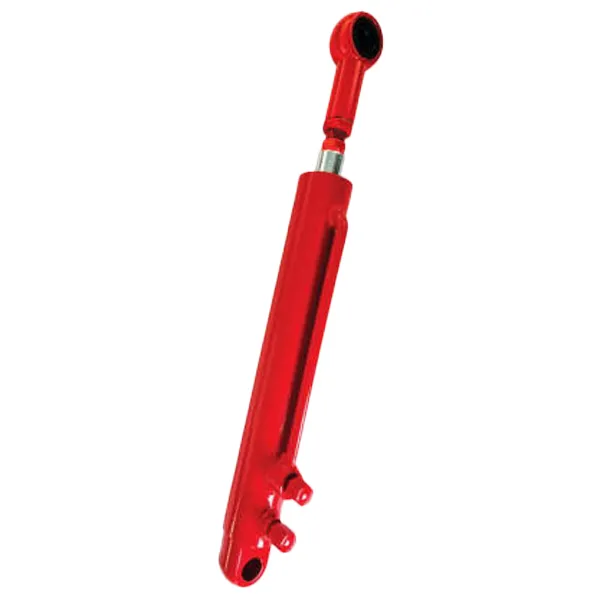
When selecting a hydraulic cylinder for any heavy-duty application—be it construction equipment, agricultural machinery, or industrial automation—one parameter stands above the rest in dictating performance, safety, and longevity: stroke length. The stroke length determines not only how far the cylinder can extend or retract but also influences the mounting configuration, rod buckling resistance, seal lifespan, and overall system stability. Choosing the wrong stroke length can lead to catastrophic mechanical failure, costly downtime, or inefficient operation. In this comprehensive guide, we leverage two decades of industry experience to explain why stroke length is the cornerstone of hydraulic cylinder selection and how to make an informed decision tailored to your exact needs.
As a leader in fluid power solutions, Raydafon Technology Group Co.,Limited has engineered and delivered thousands of custom Hydraulic Cylinder units across the globe. Our factory follows strict ISO standards, ensuring each cylinder’s stroke is optimized for real-world conditions. Whether you are replacing an existing unit or designing a new system, understanding the critical nature of stroke length will save you from performance bottlenecks and unexpected repair costs. Let’s dive deep into the mechanics, parameters, and practical considerations that make stroke length a decisive factor.
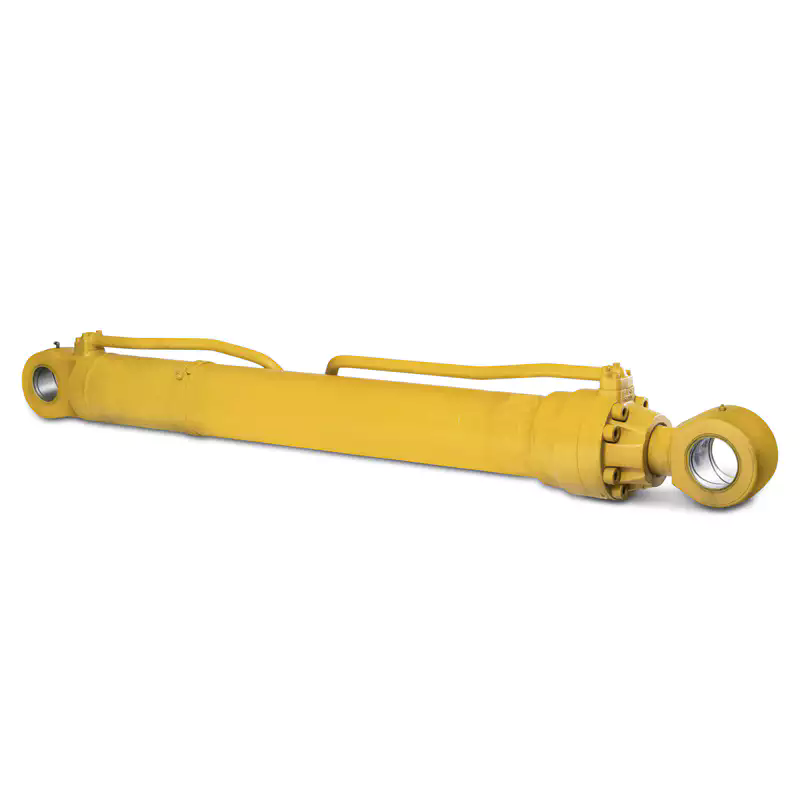
Stroke length is the total distance a piston rod travels from fully retracted (closed) to fully extended (open) position. While the definition seems straightforward, its impact ripples through every operational facet of a Hydraulic Cylinder. In my 20 years of working with heavy machinery and custom actuation systems, I’ve witnessed countless scenarios where a seemingly minor mismatch in stroke length caused major failures. At Raydafon Technology Group Co.,Limited, our engineering team treats stroke length as the central pillar around which the entire cylinder is designed. Below we break down why this parameter is non-negotiable.
First, stroke length directly determines the usable range of motion. If the stroke is too short, the equipment cannot reach required positions; if too long, it leads to over-travel, potential internal collisions, and increased risk of rod buckling under compression. Moreover, stroke length influences seal dynamics. Longer strokes demand more precise alignment to prevent uneven wear on piston seals and rod bearings. Our factory has documented that cylinders with optimized stroke-to-bore ratios show 40% longer seal life compared to off-the-shelf mismatched units.
From a performance perspective, the right stroke length ensures that the hydraulic cylinder operates within its intended pressure range. Oversized stroke can introduce additional hydraulic fluid volume, reducing system response time. Conversely, undersized stroke forces mechanical limitations. In high-cycle applications like press brakes or material handling, stroke length even affects energy efficiency. For instance, a 50mm longer stroke than required could increase cycle time by 15%, directly impacting productivity. Therefore, before specifying a cylinder, we at Raydafon Technology Group Co.,Limited always map the entire kinematic profile of the machine to match the stroke length precisely.
Mounting stability is often the most underestimated consequence of stroke length miscalculation. A hydraulic cylinder’s mounting style—whether it is clevis, trunnion, flange, or lug—interacts with the extended stroke length to create moments and side loads. In our factory’s testing lab, we’ve compared cylinders with identical bore but different strokes under side-load conditions. The results consistently show that as stroke length increases beyond the recommended ratio (stroke-to-bore ratio > 8:1 for standard tie-rod cylinders), the cylinder becomes vulnerable to buckling and mount failure. Let’s explore this relationship in detail.
When a cylinder extends, the unsupported rod length grows, making it act like a column under compressive force. If the stroke length is excessive relative to rod diameter, even moderate loads can cause permanent bending or catastrophic breakage. This is why Raydafon Technology Group Co.,Limited always recommends calculating the critical buckling load using industry formulas. For mobile applications like dump trucks or excavators, where shock loads are common, we often increase the rod diameter or incorporate stop tubes to effectively reduce the unsupported length without changing the stroke length.
From a practical standpoint, our team has replaced numerous competitor cylinders that failed due to buckling at stroke lengths as low as 800mm but with undersized rods. In one project for a waste compactor, we engineered a cylinder with a stroke length of 1800mm, using a 100mm rod diameter and a special stop tube to reduce unsupported length. The result was a 300% increase in service life compared to previous units. This demonstrates that stroke length is not just a dimensional spec but a safety-critical engineering decision. For any heavy-duty installation, consulting with specialists like Raydafon Technology Group Co.,Limited ensures your hydraulic cylinder withstands both static and dynamic loads throughout its stroke range.
While standard stroke lengths are widely available, customizing the stroke to your exact application unlocks significant efficiency gains. In my decades of consulting for mining, construction, and agricultural sectors, I’ve seen that one-size-fits-all cylinders often compromise speed, energy consumption, and structural integration. At Raydafon Technology Group Co.,Limited, we advocate for stroke length optimization because it directly aligns the actuator’s kinematics with the machine’s duty cycle. Here’s how precision customization elevates system efficiency.
Firstly, custom stroke length eliminates dead travel. Standard cylinders may have extra stroke that never gets used, yet the cylinder still requires full hydraulic fluid volume for each cycle. This wasted capacity increases pump load and energy waste. By specifying exactly the stroke length needed, our factory reduces internal fluid volume, allowing faster response times and lower operating temperatures. In a recent case for an automated press line, we shortened stroke length by 70mm compared to the off-the-shelf option, resulting in 12% faster cycle time and 8% less hydraulic oil consumption.
Moreover, customized stroke length allows us to incorporate advanced features like integrated position sensors or locking mechanisms without protruding components. For example, in aerial lift platforms, stroke length precision ensures that the platform reaches exact working heights without over-extension. Our factory uses CNC machining to achieve stroke tolerances of ±0.5mm, guaranteeing repeatability in positioning-critical applications. Ultimately, customization turns a generic Hydraulic Cylinder into a performance-matched component that enhances the entire hydraulic system’s efficiency. When you partner with Raydafon Technology Group Co.,Limited, you get stroke length optimization backed by rigorous engineering calculations and real-world validation.
Understanding the relationship between stroke length and other critical parameters ensures a balanced design. Below is a detailed table showcasing how Raydafon Technology Group Co.,Limited standardizes its Hydraulic Cylinder range, illustrating the recommended stroke limits based on bore and rod diameters for optimal performance and safety. The data is derived from our factory’s engineering guidelines and rigorous field testing.
| Bore Diameter (mm) | Rod Diameter (mm) | Maximum Recommended Stroke (mm) | Application Example |
| 40 | 25 | 300 | Small agricultural implements, light duty |
| 63 | 35 | 600 | Material handling, compact loaders |
| 80 | 45 | 1000 | Construction machinery, forklifts |
| 100 | 55 | 1500 | Excavators, mining equipment |
| 125 | 70 | 2000 | Heavy-duty presses, offshore applications |
| 160 | 90 | 2500 (with stop tube) | Large steel mills, hydraulic presses |
Our factory emphasizes that these values are starting points; for strokes beyond these limits, we incorporate additional design features such as larger rod diameters, reinforced bearings, or telescopic configurations. Additionally, mounting orientation (horizontal vs. vertical) influences allowable stroke length because vertical cylinders experience less buckling risk but require careful consideration of piston drop. Every Hydraulic Cylinder from Raydafon Technology Group Co.,Limited is accompanied by a detailed specification sheet where stroke length is correlated with the calculated maximum load capacity. We also offer finite element analysis reports for critical applications to ensure absolute reliability.
By referring to the table and these interdependent parameters, engineers can confidently select or custom-order a cylinder that balances stroke length with bore size and rod strength. Raydafon Technology Group Co.,Limited maintains an extensive inventory of components, allowing us to build cylinders with tailored stroke lengths without long lead times. This flexibility ensures that you get a precisely engineered solution that maximizes both performance and cost-effectiveness.
Stroke length is far more than a simple travel dimension; it is the cornerstone of hydraulic cylinder functionality, safety, and efficiency. Throughout this guide, we have examined how stroke length affects buckling resistance, mounting stability, seal longevity, system response, and overall machine design. Selecting the correct stroke length—whether through careful off-the-shelf selection or custom engineering—directly translates into reduced downtime, lower total cost of ownership, and enhanced operational safety. At Raydafon Technology Group Co.,Limited, our factory’s approach integrates advanced simulation tools, material science, and decades of hands-on experience to deliver hydraulic cylinders that excel in the most demanding environments.
For any new project or retrofit, we recommend starting with a comprehensive analysis of the application’s kinematic requirements, load profiles, and mounting constraints. Our engineering team is ready to assist you in defining the ideal stroke length and related parameters. Do not let stroke length be an afterthought—partner with a manufacturer who treats it as a critical design variable. Contact Raydafon Technology Group Co.,Limited today to discuss your hydraulic cylinder requirements and request a customized quote. Our factory-backed warranty and global support network ensure that your equipment performs at its peak, cycle after cycle.
Selecting a cylinder with excessive stroke length introduces several risks: increased rod buckling potential under compression, higher side loads that damage seals and bearings, and the need for larger mounting space. Additionally, an overly long stroke can cause interference with machine components when fully retracted or extended, and it may reduce overall system efficiency due to greater hydraulic fluid volume per cycle. Our factory has observed that excessive stroke often leads to premature cylinder failure and unexpected downtime. To avoid these issues, always calculate the exact required stroke based on machine kinematics and consult with specialists like Raydafon Technology Group Co.,Limited for precise recommendations.
To determine the correct stroke length for a replacement cylinder, measure the distance between the mounting pin centers when the mechanism is fully retracted and fully extended. The stroke length is the difference between these two measurements. However, you must also consider the retracted length (center-to-center closed) to ensure it fits within the machine frame. For complex linkages, we recommend using a travel range simulation. At Raydafon Technology Group Co.,Limited, we provide on-site or remote measurement guidance and can manufacture a cylinder that matches or improves upon the original stroke length while considering modern seal and rod durability enhancements. Never rely solely on model numbers; physical verification ensures compatibility.
Yes, stroke length indirectly influences the effective operating pressure rating because longer strokes increase the risk of rod buckling and piston misalignment under high pressure. While the cylinder’s pressure rating is primarily determined by the barrel thickness and seal type, exceeding recommended stroke-to-bore ratios may require derating the maximum allowable pressure to prevent failure. In our factory, when designing long-stroke Hydraulic Cylinder units, we often upgrade the rod material to high-strength alloy steel or incorporate larger rod diameters to maintain full pressure capability. Always ensure that the manufacturer provides a stroke-specific load chart to verify safe working limits.
The maximum practical stroke length for a single-stage hydraulic cylinder depends on several factors: bore size, rod diameter, mounting configuration, and operating conditions. For standard industrial cylinders, strokes up to 3000mm are achievable with reinforced rod designs and intermediate supports. However, strokes exceeding 2000mm typically require stop tubes to reduce unsupported rod length during extension. At Raydafon Technology Group Co.,Limited, we have manufactured custom single-stage cylinders with strokes up to 4500mm for specialized applications like lifting platforms and marine equipment. For extremely long strokes beyond 5 meters, telescopic cylinders are often a better alternative due to compact retracted length. Our factory’s engineering team can evaluate your specific needs to determine the most reliable solution.
Stroke length directly determines the effective cushioning distance available at the end of travel. Cushioning devices—such as tapered pins or adjustable valves—require sufficient stroke margin to decelerate the piston gradually before it contacts the end cap. If stroke length is too short relative to the piston speed and load, cushioning may not engage properly, leading to high-impact forces and potential cylinder damage. Conversely, correctly specified stroke length allows us to optimize cushion length and orifice sizing. In our factory, we calculate cushion performance based on exact stroke, operating pressure, and moving mass to ensure smooth deceleration. This precision extends cylinder life and reduces shock loads on the entire hydraulic system.
Do not leave performance to chance. Partner with Raydafon Technology Group Co.,Limited—where precision engineering meets real-world reliability. Whether you need a standard Hydraulic Cylinder with exact stroke length or a fully customized actuation system, our factory’s expertise ensures you get the perfect fit for your application. Contact us today to request a quote, discuss your project specifications, or schedule a technical consultation. Our team is ready to deliver solutions that maximize uptime, safety, and efficiency.
+86-574-87168065
Luotuo Industrial Area, Zhenhai District, Ningbo City, China