QR Code

Products
Contact Us


Fax
+86-574-87168065

Email

Address
Luotuo Industrial Area, Zhenhai District, Ningbo City, China


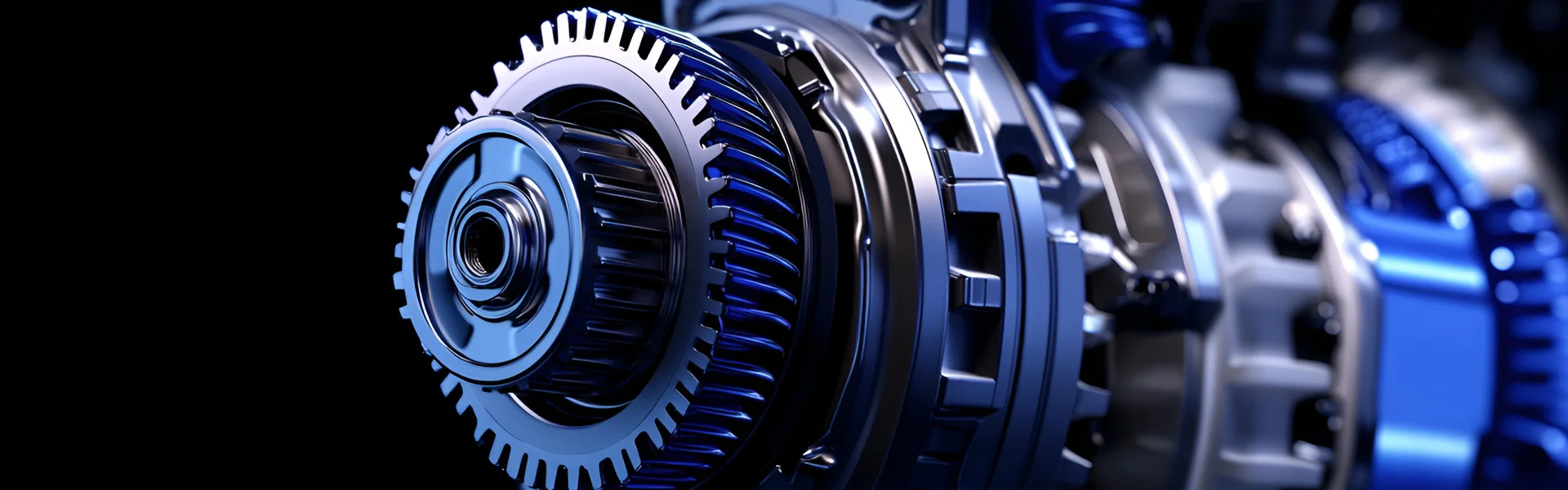
In every tractor-driven agricultural implement, the agricultural gearbox is the critical mechanical bridge that transfers power from the tractor's power take-off (PTO) shaft to the working parts of the implement. But how exactly does an agricultural gearbox work within this system? At its core, the agricultural gearbox is a speed and torque converter. It takes the high-speed, low-torque input from the tractor PTO (typically 540 or 1,000 rpm) and transforms it into a lower-speed, higher-torque output that is suitable for tasks like tilling, mowing, or baling. This transformation is achieved through a set of meshing gears with different tooth counts, arranged in one or more gear trains. Our factory at Raydafon Technology Group Co.,Limited has been designing and manufacturing agricultural gearboxes for over 20 years, and we have refined the engineering of these gear trains to achieve efficiency levels above 96 percent, even under heavy shock loads.
The working principle of an agricultural gearbox in a PTO system is based on the fundamental law of gearing: the product of speed and torque remains constant (minus friction losses). When a smaller gear drives a larger gear, the output speed decreases proportionally while the output torque increases by the same ratio. For example, a 3:1 gear reduction turns 1,000 rpm input into 333 rpm output, with three times the torque. This is essential for implements like rotary tillers, which require high torque to cut and mix soil. Additionally, the agricultural gearbox often incorporates a clutch or shear pin to protect the driveline from overloads, and some models include a reverse gear or multiple speed ranges for versatility. In this comprehensive guide, we will delve into the mechanical components, lubrication systems, and operational principles of the agricultural gearbox. We will also share detailed technical specifications, real-world performance data, and maintenance best practices from our factory's extensive experience in the agricultural sector.
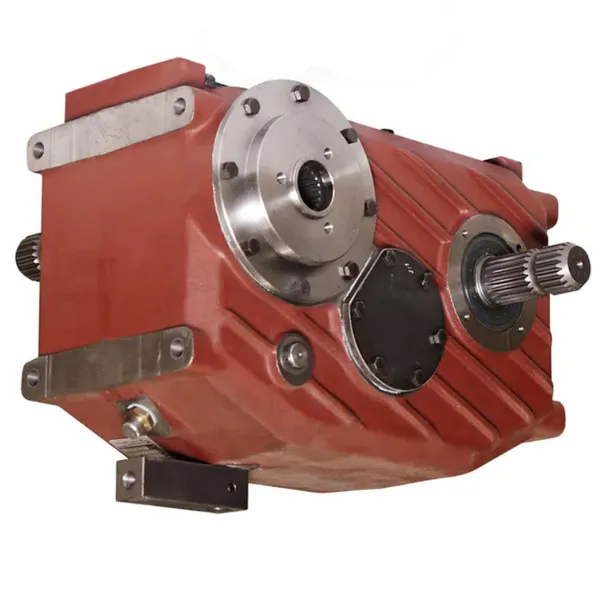
Tractor PTO shafts typically spin at either 540 rpm or 1,000 rpm, depending on the tractor model and the standard in use. However, most agricultural implements are designed to operate at much lower speeds—often between 200 and 600 rpm—with significantly higher torque than the tractor can provide directly. This mismatch between the tractor's output and the implement's requirement is the fundamental reason why an agricultural gearbox is indispensable. Without gear reduction, a rotary tiller would spin its tines too fast, causing them to break on stones and leaving the soil poorly pulverized; a baler would not have enough torque to compress hay into tight bales. The agricultural gearbox resolves this by using a set of gears to reduce the input speed and multiply the torque, ensuring that the implement operates within its optimal power band.
Key reasons why gear reduction is essential in tractor PTO systems:
To illustrate the practical importance of gear reduction, consider a 120 HP tractor used for plowing with a 5-furrow reversible plow. The plow requires 230 rpm at 1,800 Nm of torque to pull through the soil. The tractor's PTO provides 1,000 rpm but only 380 Nm of torque. A 4.3:1 agricultural gearbox reduces the speed to 233 rpm and multiplies the torque to 1,630 Nm, meeting the plow's requirement. Without the gearbox, the plow would be impossible to use effectively. Our factory has engineered agricultural gearboxes that can handle such high torque loads while maintaining compact dimensions and low weight, ensuring that the overall implement remains well-balanced and easy to maneuver.
Furthermore, the gear reduction in an agricultural gearbox also helps to reduce the inertia mismatch between the tractor and the implement. During sudden changes in load (e.g., hitting a rock), the gearbox's gearing absorbs and smooths out the shock, preventing it from being transmitted back to the tractor's transmission. This protective function is often underestimated but is critical for the longevity of both the tractor and the implement. At Raydafon, we design our agricultural gearboxes with a safety factor of 1.5 times the maximum input torque, ensuring that they can handle occasional overloads without failure.
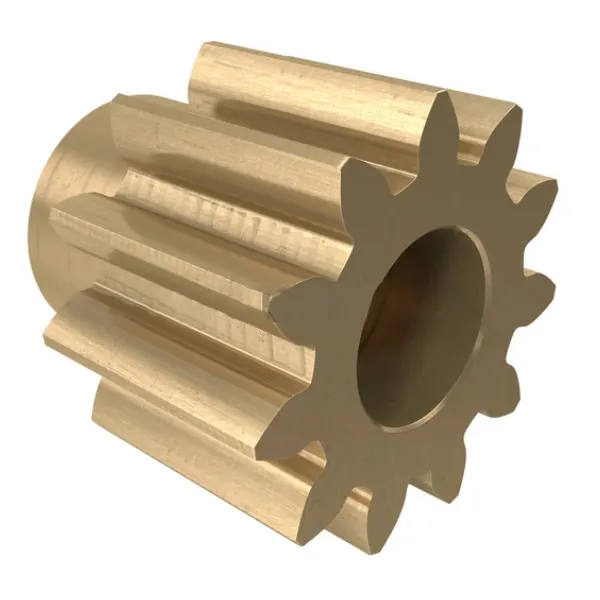
An agricultural gearbox is a precision assembly of gears, shafts, bearings, and housing that work in harmony to transmit power. The most common configuration for tractor PTO applications is the bevel gearbox (for changing the direction of power flow by 90 degrees) or the parallel shaft gearbox (for keeping the input and output shafts parallel). Inside the housing, the gears are arranged in a gear train, with the input gear (pinion) meshing with a larger output gear (bull gear) or a series of intermediate gears to achieve the desired reduction ratio. Our factory at Raydafon Technology Group Co.,Limited uses helical gears in our agricultural gearboxes because they offer smoother operation, higher load capacity, and lower noise compared to straight-cut gears. The teeth are precisely ground to achieve a surface finish of 0.8 microns, ensuring quiet operation and long life.
Key internal components of an agricultural gearbox and how they work together:
The housing of the agricultural gearbox is typically made of cast iron or ductile iron, providing a rigid structure that dampens vibrations and dissipates heat. Our factory uses nodular cast iron (GGG 50) for its superior tensile strength and elongation properties. The housing is designed with internal ribs to increase stiffness and with oil channels to direct lubricant to the bearings and gear teeth. Some agricultural gearboxes also incorporate a pump or oil slinger to ensure forced lubrication at higher operating speeds. This is particularly important for gearboxes used in high-speed rotary cutters, where the gears can reach temperatures of 80°C or more.
In addition to the basic gear train, many agricultural gearboxes include optional features such as:
These components are precisely machined and assembled in our factory to ensure that the agricultural gearbox delivers consistent performance over its entire service life. We use computer-aided gear design (KISSsoft) to optimize the gear geometry for strength and efficiency, and we validate every design through finite element analysis (FEA) and physical testing.
Raydafon Technology Group Co.,Limited manufactures a wide range of agricultural gearboxes for tractor PTO applications, covering power ratings from 30 kW to 250 kW and reduction ratios from 1.5:1 to 15:1. Our product lines include single-stage, two-stage, and bevel gearboxes, all designed for compatibility with SAE and ISO standard PTO shafts. The table below summarizes the key specifications for our most popular agricultural gearbox models, which are used in rotary tillers, disc harrows, mowers, balers, and forage harvesters. All values are based on testing under DIN 3990 and ISO 6336 standards, and our factory can customize any model to meet specific implement requirements.
| Model | Reduction Ratio | Input Power (kW) | Output Torque (Nm) | Input Speed (rpm) | Weight (kg) | Lubrication Type | Typical Application |
| RD-200 | 3.6:1 | 75 kW | 2950 Nm | 540/1000 | 42 kg | Splash | Rotary tiller (1.5-2.5m) |
| RD-350 | 4.2:1 | 130 kW | 5400 Nm | 540/1000 | 65 kg | Splash / Forced | Disc harrow (3-4.5m) |
| RD-500M | 1.8:1 / 2.8:1 | 160 kW | 4500 Nm (low) | 540/1000 | 88 kg | Forced | Mower conditioner / Baler |
| RD-75B | 5.6:1 | 55 kW | 3000 Nm | 540 | 35 kg | Splash | Baler plunger drive |
| RD-900 | 6.2:1 | 250 kW | 11200 Nm | 540/1000 | 140 kg | Forced with cooler | Heavy tillage / Harvesters |
| RD-BV100 | 1:1 (bevel) | 90 kW | 1200 Nm | 540/1000 | 55 kg | Splash | Angle drive (sprayers, spreaders) |
In addition to these standard models, our factory offers a custom design service for agricultural gearboxes. We can modify the gear material (case-carburized or induction-hardened steel), bearing type, and housing geometry to suit specific operating conditions. We also provide a range of optional accessories, including speed sensors, temperature probes, and torque limiters. All our agricultural gearboxes are painted with a durable two-component epoxy coating that resists corrosion and UV degradation.
Our quality assurance process includes 100 percent inspection of gear tooth geometry, surface hardness testing, and a 2-hour test run on a dynamometer to verify efficiency and temperature rise. Each agricultural gearbox is accompanied by a detailed test report, including gear contact pattern analysis and vibration spectrum. We also provide a 3D CAD model of the gearbox for easy integration into your implement design. With our comprehensive design and manufacturing capabilities, we can deliver a custom agricultural gearbox within 6-8 weeks from order confirmation.
An agricultural gearbox is a high-precision mechanical system that relies on proper lubrication and regular maintenance to achieve its design life. Lubrication serves multiple critical functions: it reduces friction between gear teeth and bearings, dissipates heat generated by power loss, prevents corrosion, and helps to flush away wear particles. In our agricultural gearboxes, we recommend using high-quality gear oil with EP (extreme pressure) additives, typically SAE 80W-90 or SAE 85W-140, depending on the ambient temperature and operating load. The oil should be changed at regular intervals to maintain its protective properties. Our factory has developed a comprehensive maintenance schedule that, if followed, can extend the service life of an agricultural gearbox to 8,000 to 10,000 operating hours.
Essential lubrication and maintenance practices for an agricultural gearbox:
A case study from a large-scale dairy farm in New Zealand illustrates the impact of proper maintenance. The farm used our RD-350 agricultural gearbox on 12 disc mowers. For the first two seasons, they followed our recommended maintenance schedule, with no gearbox failures. In the third season, they changed operators, and the new team neglected regular oil checks. Within three months, two gearboxes failed due to oil starvation. The farm reinstated the maintenance schedule and provided training to all operators, and in the following five years, they had only one minor gearbox issue. The farm estimated that the cost of training and oil changes was less than 10 percent of the cost of replacing the gearboxes.
In addition to the basic maintenance, we offer an optional oil analysis service, where samples can be sent to our factory for wear particle and contaminant analysis. This can provide early warning of impending problems, allowing for planned maintenance rather than unexpected breakdowns. Our factory also provides a spare parts kit with each agricultural gearbox, including seals, gaskets, and a shear pin, so that minor repairs can be done quickly in the field. By investing a small amount of time and effort in maintenance, you can ensure that your agricultural gearbox continues to deliver reliable, efficient power transmission for many years.
Question 1: Can I use an agricultural gearbox designed for 540 rpm PTO with a 1000 rpm PTO tractor?
Answer: It depends on the gearbox design. Our agricultural gearboxes are typically rated for both 540 and 1000 rpm input speeds, provided that the input torque does not exceed the gearbox's maximum rating. If you use a gearbox rated only for 540 rpm with a 1000 rpm input, the gears may spin too fast, causing excessive wear and heating. We recommend selecting an agricultural gearbox that matches your tractor's PTO speed, or using a gearbox with a dual-speed input option. Our factory can provide a gearbox that accepts either speed by using a selectable input pinion or a stepped input shaft. Always check the gearbox specifications before use.
Question 2: How do I determine the correct reduction ratio for my implement?
Answer: The correct reduction ratio is determined by the implement's required input speed and the tractor's PTO speed. The formula is: Ratio = PTO Speed ÷ Implement Input Speed. For example, if your tractor PTO is 540 rpm and your rotary tiller needs 200 rpm, the required ratio is 540/200 = 2.7:1. However, you also need to consider the torque requirement. A ratio that provides the correct speed may not provide enough torque. Our technical team at Raydafon Technology Group Co.,Limited can perform a complete power matching analysis, taking into account the implement's power requirement and the tractor's torque curve, to recommend the optimal ratio.
Question 3: What type of lubricant should I use in my agricultural gearbox?
Answer: We recommend using a high-quality, extreme-pressure (EP) gear oil with a viscosity of SAE 80W-90 for most temperate climates, and SAE 85W-140 for tropical climates. The oil must meet API GL-5 or higher specifications. For synthetic oil options, we offer an extended-life synthetic gear oil that provides better performance at high temperatures and longer oil change intervals. Avoid using automotive motor oil, as it lacks the EP additives necessary for the high-pressure sliding contact in gear teeth. Our factory provides a detailed lubricant specification sheet with each agricultural gearbox.
Question 4: How can I prevent the agricultural gearbox from overheating?
Answer: Overheating typically occurs due to low oil levels, overloading, or operating the implement at speeds above the gearbox's design limit. To prevent overheating, ensure that the oil level is correct and that the oil is clean. Check that the implement is not overloaded (e.g., tilling too deep or mowing too fast). For high-power applications, we offer agricultural gearboxes with forced lubrication and an external oil cooler. Also, ensure that the gearbox breather is clean and allows pressure to equalize, as a blocked breather can cause pressure buildup and oil leakage. If the gearbox temperature consistently exceeds 90°C, contact our factory for an assessment.
Question 5: What is the typical noise level of a Raydafon agricultural gearbox, and how can it be reduced?
Answer: Our agricultural gearboxes are designed for quiet operation, with typical noise levels ranging from 80 to 85 dB(A) at 1 meter under full load, depending on the model and ratio. The noise is primarily due to gear meshing and bearing operation. To reduce noise, we use helical gears instead of straight-cut gears, precision-ground teeth, and high-quality bearings. During installation, ensure that the gearbox is securely mounted to prevent resonance. Regular oil changes and proper lubrication also help to maintain low noise levels. If noise increases suddenly, it may indicate a bearing or gear issue that should be inspected promptly.
The agricultural gearbox is a fundamental component in tractor PTO systems, translating the tractor's power into the speed and torque required by the implement. Through gear reduction, it enables efficient operation of a wide range of implements, from tillers and mowers to balers and harvesters. The internal components—gears, shafts, bearings, and housing—work in precise harmony to deliver reliable power transmission, while proper lubrication and maintenance ensure long service life. At Raydafon Technology Group Co.,Limited, our factory has engineered agricultural gearboxes that combine high efficiency, durability, and versatility, meeting the demands of modern farming.
If you are looking to specify, upgrade, or replace an agricultural gearbox for your PTO-driven implement, contact Raydafon Technology Group Co.,Limited today. Our experienced engineering team will work with you to identify the optimal gearbox model, reduction ratio, and configuration for your specific application. We provide full technical support, including CAD integration, test reports, and on-site training. Request your free gearbox consultation and quote now from Raydafon Technology Group Co.,Limited. Let us help you power your farm operations with precision and reliability.
+86-574-87168065
Luotuo Industrial Area, Zhenhai District, Ningbo City, China