QR Code

Products
Contact Us


Fax
+86-574-87168065

Email

Address
Luotuo Industrial Area, Zhenhai District, Ningbo City, China


In a dump truck bed that must be raised to a steep angle, a scissor lift that must reach a 10-meter platform, or a refuse collection vehicle that must lift a heavy bin, the challenge is always the same: how to achieve a long stroke within a limited installation space. A standard single-stage hydraulic cylinder would need to be as long as the stroke itself, which is often impossible to accommodate. This is where the Telescopic Hydraulic Cylinders excel. A telescopic cylinder uses multiple nested stages, each of which extends in sequence. This design allows a very long stroke to be achieved from a relatively short retracted length. For buyers of hydraulic cylinders, understanding why telescopic cylinders are suitable for long-stroke applications is essential for selecting the right product for their equipment. The wrong choice will result in insufficient stroke, inadequate force, or premature failure.
This guide is written for procurement engineers, equipment manufacturers, and maintenance managers who need to source Telescopic Hydraulic Cylinders for long-stroke applications. We will explain the working principle of telescopic cylinders, the different stage configurations, the force and speed characteristics, the key specifications to include in a purchase order, and the criteria for evaluating a supplier. We will also provide detailed product parameters from our factory at Raydafon Technology Group Co.,Limited. Whether you are designing a new dump truck, a lift platform, or a special-purpose machine, this guide will help you make an informed decision that ensures reliable performance and long service life.
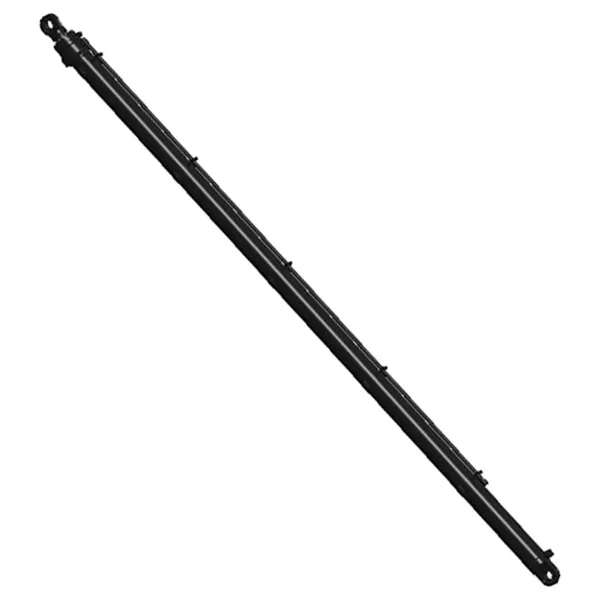
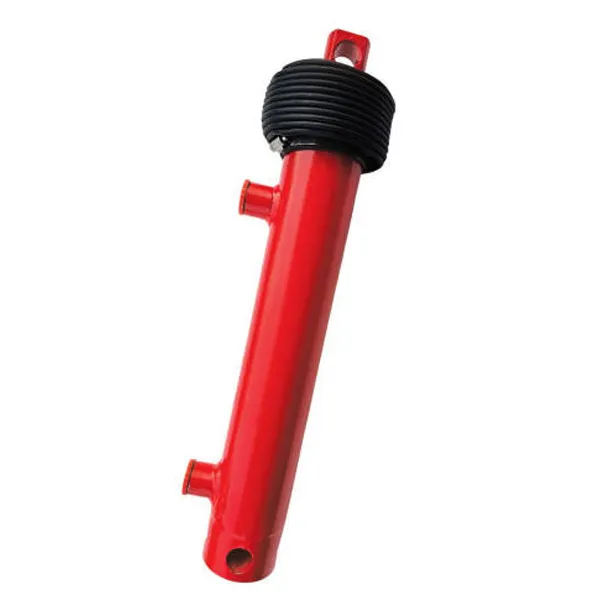
A Telescopic Hydraulic Cylinder is a hydraulic actuator that consists of multiple nested stages, or sleeves, that extend in sequence. Unlike a single-stage cylinder, which has one piston and one rod, a telescopic cylinder has multiple pistons and multiple rods, each of which is nested inside the next. When hydraulic fluid is introduced into the cylinder, the largest stage, known as the main stage, extends first. Once it reaches the end of its stroke, the next stage begins to extend, and so on, until all stages are fully extended. The retraction sequence is the reverse: the smallest stage retracts first, followed by the next, and so on. This sequential operation is what allows the telescopic cylinder to achieve a very long stroke from a compact retracted length. The table below compares the key characteristics of telescopic and single-stage cylinders.
| Characteristic | Telescopic Cylinder | Single-Stage Cylinder |
| Number of Stages | 2 - 6 | 1 |
| Stroke-to-Retracted Length Ratio | High (up to 5:1) | Low (typically 1:1 or 2:1) |
| Force Variation | Varies by stage (highest at main stage) | Constant |
| Speed Variation | Varies by stage (fastest at smallest stage) | Constant |
| Installation Space | Compact when retracted | Requires space for full stroke |
| Typical Application | Dump trucks, lifts, refuse vehicles | Presses, excavators, general machinery |
At Raydafon Technology Group Co.,Limited, our factory manufactures Telescopic Hydraulic Cylinders for a wide range of long-stroke applications. We have extensive experience in the design and production of multi-stage cylinders, and we use advanced manufacturing processes to ensure that our cylinders deliver reliable performance and long service life. Our engineering team works closely with customers to understand their specific requirements and to provide the optimal cylinder design.
The stage design is the defining feature of a Telescopic Hydraulic Cylinder and the key to its long-stroke capability. Each stage consists of a piston, a rod, and a cylinder barrel. The stages are nested, with the largest stage on the outside and the smallest stage on the inside. The diameter of the stages decreases from the main stage to the final stage. This reduction in diameter affects the force and speed characteristics of the cylinder, as we will discuss in the next section. The number of stages determines the maximum stroke. A two-stage cylinder has a shorter stroke than a three-stage cylinder, which in turn has a shorter stroke than a four-stage cylinder. However, adding stages also increases the complexity, the cost, and the retracted length. The table below summarizes the relationship between the number of stages and the stroke capability.
| Number of Stages | Typical Stroke Range | Retracted Length (for 1000 mm stroke) | Typical Application |
| 2 | 500 - 1,500 mm | 600 - 800 mm | Dump trucks, trailers |
| 3 | 1,000 - 2,500 mm | 500 - 700 mm | Refuse vehicles, lifts |
| 4 | 2,000 - 4,000 mm | 450 - 600 mm | Scissor lifts, special machinery |
| 5 | 3,000 - 6,000 mm | 400 - 550 mm | High-reach platforms |
| 6 | 5,000 - 10,000 mm | 350 - 500 mm | Special-purpose equipment |
At our factory, we design and manufacture telescopic cylinders with 2 to 6 stages, depending on the required stroke and installation space. We use high-strength steel for the barrels and rods, and we precision-machine each stage to ensure smooth extension and retraction. We also use high-quality seals and guide rings to ensure reliable performance over thousands of cycles. Our goal is to provide our customers with telescopic cylinders that meet their specific stroke and force requirements.
The force and speed characteristics of a Telescopic Hydraulic Cylinder are different from those of a single-stage cylinder. Because the stages have different diameters, the effective piston area changes as each stage extends. The main stage has the largest diameter and therefore the largest area, which means it generates the highest force. The smallest stage has the smallest diameter and therefore the smallest area, which means it generates the lowest force. Conversely, the speed of extension is highest at the smallest stage and lowest at the main stage. This is because the flow rate from the pump is constant, and the speed is inversely proportional to the area. The table below summarizes the force and speed variation for a typical 4-stage telescopic cylinder.
| Stage | Bore Diameter (mm) | Piston Area (cm²) | Force at 200 bar (kN) | Extension Speed (mm/s) |
| Main Stage | 200 | 314 | 628 | 10 |
| Second Stage | 160 | 201 | 402 | 15.6 |
| Third Stage | 125 | 122.7 | 245 | 25.5 |
| Fourth Stage | 100 | 78.5 | 157 | 39.8 |
At Raydafon, we help our customers understand the force and speed characteristics of our telescopic cylinders so that they can select the right model for their application. We provide detailed performance curves and technical data for each cylinder we manufacture. Our engineering team can also design custom cylinders to meet specific force and speed requirements.
When purchasing Telescopic Hydraulic Cylinders, the buyer should include detailed specifications in the purchase order to ensure that the product meets the required performance and quality standards. The key specifications are the number of stages, the stroke length, the retracted length, the bore diameter of each stage, the rod diameter of each stage, the operating pressure, the mounting type, the port size, and the seal type. The stroke length should be specified in millimeters. The retracted length should be specified in millimeters. The bore and rod diameters should be specified for each stage. The operating pressure should be specified in bar. The mounting type should be specified by type (e.g., clevis, flange, trunnion). The port size should be specified by thread type and size. The seal type should be specified by material. The table below summarizes the specifications that should be included in a purchase order.
| Specification | Unit of Measure | Example |
| Number of Stages | Count | 4 |
| Stroke Length | mm | 3000 mm |
| Retracted Length | mm | 800 mm |
| Bore Diameter (per stage) | mm | 200 / 160 / 125 / 100 |
| Rod Diameter (per stage) | mm | 160 / 125 / 100 / 80 |
| Operating Pressure | bar | 200 bar |
| Mounting Type | Type | Clevis |
| Port Size | Thread type and size | G3/4" |
| Seal Type | Material | Polyurethane |
At our factory, we work with our customers to ensure that all specifications are clearly defined and understood before production begins. We provide samples for approval and maintain strict quality control throughout the production process. Our goal is to deliver Telescopic Hydraulic Cylinders that meet or exceed our customers' expectations.
Evaluating a supplier of Telescopic Hydraulic Cylinders is critical for ensuring a reliable supply of high-quality products. The key criteria for evaluating a supplier are manufacturing capability, quality management, material sourcing, production capacity, delivery performance, and technical support. Manufacturing capability includes the ability to machine, weld, and assemble multi-stage cylinders to the required tolerances. Quality management includes the systems and processes that ensure consistent quality. Material sourcing includes the ability to source high-quality steel and seals at competitive prices. Production capacity includes the ability to meet large orders in a timely manner. Delivery performance includes the ability to meet lead times and to respond to urgent orders. Technical support includes the ability to assist with specification, design, and problem-solving. The table below summarizes these criteria and what to look for in each.
| Evaluation Criterion | What to Look For | Why It Matters |
| Manufacturing Capability | CNC machining, welding, assembly equipment | Ensures dimensional accuracy and structural integrity |
| Quality Management | ISO 9001 certification, inspection records | Ensures consistent product quality |
| Material Sourcing | Reliable suppliers, quality steel and seals | Ensures product performance and durability |
| Production Capacity | Monthly output, ability to scale | Ensures timely delivery of large orders |
| Delivery Performance | On-time delivery record, inventory capability | Keeps your production line running |
| Technical Support | Engineering team, design assistance | Helps you select the right product |
At Raydafon Technology Group Co.,Limited, our factory has been producing Telescopic Hydraulic Cylinders for over a decade. We have a strong track record of quality, delivery, and customer satisfaction. We are ISO 9001 certified, and we maintain detailed records of all inspections. Our production capacity is among the largest in the region, and we can scale to meet large orders. Our technical team is knowledgeable and responsive, and we are committed to helping our customers succeed. We invite you to evaluate us against these criteria and to consider us as your partner for Telescopic Hydraulic Cylinders.
The following table provides the key product parameters for our Telescopic Hydraulic Cylinders. These cylinders are designed for long-stroke applications in dump trucks, lifts, refuse vehicles, and special-purpose machinery. Our factory can also produce custom cylinders to meet specific requirements.
| Parameter | Specification Range | Notes |
| Number of Stages | 2 - 6 | Selected based on stroke and space |
| Stroke Length | 500 - 10,000 mm | Custom strokes available |
| Retracted Length | 350 - 1,500 mm | Depends on number of stages |
| Bore Diameter | 80 - 300 mm | Depends on force requirement |
| Rod Diameter | 60 - 250 mm | Depends on buckling resistance |
| Operating Pressure | Up to 350 bar | Higher pressures available |
| Mounting Type | Clevis, Flange, Trunnion, Threaded | Custom mountings available |
| Port Size | G1/2" - G1" | SAE ports available |
| Seal Material | Polyurethane, PTFE, NBR | Selected for temperature and fluid |
| Rod Coating | Hard Chrome (20-30 µm) | Ceramic coating optional |
| Barrel Material | ST52, E355, 27SiMn | Seamless steel tube |
| Rod Material | 20MnV6, 42CrMo4 | High-strength steel |
| Operating Temperature | -30°C to +100°C | High-temperature options available |
| Standards | ISO 6020, ISO 6022 | Compliance with international standards |
At our factory, we manufacture our Telescopic Hydraulic Cylinders to meet these specifications and more. We can customize the number of stages, the stroke, the diameters, and the mounting to suit your specific requirements. Our quality control system includes inspection of raw materials, in-process inspection, and final inspection before shipment. Our goal is to provide our customers with high-quality Telescopic Hydraulic Cylinders that deliver reliable performance and long service life.
Question 1: How do I determine the number of stages required for my application?
Answer: The number of stages is determined by the required stroke and the available installation space. The stroke-to-retracted length ratio increases with the number of stages. For a given stroke, a cylinder with more stages will have a shorter retracted length. To determine the optimal number of stages, calculate the required stroke and the maximum retracted length that can be accommodated. Then select the number of stages that provides the required stroke within that retracted length. Our engineering team can assist with this calculation.
Question 2: Why does the force decrease as the stages extend?
Answer: The force decreases as the stages extend because the diameter of the stages decreases. The main stage has the largest diameter and therefore the largest piston area, which generates the highest force. The smaller stages have smaller areas and generate lower forces. This is a characteristic of the telescopic design. If a constant force is required throughout the stroke, a different cylinder design may be necessary. Our engineering team can advise on the best solution for your force requirements.
Question 3: Can telescopic cylinders be used in horizontal applications?
Answer: Yes, Telescopic Hydraulic Cylinders can be used in horizontal applications, but the design must account for the bending loads that occur when the cylinder is not supported along its entire length. In horizontal applications, the cylinder may need additional support or a larger rod diameter to prevent buckling. Our engineering team can assess your application and recommend the appropriate design.
Question 4: What is the typical maintenance schedule for a telescopic hydraulic cylinder?
Answer: The maintenance schedule for a Telescopic Hydraulic Cylinder depends on the application and the operating conditions. As a general guideline, visual inspections should be performed weekly, checking for leaks and damage. The hydraulic fluid should be checked monthly and replaced according to the manufacturer's recommendations. The seals should be inspected annually and replaced if worn. For heavy-duty applications, more frequent maintenance may be required. Our factory provides detailed maintenance manuals for all our cylinders.
Question 5: Can a telescopic cylinder be repaired if a stage is damaged?
Answer: Yes, a Telescopic Hydraulic Cylinder can often be repaired if a stage is damaged. The damaged stage can be replaced, and the seals can be renewed. The repair is typically performed by disassembling the cylinder, replacing the damaged components, and reassembling it. At Raydafon Technology Group Co.,Limited, we offer a full repair and reconditioning service for our cylinders. We can restore a cylinder to like-new condition at a fraction of the cost of a new cylinder.
Telescopic Hydraulic Cylinders are the ideal solution for long-stroke applications where installation space is limited. Their multi-stage design allows a very long stroke to be achieved from a compact retracted length. They are used in a wide range of equipment, including dump trucks, scissor lifts, refuse vehicles, and special-purpose machinery. For buyers, selecting the right telescopic cylinder requires an understanding of the stage design, the force and speed characteristics, the specifications, and the supplier's capabilities. At Raydafon Technology Group Co.,Limited, our factory has the expertise and the equipment to manufacture high-quality Telescopic Hydraulic Cylinders that meet the most demanding requirements. We use high-strength materials, precision manufacturing, and rigorous quality control to ensure that our cylinders deliver reliable performance and long service life.
Whether you are designing new equipment or maintaining existing machinery, we invite you to contact us to discuss your requirements. We can provide technical data, samples, and customized solutions. Our commitment to quality and customer satisfaction has made us a trusted partner for equipment manufacturers around the world.
Contact Raydafon Technology Group Co.,Limited today to discuss your Telescopic Hydraulic Cylinder requirements and discover how our cylinders can meet your long-stroke application needs.
+86-574-87168065
Luotuo Industrial Area, Zhenhai District, Ningbo City, China