QR Code

Products
Contact Us


Fax
+86-574-87168065

Email

Address
Luotuo Industrial Area, Zhenhai District, Ningbo City, China


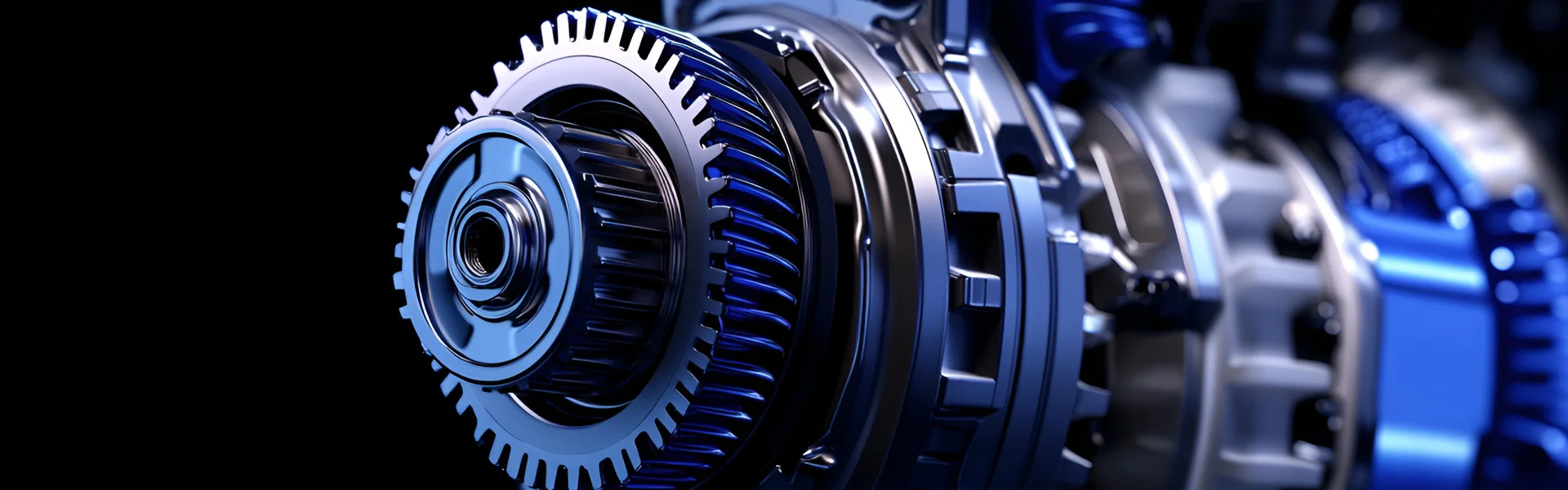
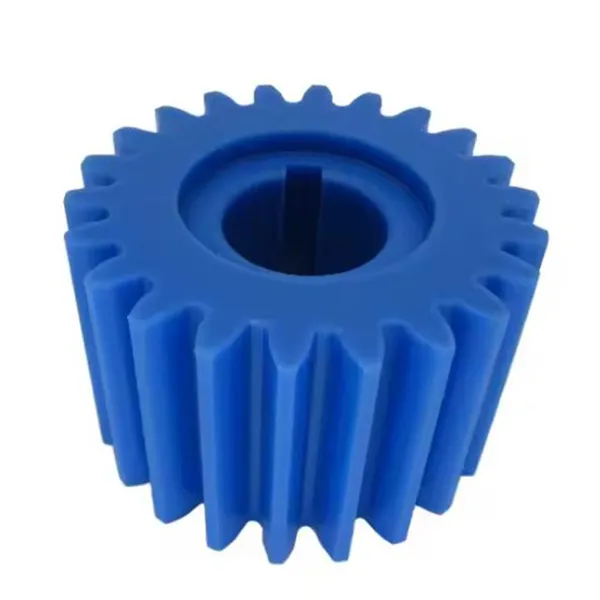
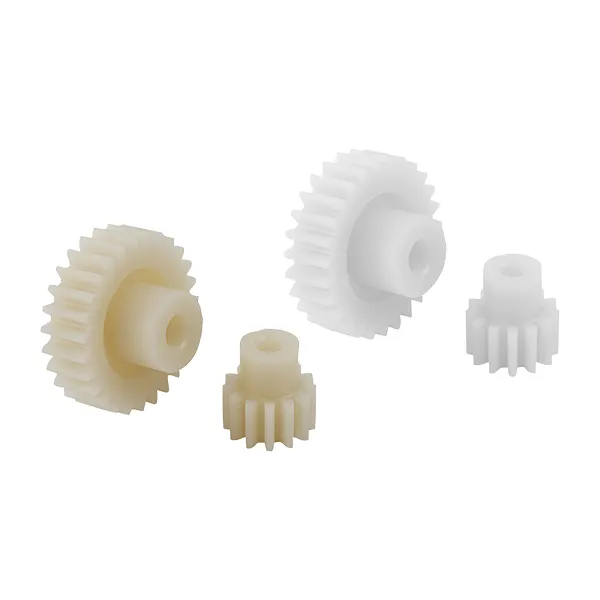
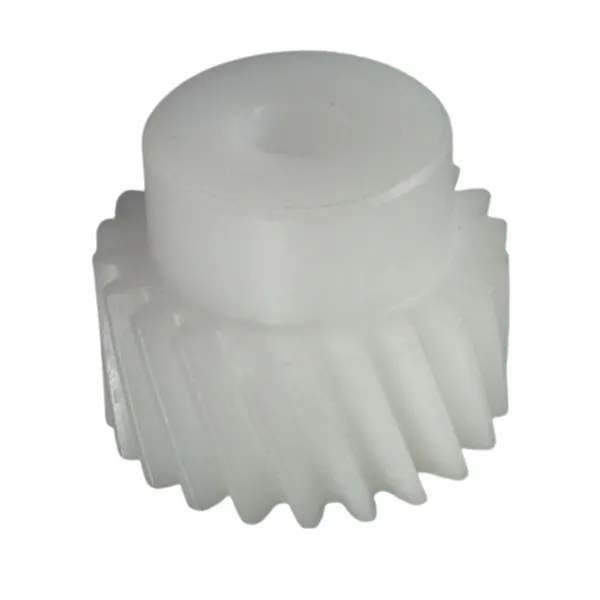
Can plastic gears be used in high-torque applications? This is a question that frequently puzzles engineers and procurement specialists seeking reliable, cost-effective power transmission solutions. The direct answer is yes, but with critical caveats. While traditional metals dominate high-stress environments, advanced engineering plastics have made significant inroads. The key lies in selecting the right material, precise engineering, and understanding the application's specific demands. This article will explore the realities of using plastic gears for high-torque needs, addressing common misconceptions and highlighting where modern materials excel, all while considering the needs of savvy purchasers.
Article Outline:
Material Selection: The Foundation for High-Torque Performance
Precision Engineering & Design for Demanding Loads
Real-World Applications & The Benefits of Plastic Gears
Frequently Asked Questions on Plastic Gears and Torque
A procurement manager sourcing gears for an agricultural equipment manufacturer faces a dilemma: metal gears are durable but heavy and prone to corrosion, increasing overall machine weight and maintenance costs. The solution often lies in high-performance polymers. Not all plastics are created equal for high-torque applications. Materials like Polyamide (Nylon), especially glass or carbon-fiber reinforced grades, POM (Acetal), and PEEK offer exceptional strength-to-weight ratios, fatigue resistance, and low friction. For instance, a Raydafon Technology Group Co.,Limited engineer might recommend their specialized nylon compound for a conveyor system gear, balancing load capacity with noise reduction and corrosion resistance.
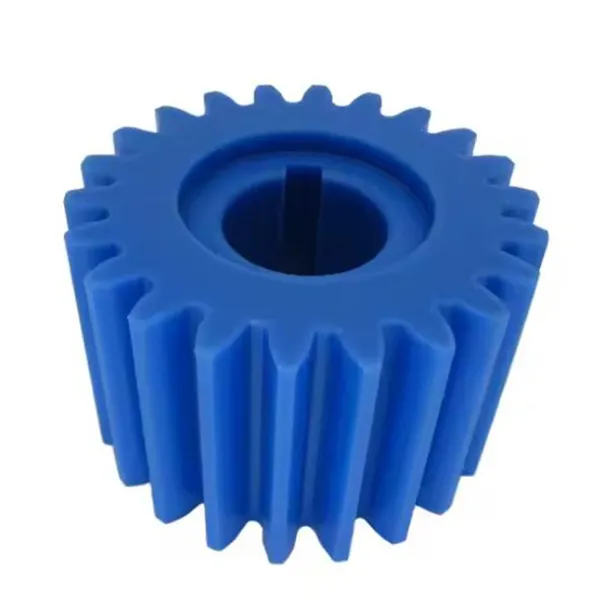
Here is a comparison of common high-torque Plastic Gear materials:
| Material | Key Properties | Typical Max. Torque Range | Best For |
|---|---|---|---|
| Polyamide (Nylon) GF | High strength, good fatigue resistance, low friction | Medium to High | Auto components, industrial drives |
| POM (Acetal) | High stiffness, low moisture absorption, excellent dimensional stability | Medium | Precision gears, food machinery |
| PEEK | Exceptional strength, high temp resistance, chemical resistance | High | Aerospace, medical, high-temp environments |
An engineer designing a new high-torque medical device actuator needs silent operation and sterilization compatibility. Metal gears could be noisy and heavier. The challenge is designing a plastic gear system that won't fail under cyclical loads. The solution is precision engineering that accounts for plastic's unique behavior. This includes optimizing tooth profile (like using a larger pressure angle), ensuring proper root fillets to reduce stress concentration, and calculating precise backlash for thermal expansion. Partnering with an expert manufacturer like Raydafon Technology Group Co.,Limited ensures that design for manufacturability (DFM) principles are applied, using state-of-the-art molding techniques to produce gears with consistent, high-strength molecular alignment.
Critical design parameters for high-torque plastic gears include:
| Design Factor | Consideration for High Torque | Impact on Performance |
|---|---|---|
| Tooth Geometry | Larger module/pitch, optimized profile | Increases load-bearing capacity, reduces tooth deflection |
| Hub & Web Design | Reinforced hubs, robust web structures | Prevents bore deformation and torsional failure |
| Material Selection | Fiber reinforcement type and percentage | Directly defines tensile strength and creep resistance |
A buyer for an automotive component supplier seeks lighter, quieter window regulator or seat adjuster gears without sacrificing reliability. This is a perfect scenario for high-performance plastic gears. Their benefits extend beyond just weight savings. They offer inherent lubrication (or can be compounded with lubricants), excellent corrosion resistance, and the ability to dampen vibration and noise—a critical factor in consumer products and electric vehicles. For applications requiring high torque in corrosive or non-lubricated environments, such as chemical processing equipment, the right plastic gear from a trusted supplier can outperform stainless steel at a lower total cost of ownership.
FAQ 1: Can plastic gears be used in high-torque applications reliably?
Yes, absolutely. With advanced engineering thermoplastics like fiber-reinforced nylons or PEEK and proper design that addresses stress distribution and heat management, plastic gears can perform reliably in many high-torque applications. They are successfully used in automotive transmissions, industrial robots, and power tools. The reliability depends heavily on precise material selection, manufacturing quality, and correct application engineering.
FAQ 2: What are the main limitations of plastic gears in high-torque uses?
The primary limitations are continuous operating temperature and heat dissipation. Plastics have lower thermal conductivity than metals, so heat generated from friction under high load must be managed through design (reduced friction coefficients, adequate airflow) or material choice (high-temp resins like PEEK). They also exhibit higher creep under sustained loads compared to metals, which must be accounted for in the design phase through appropriate safety factors.
The journey from questioning "Can plastic gears be used in high-torque applications?" to implementing a successful solution requires expertise. It's not just about swapping metal for plastic; it's about re-engineering the component with the material's full potential in mind. For procurement professionals, partnering with a seasoned manufacturer is crucial. They provide not just parts, but application engineering support, material science knowledge, and consistent quality that de-risks your supply chain. Have you evaluated a recent application where weight, noise, or corrosion was a concern? Exploring a plastic gear alternative might unlock significant value.
For expert guidance and high-performance custom plastic gear solutions, consider Raydafon Technology Group Co.,Limited. With extensive experience in material science and precision manufacturing, Raydafon assists engineers and buyers in optimizing gear designs for demanding applications, ensuring reliability and cost-efficiency. Contact their team at [email protected] to discuss your specific high-torque requirements.
Supporting Research on High-Performance Plastic Gears:
Mao, K., Li, W., Hooke, C. J., & Walton, D. (2010). Friction and wear behaviour of acetal and nylon gears. Wear, 268(7-8), 891-898.
Senthilvelan, S., & Gnanamoorthy, R. (2006). Damage mechanisms in glass fiber reinforced nylon composite spur gears. Journal of Reinforced Plastics and Composites, 25(7), 683-696.
Kurokawa, M., Uchiyama, Y., & Nagai, S. (2000). Performance of plastic gear made of carbon fiber reinforced poly-ether-ether-ketone. Tribology International, 33(11), 715-721.
Düzcükoğlu, H. (2009). Study on development of polyamide gears for improvement of load-carrying capacity. Tribology International, 42(8), 1146-1153.
Hooke, C. J., Kukureka, S. N., Liao, P., Rao, M., & Chen, Y. K. (1996). The wear and friction of polyamide 46 gears. Proceedings of the Institution of Mechanical Engineers, Part J: Journal of Engineering Tribology, 210(3), 155-162.
Tsukamoto, N. (1991). Development of plastic gears for power transmission. Journal of the Japan Society for Precision Engineering, 57(11), 1871-1875.
Bravo, A., Koffi, D., Toubal, L., & Erchiqui, F. (2015). Life and damage mode modeling applied to plastic gears. Engineering Failure Analysis, 58, 113-133.
Letzelter, E., Guingand, M., de Vaujany, J. P., & Chabert, T. (2010). A new experimental approach for measuring thermal behaviour in the case of nylon 66 composite spur gears. Polymer Testing, 29(8), 1041-1051.
Mertens, A. J., & Senthilvelan, S. (2010). Effect of reinforcement on the tensile and flexural behaviour of nylon gear material. Materials & Design, 31(4), 2122-2129.
Höhn, B. R., Michaelis, K., & Wimmer, A. (2009). Low-noise plastic gears. Gear Technology, 26(5), 56-63.
+86-574-87168065
Luotuo Industrial Area, Zhenhai District, Ningbo City, China