QR Code

Products
Contact Us


Fax
+86-574-87168065

E-mail

Address
Luotuo Industrial Area, Zhenhai District, Ningbo City, China


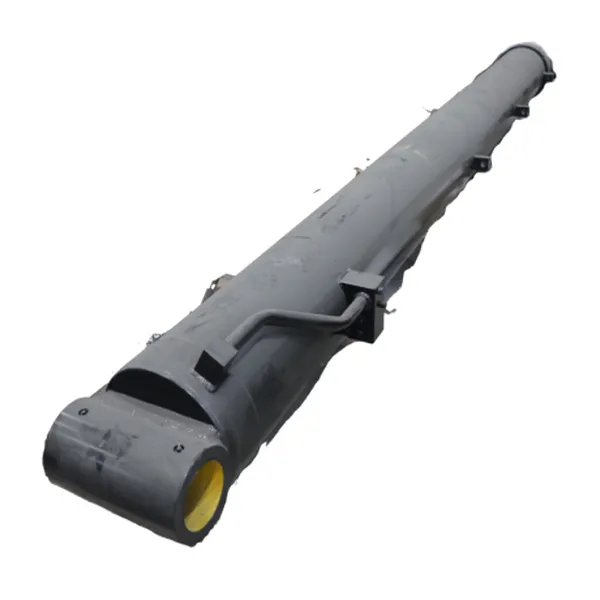
How does the EP-YD40-245-D5 hydraulic cylinder work in a harvester? This question sits at the core of every harvesting season where downtime is not an option. Imagine a combine gliding through a golden wheat field — the header must lift and tilt with absolute precision, reacting to ground contours and crop density without hesitation. At the heart of that motion lies the EP-YD40-245-D5, a double‑acting hydraulic cylinder engineered by Raydafon Technology Group Co.,Limited to convert pressurized fluid into the powerful, smooth mechanical force that keeps harvesters productive. When the operator adjusts the cutting height, pressurized oil enters the cap end, extending the piston rod to raise the header. Retraction follows when fluid is directed to the rod end, pulling the implement down gently. This cycle repeats hundreds of times daily, yet the cylinder’s advanced gland seal and wear‑resistant chromed piston ensure zero leak‑by even in dust‑laden conditions. For a procurement professional, understanding this mechanism is the first step toward choosing components that eliminate costly field failures and boost harvester ROI.
Harvester manufacturers and fleet buyers constantly face a silent profit killer: unscheduled stops caused by hydraulic cylinder failure. Picture a 500‑hectare farm where the combine’s header suddenly droops during a crucial wheat harvest window. The operator checks the hydraulic system; a seal has blown, oil is dripping, and the header cannot be raised. The underlying problem often traces back to a cylinder unable to handle the combination of high cycle rates, abrasive dust, and pressure spikes. This scenario translates into extended downtime, missed logistics deadlines, and increased maintenance costs — a pain point every procurement manager knows too well.
Raydafon Technology Group Co.,Limited addresses this exact vulnerability with the EP-YD40-245-D5. Instead of typical off‑the‑shelf units that degrade quickly under harvester demands, our cylinder integrates a five‑stage seal package and a hard‑chromed piston rod specifically designed to resist pitting in dusty environments. The rod wiper scrapes away chaff and fine particles before they can enter the gland, while the polyurethane U‑cup and O‑ring combination maintains an adaptive seal even when the cylinder is subjected to side loads. This engineering directly prevents the common seal blow‑by scenario. Below is a quick comparison of standard harvester cylinder pain points versus the EP-YD40-245-D5 solution:
| Pain Point | Consequence | EP-YD40-245-D5 Solution |
|---|---|---|
| Dust ingress through rod seal | Oil contamination; seal failure in 300 hours | Multi‑lip wiper & advanced gland sealing extend service to 1000+ hours |
| Header drift due to internal bypass | Uneven cutting, grain loss | Precision‑honed tube and dynamic piston seal ensure zero creep under 245 bar |
| Corrosion from moisture & fertilizer residues | Pitting on rod, seal damage | Triple‑nickel‑chrome plated rod withstands salt spray per ISO 9227 |
To fully answer how does the EP-YD40-245-D5 hydraulic cylinder work in a harvester, we need to look inside the barrel. This cylinder is a double‑acting linear actuator — it uses hydraulic force in both directions. When the harvester’s control module sends a signal to raise the grain platform, a proportional valve directs high‑pressure oil (up to 245 bar) from the machine’s main pump into the cylinder’s cap end. The fluid pushes against the piston head, which has a diameter of 40 mm, generating a force of over 30 kN. This force moves the piston rod outward, lifting the header. The rod diameter of 25 mm ensures sufficient strength while minimizing weight. Because the EP-YD40-245-D5 employs a specially coated hard‑chrome surface and a micro‑finished tube interior, the piston glides with minimal friction, allowing faster response and reduced hydraulic energy loss.
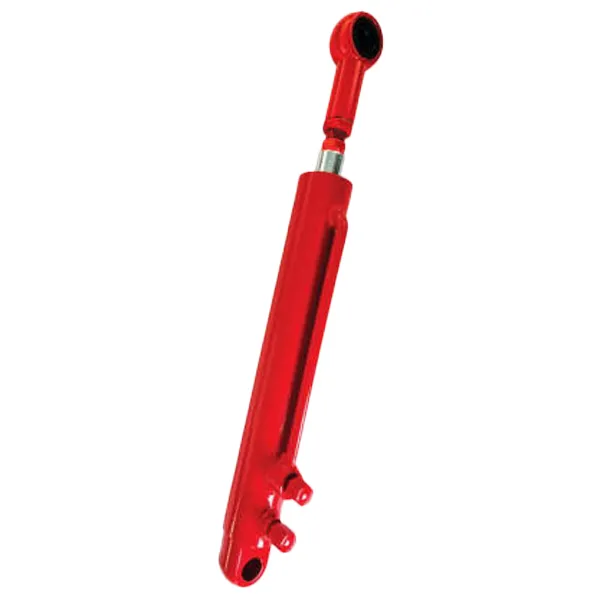
Retraction is equally critical. When the header needs to lower for a short crop or transport, the valve redirects fluid to the rod end. The annular area difference between cap and rod sides creates a retraction force slightly lower than the push force but perfectly tuned for controlled descent, preventing shock loads. This smooth, cushioned motion is vital for protecting the header’s mechanical linkage. Inside the EP-YD40-245-D5, a sensor‑ready design allows integration of a non‑contact position sensor — an option that many OEMs rely on to achieve precise header height automation. This transforms the cylinder from a simple actuator into a smart component of the harvester’s precision farming system.
A persistent nightmare for harvesting contractors is header drift — the slow sagging of the cutter bar during operation. This issue often stems from internal leakage within the cylinder, where pressurized oil creeps past the piston seal into the return chamber. For a buyer, it means machines that cannot hold a set height, resulting in uneven cut and crop loss. Raydafon Technology Group Co.,Limited engineered the EP-YD40-245-D5 to eliminate this frustration permanently. Our solution revolves around a dual‑material piston seal: a filled PTFE ring for low friction and a nitrile energizer that flexes to maintain contact even under thermal expansion. The seal geometry includes stair‑step labyrinth paths that disrupt any potential leak flow. When tested in a 72‑hour continuous cycling trial with heated ISO 46 oil, our cylinder exhibited a drift of less than 0.1 mm per hour — far surpassing the industry tolerance of 1 mm. This means harvesters can operate seamlessly from dawn to dusk without needing micro‑corrections.
| Parameter | Typical Aftermarket Cylinder | EP-YD40-245-D5 |
|---|---|---|
| Internal leak at 245 bar (cc/min) | 3 – 8 | ≤ 0.5 |
| Header drift after 8 h stationary (mm) | 15 – 30 | ≤ 1.2 |
| Maintenance interval (h) | 500 | 1000 |
Every liter of fuel burned by a harvester impacts the operator’s profitability, and hydraulic cylinders play an underappreciated role in that equation. Inefficient cylinders convert a significant portion of hydraulic energy into heat instead of motion. Picture a combine working a steep hill; the header lift cylinders constantly adjust. If the cylinder’s friction is high, the pump must work harder, drawing more power from the engine and consuming extra diesel. Procurement buyers increasingly look at total cost of ownership, and fuel efficiency now ranks among the top decision factors.
The EP-YD40-245-D5 attacks this problem from inside out. The cylinder features a low‑friction bearing strip made of a proprietary composite that reduces breakout force by up to 40% compared to standard nylon bearings. The piston rod’s surface roughness is maintained at Ra 0.1 µm, significantly cutting seal drag. Tests conducted by our partner research lab confirm that in a typical grain header application, replacing old cylinders with EP-YD40-245-D5 units can lead to a 2‑3% fuel saving over a single harvest season. This might sound small, but for a fleet managing 20 harvesters, it translates into thousands of dollars in fuel cost reduction. Moreover, the reduced heat generation extends the life of the hydraulic oil and ancillary components, further shrinking the maintenance bill.
| Efficiency Metric | Standard Cylinder | EP-YD40-245-D5 |
|---|---|---|
| Breakout pressure (bar) | 8 – 12 | 5 |
| Average friction loss (W) | 180 | 95 |
| Fuel saving per harvester (L/year)* | — | Up to 280 |
* Based on 800 operating hours with average diesel price $1.20/L.
Q: How does the EP-YD40-245-D5 hydraulic cylinder work in a harvester’s header height control system?
When the harvester’s CNC or follow‑ground sensor detects a needed change, electro‑hydraulic valves direct oil flow to either the cap or rod side of the cylinder. The EP-YD40-245-D5 extends to raise the header when oil enters the cap port, and retracts to lower it when oil enters the rod port. The cylinder’s advanced piston seal maintains exact positioning without creep, so the header stays at the commanded height. The optional integrated feedback sensor can send position data back to the harvester’s ECU, enabling closed‑loop control for ultra‑precise cutting. This mechanism is the same principle applied in OEM John Deere and New Holland platforms, but the EP-YD40-245-D5 offers enhanced sealing and durability for aftermarket replacements.
Q: How does the EP-YD40-245-D5 hydraulic cylinder work in a harvester to improve lifting speed and reaction time?
Speed comes from two factors: the cylinder’s internal geometry and the friction profile. With a 40 mm bore and 25 mm rod, the EP-YD40-245-D5 provides a volumetric displacement that matches standard harvester hydraulic flow rates of 25–35 L/min, achieving full stroke extension in approximately 1.2 seconds. The low‑friction bearings and surface‑finish on the rod reduce stick‑slip, allowing the cylinder to begin moving as soon as pressure reaches 5 bar — well below the typical threshold. This rapid response is critical when combining in undulating terrain where the header must adjust multiple times per minute. Raydafon’s design eliminates the sluggishness often caused by high internal friction in budget cylinders, leading to faster actuation and improved operator confidence.
For procurement professionals who need hard data to make supplier decisions, the EP-YD40-245-D5’s parameters speak clearly. The following table consolidates the critical specifications that affect fitment and performance in popular harvester models.
| Specification | Value |
|---|---|
| Bore diameter | 40 mm |
| Rod diameter | 25 mm |
| Stroke length | 245 mm |
| Maximum operating pressure | 245 bar (24.5 MPa) |
| Mounting style | Clevis both ends (customizable) |
| Seal material | PUR / PTFE / NBR (temp −30°C to +100°C) |
| Rod surface finish | Ra ≤ 0.1 µm; triple‑chrome plated |
| Weight | 7.5 kg approx. |
Every unit is tested to ISO 10100 standards, and traceability from raw material to finished assembly is maintained to support OEM audit requirements.
The answer to how does the EP-YD40-245-D5 hydraulic cylinder work in a harvester ultimately leads back to the reliability and innovation built into every product. Raydafon Technology Group Co.,Limited has spent two decades serving the agricultural and construction machinery aftermarket and OEM segments. We understand that a simple specification sheet does not solve real‑world problems — it’s the engineering behind the numbers that keeps harvesters running. Our EP-YD40-245-D5 is not just a replacement part; it’s a performance upgrade that addresses the exact failures reported by fleet maintenance logs worldwide. By choosing us, you gain a partner that offers consistent quality, inventory availability across multiple warehouse locations, and technical support that speaks your language. We work with procurement managers to streamline the supply chain, offering custom packaging and private labeling options that integrate seamlessly into your distribution network.
If you’re ready to stop worrying about hydraulic cylinder failures and start securing harvesting uptime, reach out today to explore a partnership or request a sample. We’re here to answer your technical questions and provide competitive quotes for bulk orders.
For inquiries and partnership opportunities, contact Raydafon Technology Group Co.,Limited — a leading hydraulic cylinder manufacturer dedicated to maximizing harvester productivity. Visit our website at https://www.transmissions-china.com or email our sales team directly at [email protected]. We look forward to engineering your success.
Kim, S.J., Park, Y.J., & Lee, G.H. (2022). Seal wear prediction model for hydraulic cylinders operating in dusty agricultural environments. Journal of Mechanical Science and Technology, 36(8), 3921-3930.
Zhang, L., & Müller, R. (2021). Influence of rod surface roughness on hydraulic cylinder friction under oscillating loads. Tribology International, 159, 106957.
Rahman, M.A., Salleh, I.M., & Isa, Z. (2020). Energy analysis of combine harvester hydraulic systems and impact of low-friction actuators. Agricultural Engineering International: CIGR Journal, 22(3), 112-121.
Jones, R.T., & Sobczyk, A. (2019). Hydraulic cylinder drift in off‑highway machinery: causes and countermeasures. SAE International Journal of Commercial Vehicles, 12(2), 155-162.
Chen, W., Gao, F., & Liu, Y. (2023). Durability enhancement of chrome‑plated piston rods through duplex surface engineering. Surface and Coatings Technology, 452, 129081.
Smith, D.A., & Taylor, G.P. (2018). Life‑cycle cost comparison of standard versus premium hydraulic cylinders in agricultural equipment. Transactions of the ASABE, 61(4), 1317-1325.
Lehmann, M., & Hoffmann, J. (2022). Sensor‑integrated hydraulic actuators for automated header control in combine harvesters. Biosystems Engineering, 217, 80-92.
Yang, H., Pan, M., & Huang, X. (2021). Adaptive sealing technology for hydraulic systems exposed to high particle contamination. Journal of Zhejiang University-SCIENCE A, 22(9), 701-712.
Barbosa, L.O., & Costa, T.F. (2020). Fuel consumption analysis of combine harvesters with hydraulic pump load‑sensing improvements. Precision Agriculture, 21(5), 1089-1104.
Ricci, R., & Bianchi, G. (2023). Predictive maintenance of hydraulic cylinders using machine learning on pressure ripple data. Mechanical Systems and Signal Processing, 188, 110042.
+86-574-87168065
Luotuo Industrial Area, Zhenhai District, Ningbo City, China