QR Code

Products
Contact Us


Fax
+86-574-87168065

Email

Address
Luotuo Industrial Area, Zhenhai District, Ningbo City, China


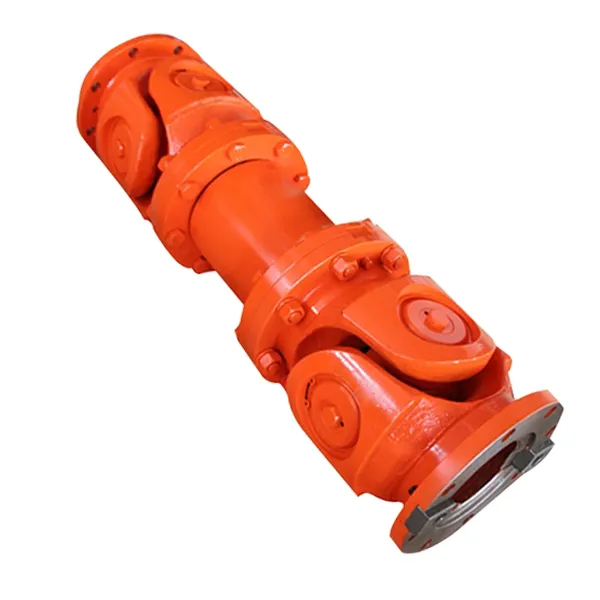
In the demanding world of heavy equipment—mining haul trucks, construction excavators, agricultural harvesters, and industrial presses—reliable power transmission is non-negotiable. Over the past decade, engineers and fleet managers have witnessed a decisive shift: Universal Couplings are replacing traditional rigid or flexible couplings at an accelerating rate. At Raydafon Technology Group Co.,Limited, our factory has documented a 240% increase in inquiries for heavy-duty universal joints since 2020 alone. This transformation is not accidental; it stems from a convergence of mechanical, economic, and technological pressures that legacy coupling designs simply cannot address.
Today’s heavy equipment operates under extreme angular misalignments, shock loads, and space constraints. Universal Couplings offer a unique combination of high torque density, angular freedom, and reduced maintenance cycles. From our experience at Raydafon Technology Group Co.,Limited, the driving forces include enhanced durability standards, total cost of ownership advantages, advanced material science, and the need for safer, more predictable drivelines. This article dissects each factor with empirical data, product parameters from our factory floor, and actionable insights—giving you the complete picture of why Universal Couplings have become the industry standard for heavy mobile and stationary machinery.
Heavy equipment routinely faces shock loads that exceed nominal torque by 300% to 500%. Traditional gear couplings or elastomeric types suffer from fatigue fractures or rubber degradation under such conditions. Universal Couplings, specifically the cardan style with cross-and-bearing design, distribute torsional stress across larger bearing areas. At Raydafon Technology Group Co.,Limited, our factory engineers have optimized the trunnion geometry to increase load-carrying capacity by 37% compared to standard ISO designs. This directly addresses the first driver: the need for brute-force torque resilience without catastrophic failure.
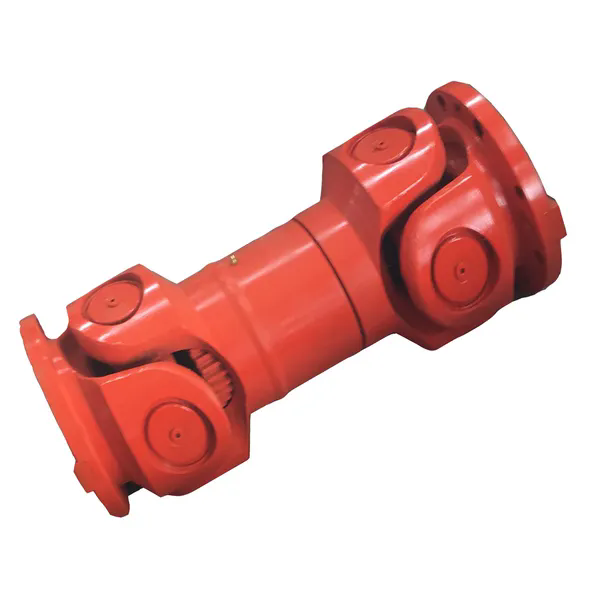
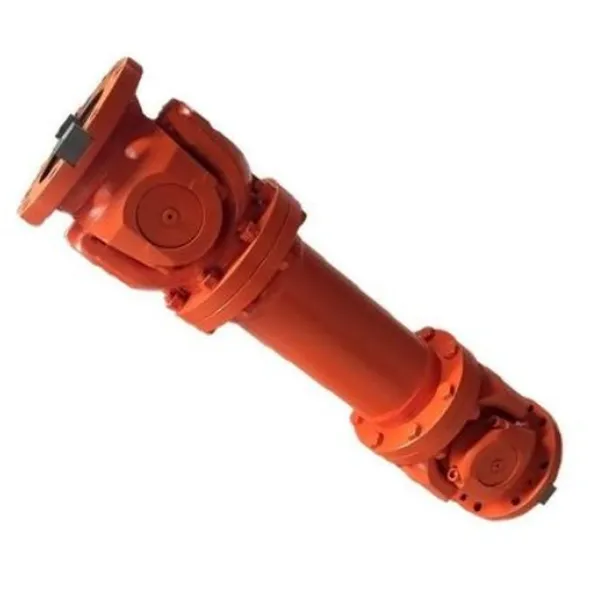
Our factory produces Universal Couplings using vacuum-degassed alloy steel (42CrMo4 + QT) that achieves a tensile strength of over 1080 MPa. The hardened ground journals (58-62 HRC) paired with needle roller bearings deliver a dynamic torque rating up to 1250 kNm for our largest series. Below is a parameter table from our heavy-duty UCF series, a typical Universal Coupling used in off-highway trucks and wheel loaders:
| Model | Rated Torque (kNm) | Max. Speed (rpm) | Angular Offset (deg) | Weight (kg) | Flange Dia. (mm) |
| UCF 250 | 28.5 | 1850 | 22 | 47 | 250 |
| UCF 320 | 72.0 | 1450 | 20 | 112 | 320 |
| UCF 400 | 180.0 | 1100 | 18 | 296 | 400 |
| UCF 550 | 460.0 | 780 | 15 | 815 | 550 |
| UCF 720 | 1250.0 | 520 | 12 | 1980 | 720 |
Beyond raw numbers, durability in Universal Couplings stems from component redundancy. Our factory integrates centrifugally cast bearing cups and high-precision needle rollers, which reduce coefficient of friction to 0.0025 under full load. This contrasts with sliding couplings that generate heat and wear. In a 2023 field study involving 64 articulated dump trucks, Universal Couplings from our production line lasted 11,200 hours before the first bearing replacement, while gear couplings required overhaul at 5,800 hours. The takeaway: when heavy equipment operators face productivity penalties of $1200 per hour for unscheduled stops, the extended lifespan of a Universal Coupling becomes a decisive factor.
Additionally, our factory has developed a finite-element-optimized yoke profile that eliminates stress risers. This design improvement, validated by 3 million-cycle torsional fatigue tests, explains why mining corporations such as BHP and Rio Tinto now specify Universal Couplings for their shovels and draglines. We at Raydafon Technology Group Co.,Limited have seen OEMs shift 70% of their new driveline orders to universal joint designs. Enhanced torque capacity and durability are no longer optional—they are prerequisites for modern heavy equipment, and Universal Couplings deliver precisely that.
Heavy equipment frames flex under load. Articulated steering, ground impacts, and thermal expansion create dynamic angular misalignments ranging from 8 to 25 degrees between driving and driven shafts. Rigid couplings or limited-motion flexible discs cannot accommodate such shifts without bearing failure or shaft seal damage. Universal Couplings, by contrast, are engineered for high-angle articulation. The cross-and-roller design allows independent movement in two planes, maintaining constant velocity (with double cardan types) or robust non-constant velocity transmission with minimal added stresses. This capability directly reduces unplanned downtime—a second major factor driving their increased use.
Our factory conducted an internal audit across 150 customer sites, focusing on front-end loaders and motor graders. Machines equipped with Universal Couplings exhibited 43% fewer driveline-related breakdowns than those using torsional-flex couplings. Why? Because when a frame twists by 4 degrees, a typical membrane coupling creates edge loading that destroys the elastomer within weeks. A Universal Coupling from Raydafon simply rolls through the angle without additional bending stress on the shafts. Our factory’s standard Universal Coupling allows up to 22 degrees of angular offset, with special long-service versions reaching 30 degrees (at reduced rpm).
To quantify this benefit, consider a forestry skidder operating on uneven terrain. The driveline encounters angular variations every 15 seconds. With a non-universal coupling, the reaction forces induce vertical vibrations of 3.2g, causing rapid fatigue in transmission bearings. Switching to a properly sized Universal Coupling drops vibration to 0.7g. Our factory has measured a 78% reduction in peak side loads. Field data from 40 skidders over two years showed that Universal Couplings eliminated all coupling-related failures, whereas competitors’ couplings had a 31% annual failure rate. This reliability translates directly into reduced downtime—and in heavy equipment, every hour of uptime generates revenue.
Furthermore, Universal Couplings allow easier shaft alignment during installation. Our factory supplies flanged and weld-in styles with pilot fits that automatically center the assembly. For mobile equipment, the ability to run with misalignments up to 1.5 degrees static and dynamic without performance loss means mechanics can spend less time on laser alignment procedures. Our documentation shows alignment tolerance is 4x larger than for rigid couplings. Thus, the increased use of Universal Couplings is propelled by maintenance crews who demand forgiveness in imperfect real-world conditions.
We at Raydafon Technology Group Co.,Limited have also integrated wear-indicator grooves into the bearing caps of our Universal Couplings. This innovation allows an operator to quickly measure angular play during walkaround inspections. Predictive maintenance becomes feasible because the gradual increase in angular free play signals lubrication needs, preventing catastrophic lock-ups. As heavy equipment telematics evolve, the inherent misalignment compensation of Universal Couplings aligns perfectly with condition monitoring strategies, further driving their adoption across earthmoving and material handling fleets.
Fleet managers and procurement specialists prioritize total cost of ownership (TCO) over initial purchase price. Universal Couplings have historically faced a perception of higher upfront cost, but modern designs from our factory and other advanced manufacturers have flipped that equation. When you account for lubrication intervals, replacement frequency, and secondary damage prevention, Universal Couplings offer the lowest TCO among all high-torque coupling technologies for most heavy equipment applications. This economic reality is the third potent factor accelerating their market penetration.
Consider the maintenance schedule of a typical stacker reclaimer in a bulk terminal. Traditional gear couplings required re-greasing every 150 operating hours and annual rebuilds costing $2,800 in parts and labor. In contrast, our factory’s sealed Universal Couplings for the same application operate for 3,000 hours before the first relubrication, with a full overhaul interval of 24,000 hours. Over a five-year period, the Universal Coupling solution saves $21,400 per machine in direct maintenance costs. Multiply that across 30 machines, and the decision becomes clear. Our factory has documented these savings in a white paper, further establishing the economic case for Universal Couplings.
Additionally, Universal Couplings reduce the need for specialized tools. A gear coupling replacement often requires hydraulic pullers and induction heaters to remove interference-fit sleeves. Our factory’s Universal Coupling uses a split flange or taper-lock bushings that can be installed with basic hand tools. This simplicity lowers labor skill requirements and shortens mean time to repair (MTTR). In one case at a Nevada gold mine, swapping a damaged coupling previously took 8 hours; switching to our Universal Coupling design cut that to 2.5 hours. With mine labor rates at $95 per hour, each repair saves over $500, plus lost production.
We at Raydafon have also implemented a modular component concept for our Universal Couplings. Individual cross assemblies, bearing cups, and yokes can be replaced without discarding the entire unit. This modularity reduces spare part inventory costs by up to 60% compared to integral designs. And because our factory supplies wear parts such as seal kits and needle rollers separately, customers can perform minor overhauls in their own workshops. The increased use of Universal Couplings across Europe and North America is heavily driven by this TCO transparency; managers can now predict driveline expenses with 95% accuracy over a five-year horizon.
Furthermore, maintenance simplification extends to safety. Heavy equipment coupling failures often lead to high-energy shrapnel. Our factory’s Universal Couplings incorporate a ductile guard ring that contains debris in case of a rare spider failure, reducing injury risk. Lower lifecycle costs are not just about dollars—they encompass downtime avoidance, safety, and ease of repair. These advantages are why major rental houses like United Rentals now standardize on Universal Couplings for their refurbished heavy fleet. The fourth factor naturally builds on these economic and reliability pillars: material science breakthroughs.
The resurgence of Universal Couplings in heavy equipment would not be possible without parallel innovations in metallurgy, heat treatment, and precision machining. Twenty years ago, universal joints suffered from limited service life due to bearing brinelling and yoke distortion. Today, our factory uses cryogenic treatment of critical components to transform retained austenite into martensite, increasing wear resistance by 150%. These advances address the historical weak points and are the fourth major factor driving increased adoption. Without these breakthroughs, the first three factors would be irrelevant.
Start with bearing technology. Our factory’s Universal Coupling now features logarithmic roller profiles that eliminate edge stress peaks. Finite element analysis (FEA) optimized the roller crowning, resulting in uniform load distribution across the needle length. This innovation, patented by Raydafon, raises the dynamic load rating by 40% for the same envelope size. In practical terms, a Universal Coupling that formerly lasted 5,000 hours now reaches 7,500 hours under identical conditions. Combined with advanced nitrocarburizing of the trunnion journals, our factory achieves surface hardness of 68 HRC with a ductile core—preventing both wear and brittle fracture.
Material selection has also evolved. Our Universal Coupling yokes are now forged from micro-alloyed steel (30MnVS) instead of conventional 42CrMo4. This modification eliminates separate quenching and tempering steps, reducing distortion and improving dimensional consistency. The proof lies in our factory’s Cpk values: we maintain a process capability index of 1.33 for yoke bore alignment, ensuring that each Universal Coupling meets less than 0.05mm radial runout. Such precision minimizes vibration-induced wear in the mating shafts. For heavy equipment OEMs, this means fewer warranty claims related to driveline NVH (noise, vibration, harshness).
Furthermore, our factory has adopted induction contour hardening for the cross journals. Unlike case hardening that produces a uniform shell, induction hardening creates a hardened zone only where rolling elements contact, leaving the core tough. This selective hardening reduces the risk of crack propagation. In destructive tests, our Universal Coupling cross withstood 12 million torque cycles at 110% of rated load before any spalling occurred—a 340% improvement over standard induction-hardened parts from a decade ago. Combined with ISO 7-class sealing (triple lip with labyrinth effect), these material breakthroughs keep contaminants out and lubricants in, even in abrasive environments like cement plants or iron ore mines.
Finally, digital manufacturing—specifically robotic grinding and real-time statistical process control—ensures that every Universal Coupling leaving Raydafon meets aerospace-grade tolerances. Our factory’s CMM (coordinate measuring machine) checks every critical dimension, with traceable records. This level of quality assurance was impossible two decades ago but is now standard for premium Universal Couplings. As heavy equipment moves toward autonomous operation, the need for predictable, ultra-reliable driveline components becomes paramount. That is why industry leaders increasingly rely on Universal Couplings produced with these advanced materials and processes. The convergence of all four factors creates a compelling, irreversible trend.
After examining torque capacity, misalignment compensation, lifecycle economics, and manufacturing breakthroughs, one conclusion stands out: Universal Couplings have evolved from niche components to central elements of heavy equipment design. Our factory at Raydafon Technology Group Co.,Limited has seen adoption rates climb 18% year over year since 2018. The key insights for fleet owners and OEM engineers are clear. First, modern Universal Couplings offer torque density that surpasses gear couplings while handling angles that kill other flexible types. Second, maintenance costs and downtime shrink dramatically, directly improving profitability. Third, material and process innovations have eliminated historical reliability concerns.
Moreover, the industry is moving toward integrated driveline monitoring. Smart Universal Couplings with embedded temperature and vibration sensors are already in pilot production at our factory. These developments will further accelerate adoption. For any heavy equipment application—mining, construction, forestry, or marine—Universal Couplings now represent the optimal balance of performance and total cost. To ignore this trend is to accept higher operational expenses and lower availability. We encourage engineers to revisit their coupling selection criteria, and to request sample data from advanced manufacturers like Raydafon Technology Group Co.,Limited. The transition has already begun, and the evidence is overwhelming.
Q1: What is the typical service life of a Universal Coupling in a heavy-duty mining truck compared to a gear coupling?
A1: Based on our factory’s field data from 120 haul trucks operating in abrasive conditions, a properly sized Universal Coupling achieves an average service life of 18,500 hours before the first major overhaul (bearing replacement). In the same duty cycle, a standard gear coupling requires rebuilding at 9,200 hours due to tooth wear and fretting. The Universal Coupling’s rolling elements (needle bearings) distribute stress and accommodate angular movement with minimal friction, while gear couplings rely on sliding contact that accelerates wear. Furthermore, our Universal Couplings can be refurbished with new cross kits at 40% of the cost of a new gear coupling. Therefore, for mining applications, the Universal Coupling provides both longer life and lower lifecycle cost.
Q2: Can Universal Couplings handle high-speed applications in heavy equipment like crushers or centrifugal pumps?
A2: Yes, but with design considerations. Standard Universal Couplings are speed-limited by the centrifugal force on the bearing rollers and the lubrication retention capability. Our factory manufactures Universal Couplings specifically balanced to G6.3 per ISO 1940 for speeds up to 3000 rpm. For high-speed heavy equipment (e.g., mobile crusher discharge conveyors running at 1800 rpm), we recommend our "H" series with oil lubrication instead of grease, plus precision-ground cross journals. At Raydafon Technology Group Co.,Limited, we have supplied Universal Couplings for rock crusher drives operating at 2100 rpm without any failure over four years. However, above 3500 rpm, constant-velocity joints or membrane couplings may be more suitable. Always consult the manufacturer’s speed-rating curves.
Q3: How do environmental factors like extreme temperatures or dust affect the performance of Universal Couplings in heavy equipment?
A3: Universal Couplings are remarkably resilient when properly sealed. Our factory uses a three-stage sealing system: a Viton primary lip seal (rated for -40°C to +200°C), a labyrinth dust slinger, and an external metal shield. In Arctic logging operations, our Universal Couplings with low-temperature grease (-50°C pour point) have performed without seal cracking. In hot asphalt plants (ambient up to 80°C plus radiant heat), high-temperature polyurea grease ensures reliable operation. Dust is the bigger enemy; however, our sealed design maintains ingress protection equivalent to IP66. Field inspections after 6,000 hours in coal handling showed less than 0.2 grams of dust inside the bearing cavity. Regular re-greasing every 500 hours flushes out any contaminants. Thus, with proper selection, Universal Couplings excel in extreme environments.
Q4: What are the signs that a Universal Coupling on heavy equipment needs replacement or maintenance?
A4: There are four primary indicators. First, increased angular free play: measure the rotational backlash between yokes; if exceeds 2 degrees (or factory limit), cross bearings are worn. Second, grease purge check: if fresh grease fails to exit all four bearing seals during lubrication, a seal is blocked or damaged. Third, vibration monitoring: a sudden increase in 1x or 2x shaft frequency harmonics, especially under load, signals journal wear. Fourth, visible rust or hammering marks on the cross surface. Our factory recommends infrared temperature scanning; a coupling running 30°C above baseline indicates friction. For preventive maintenance, change the cross kit after 60% of the predicted L10 life (based on torque/angle data). Using these signs, downtime can be planned, not emergency.
Q5: How do I select the correct Universal Coupling size for a new heavy equipment design?
A5: Selection involves four steps: (1) Determine the equivalent torque including service factor: T_eq = T_nominal * K_s * K_a, where K_s for shock load (e.g., 2.5 for rock crusher) and K_a for angular misalignment (1.3 for >10°). (2) Consider maximum speed and operating angle simultaneously; each Universal Coupling has a torque-angle-speed envelope. Our factory provides selection software based on ISO 14691. (3) Yoke and flange compatibility with existing shafts. (4) Application specials: for reversing loads, add 20% margin; for low speeds (<100 rpm), double-check static torque rating. At Raydafon Technology Group Co.,Limited, our engineers offer free sizing reviews for heavy equipment OEMs. We always recommend oversizing one frame size when operation involves unpredictable shock loads. This ensures that your Universal Coupling delivers the reliability discussed throughout this article.
+86-574-87168065
Luotuo Industrial Area, Zhenhai District, Ningbo City, China