QR Code

Products
Contact Us


Fax
+86-574-87168065

Email

Address
Luotuo Industrial Area, Zhenhai District, Ningbo City, China


In modern agricultural operations, machinery reliability directly determines productivity, operating costs, and long term return on investment. Among all power transmission components, the Agricultural Gearbox plays a decisive role in converting engine output into stable, usable torque for field equipment. Understanding what factors affect its service life under real working conditions is essential for equipment manufacturers, distributors, and end users alike.
Based on decades of industry experience and continuous manufacturing practice, Raydafon Technology Group Co., Limited has accumulated extensive insights into how design, materials, lubrication, workload, and environmental conditions interact to influence gearbox durability. Our engineering philosophy focuses on balancing strength, efficiency, and adaptability, ensuring every Agricultural Gearbox performs reliably throughout its intended lifecycle. In this article, we explore the critical factors that determine service life and explain how proper selection and usage can significantly extend operational longevity.
Gearbox design is the core determinant of how long an Agricultural Gearbox can operate reliably under real working conditions. Unlike laboratory environments, agricultural fields present highly variable loads, unpredictable shocks, and long continuous operating cycles. A gearbox that is not engineered with these realities in mind will experience accelerated wear, reduced efficiency, and ultimately premature failure. For this reason, design is not simply about transmitting power, but about managing stress, heat, vibration, and fatigue over thousands of working hours.
At Raydafon Technology Group Co., Limited, gearbox design begins with a deep understanding of agricultural applications. Our engineers analyze how torque fluctuates during soil engagement, how impact loads occur when blades encounter stones or compacted ground, and how long duty cycles affect internal components. This application driven approach ensures that each Agricultural Gearbox is structurally prepared for its real operating environment rather than idealized conditions.
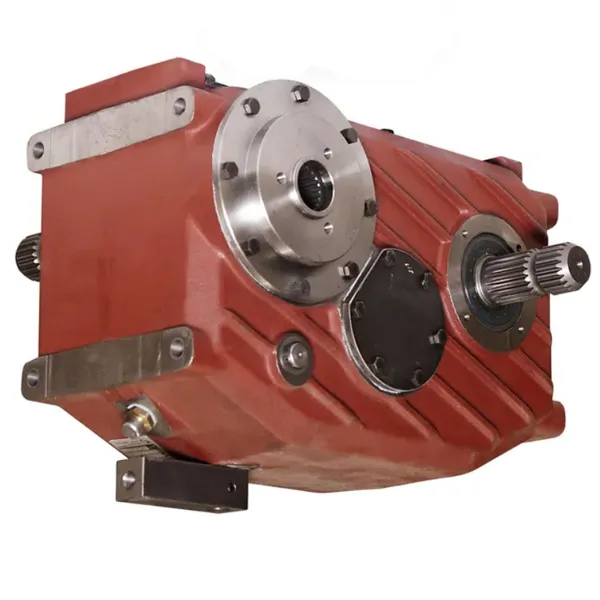
The internal layout of shafts, gears, and bearings directly affects how loads are distributed throughout the gearbox. Poor layout design can lead to concentrated stress points, which accelerate gear tooth fatigue and bearing wear. A well designed Agricultural Gearbox distributes forces evenly, reducing peak stresses and extending component life.
Our factory places strong emphasis on maintaining precise alignment during both design and assembly. Even minor deviations can increase friction and noise, which are early indicators of long term reliability issues. By controlling alignment at every stage, our designs minimize internal resistance and slow down wear progression.
Gear ratio selection has a profound impact on service life. An improperly chosen ratio can force the Agricultural Gearbox to operate near its maximum stress limit for extended periods. This results in excessive heat generation, lubricant degradation, and increased risk of gear tooth failure.
At Raydafon Technology Group Co., Limited, gear ratios are selected based on both engine characteristics and implement resistance. This ensures that torque multiplication is sufficient for task requirements without overstressing internal components. Proper ratio design allows the gearbox to operate within an optimal efficiency range, reducing cumulative fatigue over time.
The gearbox housing is more than a protective shell. It plays a critical role in maintaining internal alignment, dissipating heat, and resisting external forces. In agricultural environments, housings are exposed to vibration, impact, and contamination, all of which can shorten service life if not properly addressed.
Our factory designs housings with sufficient wall thickness and reinforced structures to resist deformation. A rigid housing ensures that gears remain properly meshed even under heavy loads. Additionally, housing geometry is optimized to enhance heat dissipation, preventing thermal buildup that accelerates lubricant breakdown.
These design features allow the Agricultural Gearbox to maintain stable internal conditions, which is essential for long term durability.
Bearings are among the most critical components in any gearbox, as they support rotating shafts and absorb dynamic loads. Incorrect bearing selection can drastically reduce service life, even if gears and housing are well designed. Bearings must be chosen based on load type, speed, and environmental exposure.
Raydafon Technology Group Co., Limited selects bearing configurations that balance load capacity and rotational efficiency. Sealed bearing systems are commonly used to prevent contamination, while tapered or deep groove designs are applied depending on axial and radial load requirements. This ensures consistent performance throughout the gearbox lifespan.
Heat is one of the primary enemies of mechanical systems. Excessive temperature accelerates wear, reduces lubricant effectiveness, and weakens material properties. An Agricultural Gearbox that lacks effective thermal management will suffer reduced service life even under moderate loads. Our design philosophy integrates thermal considerations from the earliest stages. Oil flow paths are engineered to carry heat away from high friction zones, while housing surfaces are shaped to promote natural convection. These features work together to maintain stable operating temperatures during long working days.
By controlling heat generation and dissipation, our factory ensures that internal components operate within safe temperature ranges, preserving material strength and lubricant performance.
Agricultural machinery varies widely in function, from soil preparation to harvesting. A rigid, one size fits all design often results in mismatched performance and reduced service life. Design flexibility allows an Agricultural Gearbox to be adapted to different implements without compromising durability. Raydafon adopts modular design concepts, enabling variations in input shafts, output configurations, and mounting interfaces. This flexibility ensures that the gearbox operates under suitable conditions regardless of application, reducing unnecessary stress and extending service life.
The durability of an Agricultural Gearbox is fundamentally determined by the materials used and the precision of the manufacturing processes behind them. Even the most advanced gearbox design cannot achieve long service life if material selection and production control are insufficient. In agricultural working conditions, components are subjected to continuous torque, cyclic fatigue, vibration, and environmental exposure. Only carefully engineered materials combined with stable manufacturing processes can ensure consistent performance over extended periods. At Raydafon Technology Group Co., Limited, material engineering and manufacturing discipline are treated as strategic priorities. Our factory integrates metallurgical analysis, process control, and quality verification to ensure that each Agricultural Gearbox delivers the strength, wear resistance, and reliability required for demanding field operations.
Material selection directly affects resistance to wear, fatigue, and deformation. Gears, shafts, bearings, and housings each face different mechanical and environmental stresses, making it essential to match materials to functional requirements. An Agricultural Gearbox built with inappropriate materials may perform well initially but deteriorate rapidly under real working loads.
For gears, surface hardness and core toughness must be carefully balanced. Excessive hardness can lead to brittle fractures, while insufficient hardness accelerates wear. Our factory selects alloy steels that respond well to controlled heat treatment, achieving a hardened surface capable of resisting abrasion while maintaining a tough core that absorbs shock loads.
This tailored approach ensures that every component within the Agricultural Gearbox contributes to long term durability rather than becoming a weak link.
Heat treatment is a decisive factor in enhancing material properties. Without proper heat treatment, even high quality steel cannot achieve the mechanical characteristics required for agricultural use. Processes such as carburizing, quenching, and tempering transform raw materials into components capable of withstanding repeated stress cycles.
Raydafon Technology Group Co., Limited applies heat treatment protocols that are specifically calibrated for gearbox components. For gears, carburizing creates a hardened surface layer that resists pitting and wear, while controlled quenching and tempering improve fatigue strength. Shafts undergo tailored treatment to ensure torsional stability without excessive brittleness.
The benefits of controlled heat treatment include:
Through strict temperature and time control, our factory ensures repeatable results across production batches, providing consistent quality for every Agricultural Gearbox.
Precision machining is essential for accurate gear meshing and load distribution. Even small deviations in tooth profile or shaft alignment can cause uneven contact, leading to localized stress and accelerated wear. Over time, these imperfections compound, significantly reducing service life.
Our manufacturing process emphasizes CNC machining with tight tolerance control. Gear cutting, grinding, and finishing are performed to ensure smooth contact surfaces and correct tooth geometry. This precision reduces friction, noise, and vibration, all of which are indicators of internal stress.
By maintaining machining accuracy, Raydafon Technology Group Co., Limited ensures that each Agricultural Gearbox operates smoothly from initial use through extended service periods.
Quality control bridges the gap between design intent and real world performance. Without rigorous inspection and testing, defects can remain hidden until failure occurs in the field. Effective quality control identifies potential issues early, protecting both equipment and user investment.
Our factory employs multi stage inspection procedures, including material verification, dimensional checks, and functional testing. Each Agricultural Gearbox is evaluated for gear backlash, bearing preload, and noise levels before shipment. These checks ensure that internal components interact as intended.
| Inspection Stage | Quality Focus |
| Material Inspection | Chemical composition and hardness |
| Machining Inspection | Dimensional accuracy and surface finish |
| Assembly Inspection | Alignment and torque consistency |
| Performance Testing | Noise, vibration, and temperature rise |
These procedures help ensure that each Agricultural Gearbox meets durability expectations before entering service.
Even with high quality materials and precise machining, improper assembly can undermine durability. Assembly determines bearing preload, gear backlash, and sealing effectiveness, all of which influence service life. Incorrect preload or misalignment can generate excessive heat and accelerate wear. Raydafon Technology Group Co., Limited emphasizes standardized assembly procedures supported by skilled technicians. Our factory uses calibrated tools and documented processes to ensure consistency across production volumes. This disciplined approach minimizes human error and maintains design integrity.
By integrating material science, manufacturing precision, and disciplined assembly, our factory delivers Agricultural Gearbox solutions that maintain durability throughout demanding agricultural service life.
Load conditions and real application scenarios are among the most decisive factors affecting the service life of an Agricultural Gearbox. Unlike standardized industrial equipment, agricultural machinery operates in highly variable and often unpredictable environments. Soil resistance changes constantly, crop density varies, and external impacts such as stones or uneven terrain introduce sudden torque fluctuations. These realities mean that the actual working load is rarely stable, making proper load consideration essential for long term gearbox durability.
At Raydafon Technology Group Co., Limited, load analysis is treated as a core engineering task rather than an afterthought. Our teams study how different implements interact with soil and crops, how torque peaks develop during operation, and how continuous versus intermittent workloads affect internal gearbox components. This approach allows our factory to match each Agricultural Gearbox to its true working conditions, significantly extending service life.
Rated load is the theoretical maximum load a gearbox can handle under defined conditions. Actual load, however, often exceeds these values in agricultural operations. Factors such as operator behavior, field conditions, and implement design can push an Agricultural Gearbox beyond its nominal limits, even if only intermittently. Repeated exposure to overload conditions accelerates fatigue in gears, shafts, and bearings.
Common reasons for load mismatch include:
Our factory emphasizes realistic load margins in gearbox design, ensuring that short term overloads do not immediately compromise structural integrity. By incorporating appropriate safety factors, Raydafon Technology Group Co., Limited delivers Agricultural Gearbox solutions that tolerate real world deviations without sacrificing longevity.
Shock loads are sudden spikes in torque caused by impacts or abrupt resistance changes. In agricultural environments, these events are unavoidable. When blades strike stones, when harvesting equipment encounters dense crop clusters, or when machinery starts under load, shock forces propagate through the drivetrain.
Unlike steady loads, shock loads concentrate stress within a very short time frame. Gear teeth experience momentary overload, which can cause micro cracks or surface fatigue. Over time, these microscopic defects grow, leading to pitting, spalling, or complete tooth failure.
Raydafon Technology Group Co., Limited addresses shock loads through gear profile optimization and robust shaft design. Our Agricultural Gearbox configurations distribute impact forces more evenly, reducing localized stress and slowing fatigue accumulation.
Duty cycle refers to how long and how frequently a gearbox operates under load. Agricultural equipment often runs for extended hours during peak seasons, with minimal cooling intervals. Continuous operation generates heat and accelerates lubricant degradation, both of which contribute to wear. A gearbox designed for intermittent use may fail prematurely if subjected to continuous duty. Heat buildup reduces oil viscosity, weakening the protective film between metal surfaces. Bearings and gears then experience increased friction, leading to accelerated wear.
Our factory evaluates duty cycle requirements during product selection and customization. By designing Agricultural Gearbox solutions that match expected working hours, Raydafon Technology Group Co., Limited ensures stable performance throughout extended operating periods.
Different agricultural implements impose distinct load profiles on the gearbox. Understanding these differences is essential for selecting the right Agricultural Gearbox. Rotary tillers generate cyclic loads as blades repeatedly enter and exit soil. Harvesters introduce uneven resistance depending on crop density. Seeders typically apply lighter but continuous loads.
Each scenario requires specific gearbox characteristics:
Raydafon Technology Group Co., Limited adapts gearbox specifications based on implement type, ensuring that load characteristics align with internal design limits. This application specific matching reduces unnecessary stress and prolongs service life.
Operator practices significantly influence gearbox loading, even when equipment specifications are appropriate. Aggressive operation, improper speed selection, and poor maintenance habits can all increase mechanical stress. Sudden PTO engagement at high engine speed, for example, introduces severe shock loads that shorten gearbox life. Our experience shows that proper operational guidance can greatly reduce failure rates. By educating users on correct operating procedures and load management, Raydafon Technology Group Co., Limited helps customers maximize the lifespan of each Agricultural Gearbox.
Load matching means ensuring that the gearbox capacity aligns with the actual demands of the application. Undersized gearboxes experience chronic overload, while oversized units may operate inefficiently. Proper matching optimizes stress distribution and energy efficiency, directly contributing to extended service life. At Raydafon Technology Group Co., Limited, our factory supports customers in selecting suitable Agricultural Gearbox models based on tractor power, implement type, and operating environment. This collaborative approach reduces premature failures and improves overall system reliability.
Lubrication and maintenance are decisive factors in determining how long an Agricultural Gearbox can perform reliably in demanding working conditions. Even a well designed gearbox manufactured from high quality materials will experience premature wear if lubrication practices are inadequate or maintenance is neglected. In agricultural environments, gearboxes are exposed to heavy loads, dust, moisture, and temperature fluctuations, all of which place additional demands on lubrication systems and routine upkeep.
At Raydafon Technology Group Co., Limited, lubrication strategy is considered an integral part of product engineering rather than a secondary concern. Our factory evaluates lubricant type, oil capacity, circulation behavior, and sealing effectiveness to ensure that each Agricultural Gearbox maintains stable internal conditions throughout its service life.
Lubrication serves multiple critical functions inside a gearbox. It reduces friction between meshing gear teeth, minimizes wear on bearings, dissipates heat generated during operation, and protects internal surfaces from corrosion. Without an effective lubricant film, metal to metal contact occurs, dramatically accelerating component degradation.
In agricultural applications, load levels often fluctuate, causing variable contact pressures on gear surfaces. Proper lubrication ensures that even under peak loads, a protective oil film remains intact. This film absorbs shock energy and prevents surface pitting, which is one of the most common early failure modes in an Agricultural Gearbox.
By maintaining consistent lubrication, our factory ensures that internal components operate smoothly and efficiently over extended periods.
Not all lubricants perform equally under agricultural conditions. Viscosity, additive composition, and thermal stability must align with gearbox design and operating environment. Using an incorrect lubricant can lead to insufficient film strength, excessive heat generation, or rapid oil degradation. Raydafon Technology Group Co., Limited specifies lubricant grades based on operating temperature range, rotational speed, and load characteristics. High quality gear oils with appropriate extreme pressure additives are commonly recommended for Agricultural Gearbox applications, ensuring stable performance even under high torque and shock loads.
Our experience shows that correct lubricant selection alone can significantly extend gearbox service intervals and overall lifespan.
Contamination is one of the most damaging factors affecting lubrication effectiveness. Dust, soil particles, moisture, and metal debris can enter the gearbox through seals or during maintenance. Once inside, contaminants act as abrasives, accelerating wear on gears and bearings.
Our factory designs sealing systems that limit contaminant ingress while allowing for thermal expansion and pressure balance. In addition, regular oil inspection and replacement are essential practices for maintaining cleanliness. Removing contaminated oil prevents abrasive particles from circulating and damaging internal surfaces.
Clean lubrication results in:
Maintenance transforms lubrication from a static condition into a dynamic protective system. Regular inspections allow early detection of potential issues such as oil leakage, abnormal noise, or temperature rise. Addressing these signs promptly prevents minor problems from developing into major failures.
Raydafon Technology Group Co., Limited encourages structured maintenance schedules tailored to actual working conditions. Our factory provides guidance on oil change intervals, inspection points, and operating limits, enabling users to maintain gearbox health proactively.
Consistent maintenance not only extends the service life of an Agricultural Gearbox but also improves operational safety and efficiency.
Seals play a critical role in preserving lubrication effectiveness. They prevent oil leakage and block external contaminants from entering the gearbox. In agricultural settings, seals must withstand dust, mud, moisture, and mechanical vibration. Our factory selects sealing materials and designs that balance flexibility and durability. Effective sealing ensures that lubricant remains inside the gearbox at the correct level and condition, maintaining continuous protection for internal components. By integrating robust sealing solutions, Raydafon Technology Group Co., Limited helps ensure that lubrication systems function as intended throughout the entire service life of each Agricultural Gearbox.
Preventive maintenance focuses on avoiding failures rather than reacting to them. By maintaining proper lubrication and monitoring gearbox condition, users can schedule service activities during planned downtime rather than experiencing unexpected breakdowns during critical agricultural seasons. This approach not only protects the gearbox but also improves overall operational efficiency. Equipment availability increases, repair costs decrease, and the Agricultural Gearbox delivers consistent performance year after year.
Environmental conditions are often the most underestimated contributors to the service life of an Agricultural Gearbox. While design, materials, and lubrication establish the mechanical foundation, the surrounding environment ultimately determines how quickly those advantages are consumed. Agricultural operations expose gearboxes to dust, moisture, temperature extremes, chemical agents, and long periods of inactivity, all of which interact with internal components in complex ways.
At Raydafon Technology Group Co., Limited, environmental adaptability is considered a core performance requirement rather than a secondary feature. Our factory evaluates real field environments across different regions and farming practices, ensuring that each Agricultural Gearbox can maintain stability and reliability despite harsh external conditions.
Dust is one of the most aggressive environmental threats in agricultural settings. Fine soil particles, sand, and organic debris are constantly present during tilling, harvesting, and transport operations. Once these particles enter the gearbox, they mix with lubricant and form an abrasive compound that accelerates wear on gears and bearings.
Even small amounts of contamination can disrupt the lubrication film, increasing friction and generating heat. Over time, abrasive wear leads to increased backlash, noise, and vibration, all of which signal declining gearbox health.
Our factory addresses this challenge through reinforced sealing systems and housing designs that limit dust ingress. By reducing contamination exposure, Raydafon Technology Group Co., Limited helps preserve internal component integrity and extend the effective life of each Agricultural Gearbox.
Moisture exposure is unavoidable in agriculture. Rain, irrigation, humidity, and condensation all introduce water into the operating environment. When moisture enters a gearbox, it compromises lubrication quality and promotes corrosion on metal surfaces.
Water contamination reduces oil viscosity and weakens its load carrying capacity. Bearings and gear teeth become vulnerable to rust, which creates surface irregularities that accelerate fatigue. In cold climates, moisture can also freeze, causing seal damage and internal stress.
Raydafon Technology Group Co., Limited designs Agricultural Gearbox housings and seals to resist moisture ingress while allowing pressure equalization. This balance helps maintain lubrication quality even under humid or wet working conditions.
Temperature variations place significant stress on gearbox components. In hot environments, elevated operating temperatures accelerate lubricant oxidation and reduce film strength. In cold conditions, lubricants thicken, increasing startup resistance and placing additional load on gears and bearings.
Agricultural equipment often experiences both extremes within a single year. Gearboxes must therefore perform reliably across wide temperature ranges without compromising internal clearances or material properties.
Key temperature related effects include:
Our factory considers regional climate conditions during gearbox specification and lubricant recommendation. By ensuring thermal compatibility, Raydafon Technology Group Co., Limited enables consistent Agricultural Gearbox performance regardless of seasonal temperature changes.
Agricultural environments frequently involve exposure to fertilizers, pesticides, and soil treatments. These chemicals can attack external surfaces, seals, and coatings, gradually weakening protective barriers. Once seals degrade, contaminants and moisture gain easier access to the gearbox interior.
Chemical exposure may not cause immediate failure, but its cumulative effect shortens service life by undermining sealing performance and promoting corrosion. This makes material compatibility and surface protection essential considerations in gearbox design.
Raydafon Technology Group Co., Limited incorporates corrosion resistant coatings and chemically stable sealing materials to mitigate these risks, ensuring Agricultural Gearbox durability in chemically active environments.
Many agricultural machines operate seasonally, spending long periods in storage between working cycles. During inactivity, environmental exposure continues, often without the protective benefits of circulating lubricant. Condensation can form inside the gearbox, leading to corrosion and lubricant degradation.
Improper storage conditions accelerate internal damage before the next operating season begins. Gearboxes left with contaminated or degraded oil are particularly vulnerable to surface corrosion and bearing damage.
Best practices for extending service life during storage include:
Our factory provides guidance on off season care, helping users protect their Agricultural Gearbox investment during idle periods.
Environmental factors rarely act alone. Dust, moisture, temperature, and chemical exposure often combine, amplifying their impact on gearbox components. A design that performs well in controlled conditions may fail prematurely if environmental adaptation is insufficient. Raydafon Technology Group Co., Limited approaches environmental challenges holistically. By integrating sealing technology, material protection, and maintenance guidance, our factory ensures that each Agricultural Gearbox can withstand the cumulative effects of real agricultural environments.
The service life of an Agricultural Gearbox is the result of multiple interconnected factors, including design integrity, material quality, load management, lubrication discipline, and environmental adaptation. By understanding and controlling these variables, users can significantly extend equipment lifespan and reduce operating costs. Raydafon Technology Group Co., Limited integrates engineering expertise, manufacturing precision, and application knowledge to deliver gearbox solutions designed for real world agricultural demands. Our commitment to quality ensures stable performance, reduced downtime, and long term value for global customers.
Q1: What is the most common cause of premature Agricultural Gearbox failure?
The most common cause is continuous operation under overload conditions, which accelerates gear and bearing fatigue beyond design limits.
Q2: How does lubrication choice affect gearbox service life?
Using the correct oil viscosity and maintaining cleanliness reduces friction and heat, directly extending gear and bearing lifespan.
Q3: Why is material heat treatment important for durability?
Heat treatment improves surface hardness and core toughness, allowing gears to resist wear while absorbing operational shocks.
Q4: Can environmental exposure significantly reduce gearbox lifespan?
Yes, dust, moisture, and chemical exposure can degrade lubrication and cause corrosion if sealing and maintenance are inadequate.
Q5: How can users maximize gearbox service life in daily operation?
By matching gearbox capacity to application load, following maintenance schedules, and monitoring operating conditions regularly.
+86-574-87168065
Luotuo Industrial Area, Zhenhai District, Ningbo City, China