QR Code

Products
Contact Us


Fax
+86-574-87168065

Email

Address
Luotuo Industrial Area, Zhenhai District, Ningbo City, China


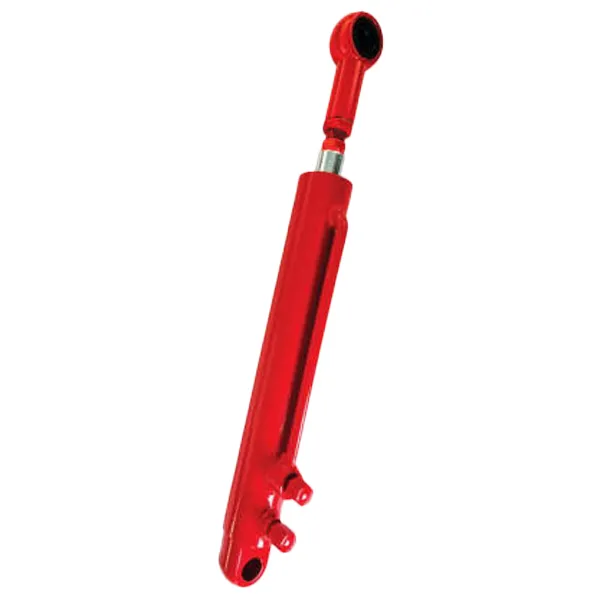
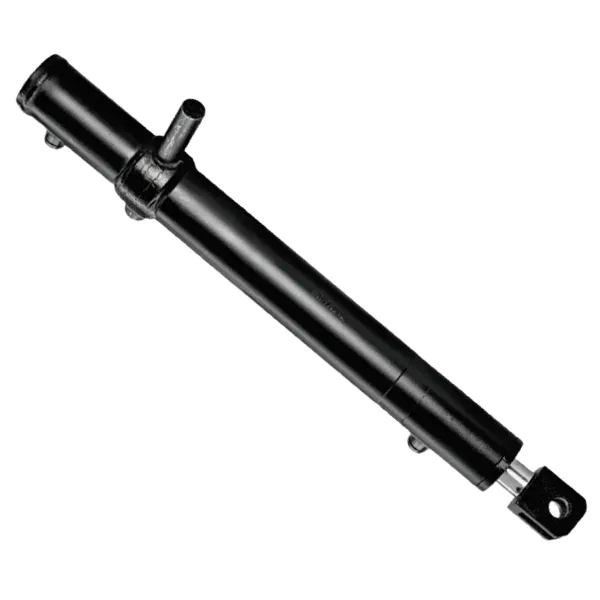
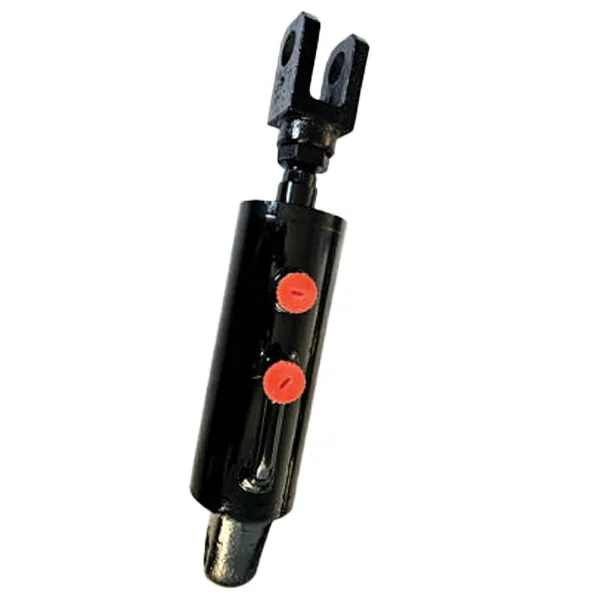
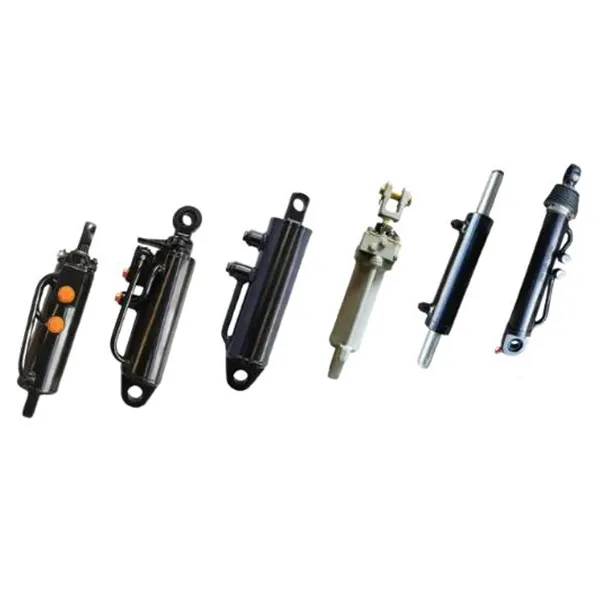
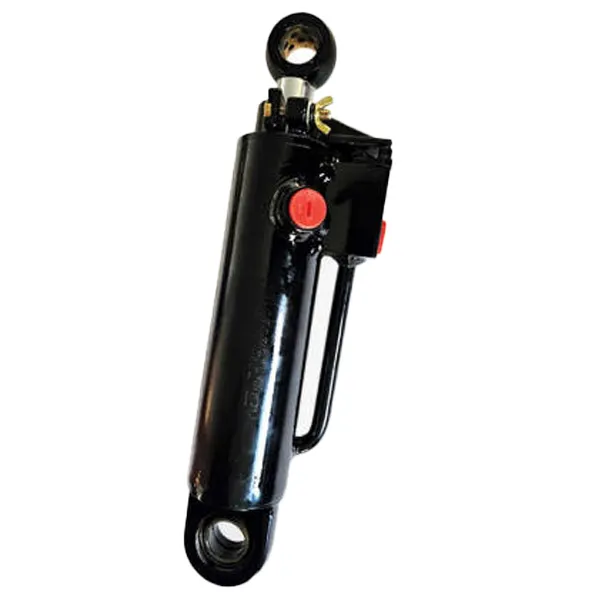
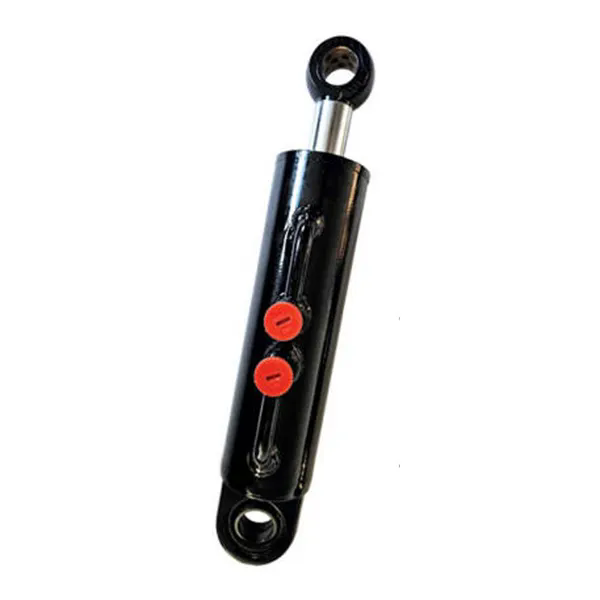
In the field of agricultural machinery, particularly in harvesting equipment, the hydraulic cylinder is a fundamental component. It converts hydraulic fluid pressure into linear force and motion, enabling the control of various functions, from lifting header assemblies to adjusting reel positions. Among the most common types of hydraulic cylinders used in harvesters are the single acting and double acting cylinders. The choice between these two types is not arbitrary; it is a critical engineering decision that affects the machine's performance, efficiency, and cost.
The fundamental difference between a single acting and a double acting Harvester Hydraulic Cylinder lies in the way hydraulic fluid is applied to generate motion. A single acting cylinder uses hydraulic pressure to extend the piston in one direction, with the return stroke accomplished by an external force, typically gravity or a spring. A double acting cylinder uses hydraulic pressure to extend and retract the piston, providing powered motion in both directions. This core difference drives variations in design, application, and performance characteristics. This article provides a systematic technical analysis of both cylinder types, examining their operating principles, construction, application areas, and selection criteria. The aim is to equip engineers, technicians, and procurement professionals with a clear understanding of the advantages and limitations of each type.
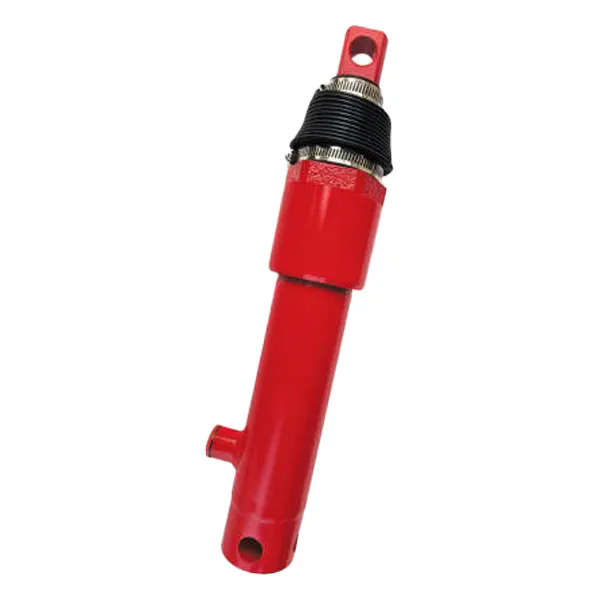
A hydraulic cylinder is a mechanical actuator that converts hydraulic energy (fluid pressure) into mechanical energy (linear force and motion). The core principle is the application of pressurized hydraulic fluid to a piston within a cylinder barrel. The pressure acts on the piston area, generating a force that moves the piston and the attached rod. The direction of motion is determined by which side of the piston the fluid is applied to. The single acting and double acting Harvester Hydraulic Cylinder differ fundamentally in the way the fluid is applied to control motion.
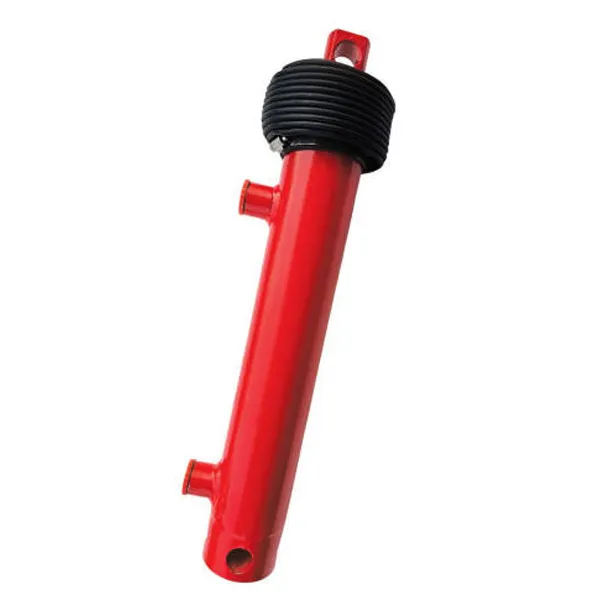
Single Acting Cylinder: A single acting cylinder has one port for the hydraulic fluid. The fluid is applied to only one side of the piston (typically the bottom side). The pressure pushes the piston and rod in one direction, extending the cylinder. The return stroke (retraction of the piston) is achieved by an external force. The most common external forces are gravity (the weight of the load pulling the piston back) or a mechanical spring. Single acting cylinders are simple in design and are used in applications where the load itself provides the return force. In a harvester, a single acting Harvester Hydraulic Cylinder might be used for tasks such as lifting a heavy component, where the weight of the component provides the return force when the hydraulic pressure is released.
Double Acting Cylinder: A double acting cylinder has two ports, one on each side of the piston. Hydraulic fluid can be supplied to either port to generate motion in either direction. To extend the cylinder, fluid is supplied to the bottom port, pushing the piston up. To retract the cylinder, fluid is supplied to the top port, pushing the piston down. This provides powered motion in both directions. The force generated in each direction is not necessarily equal, as the effective area of the piston is different on the two sides (the rod side has a smaller effective area due to the rod cross-section). Double acting cylinders offer more precise control and are used where force is required in both directions. In a harvester, double acting Harvester Hydraulic Cylinder are used for functions such as controlling the height of a reel, angling a header, or adjusting the position of a cutter bar, where powered motion is required in both directions.
The following table provides a side-by-side comparison of the operating principles.
| Feature | Single Acting Cylinder | Double Acting Cylinder |
| Number of Ports | One | Two |
| Extension Force | Hydraulic pressure on piston area | Hydraulic pressure on piston area (bottom port) |
| Retraction Force | External (gravity, spring) | Hydraulic pressure on rod side (top port) |
| Control | Simple on/off control | Precise bidirectional control |
At Raydafon Technology Group Co.,Limited, we manufacture both single acting and double acting Harvester Hydraulic Cylinder to meet the diverse needs of the agricultural sector. Our engineering team can provide expert guidance on the selection of the appropriate cylinder type for a specific application.
The construction of a single acting and double acting Harvester Hydraulic Cylinder reflects their different operating principles. The core components of both cylinder types are similar: a cylinder barrel, a piston, a rod, seals, and end caps. However, there are significant differences in the details of the construction, which affect their performance and reliability. The primary differences are in the piston and the piston sealing system.
Piston: In a single acting cylinder, the piston is typically a simple disc-like component that is attached to the rod. The piston is used to transmit the force from the hydraulic fluid to the rod. In a double acting cylinder, the piston is a more complex component. It features seals on both sides to prevent fluid leakage between the two chambers. The piston must be able to withstand pressure from both sides, which requires a robust design. The piston in a double acting cylinder often includes a guide ring (or wear ring) to maintain alignment and prevent metal-to-metal contact between the piston and the cylinder bore.
Seals: The sealing system is critical to the performance of any hydraulic cylinder. In a single acting cylinder, the primary sealing requirement is to prevent fluid leakage from the pressurized side of the piston. In a double acting cylinder, seals are required on both sides of the piston to prevent leakage between the two chambers. This is a more demanding sealing requirement, as it requires a seal that can withstand pressure from both directions. The piston seal in a double acting cylinder is often a double-acting seal, such as a U-cup seal or a polyurethane seal.
Rod Seals: Both cylinder types have rod seals to prevent fluid leakage along the rod. However, the rod seal in a double acting cylinder must also be able to withstand the higher pressures that can occur on the rod side of the piston. This may require a more robust rod seal design.
Cushioning: Double acting cylinders often include cushioning features at the end of the stroke to reduce impact forces and noise. This is particularly important in applications where the cylinder is moving heavy loads at high speeds. Cushioning is less common in single acting cylinders, as the return stroke is typically controlled by an external force.
The following table provides a comparison of the construction features of single acting and double acting Harvester Hydraulic Cylinder.
| Component | Single Acting Cylinder | Double Acting Cylinder |
| Piston Design | Simple disc, one-sided seals | Complex, seals on both sides, guide ring |
| Piston Seal | Single-acting seal | Double-acting seal (U-cup, polyurethane) |
| Rod Seal | Standard rod seal | Robust rod seal for higher pressures |
| Cushioning | Typically not present | Often includes end-of-stroke cushioning |
| Breather Port | Yes, to allow air to enter/exit | No, sealed system |
At Raydafon Technology Group Co.,Limited, we manufacture Harvester Hydraulic Cylinder using high-quality materials and precise manufacturing processes. Our cylinders are designed to meet the demanding requirements of agricultural applications, providing reliable and long-lasting performance.
The choice between a single acting and a double acting Harvester Hydraulic Cylinder is heavily influenced by the specific application within the harvester. Each type of cylinder is suited to particular functions based on the required motion, force profile, and control requirements. A Harvester Hydraulic Cylinder is used in a wide range of functions on the machine, from lifting heavy components to controlling intricate movements.
Single Acting Cylinder Applications: Single acting cylinders are typically used in applications where the load can provide the return force. In a harvester, this often includes lifting operations where the weight of the component provides the return force. For example, a single acting cylinder might be used to lift the header (cutterbar) of a combine harvester. When hydraulic pressure is applied, the cylinder extends, lifting the header. When the pressure is released, the weight of the header pushes the cylinder back down. Similarly, single acting cylinders are used for reel height adjustment on some harvesters, where the reel's weight provides the return force.
Double Acting Cylinder Applications: Double acting cylinders are used in applications that require powered motion in both directions. In a harvester, this includes functions such as controlling the angle of the header, adjusting the position of a reel, and operating the unloading auger. For example, a double acting Harvester Hydraulic Cylinder might be used to tilt the header to follow the contour of the ground. The cylinder can be extended or retracted to adjust the header angle. Similarly, a double acting cylinder is often used to control the position of an unloading auger, allowing it to be extended or retracted as needed. The ability to provide powered motion in both directions is essential for precise control of these functions.
The table below provides a summary of typical applications for each cylinder type in a harvester.
| Cylinder Type | Typical Applications in a Harvester | Reason |
| Single Acting | Header lift, reel height adjustment (weight return) | Load provides return force; simple and cost-effective |
| Double Acting | Header tilt, reel position, auger position, knife drive (some) | Powered motion required in both directions; precise control |
At Raydafon, we have extensive experience in manufacturing Harvester Hydraulic Cylinder for a wide range of applications. Our engineering team can provide expert guidance on the appropriate cylinder type for your specific application.
The performance and control characteristics of a single acting and a double acting Harvester Hydraulic Cylinder are a direct consequence of their design and operating principles. Understanding these characteristics is essential for selecting the right cylinder for a given application and for integrating it into the overall hydraulic system. The primary performance characteristics to consider are the force output, speed control, and controllability.
Force Output: The force output of a hydraulic cylinder is determined by the hydraulic pressure and the effective area of the piston. For a single acting cylinder, the force is generated on the extension stroke only. The force is equal to the pressure multiplied by the full piston area. For a double acting cylinder, the force is generated on both the extension and retraction strokes. The force on the extension stroke is the same as for a single acting cylinder (pressure x full piston area). The force on the retraction stroke is lower because the effective area is reduced by the rod area (pressure x (piston area - rod area)). This difference can be significant, especially in cylinders with large rods.
Speed Control: The speed of a hydraulic cylinder is controlled by the flow rate of the hydraulic fluid. For a single acting cylinder, the speed is controlled on the extension stroke only. The speed on the retraction stroke is controlled by the external force (gravity or spring). For a double acting cylinder, the speed can be controlled on both the extension and retraction strokes by adjusting the flow rate to the appropriate port. This provides more precise control over the cylinder's motion.
Controllability: A double acting Harvester Hydraulic Cylinder offers more precise control than a single acting cylinder. The ability to apply hydraulic pressure to both sides of the piston allows for more accurate positioning of the load. The double acting cylinder also allows for the use of regenerative circuits, which can increase the speed of the cylinder in certain applications. Single acting cylinders are less controllable, as the return stroke is dependent on an external force.
The following table summarizes the performance characteristics of single acting and double acting Harvester Hydraulic Cylinder.
| Characteristic | Single Acting Cylinder | Double Acting Cylinder |
| Force Extension | Pressure x Piston Area | Pressure x Piston Area |
| Force Retraction | External (gravity/spring) | Pressure x (Piston Area - Rod Area) |
| Speed Control | Controlled on extension; limited on retraction | Controlled on both extension and retraction |
| Positioning Precision | Lower | Higher |
At Raydafon, our Harvester Hydraulic Cylinder are designed to deliver high performance and reliable operation. We use advanced manufacturing techniques to ensure consistent quality and long service life.
The selection of the appropriate Harvester Hydraulic Cylinder type (single acting or double acting) is a critical engineering decision that impacts the performance, reliability, and cost of the system. The selection process should be based on a systematic evaluation of the application requirements. The following criteria should be considered:
Force Requirements: Does the application require force in both directions? If only a lifting or pushing force is required, a single acting cylinder may be sufficient. If force is required in both directions, a double acting cylinder is necessary. Consider also the magnitude of the force required in each direction. The force on the retraction stroke of a double acting cylinder is lower than the extension stroke due to the rod area, which may be a factor.
Control Requirements: How precise does the control of the cylinder need to be? If simple on/off control is sufficient, a single acting cylinder may be adequate. If precise positioning is required, a double acting cylinder is needed. Consider also whether the application requires the cylinder to hold a position, which is more easily achieved with a double acting cylinder.
Speed Requirements: Does the application require controlled speed in both directions? If speed control is only required on the extension stroke, a single acting cylinder may be acceptable. If speed control is required on both strokes, a double acting cylinder is necessary.
Cost Considerations: Single acting cylinders are generally less expensive than double acting cylinders due to their simpler design. However, the cost savings of a single acting cylinder must be weighed against the potential performance and control limitations.
At Raydafon Technology Group Co.,Limited, we can assist with the selection of the appropriate Harvester Hydraulic Cylinder for your specific application. Our engineering team can provide expert guidance based on your requirements.
Question 1: Can a single acting cylinder be converted into a double acting cylinder?
Answer: No, a single acting cylinder cannot be converted into a double acting cylinder. The design of the cylinder is fundamentally different. A single acting cylinder has only one port and a single set of seals, while a double acting cylinder has two ports and seals on both sides of the piston. Conversion would require a complete redesign of the cylinder and replacement of the piston and seals, which is not cost-effective. It is generally more practical to purchase a double acting cylinder for applications that require bidirectional force.
Question 2: What happens to the fluid on the non-pressurized side of a single acting cylinder?
Answer: In a single acting cylinder, the non-pressurized side of the piston is typically vented to atmosphere. This allows air to enter and exit the cylinder as the piston moves, preventing a vacuum or overpressure from developing. This venting is achieved through a breather port. Some single acting cylinders also have a rod end that is open to the environment.
Question 3: Which type of cylinder is more commonly used in modern harvesters?
Answer: Modern harvesters use a combination of single acting and double acting Harvester Hydraulic Cylinder, depending on the specific application. For simple lifting tasks, single acting cylinders are often used. However, for more complex functions that require precise control and bidirectional force, double acting cylinders are the standard. The trend in modern harvesters is toward more double acting cylinders, as they provide greater control and versatility.
Question 4: How do I know if my application needs a single acting or double acting cylinder?
Answer: The choice depends on the force and control requirements of the application. If you need a force in only one direction and the return stroke can be accomplished by gravity or a spring, a single acting cylinder may be sufficient. If you need a force in both directions or precise control of the cylinder's position, a double acting cylinder is required. Our technical team can help you analyze your application.
Question 5: How does the rod size affect the force of a double acting cylinder?
Answer: The rod size reduces the effective area of the piston on the retraction stroke. The force on the retraction stroke is equal to the pressure multiplied by the piston area minus the rod area. This means that the retraction force is always lower than the extension force. The difference between the extension and retraction forces is more significant on cylinders with larger rod diameters. For applications requiring high force in both directions, a cylinder with a small rod may be preferred.
The single acting and double acting Harvester Hydraulic Cylinder are both essential components in agricultural machinery, but they serve different purposes. The single acting cylinder provides force in one direction, with the return stroke accomplished by an external force, making it suitable for simple lifting tasks. The double acting cylinder provides force in both directions, offering precise control and versatility for complex functions. The selection of the appropriate cylinder type depends on the specific application requirements, including the need for bidirectional force, control precision, and speed control.
At Raydafon Technology Group Co.,Limited, we are committed to providing high-quality Harvester Hydraulic Cylinder that meet the demanding requirements of the agricultural industry. Our comprehensive range of cylinders includes both single acting and double acting designs, and our experienced engineering team can provide expert guidance on the selection and application of these products. We invite you to contact us for more information.
Contact Raydafon Technology Group Co.,Limited today to discuss your Harvester Hydraulic Cylinder requirements.
+86-574-87168065
Luotuo Industrial Area, Zhenhai District, Ningbo City, China