QR Code

Products
Contact Us


Fax
+86-574-87168065

Email

Address
Luotuo Industrial Area, Zhenhai District, Ningbo City, China


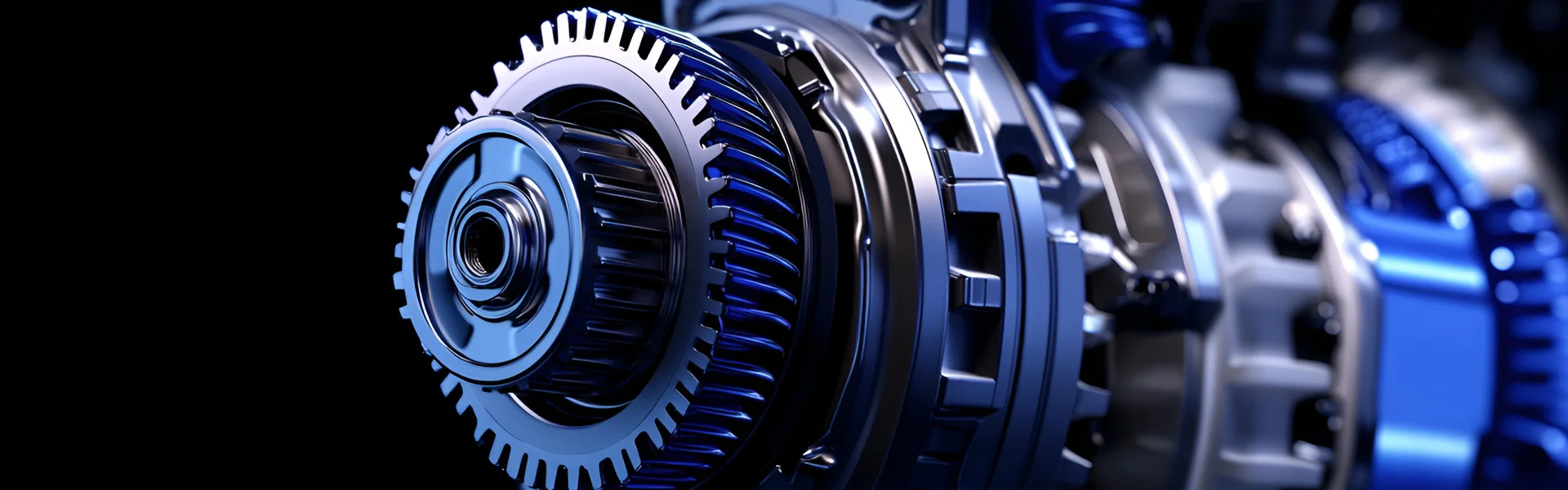
Imagine a high-performance sports car accelerating through its gears on a winding mountain road. With each shift, the engine's power is routed through the transmission, where a series of interlocking Precision Gear components transform high-speed, low-torque rotation into the low-speed, high-torque output that propels the vehicle forward. The sensation is seamless, the power delivery instantaneous. Now imagine the same car with a transmission built from gears that are just a few microns out of specification. The shifts would feel coarse, the car would vibrate at speed, and within a few thousand miles, the transmission would begin to whine and eventually fail. This stark contrast illustrates a fundamental truth of automotive engineering: a transmission is only as good as the Precision Gear at its heart. While often hidden from view, these precisely engineered components are the foundation upon which the entire driving experience is built.
So why are Precision Gear components so indispensable in modern automotive gearboxes? The answer lies in their direct influence on four critical performance metrics: powertrain efficiency, shift quality, noise and vibration characteristics, and long-term durability. A Precision Gear that is meticulously manufactured to exacting tolerances—typically within 1-2 microns on critical surfaces—ensures that power is transmitted with minimal frictional loss. It ensures that gear teeth engage smoothly, without the backlash or misalignment that causes noise and wear. It ensures that the gear teeth can withstand the immense cyclical stresses of thousands of shift cycles without succumbing to fatigue failure. This article will explore these principles in depth, examining the engineering, manufacturing, and material science that transform a simple gear blank into a high-performance automotive component. We will dissect the specific mechanisms by which Precision Gear elements contribute to transmission excellence and provide a detailed look at the technical specifications that define their quality.
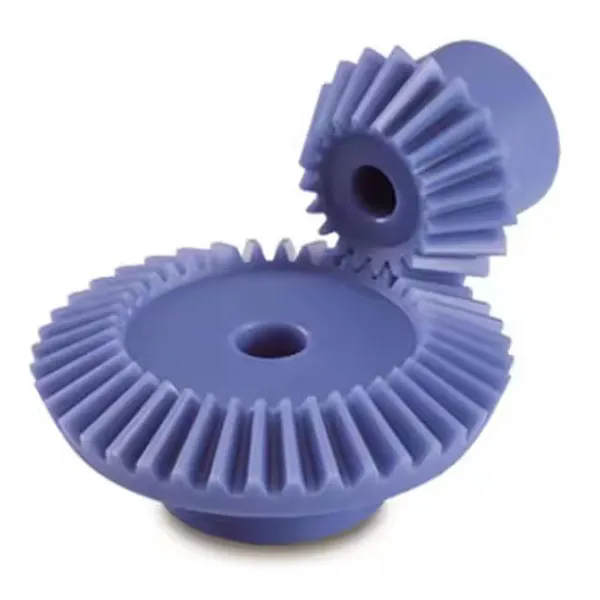
A Precision Gear is a toothed mechanical component manufactured to exceptionally tight dimensional and geometrical tolerances, specifically designed to transmit rotational motion and torque from one shaft to another within a mechanical system. In the context of an automotive gearbox, Precision Gear components are the fundamental building blocks of the transmission. They are arranged in a series of gear pairs (meshing gears) that provide different gear ratios, allowing the vehicle to operate efficiently across a wide range of speeds and loads. But calling them simply "gears" undersells their complexity. A modern automotive Precision Gear is the product of sophisticated engineering, advanced metallurgy, and precision manufacturing techniques that are applied to ensure the component can survive and perform in one of the most demanding mechanical environments known.
To understand the role of a Precision Gear, imagine a simple two-gear pair. One gear is the driving gear, connected to the input shaft from the engine. The other is the driven gear, connected to the output shaft leading to the wheels. The ratio of the number of teeth on these two gears determines the gear ratio. But in a real transmission, this simple concept is complicated by the need for multiple ratios, which is achieved by a complex arrangement of gears on a gear train. The gears are constantly meshing and unmeshing as the driver selects different ratios. This is where precision becomes critical. Each time the gear teeth engage, they must mesh perfectly to prevent excessive noise and wear. A Precision Gear with a low level of error in tooth geometry, spacing, and finish ensures that this meshing is smooth and reliable.
The geometry of a Precision Gear is not arbitrary; it is based on the fundamental principles of the involute curve. This mathematical curve allows for a constant velocity ratio between meshing gears, regardless of the gear's rotation. However, even the most perfect mathematical curve can be compromised by manufacturing errors. A poorly manufactured gear will deviate from the ideal involute curve, leading to variations in the velocity ratio, which manifests as vibration and noise. The role of a Precision Gear manufacturer, therefore, is to create a component that conforms as closely as possible to the ideal geometry. Our factory at Raydafon has invested in state-of-the-art gear manufacturing and inspection equipment to ensure that every Precision Gear we produce meets these exacting standards, delivering the performance and reliability that modern automotive transmissions demand.
In an era where fuel economy and emission reduction are paramount, the efficiency of the powertrain is a critical area of focus for automotive engineers. A significant portion of energy losses in a vehicle occurs in the transmission. These losses arise from a combination of sources: frictional losses in the gear teeth, churning losses as the gears move through the transmission fluid, and bearing losses. The Precision Gear plays a central role in the first two categories, and its design and manufacturing quality directly impact the overall efficiency of the gearbox.
The primary mechanism by which a Precision Gear affects efficiency is through the control of friction. When two gear teeth mesh, there is a relative sliding motion between the surfaces. This sliding motion generates heat, which represents wasted energy. The magnitude of this frictional loss is directly related to the surface finish of the gear teeth. A Precision Gear with a smooth, polished surface (with a surface roughness of Ra 0.2 µm or less) will have significantly lower friction than a gear with a rough surface. This translates directly to a higher efficiency. The reduction in friction is not trivial. A typical automotive transmission with standard gears may have an efficiency of around 92-94%. A transmission with high-precision gears, using advanced manufacturing techniques, can achieve an efficiency of 97% or higher. This 3-5% difference in efficiency may seem modest, but it can translate to a 2-3% improvement in fuel economy, which is a significant competitive advantage.
Another factor is the reduction of churning losses. Churning occurs when the gears rotate through the transmission oil. The higher the viscosity of the oil and the more gear teeth are immersed in the oil, the greater the churning loss. A Precision Gear with a precisely defined tooth form can help to minimize the amount of oil that is "trapped" between the teeth, reducing the churning resistance. This effect is more significant at higher speeds, and it is a key reason why modern transmissions use low-viscosity oils and carefully designed gear profiles. The interplay between gear design, lubrication, and efficiency is a critical area of engineering. At Raydafon, we work closely with our customers to optimize the Precision Gear design for the specific transmission application, ensuring that the gear provides the best possible balance of strength, durability, and efficiency. The selection of the tooth profile, the helix angle, and the surface finish are all carefully considered to minimize losses and maximize the transmission's efficiency.
The table below illustrates the typical efficiency improvements achieved by using precision-ground gears versus standard hobbing.
| Parameter | Standard Hobbed Gear | Precision Ground Gear | Efficiency Improvement |
| Surface Roughness (Ra) | 0.8-1.2 µm | 0.15-0.25 µm | Significant reduction in friction |
| Transmission Efficiency (at 2000 rpm) | 92.5% | 96.8% | +4.3% |
| Transmission Efficiency (at 4000 rpm) | 91.0% | 96.2% | +5.2% |
| Fuel Consumption Impact (WLTP cycle) | Baseline | 2.5% improvement | Measurable CO₂ reduction |
For most drivers, the quality of a transmission is defined not by its theoretical efficiency or its published torque capacity, but by its subjective feel. A good transmission shifts with a satisfying, precise engagement. A poor transmission is characterized by clunks, vibrations, and a general lack of refinement. This subjective experience is heavily influenced by the gear noise and vibration, collectively known as NVH (Noise, Vibration, and Harshness). The Precision Gear is the primary component that dictates the NVH characteristics of a transmission.
NVH in a transmission originates from the meshing of the gear teeth. As the teeth engage and disengage, the force between them fluctuates, creating a dynamic excitation that propagates through the gear train and into the vehicle structure. This excitation is the source of the whine or clatter that can be heard and felt. The magnitude of the excitation is determined by the precision of the gear geometry. A gear with a high level of precision (low runout, low pitch error, and a smooth tooth profile) will have a very consistent meshing force, generating minimal vibration. Conversely, a gear with even small errors will produce a fluctuating force, leading to a noticeable whine or whir.
The improvement in NVH achieved by using a Precision Gear can be dramatic. In a typical comparison test, a transmission built with standard hobbing gears might produce a gear whine of 75 dB at full load, which is clearly audible in the cabin. The same transmission, equipped with precision-ground gears, might produce a whine of only 62 dB, which is barely perceptible. This 13 dB reduction is a significant improvement in the driving experience. The benefits extend beyond subjective comfort. Lower NVH also indicates lower levels of stress on the transmission components, which can lead to improved long-term reliability.
Beyond noise, the precision of the gear also affects shift quality. Shift quality is the perceived smoothness and responsiveness of a gear change. This is determined by the synchronization system, which uses friction to bring the gears to the same speed before they are engaged. A Precision Gear with a precise tooth geometry makes this synchronization process more predictable, leading to smoother shifts. The reduced backlash, which is the small amount of free play between meshing gears, also contributes to a more direct and connected feel. The driver feels a more immediate response to their input. At Raydafon Technology Group Co.,Limited, our Precision Gear are designed and manufactured to minimize these NVH and shift quality issues, ensuring that the end product meets the expectations of the most demanding automotive customers.
Creating a high-performance Precision Gear is not a simple machining operation; it is a carefully orchestrated sequence of material selection, heat treatment, and precise machining. The journey from a piece of steel to a finished gear is a story of control at every stage. The wrong steel selection, an uneven heat treatment, or a single misaligned cut can render a gear unsuitable for its intended application. The manufacturing process must be robust and well-controlled to deliver the combination of hardness, strength, and dimensional accuracy required for a modern transmission.
The material selection for a Precision Gear is the foundation of its performance. The most common material for automotive transmission gears is a low-alloy steel, such as 20CrMnTi or 42CrMo. These materials provide an excellent balance of core strength, toughness, and hardenability. The choice of steel is not just about the initial composition; it is also about the cleanliness of the material, the uniformity of the grain structure, and the consistency of its response to heat treatment. Impurities or inconsistencies in the steel can lead to a gear that fails prematurely.
The manufacturing process for a Precision Gear begins with the forging of a gear blank. Forging aligns the grain structure of the steel, improving its strength and toughness. The blank is then machined to a near-net shape through a turning and hobbing process. At this stage, the gear is in a soft state, which allows for rapid and efficient material removal. The hobbing process uses a rotating cutting tool (a hob) to cut the teeth. This initial hobbing creates the general tooth profile. After hobbing, the gear is subjected to a heat treatment process that is essential for achieving the required mechanical properties. The gear is carburized (adding carbon to the surface), quenched (cooled rapidly to harden the surface), and tempered (reheated to a moderate temperature to relieve stress and achieve the desired hardness).
The final and most critical step is the finishing operation. For a high-performance Precision Gear, the finishing process is typically a grinding operation, using a specialized grinding wheel to achieve the final tooth geometry and surface finish. This is the step that distinguishes a high-quality gear from a standard one. The grinding process can achieve a surface roughness of Ra 0.2 microns or less, and it can correct any small errors introduced during the hobbing process. The grinding process also determines the final accuracy of the gear, achieving a DIN quality grade of 5 or better. Our factory at Raydafon Technology Group Co.,Limited employs advanced CNC gear grinding machines that are capable of achieving the highest levels of precision, ensuring that every Precision Gear meets the exacting specifications of the automotive industry.
The table below outlines the key stages of the manufacturing process for a Precision Gear.
| Process Stage | Description | Key Parameters |
| Material Selection | Choosing the appropriate steel alloy | 20CrMnTi, 42CrMo; cleanliness and consistency |
| Forging | Aligns grain structure for strength | Temperature, pressure, cooling rate |
| Rough Machining (Turning & Hobbing) | Creates initial gear profile | Cutting speed, feed rate, tool geometry |
| Heat Treatment (Carburizing, Quenching, Tempering) | Hardens surface, strengthens core | Temperature profile, time, quench medium |
| Precision Grinding | Final tooth geometry and surface finish | Grinding wheel selection, wheel speed, feed rate |
| Inspection & Quality Control | Verifies dimensional accuracy and surface finish | Gear measurement machine, profilometer |
The quality of a Precision Gear is defined by a set of measurable technical specifications. These parameters are the language that engineers use to specify, manufacture, and inspect gears. For a gear to meet the demands of a modern automotive transmission, it must satisfy a series of stringent requirements. The key specifications include: tooth profile accuracy, pitch accuracy, lead accuracy, surface finish, and material hardness. Each of these specifications has a direct impact on the gear's performance and durability.
Tooth profile accuracy (often measured as a deviation from the ideal involute curve) is a primary determinant of NVH. A gear with a high level of profile accuracy will have a smooth, consistent meshing action. The profile is typically measured using a gear measurement machine that traces a stylus along the tooth flank. The deviation is quantified as a total profile error. For a high-performance gear, this error should be less than 3 microns for profile deviation and less than 2 microns for pitch deviation (the variation in the spacing between teeth). This level of accuracy is achieved through the precision grinding process. The tooth surface finish, measured as Ra or Rz, is another important parameter. A smoother tooth surface leads to lower friction and less wear. For a high-quality gear, a surface finish of Ra 0.2-0.4 micrometers is typical.
The material hardness, measured on the Rockwell C scale (HRC), is a key indicator of the gear's ability to resist wear and deformation. The case-hardened surface of a gear typically has a hardness of 58-62 HRC. The core of the gear, which must be tough to withstand impact loads, is typically much softer, in the 30-35 HRC range. The depth of the hardened case, known as the effective case depth, is also critical. A case depth that is too shallow will lead to rapid wear, while a case depth that is too deep can lead to cracking. For a typical automotive gear, a case depth of 0.5-0.8 mm is common. Our factory at Raydafon Technology Group Co.,Limited uses advanced heat treatment control to achieve the required case hardness and depth. The table below summarizes the key technical specifications for a high-quality Precision Gear.
| Specification | Value Range | Measurement Method |
| DIN/AGMA Quality Grade | 5 or better (AGMA 12-14) | Gear measurement machine |
| Profile Deviation (f-fα) | < 3 µm | Gear measurement machine |
| Pitch Deviation (f-p) | < 2 µm | Gear measurement machine |
| Lead Deviation (f-Hβ) | < 4 µm | Gear measurement machine |
| Surface Roughness (Ra) | 0.15-0.35 µm | Profilometer |
| Case Hardness (HRC) | 58-62 | Rockwell Hardness Tester |
| Core Hardness (HRC) | 30-35 | Rockwell Hardness Tester |
| Effective Case Depth (mm) | 0.5-0.8 | Metallographic examination |
The reliability of an automotive transmission is a critical attribute. A transmission failure is a major event, leaving the vehicle immobile and incurring a significant repair cost. The Precision Gear is a primary determinant of this reliability. A gear that is not properly designed or manufactured will lead to premature wear, fatigue, and ultimately, failure. Conversely, a gear that is engineered and manufactured to the highest standards will provide many years of trouble-free service. This section explores the specific failure modes of gears and how a high-quality Precision Gear mitigates these risks, significantly extending the life of the transmission.
There are three primary failure modes for gears in a transmission: wear, pitting, and fatigue. Wear is the gradual removal of material from the tooth surface. It is caused by abrasive particles (such as dirt or metal debris) or by high stress and inadequate lubrication. A Precision Gear with a smooth, hard surface is much more resistant to wear than a gear with a rough surface. The surface finish reduces the friction, which in turn reduces the generation of wear particles. Pitting is a form of fatigue failure that occurs on the tooth surface. It is caused by the repeated, high-stress loading of the tooth surface. Small cracks form and propagate, eventually leading to the formation of small pits. Pitting is a progressive form of damage that can lead to significant loss of material and eventual tooth breakage. A Precision Gear, with its excellent surface finish and controlled case depth, is more resistant to pitting than a standard gear.
Fatigue failure of the tooth root is the most serious type of gear failure. It occurs when the repeated bending stress on the gear tooth exceeds its fatigue strength. Cracks initiate at the tooth root and propagate until the tooth breaks. The fatigue strength of a gear is determined by its material and its design. The material selection, the case hardening process, and the gear's geometry all play a role. A well-designed and properly manufactured Precision Gear provides a high level of fatigue resistance. The advanced manufacturing process and the use of a case-hardened steel ensure that the gear can withstand the cyclic loads experienced in a transmission.
The calculation of gear life is typically based on the concept of L10 life, which is the life at which 90% of a population of identical gears will survive. The L10 life depends on the load, the speed, and the material. A higher quality gear, with better materials and better manufacturing, will have a significantly longer L10 life. The use of a Precision Gear can increase the L10 life by a factor of 2-3 compared to a standard gear. For example, a standard gear might have an L10 life of 100,000 cycles. A Precision Gear of the same design might have an L10 life of 250,000 cycles. This translates directly to a longer transmission service interval and a lower likelihood of a premature failure. Our factory's Precision Gear are designed and manufactured to maximize the L10 life, ensuring long-term reliability for our customers. By investing in the best materials and manufacturing processes, we can extend the life of the transmission and reduce the total cost of ownership for the vehicle owner.
Question 1: What is the typical precision grade for a modern automotive transmission gear?
Answer: Modern automotive transmission gears are typically manufactured to DIN quality grade 5 or better (AGMA 12-14). This means that the gear tooth profile, pitch, and lead deviations are held to very tight tolerances—typically within 2-5 microns. This level of precision is essential to achieve the required levels of efficiency, NVH, and durability. Our factory at Raydafon Technology Group Co.,Limited produces Precision Gear components that consistently meet or exceed these standards.
Question 2: Why is heat treatment necessary for automotive gears?
Answer: Heat treatment is essential for automotive gears because it achieves the specific combination of surface hardness and core toughness required for the demanding operating conditions. The carburizing process hardens the tooth surface (to 58-62 HRC), providing wear resistance and resistance to pitting. The core remains relatively soft and tough (30-35 HRC), providing resistance to impact and bending fatigue. Without proper heat treatment, a gear would be too soft to resist wear or too brittle to withstand impact loads.
Question 3: What is the most effective way to detect gear wear in an operating transmission?
Answer: The most effective way to detect gear wear is through regular oil analysis. As gears wear, microscopic metal particles are released into the transmission oil. Analysis of the oil can detect the presence and concentration of these particles, providing an early warning of excessive wear. A sudden increase in iron or other wear metal concentrations can indicate a problem with a gear. Another method is to monitor the transmission's vibration signature, as worn gears will generate distinct vibration patterns. Regular oil changes are also a critical part of maintaining gear health.
Question 4: How do gearbox lubricants affect the performance and life of precision gears?
Answer: Gearbox lubricants are essential for the performance and life of Precision Gear components. The lubricant forms a film that separates the gear tooth surfaces, reducing friction and wear. It also carries away heat and protects the surfaces from corrosion. The correct lubricant viscosity and additive package are crucial for achieving the required film thickness and preventing wear. Modern transmissions often use low-viscosity synthetic oils to reduce churning losses and improve fuel economy, but these oils must be carefully matched to the gear design to ensure adequate protection.
Question 5: Are precision gears different for electric vehicles compared to internal combustion engine vehicles?
Answer: Yes, there are some important differences. Electric vehicles (EVs) typically have a single-speed or two-speed transmission, compared to the 6-8 speed transmissions common in internal combustion engine (ICE) vehicles. EV gears experience different loading conditions—they are typically subject to higher torque at lower speeds, with less variation in load. EV gearboxes also operate at much higher speeds, which places greater emphasis on gear balance and dynamic stability. While the fundamentals of Precision Gear design and manufacturing remain the same, the specific design parameters, such as tooth geometry, helix angle, and material selection, are optimized for the specific demands of EV applications.
Precision Gear components are the unsung heroes of the automotive transmission. They are the foundation upon which the efficiency, shift quality, NVH, and durability of the entire powertrain are built. A transmission is a system, and the Precision Gear is its most critical subsystem. The selection of the right materials, the application of the correct manufacturing processes, and the adherence to strict quality control are essential to creating a gear that can withstand the rigors of millions of shifts. The performance of a modern vehicle is directly linked to the quality of its Precision Gear components.
From the initial forging and the precision grinding to the final inspection, every step in the manufacturing of a Precision Gear is a testament to the engineering expertise that goes into its production. At Raydafon Technology Group Co.,Limited, we understand the demands of the automotive industry, and we are dedicated to providing Precision Gear components that meet the highest standards of quality and performance. We invite you to learn more about our capabilities and to discuss your specific requirements with our technical team. Whether you are designing a new transmission, sourcing components for a manufacturing project, or seeking to improve the performance of an existing gearbox, we are here to support you with expert advice and high-quality products.
Contact Raydafon Technology Group Co.,Limited today to discover how our Precision Gear solutions can enhance the performance, efficiency, and reliability of your automotive transmission applications.
+86-574-87168065
Luotuo Industrial Area, Zhenhai District, Ningbo City, China