QR Code

Products
Contact Us


Fax
+86-574-87168065

Email

Address
Luotuo Industrial Area, Zhenhai District, Ningbo City, China


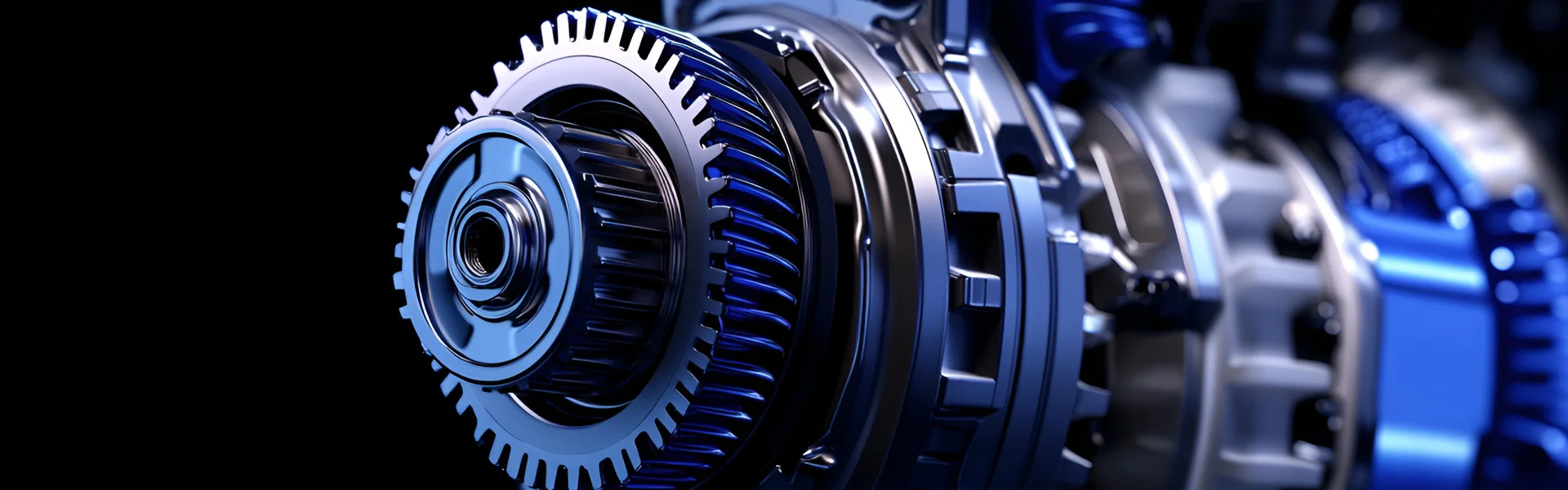
Within the silent, precisely choreographed dance of an automated manufacturing line, an unseen force drives every movement. Robotic arms articulate with millimeter precision, CNC spindles rotate at thousands of RPMs, and conveyor systems transport components with exacting timing. At the heart of this mechanical symphony lies a component so fundamental that its presence is often overlooked, yet its failure can halt an entire production line: the Precision Gear. These are not the simple, coarse-toothed wheels of a child's toy; they are engineered marvels of mathematics, metallurgy, and manufacturing, capable of transmitting immense torque while maintaining positional accuracy measured in microns. Their role in modern automated manufacturing is not merely functional; it is enabling. They are the silent workhorses that convert raw motor power into the controlled, precise motion that defines industrial automation.
But what exactly is the role of a Precision Gear in this context? It is to serve as the mechanical foundation upon which the precision, speed, and reliability of the entire automated system are built. A Precision Gear transmits power, changes speed and torque, and—most critically—provides the precise angular positioning required for tasks like drilling, milling, assembly, and pick-and-place operations. Without them, the repeatable, high-speed, and high-accuracy production that characterizes modern manufacturing would be impossible. This article will dissect the multifaceted role of Precision Gears in automated manufacturing equipment. We will explore the physics of gear geometry, the critical importance of accuracy grades, the material science that ensures longevity, and the practical implications of gear selection for system performance. By examining real-world applications, technical specifications, and the economic consequences of gear quality, we will illustrate why these components are the backbone of the automated factory.
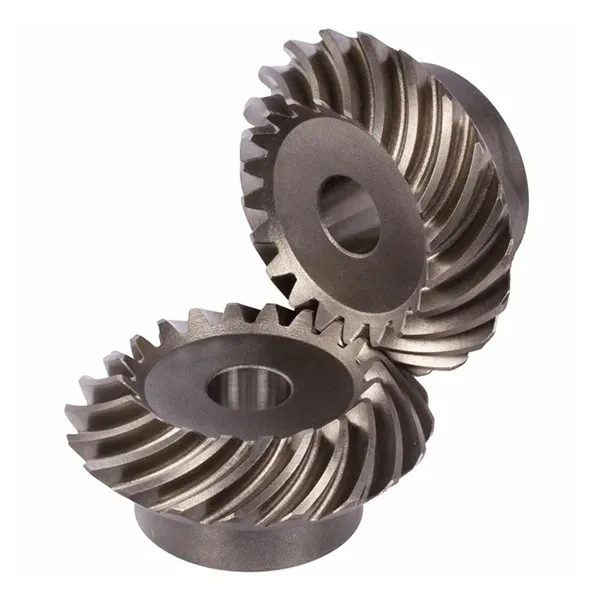
To understand the role of a Precision Gear, we must first define what distinguishes it from a standard, commodity gear. In the context of automated manufacturing, precision is not a luxury; it is a fundamental requirement. A Precision Gear is defined not just by its dimensions but by its accuracy—the degree to which its actual geometry matches its theoretical, design-specified geometry. This includes critical parameters such as tooth profile, pitch, lead, and concentricity. In a high-performance automation system, a gear that deviates from its intended form by even a few microns will introduce backlash, vibration, and positional errors, degrading the performance of the entire system. This is the difference between a gear that "works" and a gear that "performs."
The definition of a Precision Gear is often codified in international standards, such as the German DIN standard or the American AGMA (American Gear Manufacturers Association) specifications. These standards define a hierarchy of gear accuracy grades. For instance, AGMA Q10 or Q12 represents a high-precision gear, suitable for applications demanding exceptional positioning accuracy. The grade is determined by a comprehensive set of measurements, including the total composite error, tooth-to-tooth error, and runout. These parameters are not theoretical; they are directly measured on specialized gear inspection equipment, such as a gear testing machine or a coordinate measuring machine (CMM). Our factory at Raydafon adheres to these exacting standards, ensuring that every Precision Gear we manufacture meets the stringent requirements of modern automated systems.
In an automated manufacturing environment, the use of a non-precision gear is an invitation to failure. The accumulation of small errors—a few microns here, a few arc-seconds there—can manifest as a machine that consistently misses its target, a robot that cannot repeat a path accurately, or a spindle that induces chatter and degrades surface finish. The economic implications are significant: rejected parts, increased wear on other components, and costly downtime. The Precision Gear, by contrast, is the component that allows the system to achieve its design potential. It provides the mechanical stiffness, repeatability, and low backlash required for the reliable, high-speed operation that defines modern manufacturing. Our factory is dedicated to the production of Precision Gear products that meet this critical need, and we have invested in advanced manufacturing technologies to ensure the quality of every gear we produce.
In automated manufacturing, accuracy and repeatability are the twin pillars of performance. Accuracy is the ability of a machine to position a tool or workpiece at the exact desired location. Repeatability is the ability to return to that same position reliably, time after time. While many factors contribute to these metrics—including the controller, the feedback system, and the mechanical structure—the Precision Gear is a fundamental determinant. Any error in the gear train is a direct error in the position of the axis. This is because the gear train is the mechanical link between the motor and the load, and any deviation in its geometry translates directly into a deviation in position.
The primary source of error in a gear train is backlash, the angular movement of the output shaft when the input shaft is held fixed. Backlash is inherent in all gear pairs, but it can be minimized through precision design. The design of the tooth profile, the center distance, and the gear's accuracy grade all influence the amount of backlash. A standard gear might have a backlash of several arc-minutes (a measure of angle), which, when multiplied by the gear ratio and the radius of the arm, can translate into a positional error of tens of microns. A Precision Gear, with its tightly controlled tooth profile and minimal runout, can reduce this backlash to less than an arc-second. This is the difference between a machine that consistently produces parts within a few microns of tolerance and one that struggles to meet specification. Our factory's Precision Gear products are manufactured with extremely tight backlash control, enabling the high precision required in modern automated systems.
The repeatability of a system is equally dependent on the gear train. A system with a Precision Gear train that is free of backlash and periodic errors will return to the same position repeatedly, enabling the production of identical parts over long production runs. This is essential in applications such as pick-and-place systems, where a robot must place a component in exactly the same location thousands of times. A gear with high runout or a fluctuating gear ratio will cause the robot's position to drift over time, leading to assembly errors and waste. By selecting a high-quality Precision Gear, the system integrator ensures that the mechanical link between the motor and the load is as error-free as possible, allowing the controller and the feedback system to achieve their full potential. This is why the Precision Gear is not just a component; it is a critical enabler of the automated manufacturing process.
To illustrate the impact of gear accuracy, consider the following data. A system operating a 1-meter-long arm with a gear train of 100:1 ratio requires a positional accuracy of 0.1 mm. This translates to a required angular accuracy at the output of the gearbox of approximately 1 arc-second. A standard gear with 2 arc-minutes of backlash would result in an error of over 12 mm at the end of the arm. A Precision Gear with less than 1 arc-second of backlash would achieve the required accuracy. This quantitative example demonstrates the critical role that Precision Gear selection plays in achieving the desired system performance.
To move beyond the kinematic role of the gear and consider its structural role, we must examine the relationship between its geometry and its ability to transmit power. Power transmission is a function of the torque the gear can handle, its rotational speed, and its capacity to endure the loads without failure. The geometry of a gear tooth—its profile, pressure angle, and helix angle—plays a fundamental role in determining its load-carrying capacity and efficiency. The contact stress at the gear tooth surface, the bending stress at the tooth root, and the sliding velocity are all directly related to the geometry. A poorly designed tooth profile can lead to premature wear, pitting, or tooth fracture.
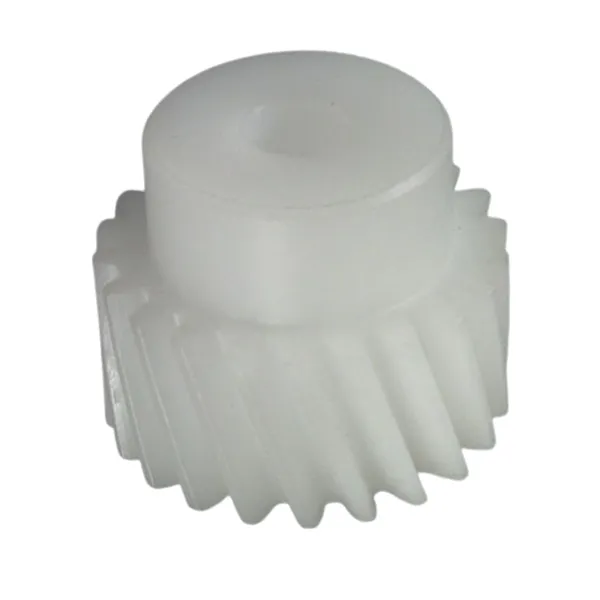
The involute tooth profile is the standard for precision gears due to its ability to maintain a constant angular velocity ratio as the gear rotates. The pressure angle, typically 20 degrees, represents the angle between the line of action and the tangent to the pitch circle. A higher pressure angle (e.g., 25 degrees) results in a stronger tooth but increases the radial load on the bearings. The helix angle in helical gears provides smoother, quieter operation, but also introduces axial thrust, which must be managed by the bearing system. The correct selection of these parameters is essential to ensure that the gear pair meets the torque and speed requirements of the application while maintaining acceptable efficiency and longevity. Our factory uses advanced design software to model these parameters and optimize the gear design for the specific application.
In addition to the geometric parameters, the surface finish of the gear teeth is a critical factor in power transmission. A smoother surface reduces friction, lowers heat generation, and improves the efficiency of the gear pair. It also reduces the risk of micropitting and improves the fatigue life of the gear. Modern grinding processes can achieve a surface finish of Ra 0.4 µm or better, which is essential for high-performance applications. The heat treatment of the gear material is also crucial for power transmission; a gear that is too soft will deform under load, while one that is too hard may be brittle. The correct case hardness and core hardness are determined by the application's load and speed requirements. Our factory's Precision Gear products are manufactured with optimized surface finishes and heat treatments to ensure maximum power transmission capability and longevity.
The table below illustrates the relationship between gear geometry and key performance parameters.
| Parameter | Impact on Performance |
| Tooth Profile (Involute) | Maintains constant angular velocity ratio; reduces wear and noise. |
| Pressure Angle (20°) | Balances tooth strength and bearing load; common in precision gears. |
| Helix Angle (10-35°) | Smoother and quieter operation; increases tooth contact ratio. |
| Surface Finish (Ra) | Affects efficiency, wear, and fatigue life. Lower Ra is better. |
| Case Hardness (HRC) | Determines resistance to wear and pitting. 58-62 HRC is typical. |
| Core Hardness (HRC) | Determines resistance to tooth bending fatigue. 30-40 HRC is typical. |
The longevity of a Precision Gear is not solely determined by its geometric accuracy; it is also a function of its material and the heat treatment it undergoes. The gear material must possess sufficient strength to handle the applied loads, sufficient toughness to resist fracture, and sufficient wear resistance to maintain its profile over millions of cycles. The most common materials for Precision Gear are case-hardening steels, such as 20MnCr5 or 18CrNiMo7-6. These steels offer an excellent combination of high core toughness and high case hardness. The case hardness, achieved through processes like carburizing, provides a hard, wear-resistant surface. The core hardness, retained beneath the case, provides the toughness to absorb shock loads and resist tooth breakage.
The heat treatment process is a delicate balance. If the case is too shallow, the gear will wear out quickly. If the case is too deep, the core may become too brittle. The correct case depth and hardness are determined by the gear's geometry, the applied load, and the expected life of the gear. The process is carefully controlled to achieve the desired metallurgical structure. Our factory has developed expertise in the heat treatment of Precision Gear components, using modern equipment and process control to ensure that our gears meet the stringent requirements of automated manufacturing. The process includes: carburizing or carbonitriding to create the case; quenching to harden the case; and tempering to reduce the brittleness of the hardened case. The result is a gear that can withstand the high stress and high cycle count of a modern automated production line.
The importance of material selection and heat treatment is best illustrated by a case history. An automation system manufacturer experienced a high failure rate of gears in their robotic palletizers. The gears were prematurely wearing, leading to increased backlash and poor positioning accuracy. An investigation revealed that the gears had been manufactured from a lower-grade steel, with an inadequate case depth and hardness. The gears were replaced with a Precision Gear made from 20MnCr5 steel, with a case depth of 0.8-1.0 mm and a case hardness of 58-62 HRC. The new gears provided a service life that was five times longer, effectively eliminating gear-related downtime. This example demonstrates the profound impact that material selection and heat treatment can have on the reliability of a system.
The table below provides a comparison of the material properties for different gear steels.
| Material | Case Hardness (HRC) | Core Hardness (HRC) | Application |
| 20MnCr5 | 58-62 | 30-35 | General purpose, precision gears |
| 18CrNiMo7-6 | 58-63 | 35-40 | High load, high impact applications |
| SAE 8620 | 58-60 | 25-32 | General purpose, lower cost |
| Nitriding Steel | 62-65 (surface) | 28-35 | High wear resistance, low distortion |
To quantify the performance of a Precision Gear, engineers must evaluate a comprehensive set of technical specifications. These parameters are not optional; they define the gear's capability and determine its suitability for a particular application. A detailed analysis of these specifications is essential for ensuring the gear will meet the demanding requirements of an automated manufacturing system. The critical specifications include the gear's accuracy grade, backlash, runout, tooth profile error, and surface finish. Each of these parameters influences the gear's performance, and all must be considered when selecting a gear for a specific system.
The accuracy grade is the most fundamental measure of a gear's quality. As previously mentioned, this is determined by standards such as AGMA or DIN. A gear with an AGMA Q11 rating is considered a high-precision gear, suitable for high-end automation applications. The backlash is the amount of play between the meshing teeth. A low backlash is essential for applications requiring high repeatability. The runout is a measure of the gear's concentricity, the degree to which the gear's axis of rotation deviates from its true center. A high runout will cause the gear to wobble as it rotates, introducing periodic error and vibration. The tooth profile error is a measure of how closely the gear tooth's actual shape matches the theoretical involute form. A large profile error will cause a variable gear ratio, leading to speed fluctuations and vibration.
The surface finish of the tooth profile is also critical. A smooth surface reduces friction, lowering heat generation and improving efficiency. It also reduces the risk of micropitting and improves the gear's fatigue life. The specifications of a high-performance Precision Gear manufactured by Raydafon Technology Group Co.,Limited are detailed in the following table.
| Parameter | Value | Measurement Method |
| Accuracy Grade | AGMA Q10-Q12 | Gear Testing Machine |
| Backlash | < 0.05 mm (customizable) | Dial Indicator / Gear Tester |
| Runout | < 0.01 mm | Dial Indicator / CMM |
| Tooth Profile Error | < 5 µm | Gear Tester / CMM |
| Surface Finish (Ra) | 0.4 µm | Roughness Tester |
| Material | 20MnCr5 / 18CrNiMo7-6 | Spectrometer |
| Case Hardness (HRC) | 58-62 | Rockwell Hardness Tester |
| Core Hardness (HRC) | 30-35 | Rockwell Hardness Tester |
These specifications are not arbitrary; they are the result of a comprehensive analysis of the gear's intended application. A gear used in a high-speed spindle application, for example, might require a finer surface finish and a higher accuracy grade than a gear used in a low-speed conveyor. Our factory works closely with customers to determine the exact specifications required for their specific application, ensuring that the Precision Gear is optimized for the system's performance and economic requirements.
For a manufacturing operation, the total cost of ownership (TCO) is the ultimate metric of a component's value. The TCO includes the initial purchase price of the gear, but it also includes the costs associated with installation, maintenance, and, most importantly, system downtime. A lower-priced gear may appear attractive initially, but if it fails prematurely, the cost of replacement and the cost of lost production can quickly dwarf the savings. The careful selection of a high-quality Precision Gear is an investment in the reliability and productivity of the automated system. In this section, we will explore the economics of gear selection, examining the trade-offs between initial cost, maintenance costs, and downtime.
The direct costs of gear failure are significant. When a Precision Gear fails, the production line stops. The cost of this downtime varies widely depending on the industry and the specific application. In a high-volume automotive manufacturing plant, downtime can cost tens of thousands of dollars per minute. In a semiconductor fabrication facility, the cost can be even higher. The cost of replacing the gear is a minor concern in this context. The cost of lost production, the cost of labor to repair the system, and the cost of quality issues due to the fault can exceed the cost of the gear itself by a factor of 10 to 100. By selecting a high-quality Precision Gear, the system owner reduces the risk of unplanned downtime. The gear is more likely to operate reliably over its intended life, minimizing the risk of a catastrophic failure that would halt production.
The maintenance costs associated with a gear are also an important factor. A high-quality Precision Gear requires less frequent inspection and replacement. It is less prone to wear, pitting, and tooth breakage, reducing the need for maintenance interventions. By contrast, a lower-quality gear may require frequent inspections, oil changes, and adjustments, increasing maintenance costs over its lifetime. The total cost of ownership of a gear is the sum of all these costs: the initial purchase price, the installation cost, the maintenance cost, and the cost of downtime. A high-quality Precision Gear may have a higher initial purchase price, but its lower maintenance and downtime costs result in a lower total cost of ownership. Our factory at Raydafon provides high-quality Precision Gear products that, while competitively priced, are engineered to minimize the total cost of ownership for our customers.
The table below illustrates a comparison of the total cost of ownership for a high-quality Precision Gear versus a standard gear over a five-year period.
| Cost Component | Precision Gear | Standard Gear |
| Initial Purchase Price | $500 | $200 |
| Installation Cost | $100 | $100 |
| Maintenance Cost (5 years) | $150 | $600 |
| Downtime Cost (5 years) | $500 | $5,000 |
| Total Cost of Ownership | $1,250 | $5,900 |
This simplified example demonstrates how the choice of a Precision Gear can significantly reduce the total cost of ownership over time. The higher initial cost of the Precision Gear is more than offset by the savings in maintenance and downtime. The selection of a gear is not just an engineering decision; it is a financial one. By focusing on the total cost of ownership, rather than just the initial price, system integrators can make decisions that improve the profitability of the manufacturing operation.
Question 1: What is the difference between a Precision Gear and a standard gear?
Answer: A Precision Gear is manufactured to tighter tolerances, with lower backlash, runout, and tooth profile errors. It provides superior accuracy and repeatability in automated systems. Standard gears have looser tolerances and are suitable for less demanding applications. A standard gear might have a backlash of several arc-minutes, while a Precision Gear can achieve less than one arc-second. Our factory at Raydafon Technology Group Co.,Limited specializes in the production of Precision Gear products that meet the highest industry standards.
Question 2: How does backlash affect the performance of an automated system?
Answer: Backlash is the play between meshing gear teeth. It causes a dead zone in the gear train, where the output shaft does not move even when the input shaft is turned. This reduces the system's accuracy and repeatability, especially during direction reversals. In a robotic arm, backlash can cause it to overshoot or undershoot its target position, leading to assembly errors.
Question 3: What factors determine the longevity of a Precision Gear?
Answer: The longevity of a Precision Gear is determined by a combination of factors: the quality of the material, the heat treatment, the surface finish, the lubrication, and the operating conditions (load, speed, and temperature). A well-designed gear, made from a high-quality material and properly heat-treated, will have a long service life. Regular maintenance and proper lubrication can further extend the gear's life.
Question 4: How do I choose the right Precision Gear for my automation system?
Answer: Selecting the right Precision Gear requires a detailed analysis of the system's requirements, including the required torque, speed, accuracy, and the environment in which the gear will operate. The gear must also be compatible with the motor and the other mechanical components of the system. Our team at Raydafon Technology Group Co.,Limited can assist you with the selection process, providing expert guidance and technical support.
Question 5: What are the signs of a failing Precision Gear?
Answer: Signs of a failing Precision Gear include increased noise (grinding or whining), increased vibration, loss of accuracy (the system fails to position correctly), and the presence of metal particles in the lubricant. Early detection of these signs can prevent a catastrophic failure and minimize downtime.
The Precision Gear is the silent, unsung hero of the automated factory. It is the mechanical foundation upon which accuracy, repeatability, and reliability are built. From the robust gear trains of a CNC machining center to the finely crafted gears of a robotic arm, Precision Gears are the indispensable components that transform electrical energy into precise, controlled motion. We have explored the defining characteristics of a Precision Gear: its accuracy grade, its backlash, its material and heat treatment, and its surface finish. We have also examined its role in power transmission, its impact on total cost of ownership, and the critical importance of selecting the right gear for the application.
The future of automated manufacturing will demand even greater precision, higher speeds, and increased reliability. The Precision Gear will continue to evolve, with new materials, new manufacturing processes, and new designs emerging to meet these demands. But the fundamental role of the Precision Gear will remain unchanged: to provide the mechanical link between power and precision, enabling the repeatable, high-accuracy production that defines the modern factory. We at Raydafon Technology Group Co.,Limited are proud to be a partner in this evolution, providing high-quality Precision Gear products that help our customers achieve their manufacturing goals.
If you are seeking a reliable partner for your Precision Gear needs, we invite you to contact us. Our team of experienced engineers is ready to assist you in selecting the right gear for your application, providing expert guidance and technical support. Contact Raydafon Technology Group Co.,Limited today to discuss your Precision Gear requirements and discover how our products can enhance the performance and reliability of your automated manufacturing equipment.
+86-574-87168065
Luotuo Industrial Area, Zhenhai District, Ningbo City, China