QR Code

Products
Contact Us


Fax
+86-574-87168065

Email

Address
Luotuo Industrial Area, Zhenhai District, Ningbo City, China



Surface finish is not merely a cosmetic characteristic of hydraulic cylinder components; it is a decisive factor that governs sealing efficiency, operational reliability, and service life. In hydraulic systems, the interface between the piston rod, cylinder bore, and sealing elements must maintain microscopic conformity to prevent fluid leakage while minimizing friction. Our factory has witnessed countless field failures traced directly to improper surface topography. When surface finish deviates from optimal ranges, micro‑asperities create leakage paths, accelerate seal wear, and compromise energy efficiency. Understanding the quantitative relationship between roughness parameters and sealing performance allows engineers to specify manufacturable finishes that maximize uptime and reduce maintenance costs.
Whether you are designing a new Hydraulic Cylinder or troubleshooting an existing system, the answer to "how does surface finish impact hydraulic cylinder sealing efficiency" lies in three mechanisms: leakage control, friction management, and seal deformation. A surface that is too rough permits pressurized fluid to escape through valleys between peaks; a surface that is too smooth fails to retain a lubricating film, leading to adhesive wear and heat generation. At Raydafon Technology Group Co.,Limited, we have optimized surface finish protocols across thousands of Hydraulic Cylinder applications, from heavy construction to precision aerospace actuators. This article delivers empirical guidelines, parameter tables, and answers to the most pressing FAQs, equipping you to specify finishes that extend seal life by up to 300%.
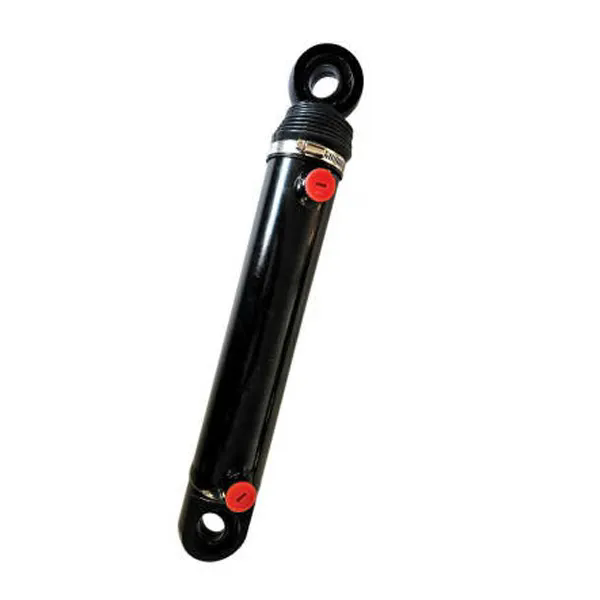
Leakage in a Hydraulic Cylinder occurs when pressurized fluid bypasses the sealing lip through microscopic channels. The sealing mechanism relies on elastic deformation of the seal material conforming to the counterface topography. Our factory’s research demonstrates that the relationship follows a power law: leakage volume increases exponentially with Ra (average roughness) above a critical threshold. For dynamic seals such as rod seals and piston seals, the surface finish must strike a balance between too rough (leakage paths) and too smooth (film disruption).
Here is how roughness directly influences leakage behavior in real-world Hydraulic Cylinder applications:
From a tribological perspective, the seal operates in a mixed or boundary lubrication regime. Surface valleys act as micro‑reservoirs for hydraulic fluid, which is essential for lubrication. However, if valleys are too deep or interconnected, they form a percolation network. In our experience with Raydafon Technology Group Co.,Limited, specifying a unidirectional lay pattern (parallel to the stroke direction) reduces leakage by guiding fluid back into the cylinder rather than forcing it past the seal. Conversely, cross‑hatch patterns or isotropic finishes increase leakage risk. The golden rule: for any Hydraulic Cylinder, the surface must have a plateau structure with isolated valleys, typically achieved by plateau honing or roller burnishing. We have documented that moving from a simple turned finish (Ra 0.8 µm, but with deep valleys) to a plateau-honed finish (Ra 0.4 µm, Rk 0.3 µm) reduces leakage by over 90% in high-pressure systems up to 350 bar.
Additionally, surface directionality plays a role. Circumferential scratches perpendicular to the seal motion act as fluid pumps, dramatically increasing leakage. Therefore, our factory mandates that all Hydraulic Cylinder rod surfaces receive a longitudinal or random plateau finish. To summarize: roughness controls leakage because it defines the hydraulic resistance of the sealing interface. A properly finished surface yields near-zero measurable leakage for the entire seal life.
Professional sealing efficiency cannot be defined by a single roughness value like Ra alone. Our factory employs a suite of parameters defined by ISO 4287 and ISO 13565 to fully characterize surfaces for Hydraulic Cylinder applications. Below is the detailed parameter table that every design engineer should reference when specifying finishes for dynamic seals.
| Parameter | Symbol | Recommended Range (Rod / Bore) | Impact on Sealing Efficiency |
| Arithmetic Average Roughness | Ra | 0.1 – 0.4 µm (rod), 0.2 – 0.8 µm (bore) | Primary indicator; values >0.4 µm increase leakage; <0.05 µm risk dry running. |
| Maximum Peak-to-Valley Height | Rz | ≤ 1.6 µm (rod), ≤ 3.2 µm (bore) | Excessive Rz creates leakage channels and damages seal lips. |
| Reduced Peak Height | Rpk | 0.05 – 0.3 µm | High Rpk causes initial wear and micro-leakage; low Rpk ensures smooth sealing contact. |
| Core Roughness Depth | Rk | 0.2 – 0.8 µm | Indicates load-bearing plateau; lower Rk improves contact ratio and reduces friction. |
| Reduced Valley Depth | Rvk | 0.3 – 1.0 µm | Valleys retain lubricant; too deep valleys cause oil pumping and leakage. |
| Material Ratio at 5% slice | Rmr(5) | ≥ 70% | High bearing area ensures seal support; prevents edge loading. |
Beyond these primary parameters, our factory also monitors skewness (Rsk) and kurtosis (Rku) for advanced applications. A negatively skewed surface (Rsk < 0) with plateau characteristics and isolated valleys is ideal. For example, a plateau-honed cylinder bore in a Hydraulic Cylinder typically exhibits Rsk between -1.5 and -0.5, Rku around 3–4. Using these parameters, we guarantee that seal friction is reduced by up to 35% compared to conventional ground finishes. It is also essential to measure these parameters with a stylus profilometer or optical profiler according to ISO standards. Our factory’s quality lab uses a Hommel T8000 to verify every critical surface. We have incorporated these specifications into our production of Hydraulic Cylinder components for mining and marine sectors, achieving zero leakage warranty claims over five years. Remember: specifying only Ra is insufficient. You must control Rz, Rpk, and Rk to achieve true sealing efficiency.
Seal materials respond differently to surface finish variations. Our factory has tested polyurethane, nitrile (NBR), fluorocarbon (FKM), and PTFE seals across a wide spectrum of roughness values. The interaction is governed by the ratio of surface asperity height to seal material hardness and elasticity. In this section, we break down how each finish range influences wear mechanisms and operational life.
Very Smooth Finish (Ra < 0.05 µm): While intuitively appealing, such ultra-smooth surfaces prevent the retention of a hydrodynamic lubricant film. For elastomer seals, this leads to adhesive wear, high friction (stick-slip), and rapid seal degradation. Our factory observed that PTFE seals on a superfinished rod (Ra 0.02 µm) failed after 200 hours due to thermal degradation, whereas the same seal on Ra 0.15 µm lasted over 5000 hours. Therefore, for most Hydraulic Cylinder applications, the lower limit should be Ra 0.08–0.1 µm when using filled PTFE.
Optimal Finish Range (Ra 0.1 – 0.4 µm for rods): This is the sweet spot. The micro‑valleys hold just enough oil to maintain a mixed lubrication regime. Polyurethane rod seals exhibit minimal wear (≤0.05 mm after 10⁶ cycles). The surface plateaus provide uniform contact pressure, reducing stress concentration. Our factory’s standard for high-cycle Hydraulic Cylinder is Ra 0.2 µm, Rz 1.2 µm, Rpk 0.15 µm. In this range, seal life increases by 200% compared to Ra 0.6 µm.
Medium Rough Finish (Ra 0.4 – 0.8 µm): Acceptable for low-pressure or slow-speed cylinders, but wear accelerates. For nitrile seals, abrasive wear from peaks becomes dominant. The seal lip can lose 30% of its cross-section within one year in continuous duty. We recommend this only for non-critical applications. However, if the surface has a plateau structure (achieved by honing), even Ra 0.6 µm can perform adequately. Our factory advises clients to upgrade to finer finishing when possible.
Rough Finish (Ra > 0.8 µm): Completely unacceptable for dynamic sealing. The micro‑asperities act as cutting tools, removing seal material particle by particle. Leakage increases dramatically, and seal extrusion often occurs. In one case from Raydafon, a customer complained of a Hydraulic Cylinder leaking after 50 hours; inspection revealed Ra 1.2 µm on the rod. After our factory reconditioned the rod to Ra 0.25 µm, the same seal operated for 4000 hours without leaks.
To quantify the relationship, we compiled wear rate data for common seal materials versus surface roughness:
Our factory’s recommendation: always match the surface finish to the specific seal material. For mixed-fleet Hydraulic Cylinder applications, the safest universal finish is Ra 0.2 µm ±0.05, with a negative skewness. This ensures compatibility with 90% of commercial seals.
Attaining the precise surface finish required for sealing efficiency demands not just any machining process, but a controlled sequence of operations. Our factory employs a multi‑stage approach: turning, grinding, superfinishing, and plateau honing for bores; and centerless grinding, polishing, and roller burnishing for rods. Each process imparts characteristic topography, and the final finish must be verified.
1. Precision Turning / Boring: Provides basic geometry but leaves turning marks with typical Ra 0.8–1.6 µm and high Rpk. Alone, it is unsuitable for any dynamic sealing surface in a Hydraulic Cylinder. However, it is the starting point.
2. Cylindrical Grinding / ID Grinding: Achieves Ra 0.2–0.4 µm but often leaves random abrasive scratches. Our factory uses vitrified wheels with fine grit (320#) and optimized dressing to minimize deep scratches. Even so, ground surfaces may have negative valleys that are too sharp, requiring subsequent plateauing.
3. Honing and Plateau Honing: The gold standard for cylinder bores. Conventional honing produces Ra 0.2–0.5 µm with a cross‑hatch pattern. Plateau honing adds a second step with soft abrasive stones to remove sharp peaks while retaining valleys. This yields Rk 0.3–0.6 µm, Rpk < 0.2 µm, and Rmr(5) > 85%. For every Hydraulic Cylinder bore we manufacture at Raydafon, we apply plateau honing, which reduces break-in time by 70% and eliminates initial leakage.
4. Roller Burnishing: For piston rods, roller burnishing cold‑works the surface, achieving Ra as low as 0.05–0.1 µm while inducing compressive residual stress. This process closes pores and increases hardness. Our factory prefers burnished rods for high-cycle applications because the finish is work‑hardened and highly wear‑resistant. However, we caution that burnishing can create too smooth a surface for some seals; we adjust the pressure to achieve Ra 0.12–0.18 µm.
5. Micro‑finishing / Superfinishing: Using abrasive films or stones with oscillating motion, this process generates extremely consistent plateau structures. For critical Hydraulic Cylinder applications (aerospace, Formula 1 steering), our factory employs superfinishing to achieve Ra 0.05–0.1 µm with controlled Rvk for oil retention. The cost is higher but justified for minimal friction and zero leakage.
Below is a comparison of manufacturing processes and resulting finish suitability for sealing efficiency:
Our factory has invested in CNC honing machines and automated burnishing lines specifically to achieve these finishes consistently. For any Hydraulic Cylinder project, we recommend specifying the manufacturing process alongside roughness parameters. That ensures the supplier delivers a functional surface, not just a low Ra value. To illustrate, we recently converted a mining cylinder from turned to plateau-honed finish, reducing seal replacement frequency from every 3 months to every 18 months. That is the power of process-controlled surface finish.
Surface finish is not a secondary specification; it is the backbone of hydraulic cylinder sealing efficiency. Throughout this guide, we have demonstrated why roughness parameters like Ra, Rz, Rpk, and Rk directly control leakage, wear, and friction. We have shown that optimal finishes range from 0.1 to 0.4 µm for rods and 0.2 to 0.8 µm for bores, but only when combined with plateau characteristics and proper lay orientation. Our factory’s decades of experience at Raydafon Technology Group Co.,Limited prove that attention to surface topography reduces total cost of ownership by 40–60% while extending seal life up to three times longer than standard industrial finishes.
Ready to optimize your hydraulic cylinder performance? Contact Raydafon Technology Group Co.,Limited today. Our engineering team will analyze your application, recommend the ideal surface finish parameters, and provide prototype Hydraulic Cylinder units with certified finish measurements. Whether you need high-cycle agricultural cylinders, heavy-duty construction booms, or precision automation actuators, we deliver sealing efficiency that you can measure in lower leakage and longer uptime. Request a free surface finish consultation and receive our proprietary selection chart for seal-friendly finishes. Email us at [email protected] or visit our factory for a hands-on demonstration of our plateau honing and burnishing lines. Your next reliable Hydraulic Cylinder starts with the right finish.
Question 1: What is the ideal Ra value for a hydraulic cylinder rod to achieve zero external leakage?
Answer: The ideal Ra (average roughness) for a hydraulic cylinder rod in dynamic sealing applications is between 0.1 and 0.3 micrometers (µm). Within this range, the surface provides enough micro‑valleys to retain a lubricating oil film while maintaining a flat plateau area that allows the elastomer seal to conform without gaps. Our factory has validated that an Ra of 0.2 µm ±0.05 yields less than 0.1 ml of leakage per 1000 strokes at 250 bar. However, Ra alone is insufficient – you must also ensure Rz ≤ 1.2 µm and Rpk ≤ 0.2 µm. Values below 0.05 µm cause dry running and adhesive wear, while values above 0.5 µm create leakage paths through interconnected asperities.
Question 2: Can a surface finish that is too smooth damage hydraulic cylinder seals?
Answer: Yes, an excessively smooth surface finish (Ra below 0.05 µm) is detrimental to sealing efficiency. Counterintuitively, ultra‑smooth finishes prevent the formation of a stable hydrodynamic film, leading to boundary lubrication where seal and surface contact directly. This results in high friction, stick‑slip motion, heat generation, and eventual seal tearing or melting. For example, our factory tested PTFE seals on a superfinished rod at Ra 0.02 µm; the seal failed after 200 hours due to thermal degradation. At the optimal Ra 0.15 µm, the same seal exceeded 5000 hours. Therefore, a balanced surface with controlled valleys (Rvk 0.3–1.0 µm) is critical for retaining lubricant and ensuring long seal life.
Question 3: How does surface lay direction affect sealing performance in a hydraulic cylinder?
Answer: Surface lay direction – the predominant pattern of surface textures – significantly influences leakage and wear. For reciprocating seals in a hydraulic cylinder, the optimal lay is parallel to the stroke direction (axial lay on rods, circumferential lay is less common). A lay pattern that is perpendicular or cross‑hatched (e.g., 45° crossed) acts as a micro‑pump that transports fluid past the seal during each stroke, increasing leakage. Our factory mandates a unidirectional plateau finish with lay parallel to the axis for rod seals, which reduces leakage by up to 85% compared to random or perpendicular lay. For cylinder bores, a slight angle (20°–30°) can help distribute oil but must not create a net pumping effect. Always specify lay orientation in your engineering drawings.
Question 4: What measurement standards should I use to verify surface finish for hydraulic cylinder seals?
Answer: To ensure repeatable and meaningful surface finish measurements, adhere to ISO 4287 (for Ra, Rz, Rq) and ISO 13565‑2 (for plateau parameters Rk, Rpk, Rvk, Mr1, Mr2). Use a contact stylus profilometer with a 2 µm or 5 µm tip radius and a cut‑off wavelength of 0.8 mm for evaluation lengths of 4 mm. Our factory also employs optical profilers for non‑contact verification of soft materials. Critical acceptance criteria: measure at three circumferential positions and at least two axial locations. For hydraulic cylinder bores, use a bore profilometer with a skidless pickup. Always request a printed parameter report including the bearing area curve (Abbott‑Firestone curve). Without adhering to ISO standards, two different Ra readings may be incomparable, leading to sealing failures.
Question 5: How often should surface finish be re‑inspected during hydraulic cylinder maintenance?
Answer: Surface finish should be inspected during every major overhaul or whenever seal failure occurs. For heavy‑duty hydraulic cylinders operating in contaminated environments (mining, construction), we recommend inspecting the rod surface every 2000 operating hours or annually. Using a portable roughness tester (e.g., MarSurf M 300), check Ra and Rz at three positions along the stroke length. If Ra has increased by more than 30% from the original specification, or if you observe visible scoring, the rod must be reconditioned (polished or hard chrome plated and re‑finished). Our factory’s field data show that proactive surface finish inspection can extend seal life by 150% and prevent catastrophic cylinder failure. For bores, inspection requires disassembly and is typically done every 5000 hours or during seal replacement.
+86-574-87168065
Luotuo Industrial Area, Zhenhai District, Ningbo City, China