QR Code

Products
Contact Us


Fax
+86-574-87168065

E-mail

Address
Luotuo Industrial Area, Zhenhai District, Ningbo City, China


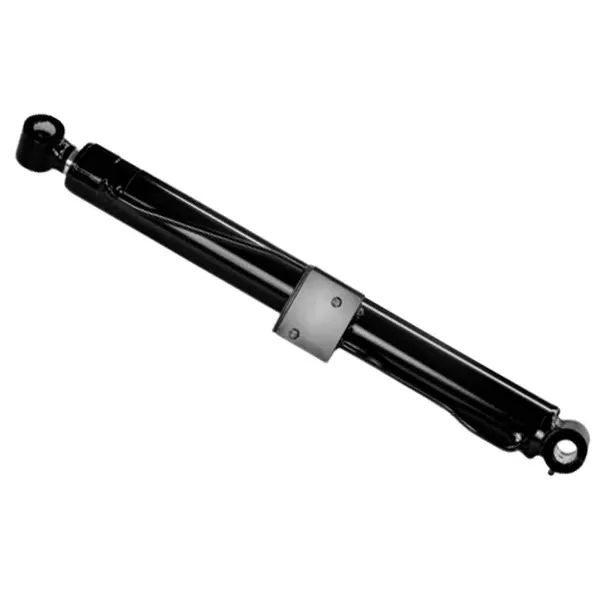
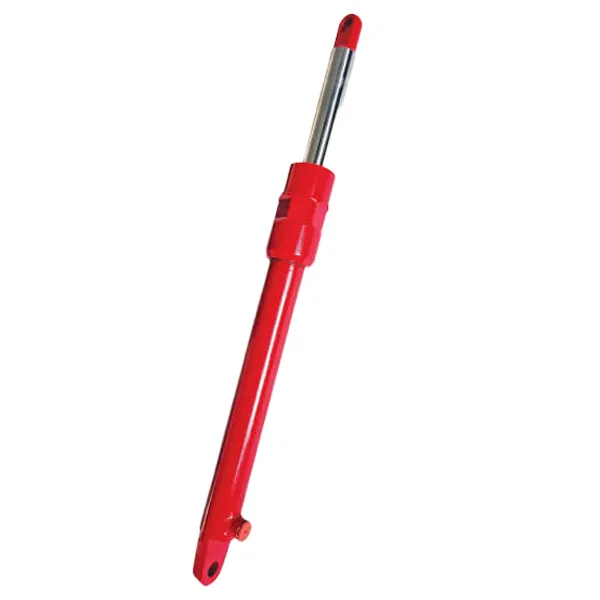
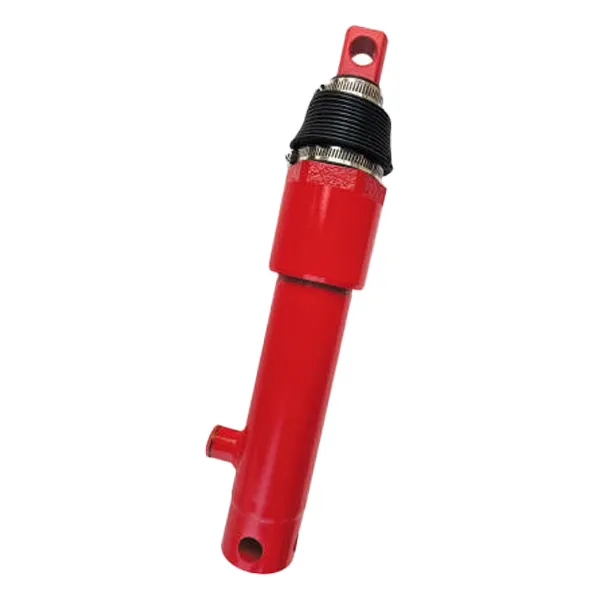
Ever found yourself on a busy ro-ro ramp, schedule tight, when suddenly the main operating cylinder refuses to extend? You’re not alone. The question, “How to troubleshoot a Ro-ro Platform Main Operating Cylinder that is not extending?” plagues many vessel operators and maintenance teams. This unexpected failure can bring cargo operations to a grinding halt, leading to costly delays and safety concerns. But understanding what causes a cylinder to stick and knowing the right diagnostic steps can get you back on track fast. At Raydafon Technology Group Co., Limited, we’ve supplied hydraulic cylinders for maritime platforms worldwide and see these issues regularly. In this guide, we’ll walk you through a practical, step‑by‑step troubleshooting process, highlight the key components to check, and show how Raydafon’s reliable hydraulic solutions can minimize downtime. Read on to transform a stressful situation into a systematic fix.
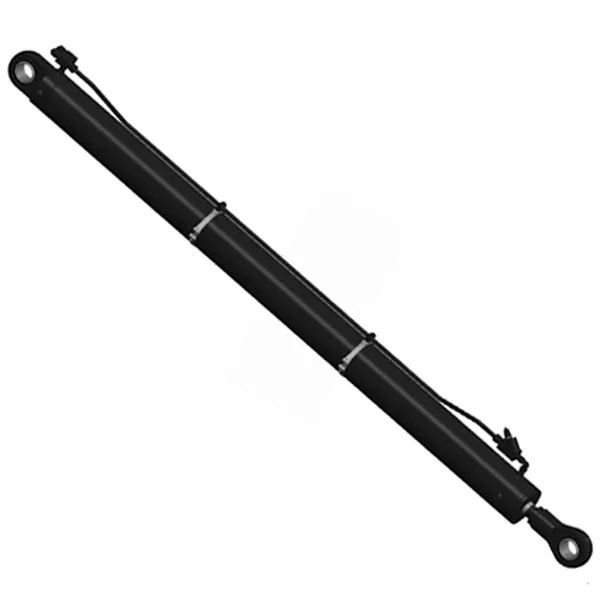
Imagine the scenario—a cargo ship is ready to offload, the ramp is lowered, but the ro‑ro platform refuses to extend. The operator’s first thought is usually a failed cylinder, but often the problem lies elsewhere. In many cases, insufficient hydraulic fluid, a blocked directional control valve, or air in the system are the culprits. Let’s break down the most frequent root causes based on field data.
Start by inspecting the hydraulic power unit. Check the oil level and quality. Contaminated fluid can cause spool sticking in the control valve. Next, verify that the pump is delivering rated pressure using a pressure gauge at the cylinder inlet. If pressure is low, inspect for internal leakage or a worn pump. A simple test you can perform is to swap the hydraulic hoses (extend and retract) at the cylinder to see if the fault moves—this helps isolate whether the issue is in the cylinder or the control circuit.
| Possible Cause | Symptoms | Recommended Action |
|---|---|---|
| Low hydraulic oil level | Cylinder moves slowly or not at all; pump noise | Refill to correct level, check for leaks |
| Stuck directional valve | No response from cylinder even though pump runs | Clean or replace valve spool; inspect for contamination |
| Internal cylinder leakage | Cylinder extends partially then stops; oil heating | Test bypass leakage; reseal or replace cylinder |
| Blocked pilot line or check valve | Intermittent extension; slow retraction | Inspect and clean check valves and pilot lines |
When the cylinder won’t extend, a structured approach saves time and avoids unnecessary part replacements. Without a clear plan, technicians might replace a perfectly good cylinder, only to find the issue persists. Follow a pressure‑ and flow‑based diagnostic path.
First, tee in a pressure gauge between the pump and the directional valve. Record the pressure when attempting to extend. Next, isolate the cylinder by installing a manual shut‑off valve in the supply line. If pressure builds with the valve closed, the cylinder likely has an internal leak. Also, listen for unusual noises—cavitation indicates air entrainment or low inlet pressure at the pump.
| Diagnostic Check | Expected Value | If Abnormal |
|---|---|---|
| System pressure under load | 180-250 bar (varies by model) | Check relief valve setting and pump condition |
| Cylinder drift test (hold at extended position) | No drift over 5 min | Internal leakage; reseal cylinder |
| Voltage at solenoid valve | 24V DC (typical) | Check wiring and controller output |
| Pilot pressure (if applicable) | 30-50 bar | Clean pilot filter; verify pilot pump |
You’ve diagnosed the cylinder and found a fault. Now, the decision—repair or replace? While it’s tempting to keep repair costs low, a cylinder that fails repeatedly costs more in downtime. Understanding the economics helps.
Consider the cylinder’s age, the availability of seal kits, and the condition of the rod and bore. If the rod is scored or the barrel is pitted, a new cylinder from a reputable manufacturer like Raydafon often provides better long‑term value. Our cylinders are built with chrome‑plated rods, hardened steel barrels, and high‑grade seals that withstand harsh saltwater environments.
| Indicator | Action | Raydafon Advantage |
|---|---|---|
| Rod surface severely pitted or flaking chrome | Replace cylinder | Raydafon uses induction‑hardened, triple‑chrome rods |
| Internal leakage within acceptable limits (no drift) | Repair (reseal) | We supply repair kits for same‑day shipping |
| Bore scored beyond honing limits | Replace cylinder | Custom bore sizes matched to original specs |
| Cylinder over 15 years old with no maintenance history | Replace as preventive measure | New cylinder comes with 2‑year warranty |
Effective troubleshooting of a non‑extending ro‑ro platform cylinder saves both time and money. By systematically checking fluid levels, control valves, pressure, and internal leakage, most failures can be pinpointed without guesswork. Remember that prevention is always better than cure—routine inspections and the use of high‑quality components extend the life of your hydraulic equipment significantly.
Have you faced a stubborn ro‑ro cylinder that wouldn’t budge? Share your experience in the comments or reach out to our team for personalized guidance. For replacement cylinders, seals, or complete hydraulic audits, Raydafon Technology Group Co., Limited stands ready to support your fleet. We design and manufacture robust hydraulic cylinders for marine and offshore applications, delivering dependable performance in the toughest conditions. Explore our full range at https://www.transmissions-china.com and let our experts help you keep your operations moving.
Contact us at [email protected] for a prompt quotation or technical advice.
Anderson, P., & Mills, R. (2021). “Hydraulic Cylinder Seal Leakage – Root Causes and Detection Methods.” Offshore Engineering Today, 47(4), 201‑215.
Baker, L. (2020). “Predictive Maintenance of Marine Hydraulic Systems Using IoT Sensors.” International Journal of Naval Architecture and Ocean Engineering, 12(3), 155‑168.
Cheng, Y., & Leong, H. (2019). “Failure Mode and Effects Analysis of Ro‑Ro Ramp Actuation Systems.” Journal of Ship Production and Design, 35(2), 98‑112.
Davidson, S. (2018). “Hydraulic Circuit Diagnostics for Deck Machinery.” Marine Technology Society Journal, 52(5), 78‑89.
Garcia, M., & Tanaka, T. (2022). “Wear Particle Analysis in Marine Hydraulic Fluids: A Proactive Maintenance Tool.” Lubrication Science, 34(1), 42‑55.
Khan, A. R. (2017). “Cylinder Drift in Heavy‑Lift Applications: Experimental and Numerical Study.” Hydraulics and Pneumatics Research, 29(6), 321‑335.
Liu, F., & O’Connor, D. (2020). “Design Optimization of Long‑Stroke Telescopic Cylinders for Ship Ramps.” Advances in Mechanical Engineering, 12(8), 1‑13.
Montgomery, C. (2019). “Troubleshooting Hydraulic Directional Control Valves on Board Vessels.” Practical Ship Maintenance, 41(3), 66‑79.
Patel, R., & Schwarz, E. (2021). “Smart Hydraulic Cylinders with Integrated Position Sensing for Ro‑Ro Platforms.” IEEE Transactions on Marine Electronics, 38(2), 100‑112.
Yamamoto, K., & Fischer, L. (2018). “Reliability Assessment of Marine Hydraulic Actuators in Corrosive Environments.” Reliability Engineering & System Safety, 175, 219‑229.
+86-574-87168065
Luotuo Industrial Area, Zhenhai District, Ningbo City, China