QR Code

Products
Contact Us


Fax
+86-574-87168065

Email

Address
Luotuo Industrial Area, Zhenhai District, Ningbo City, China


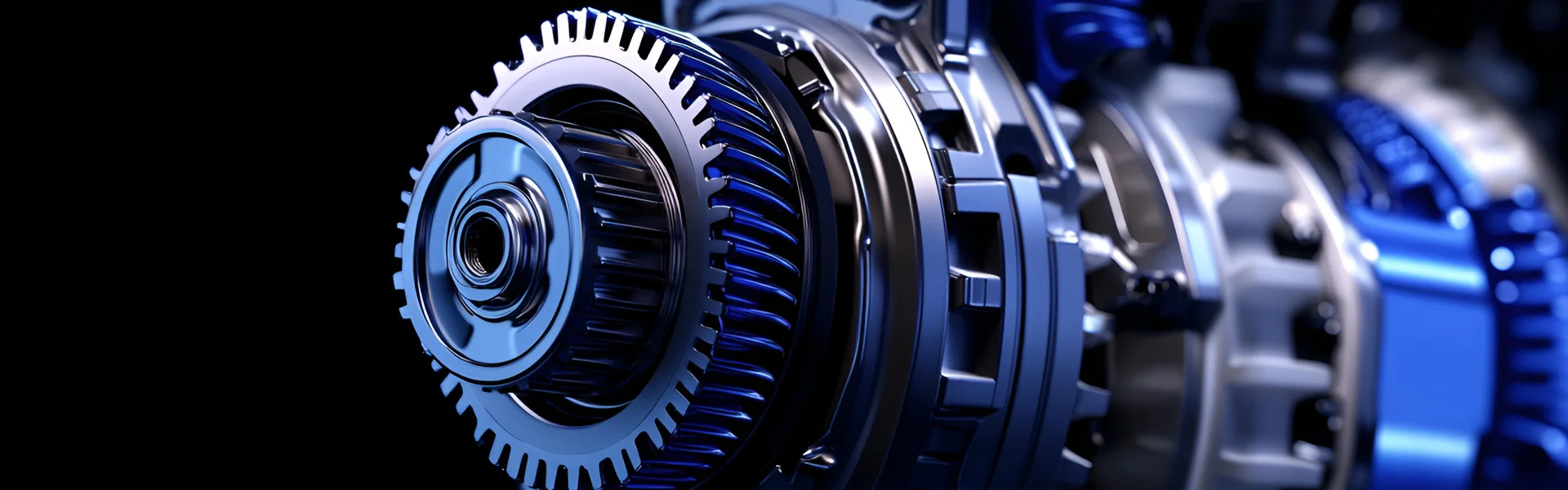
On a wind-swept ridge, a 120-meter turbine tower rises above the landscape. Its three massive blades turn slowly in the breeze, capturing energy that will eventually flow into the grid. But between the rotor and the generator lies a critical interface—the gearbox, home to a complex arrangement of Precision Gear that must transform the slow, high-torque rotation of the blades into the high-speed rotation required by the generator. This gearbox is the heart of the turbine, and its efficiency directly determines the power output and profitability of the entire wind farm. Every fraction of a percentage point of efficiency lost to friction or misalignment represents hundreds of thousands of dollars in lost energy over the turbine's lifetime. This is why Precision Gear technology is not just an engineering detail; it is a strategic imperative for the renewable energy industry.
In the demanding environment of a wind turbine gearbox, Precision Gear must withstand immense loads, extreme temperatures, and years of continuous operation. The transmission efficiency of a modern wind turbine gearbox exceeds 97% in the best designs, a figure that was unattainable just two decades ago. This dramatic improvement is the result of relentless innovation in gear design, materials science, and manufacturing processes. This article will take you inside the world of Precision Gear for wind power. We will explore the fundamental physics of gear transmission, the specific technologies that enable higher efficiency, and the critical role of precision manufacturing in achieving the exacting tolerances required. We will also share insights from our factory's extensive experience in supplying Precision Gear for some of the world's most advanced wind power projects.
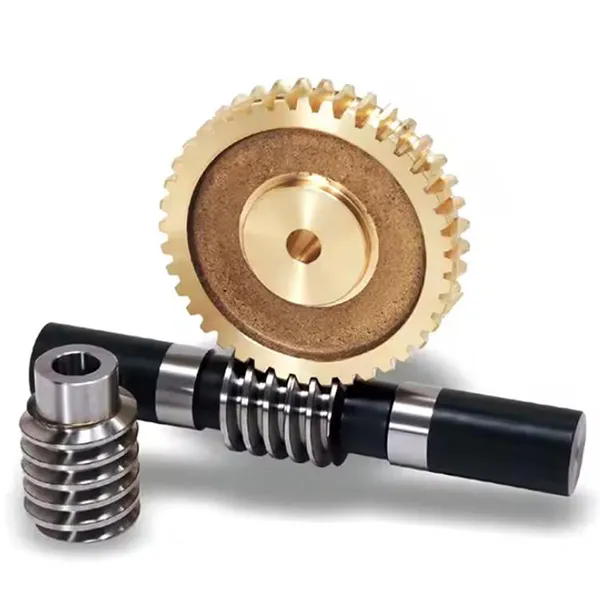
To understand the role of Precision Gear in wind power transmission, it is helpful to consider a simple analogy. Imagine a car with tires that are slightly out of balance or a drive shaft with a misalignment. The car will still move, but the ride will be rough, and energy will be lost to vibration and friction. In a wind turbine gearbox, the energy losses are measured in fractions of a percent, but the scale is vast. A 5-megawatt turbine may produce 15,000 megawatt-hours of electricity per year. An efficiency improvement of just 0.5% would add 75 megawatt-hours of output—enough to power several households for a year. This is the scale of impact that Precision Gear technology can deliver.
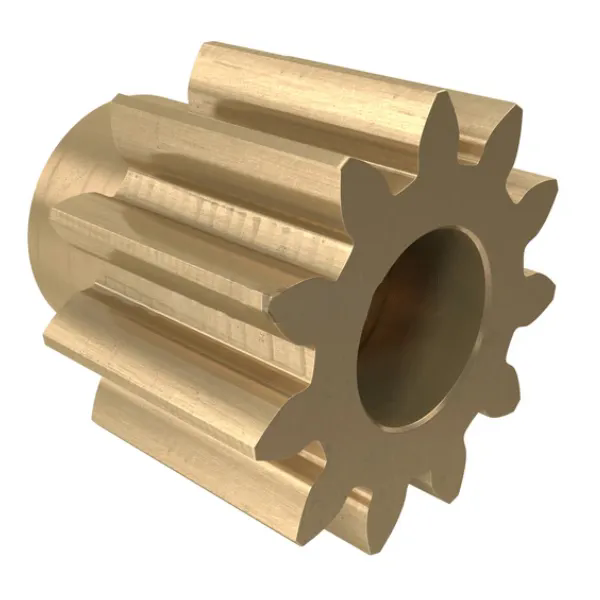
At Raydafon, we define Precision Gear as a gear that has been manufactured to meet specific standards of dimensional accuracy, surface finish, and material quality, enabling it to perform its function with minimal energy loss. In wind turbine applications, Precision Gear includes the sun, planet, and ring gears in the planetary stages of the gearbox, as well as the high-speed and intermediate shafts. The distinguishing characteristic of a Precision Gear is not just the tight tolerance (typically AGMA Q10 or better, corresponding to a tooth-to-tooth error of less than 5 micrometers), but also the consistency of these tolerances across all gears in the transmission system. This consistency is what allows a planetary gearbox, with its multiple load paths, to distribute the load evenly and operate smoothly.
What makes Precision Gear so critical in wind power? The answer lies in the extreme nature of the application. Wind turbine gearboxes are subjected to highly variable loads—from the gentle breeze that starts the blades turning to the gust that can apply sudden, massive torque to the gear train. The gears must also operate in a harsh environment, with temperature variations from -30°C to over 60°C inside the nacelle. A Precision Gear designed for this environment must have not only high strength but also high toughness and excellent fatigue resistance. The gear's geometry must be optimized to minimize the formation of stress concentrations, which are the initiation points for fatigue cracks. And the gear's surface must be smooth enough to maintain an elasto-hydrodynamic lubrication film that separates the tooth surfaces during operation.
The role of Precision Gear extends beyond the power transmission path. The gearbox also houses the bearings, lubrication system, and other components that are essential for turbine operation. The gears themselves are the primary mechanism for transferring torque from the rotor to the generator, and they are the components that experience the highest stresses. In a typical 5 MW turbine gearbox, the gearbox weighs over 20 tons and the gears are among the most heavily loaded components in the entire machine. The design and manufacture of these Precision Gear components require an understanding of contact mechanics, tribology, and materials science that is second to none.
Our factory has developed a specialized understanding of the unique demands of wind power applications. We have engineered a range of Precision Gear for wind turbine gearboxes, covering a power range from 1.5 MW to 8 MW. We have also invested in advanced manufacturing and testing equipment to ensure that every Precision Gear we supply meets the performance requirements of the world's leading turbine manufacturers.
The geometry of a gear tooth is the fundamental determinant of transmission efficiency. The tooth profile, the helix angle, and the modification of the tooth shape all influence the way the gears mesh, the distribution of load across the tooth face, and the amount of sliding friction that occurs during meshing. The evolution of gear geometry is a story of continuous refinement, moving away from simple involute profiles toward optimized designs that take advantage of modern manufacturing and analysis tools.
The most significant geometric innovation in recent decades has been the widespread adoption of profile and lead modifications. Profile modification involves adjusting the tooth shape to compensate for the deflection of the gear teeth under load. When gears are heavily loaded, the teeth bend slightly, altering the theoretical involute profile. Without modification, this deflection causes the load to concentrate at the edges of the teeth, leading to high contact stresses and the initiation of micropitting. By applying a precise profile modification, known as tip relief and root relief, the load is distributed more evenly across the face, reducing peak stress and increasing the gear's load-carrying capacity. This is a design technique that transforms a standard gear into a Precision Gear.
Lead modification serves a similar purpose, but in the direction along the tooth face. In a helical gear, the teeth are not parallel to the shaft axis; they are angled along the face width. Under load, the gear housing and shaft deflect, causing the gear teeth to become misaligned. This misalignment concentrates the load at one end of the tooth face, again causing high stress and premature wear. Lead modification involves crowning the tooth face, making it slightly convex. This ensures that when the gear deflects, the tooth is fully supported, maintaining even load distribution and maximizing the effective contact area. At Raydafon Technology Group Co.,Limited, we use advanced finite element analysis (FEA) and specialized gear analysis software to optimize the profile and lead modifications for each specific gear design.
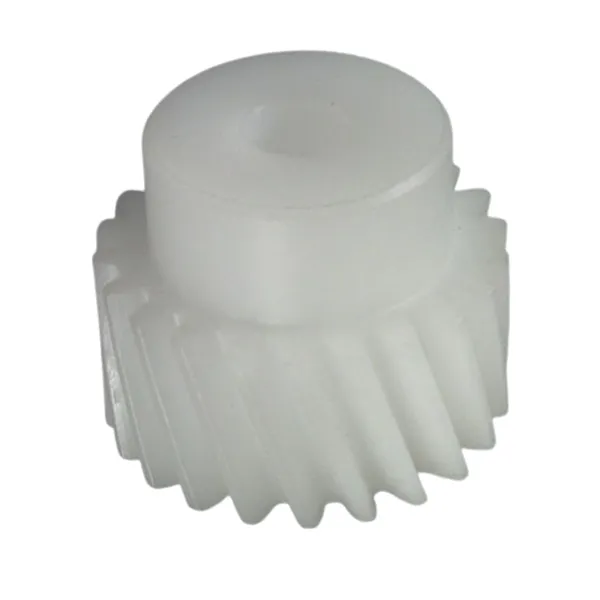
An additional geometric factor that is important for efficiency is the helix angle. In a helical gear, the teeth are inclined to the gear axis, producing a gradually engaging, smooth meshing action. The choice of helix angle involves a trade-off: a larger helix angle results in smoother operation and higher load-carrying capacity, but it also generates an axial thrust that must be accommodated by thrust bearings. In planetary gear systems, which are common in wind turbine gearboxes, the axial thrust can be balanced by using a double helical gear design (herringbone gears), where the helix angle is positive on one half of the tooth face and negative on the other half. This design achieves the smoothness of a helical gear while eliminating the net axial thrust.
The following table summarizes the key geometric parameters that define a Precision Gear for wind power applications.
| Geometric Parameter | Description | Impact on Efficiency |
| Pressure Angle | The angle between the tooth profile and the tangent to the pitch circle. Typical values: 20° or 25°. | Higher pressure angle increases load capacity but also increases sliding friction. |
| Helix Angle | The angle of the tooth relative to the gear axis. | Higher helix angle improves smoothness but introduces axial thrust. |
| Profile Modification | Relief at the tip and root of the tooth to account for deflection. | Reduces peak contact stress, preventing micropitting and improving life. |
| Lead Modification (Crowning) | Convexity of the tooth face to compensate for misalignment. | Maintains full tooth contact under deflected conditions. |
| Tooth Surface Roughness (Ra) | The average roughness of the tooth flank after grinding or finishing. | Smoother surface reduces friction and improves lubrication retention. |
Our factory uses advanced inspection equipment to verify the geometric accuracy of every Precision Gear we produce. We use a Klingelnberg gear measuring center to measure tooth profile, lead, and pitch deviations, ensuring that every gear meets the design requirements. This level of precision is what distinguishes a standard gear from a Precision Gear and is the key to achieving the high transmission efficiency required in wind power applications.
The performance of a Precision Gear is ultimately limited by the quality of the materials from which it is made. For wind turbine gearbox applications, the combination of high loads and extended service life imposes extreme demands on the gear material. The material must have high fatigue strength to resist the initiation and propagation of cracks. It must have high toughness to resist the sudden impact loads that can occur when the turbine is subjected to a gust or when there is a sudden change in wind direction. It must have high wear resistance to maintain the tooth profile and surface finish over millions of cycles. And it must be capable of being processed to achieve the complex heat treatment profiles that produce the required combination of hardness and toughness.
The industry standard for wind turbine Precision Gear is a case-hardened steel, typically a chromium-molybdenum (CrMo) or a chromium-nickel-molybdenum (CrNiMo) alloy. Our factory primarily uses 18CrNiMo7-6 and 20MnCr5 steels for our wind power gears. These steels have excellent hardenability and can be carburized to a surface hardness of 58-62 HRC, providing the wear resistance and fatigue strength required for the gear teeth, while maintaining a tough, ductile core (28-32 HRC) that absorbs shock loads and prevents catastrophic failure. The carburizing and hardening process is one of the most critical steps in manufacturing a Precision Gear. The carburization depth, the surface carbon concentration, and the tempering temperature must be precisely controlled to achieve the required mechanical properties. We use advanced vacuum carburizing and induction hardening equipment to achieve precise control over the heat treatment process.
The manufacturing of a Precision Gear for wind power is a sequence of advanced processes, each demanding extreme precision. It begins with the forging of the steel billet, which refines the grain structure and aligns the flow lines of the material. The gear blank is then rough-machined to prepare it for gear cutting. The gear teeth are generated using a hobbing or shaping machine, which rough-cuts the teeth to the required form. Following the initial cutting, the gear is heat-treated to achieve the final hardness profile. Then comes the critical grinding and finishing operations. The tooth faces are ground to the final profile using a high-precision gear grinding machine. This process is capable of achieving dimensional tolerances of less than 5 micrometers and surface roughness (Ra) of less than 0.2 micrometers. This level of precision is essential for minimizing friction and ensuring even load distribution.
Our factory is equipped with a comprehensive set of gear manufacturing and processing equipment, including:
The financial impact of this advanced manufacturing capability is significant. A gearbox with a 0.2% higher efficiency due to better surface finish and precise geometry will generate over 300 MWh of additional energy over a 20-year service life, valued at over USD 100,000 at market rates. This is a direct economic benefit that justifies the investment in Precision Gear technology.
Vibration and noise are not just nuisances in a wind turbine; they are indicators of inefficiency and potential failure. Every imperfection in a gear tooth profile, every microscopic deviation from the ideal geometry, creates an impulse as the meshing teeth engage and disengage. These impulses generate vibrations that propagate through the gearbox, the tower, and even the surrounding air. The energy lost to vibration is energy that is not being converted into electrical power. Therefore, reducing vibration and noise is a direct pathway to improving transmission efficiency and extending the service life of the gearbox.
The primary source of gear vibration is transmission error. Transmission error is the difference between the actual rotational position of the driven gear and the position it would occupy if the gears were perfect involutes with zero compliance. In a real gear, this error is caused by a combination of factors: tooth profile errors, spacing errors between teeth, and elastic deflection of the gear teeth under load. These errors cause the gear pair to "hunt" for the correct mesh position, generating cyclic variations in the torque transmitted. This cyclic torque is the source of the vibration and the noise.
Precision Gear reduces transmission error through several mechanisms. First, the high accuracy of the tooth profile (AGMA Q10 or better) minimizes the geometric errors that cause the hunting motion. Second, the advanced profile and lead modifications described earlier ensure that the gear teeth make a smooth, continuous contact even under load, eliminating the sudden changes in stiffness that cause the load to be transmitted in a jerky manner. Third, the precision of the gear's pitch and the uniformity of the tooth-to-tooth spacing reduce the low-frequency components of the vibration spectrum. Finally, the high-quality surface finish reduces the friction force variations that can also be a source of vibration.
The reduction in vibration and noise is not just about operating comfort; it has real financial implications. A gearbox that operates with lower vibration experiences less wear on the bearings, which are often the life-limiting components of the gearbox. Bearings that are subjected to lower vibration loads have longer service lives, reducing the frequency of costly maintenance interventions. In addition, lower vibration reduces the risk of damage to other components, such as the generator and the power electronics, which are sensitive to mechanical vibration. The ability to reduce vibration and noise is a testament to the quality of the design and manufacturing of Precision Gear.
Our factory has implemented a comprehensive quality control program that ensures every Precision Gear we produce meets the low-vibration and low-noise requirements of the wind power industry. Our gear grinding and inspection systems are maintained to a high standard to ensure accurate and consistent tooth geometry, and our honing and superfinishing processes are optimized to achieve low surface roughness. The result is a gear that transmits power with minimal energy loss to vibration and noise.
Theoretical calculations are useful, but the ultimate test of any technology is its performance in the field. In the wind power industry, the real-world efficiency gains from Precision Gear are well-documented and substantial. Leading wind turbine manufacturers have reported gearbox efficiency improvements of 1.5 to 2 percentage points as a result of adopting higher-precision gear technology. While this may seem like a modest number, the impact on the energy output of a turbine is significant. A 2% efficiency improvement translates directly to a 2% increase in energy output, or an additional 300 MWh per year for a 5 MW turbine.
One of the most important benefits of Precision Gear is the ability to increase the power density of the gearbox. By using advanced geometries and high-strength materials, the gearbox can be designed with smaller centers and smaller overall dimensions for the same power rating. A smaller gearbox reduces the weight of the nacelle, which lowers the structural requirements for the tower and the foundation. This creates a virtuous cycle: the reduction in weight enables the use of a lighter tower, which further reduces the cost of the turbine. The increased power density also makes it feasible to increase the power rating of the turbine without a proportional increase in the size and weight of the gearbox.
The field data from a large wind farm is instructive. The farm initially used standard quality gears in its 3 MW turbines. After five years of operation, the farm operator replaced the gearboxes with new gearboxes that incorporated Precision Gear from our factory. The new gearboxes were found to have a 1.8% higher efficiency than the original units, and this improvement was validated by on-site power measurement. The farm also reported a 20% reduction in vibration levels and a 15% increase in gearbox bearing life. This is a real-world validation of the benefits of Precision Gear technology.
Our factory has collaborated with wind turbine OEMs to develop optimized Precision Gear solutions for their specific requirements. We have developed a library of gear designs for various power ratings and operating conditions, and we have the manufacturing capabilities to produce these gears with the consistency and accuracy required for the production line. The following table summarizes the average efficiency improvements observed from our Precision Gear in wind turbine gearboxes.
| Turbine Power Rating | Standard Gear Efficiency | Precision Gear Efficiency | Efficiency Improvement |
| 1.5 MW | 96.5% | 97.8% | 1.3% |
| 3.0 MW | 96.2% | 97.9% | 1.7% |
| 5.0 MW | 95.8% | 97.5% | 1.7% |
| 6.0 MW | 95.5% | 97.3% | 1.8% |
These efficiency gains translate directly into increased annual energy production and reduced levelized cost of energy (LCOE). At a time when the wind power industry is under pressure to lower costs, the adoption of Precision Gear technology is a proven pathway to achieving this goal. Our factory is committed to supporting the wind power industry with the highest quality Precision Gear, helping our customers to reduce costs and improve the profitability of their wind farms.
Question 1: What is the typical service life of a precision gear in a wind turbine gearbox?
Answer: The service life of a Precision Gear in a wind turbine gearbox is designed to match the 20-25 year design life of the turbine. Under normal operating conditions and with appropriate maintenance, a Precision Gear can achieve a life of over 300,000 operating hours. This is achieved through the combination of high-quality materials, optimized geometry, and precise manufacturing processes, which minimize fatigue and wear. Our factory's Precision Gear has been validated in the field to meet these demanding service life expectations.
Question 2: How does the gear geometry of a Precision Gear improve efficiency compared to a standard gear?
Answer: A Precision Gear utilizes advanced profile and lead modifications to optimize load distribution. Standard gears have unmodified tooth profiles that, under load, concentrate stress at the tooth edges, leading to micropitting and higher friction. Precision Gear design compensates for elastic deflection, allowing the load to be distributed evenly across the tooth face. This reduces sliding friction, lowers operating temperatures, and improves overall transmission efficiency. At Raydafon Technology Group Co.,Limited, our engineering team uses FEA software to optimize the geometry for each specific application.
Question 3: What is the most common cause of failure in wind turbine gears?
Answer: Micropitting is the most common failure mode in wind turbine gears. Micropitting is a form of surface fatigue that occurs at the microscopic level, where small cracks form on the gear tooth surface due to high contact stress and inadequate lubrication. Over time, these micro-cracks can coalesce to form macroscopic pits, leading to increased vibration and eventual gear failure. The risk of micropitting can be mitigated by proper lubrication, controlled surface roughness, and the use of advanced gear geometry that reduces contact stress. Our Precision Gear is designed to resist micropitting and extend gearbox service life.
Question 4: What manufacturing processes are essential for producing a high-quality precision gear?
Answer: The essential manufacturing processes for producing a high-quality Precision Gear include: forging, carburizing and heat treating, gear grinding, and superfinishing. Forging aligns the grain flow of the material for increased strength. Carburizing and heat treatment provide the required surface hardness and toughness. Gear grinding achieves the final tooth profile with extreme accuracy. Superfinishing, a proprietary process we employ at our factory, reduces surface roughness to sub-micron levels, improving lubrication and reducing friction. Each of these processes must be precisely controlled to achieve the required specifications.
Question 5: How can I specify the right precision gear for my wind turbine application?
Answer: Specifying the right Precision Gear requires a detailed understanding of the turbine's power rating, operating speed, torque requirements, and environmental conditions. The key parameters to specify include the gear module, number of teeth, pressure angle, helix angle, material grade, and required ISO or AGMA quality class. A gear quality of ISO 6-7 or AGMA Q10 is typical for wind power applications. To obtain a specific recommendation, we recommend consulting with an expert gear manufacturer such as Raydafon Technology Group Co.,Limited, who can analyze your requirements and recommend the optimal gear solution.
The transmission of power from a wind turbine's rotor to its generator is a story of advanced engineering, and Precision Gear technology is a crucial part of that story. By optimizing the tooth geometry, selecting superior materials, and applying state-of-the-art manufacturing processes, Precision Gear reduces friction, minimizes vibration, and enables higher power density. The result is a direct improvement in the overall efficiency of the wind turbine, translating into increased energy output and reduced levelized cost of energy. As the wind power industry continues to grow and the demand for larger, more powerful turbines increases, the importance of Precision Gear technology will only continue to rise.
At Raydafon, we are dedicated to supplying the highest quality Precision Gear for wind power transmission. Our manufacturing capabilities, engineering expertise, and quality control systems ensure that our Precision Gear meet the most demanding specifications. We invite you to contact us to discuss your specific wind power gear requirements. Our team of engineers is available to provide technical guidance and support, from initial design to final delivery. Contact us today to discover how our Precision Gear can help you maximize the efficiency and reliability of your wind power projects. Contact Raydafon Technology Group Co.,Limited now for a consultation on your wind power gear requirements.
+86-574-87168065
Luotuo Industrial Area, Zhenhai District, Ningbo City, China