QR Code

Products
Contact Us


Fax
+86-574-87168065

Email

Address
Luotuo Industrial Area, Zhenhai District, Ningbo City, China


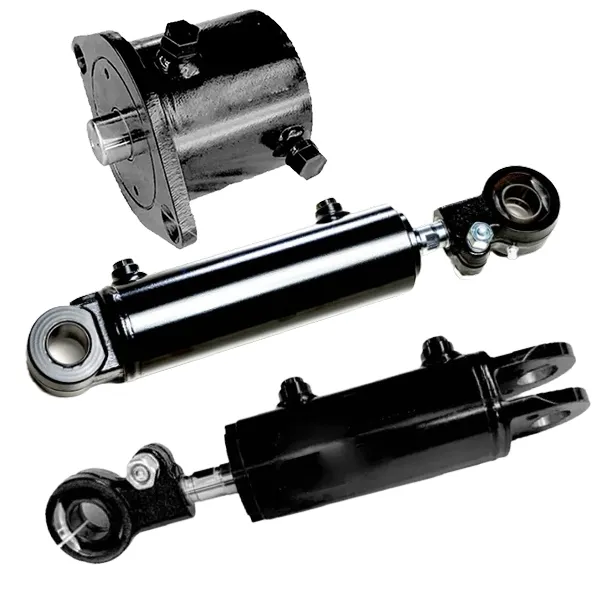
A Hydraulic Lift Cylinder operating at 350 bar is not simply a cylinder with high-pressure fluid inside. It is a system in which every component—the barrel, the rod, the piston, and the seals—is designed to work together to contain that pressure and convert it into controlled lifting force. Among these components, the seals are the most vulnerable. They are the softest materials in the system, the most exposed to friction and heat, and the most likely to fail first. When a Hydraulic Lift Cylinder loses pressure, the cause is almost always a seal. That is why seal durability is not a secondary concern for cylinder designers; it is the primary constraint that determines the cylinder's pressure rating, service life, and safety margin.
This article examines the Hydraulic Lift Cylinder from the perspective of seal durability. We will look at how the cylinder's design protects the seals, how material selection extends seal life, and how our factory at Raydafon Technology Group Co.,Limited engineers Hydraulic Lift Cylinders that maintain their sealing performance under the most demanding high-pressure conditions.
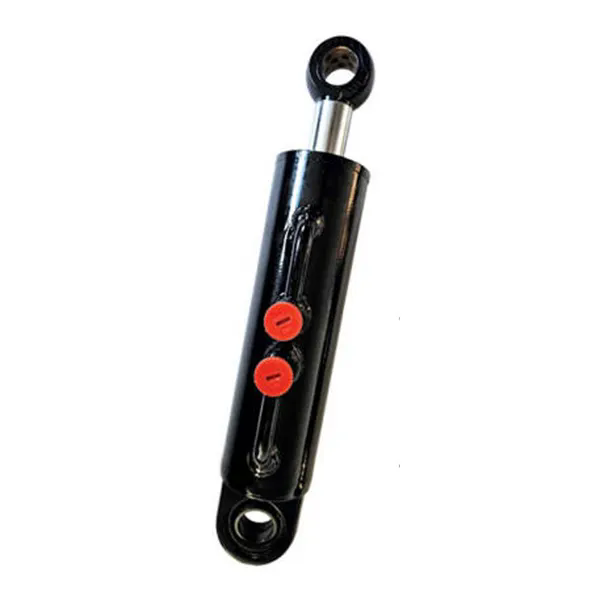
The ability of a Hydraulic Lift Cylinder to contain 350 bar of hydraulic pressure without leaking depends on three elements working together: the cylinder barrel, the piston, and the sealing system. The barrel is the pressure vessel. It is made from seamless steel tube with a wall thickness calculated to withstand the hoop stress generated by the internal pressure. The barrel's internal surface is honed to a precise diameter and a smooth finish (Ra 0.2-0.4 µm) to allow the piston seals to slide with minimal friction and wear. The piston is the moving element that separates the high-pressure and low-pressure sides of the cylinder. It is machined to a precise fit within the barrel, with a clearance that is tight enough to support the seals but not so tight that it causes binding. The sealing system consists of the piston seal, the rod seal, the wiper seal, and the guide rings. These components are the primary barrier against leakage.
The relationship between the Hydraulic Lift Cylinder and its seals is a partnership. The cylinder provides the rigid structure and the precision surfaces that the seals need to function. The seals provide the flexibility and the conformity that the rigid metal components cannot. If the cylinder barrel is out of round or the surface finish is too rough, the seals will wear prematurely. If the clearance between the piston and the barrel is too large, the seals will extrude. If the clearance is too small, the seals will be pinched. The table below summarizes how each component of the Hydraulic Lift Cylinder contributes to seal durability.
| Component | Function | Impact on Seal Durability |
| Cylinder Barrel | Contains pressure, provides smooth bore | Honed surface finish (Ra 0.2-0.4 µm) reduces seal wear |
| Piston | Separates pressure zones, transmits force | Precise clearance prevents seal extrusion and pinch |
| Piston Rod | Transmits force to load, surface for rod seal | Hard chrome plating resists wear and corrosion |
| Guide Rings | Support piston and rod, prevent metal contact | Maintains alignment, reduces side load on seals |
| Seal Grooves | Hold seals in position | Proper dimensions prevent seal movement and damage |
At Raydafon Technology Group Co.,Limited, our factory manufactures Hydraulic Lift Cylinders with all these components engineered to work together. We machine the barrel to a precise internal diameter and surface finish. We machine the piston to the optimal clearance for the operating pressure. We harden and chrome-plate the rod to resist wear and corrosion. And we select the guide rings and seals to match the specific application. This integrated approach ensures that our Hydraulic Lift Cylinders deliver reliable sealing performance under the most demanding high-pressure conditions.
The design of a Hydraulic Lift Cylinder incorporates several features that are specifically intended to protect the seals and extend their life. These features include the back-up ring, the guide rings, the wiper seal, and the rod surface treatment. Each of these features plays a critical role in maintaining the integrity of the sealing system under high-pressure conditions.
The back-up ring is a rigid ring that is placed behind the seal, on the low-pressure side. Its purpose is to prevent the seal from extruding into the clearance gap between the piston and the barrel, or between the rod and the gland. Under high pressure, the seal material becomes soft and can be forced into the gap. The back-up ring, which is typically made from PTFE or POM, provides a hard, immovable barrier that stops this extrusion. Without a back-up ring, a Hydraulic Lift Cylinder operating at 350 bar would experience rapid seal failure. The guide rings, also known as bearing strips or wear rings, are placed on the piston and the rod to support the moving components and maintain proper alignment. They prevent metal-to-metal contact between the piston and the barrel, and between the rod and the gland. By maintaining alignment, they reduce the side loads on the seals, which would otherwise cause uneven wear and premature failure.
The wiper seal, also known as a scraper, is located at the outer end of the rod gland. Its purpose is to remove dirt, dust, and other contaminants from the rod as it retracts into the cylinder. Without a wiper seal, these contaminants would be drawn into the cylinder and would cause abrasive wear on the rod seal and the rod surface. The rod surface treatment is also critical. The rod is typically hardened and hard-chrome plated to provide a hard, smooth, corrosion-resistant surface for the rod seal to slide against. The table below summarizes these design features and their role in protecting the seals.
| Design Feature | Function | Benefit for Seal Durability |
| Back-up Ring | Prevents seal extrusion into clearance gap | Essential for high-pressure applications |
| Guide Rings | Supports piston and rod, maintains alignment | Reduces side loads and uneven wear on seals |
| Wiper Seal | Removes contaminants from rod | Prevents abrasive wear on rod seal |
| Rod Surface Treatment | Hard chrome plating | Provides smooth, wear-resistant surface for seal |
| Seal Groove Design | Holds seal in position | Prevents seal movement and damage |
At our factory, we incorporate all these design features into every Hydraulic Lift Cylinder we manufacture. We use finite element analysis (FEA) to optimize the clearance gaps and the seal groove dimensions for each pressure rating. We also use precision CNC machining to achieve the tolerances required for these features to function correctly. The result is a Hydraulic Lift Cylinder that protects its seals and delivers reliable performance over a long service life.
The material of the seal is the single most important factor in determining its durability under high-pressure conditions. Different materials have different properties, and the choice of material must be matched to the specific application. The most common seal materials for Hydraulic Lift Cylinders are PTFE, polyurethane, NBR, and FKM. Each material has its own strengths and weaknesses.
PTFE is a fluoropolymer that offers excellent chemical resistance, a very low coefficient of friction, and a high temperature rating (up to 260°C). It is often used in high-pressure applications because it resists extrusion and has good compression set resistance. However, PTFE is relatively soft and can be prone to wear, so it is often used with a back-up ring or in a composite seal. Polyurethane is a polymer that offers excellent wear resistance, high tensile strength, and good resistance to extrusion. It is commonly used for rod seals and piston seals in high-pressure cylinders. Polyurethane has a temperature rating of up to 80-90°C. NBR (nitrile rubber) is a synthetic rubber that offers good resistance to oil and water, but it has a lower temperature rating and lower extrusion resistance than PTFE or polyurethane. It is used in lower-pressure applications. FKM (Viton) is a fluorinated rubber that offers excellent resistance to high temperatures (up to 200°C) and chemicals. It is used in high-temperature applications. The table below compares the key properties of these seal materials.
| Material | Temperature Range | Chemical Resistance | Extrusion Resistance | Wear Resistance | Typical Application in Hydraulic Lift Cylinders |
| PTFE | -200°C to +260°C | Excellent | Excellent | Moderate | High-pressure, high-temp seals |
| Polyurethane | -30°C to +90°C | Good | Excellent | Excellent | High-pressure rod/piston seals |
| NBR | -40°C to +100°C | Good (oil resistant) | Moderate | Good | General-purpose seals |
| FKM (Viton) | -20°C to +200°C | Excellent | Good | Good | High-temperature seals |
At our factory, we select seal materials based on the specific requirements of each Hydraulic Lift Cylinder application. For high-pressure, high-temperature applications, we use PTFE or FKM. For high-pressure, moderate-temperature applications, we use polyurethane. For general-purpose applications, we use NBR. We also offer composite seals that combine the best properties of different materials. Our goal is to provide a Hydraulic Lift Cylinder that delivers reliable performance over the full service life of the equipment.
When a seal fails in a Hydraulic Lift Cylinder, the failure does not happen in isolation. It triggers a chain of events that cascades through the hydraulic system, affecting every component from the pump to the load. Understanding this failure chain is essential for engineers and maintenance managers who need to justify the investment in high-quality seals and preventive maintenance programs. The failure chain begins with the initial leak. The leak may be small—a few drops per minute—but it creates a loss of pressure that the hydraulic system attempts to compensate for by increasing the flow from the pump. This increased flow requires more power, which generates more heat. The heat accelerates the degradation of the hydraulic fluid, reducing its lubricity and causing the seals to wear faster. As the seals wear, the leak increases, and the cycle repeats itself at an accelerating rate.
The cascading costs of a seal failure in a Hydraulic Lift Cylinder extend far beyond the cost of the seal itself. The table below breaks down the cost components of a typical seal failure in a large-tonnage Hydraulic Lift Cylinder.
| Cost Component | Description | Estimated Cost |
| Replacement Seal Kit | Cost of the seals and associated components | $200 - $800 |
| Labor | Technician time to disassemble, replace, and reassemble | $500 - $2,000 |
| Hydraulic Fluid | Fluid lost during the leak and replacement fluid | $100 - $500 |
| Downtime | Lost production during repair | $2,000 - $20,000+ |
| Collateral Damage | Damage to pump, valves, or other components | $500 - $5,000 |
| Safety Incident | Potential injury or equipment damage | Variable (can be catastrophic) |
At Raydafon, our factory designs Hydraulic Lift Cylinders with seal systems that are engineered to prevent these failure modes. We use high-quality seal materials and precision manufacturing to ensure that our cylinders maintain their sealing performance even under the most demanding high-pressure conditions.
A high-durability Hydraulic Lift Cylinder is defined by a set of specifications that ensure reliable performance under high-pressure conditions. These specifications include the seal material, the back-up ring material, the surface finish, the clearance gap, and the testing protocol. The table below provides a summary of these specifications for our Hydraulic Lift Cylinder products.
| Specification | Standard Hydraulic Lift Cylinder | High-Durability Hydraulic Lift Cylinder |
| Piston Seal Material | NBR | PTFE + NBR energizer |
| Rod Seal Material | Polyurethane | Polyurethane or PTFE |
| Wiper Seal Material | Polyurethane | Polyurethane |
| Back-up Ring Material | POM | PTFE |
| Surface Finish (Ra) | 0.4 - 0.8 µm | 0.2 - 0.4 µm |
| Clearance Gap | Standard | Optimized for pressure |
| Temperature Rating | -30°C to +100°C | -40°C to +200°C |
| Pressure Rating | Up to 250 bar | Up to 500 bar |
| Testing Protocol | Static pressure test | Dynamic cycle test + pressure test |
At Raydafon Technology Group Co.,Limited, we offer both standard and high-durability Hydraulic Lift Cylinders. We can customize the cylinder to meet the specific requirements of your application, including special materials, special clearances, and special testing protocols. Our factory has the expertise and the equipment to produce cylinders that deliver reliable performance under the most demanding high-pressure conditions.
Question 1: How often should the seals in a Hydraulic Lift Cylinder be replaced?
Answer: The replacement interval depends on the operating conditions and the seal material. For standard applications, seals should be replaced every 2-3 years or after 5,000-10,000 operating hours. For high-pressure or high-temperature applications, the interval may be shorter. Regular inspection can help determine when replacement is needed. At Raydafon Technology Group Co.,Limited, we recommend a preventive maintenance schedule based on your specific application.
Question 2: What are the signs that a Hydraulic Lift Cylinder seal is failing?
Answer: The most common signs of seal failure are external leaks, a drop in system pressure, increased operating temperature, and unusual noises from the hydraulic system. If you notice any of these signs, the cylinder should be inspected immediately. Early detection can prevent catastrophic failure and reduce repair costs.
Question 3: Can I replace the seals in a Hydraulic Lift Cylinder myself, or should I have a professional do it?
Answer: Seal replacement requires specialized tools and knowledge. It is recommended that a qualified hydraulic technician perform the replacement. Improper installation can damage the seals or the cylinder, leading to premature failure. At our factory, we offer a full seal replacement service and can provide training for your maintenance team.
Question 4: What is the best seal material for high-pressure Hydraulic Lift Cylinders?
Answer: The best seal material for high-pressure applications depends on the specific conditions. PTFE is often used for high-pressure seals because of its excellent extrusion resistance and chemical resistance. Polyurethane is also a good choice for high-pressure applications because of its high wear resistance and tensile strength. FKM is used for high-temperature applications. Our engineering team can help you select the right material for your specific application.
Question 5: How can I extend the life of my Hydraulic Lift Cylinder seals?
Answer: To extend seal life, follow these practices: maintain proper filtration to prevent contamination, keep the hydraulic fluid at the correct temperature, avoid excessive pressure and side loads, and perform regular inspections. Using high-quality seals and following the manufacturer's maintenance recommendations will also help. At our factory, we provide detailed maintenance guidelines for all our Hydraulic Lift Cylinders.
Seal durability is critical for Hydraulic Lift Cylinders under high-pressure conditions because the seals are the components that contain the hydraulic fluid and maintain the pressure that supports the load. When a seal fails, the consequences can be severe: loss of control, equipment damage, and injury. The durability of a seal is determined by the cylinder's design, the material selection, and the operating conditions. By selecting the right seal material, using back-up rings and precision clearances, and maintaining the hydraulic system properly, the life of the seal can be extended, and the reliability of the Hydraulic Lift Cylinder can be ensured. At Raydafon Technology Group Co.,Limited, our factory is committed to manufacturing Hydraulic Lift Cylinders with seal systems that deliver reliable performance under the most demanding high-pressure conditions. We use high-quality materials, precision manufacturing processes, and rigorous testing to ensure that every cylinder we produce meets the highest standards of quality and safety.
Whether you are designing a new hydraulic system or maintaining an existing one, we invite you to contact our technical team to discuss your requirements. We can provide detailed product specifications, seal selection assistance, and maintenance support. Our commitment to quality and customer satisfaction has made us a trusted partner for industrial hydraulics around the world.
Contact Raydafon Technology Group Co.,Limited today to discuss your Hydraulic Lift Cylinder requirements and discover how our high-durability cylinders can improve the reliability of your equipment.
+86-574-87168065
Luotuo Industrial Area, Zhenhai District, Ningbo City, China