QR Code

Products
Contact Us


Fax
+86-574-87168065

Email

Address
Luotuo Industrial Area, Zhenhai District, Ningbo City, China


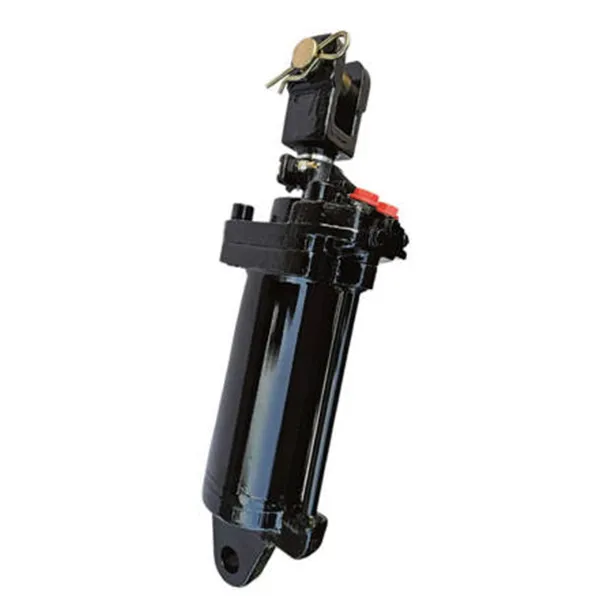
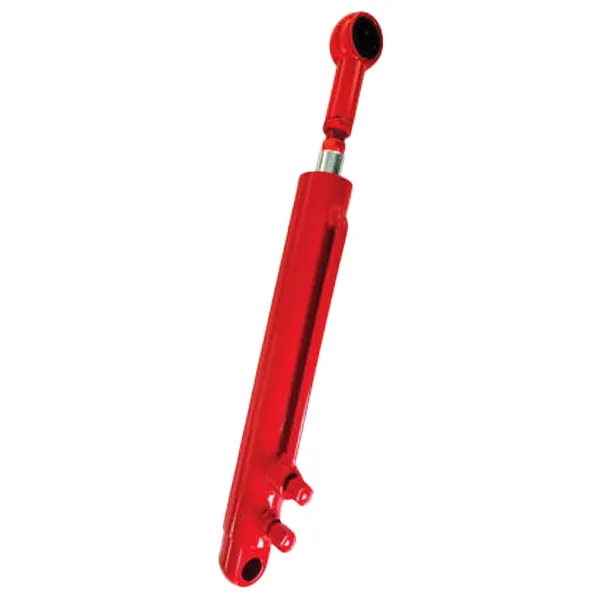
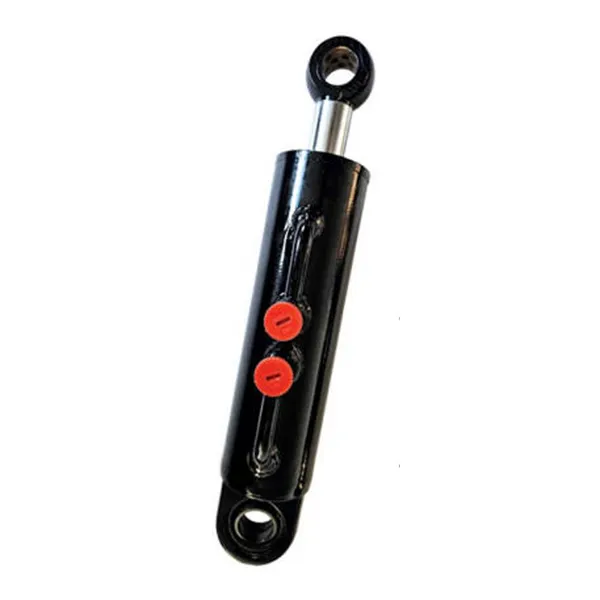
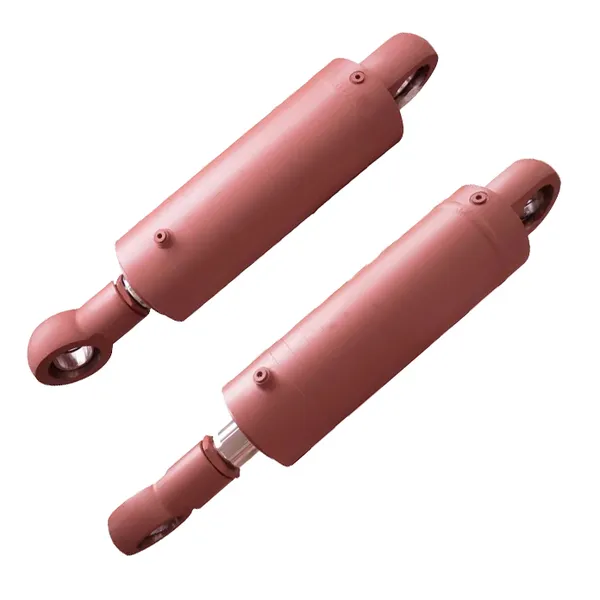
In the world of industrial hydraulics, the choice between a single-acting and a double-acting cylinder is one of the first decisions an engineer must make. It is a decision that affects the cylinder's performance, its cost, its maintenance requirements, and its suitability for the application. A Hydraulic Lift Cylinder is a device that converts hydraulic pressure into linear force and motion. The distinction between single-acting and double-acting designs lies in how the hydraulic fluid is applied to the piston. In a single-acting cylinder, fluid is applied to only one side of the piston, and the return stroke is powered by an external force such as gravity or a spring. In a double-acting cylinder, fluid is applied to both sides, allowing the cylinder to generate force in both directions. This fundamental difference has profound implications for how the cylinder is used and what it can achieve.
This article will provide a systematic technical comparison of single-acting and double-acting Hydraulic Lift Cylinders. We will examine the design differences, the operational principles, the advantages and limitations of each type, and the applications where each is most appropriate. We will also provide detailed specifications for our Hydraulic Lift Cylinder products from our factory at Raydafon Technology Group Co.,Limited, including both single-acting and double-acting models. Whether you are designing a new hydraulic system, upgrading an existing one, or simply seeking to understand the technology, this guide will provide the technical foundation you need to make an informed decision.
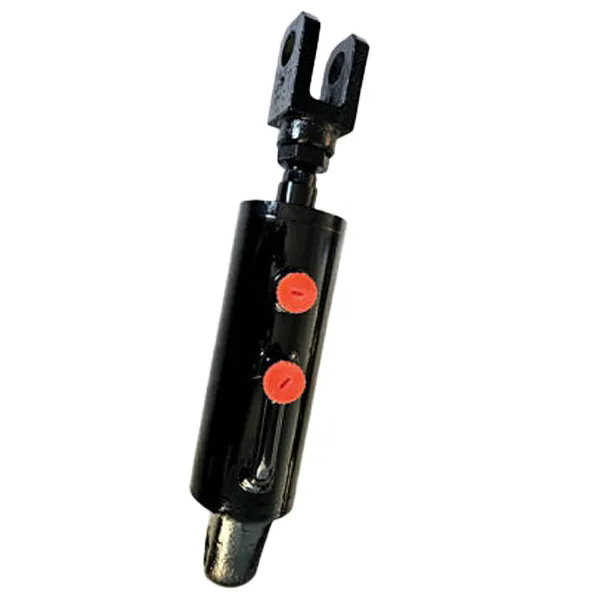
A single-acting hydraulic cylinder is a Hydraulic Lift Cylinder that uses hydraulic pressure to generate force in one direction only. The hydraulic fluid is applied to one side of the piston—typically the bottom or the cap side—to extend the rod. The return stroke is not powered by hydraulic pressure. Instead, it relies on an external force. This external force can be gravity, a spring, or the weight of the load itself. In many single-acting cylinders, a return spring is built into the cylinder to push the piston back to its retracted position when the hydraulic pressure is released. In other designs, the weight of the load provides the return force. Single-acting cylinders are simpler in construction than double-acting cylinders because they require only one fluid port and one set of seals.
Single-acting cylinders are widely used in applications where the return stroke does not require hydraulic force. For example, in a dump truck, the hydraulic cylinder that raises the bed is a single-acting cylinder. The hydraulic pressure lifts the bed, and gravity returns it to the lowered position when the pressure is released. In a car jack, the hydraulic cylinder lifts the car, and a release valve allows the car to descend by gravity. In a hydraulic press, the cylinder that applies the pressing force is often single-acting, with the return stroke powered by a spring or a separate return cylinder. The table below summarizes the key characteristics of a single-acting Hydraulic Lift Cylinder.
| Characteristic | Description |
| Fluid Application | One side of the piston only |
| Force Direction | One direction (usually extension) |
| Return Stroke | External force (gravity, spring, or load) |
| Fluid Ports | One |
| Construction Complexity | Simple |
| Cost | Lower |
| Typical Applications | Dump trucks, jacks, presses, lifts |
At Raydafon, our factory manufactures single-acting Hydraulic Lift Cylinders for a range of applications. We offer models with stroke lengths from 100mm to 2,000mm and thrust capacities up to 500 tons. Our engineering team can assist with the selection of the right cylinder for your specific application.
A double-acting hydraulic cylinder is a Hydraulic Lift Cylinder that uses hydraulic pressure to generate force in both directions. The hydraulic fluid is applied alternately to both sides of the piston. When fluid is applied to the cap side, the rod extends. When fluid is applied to the rod side, the rod retracts. This allows the cylinder to perform work in both directions. Double-acting cylinders are more complex than single-acting cylinders because they require two fluid ports and two sets of seals. However, they offer greater control and versatility. They are the standard choice for applications that require positive control of both extension and retraction, such as in construction equipment, manufacturing machinery, and aerospace systems.
The ability to generate force in both directions is a significant advantage. In an excavator, the boom, arm, and bucket cylinders are all double-acting. They must be able to push and pull with equal force to control the bucket precisely. In a hydraulic press, a double-acting cylinder can apply force in both the pressing and the return strokes, allowing for faster cycle times. In a steering system, a double-acting cylinder can turn the wheels in both directions. The table below summarizes the key characteristics of a double-acting Hydraulic Lift Cylinder.
| Characteristic | Description |
| Fluid Application | Both sides of the piston |
| Force Direction | Both directions (extension and retraction) |
| Return Stroke | Hydraulic pressure |
| Fluid Ports | Two |
| Construction Complexity | More complex |
| Cost | Higher |
| Typical Applications | Excavators, presses, steering systems, automation |
At our factory, we manufacture double-acting Hydraulic Lift Cylinders for demanding applications. We offer models with stroke lengths from 100mm to 8,000mm and thrust capacities up to 2,000 tons. Our engineering team can assist with the selection of the right cylinder for your specific application.
The internal design of a Hydraulic Lift Cylinder determines its performance, its efficiency, and its maintenance requirements. The key differences between single-acting and double-acting cylinders are in the number of fluid ports, the number of seals, and the design of the piston and rod. In a single-acting cylinder, there is one fluid port, typically located at the cap end. The piston has a single seal that separates the pressurized fluid from the unpressurized side. The rod extends through the rod end cap, which has a rod seal and a wiper seal. In a double-acting cylinder, there are two fluid ports, one at each end. The piston has two seals, one on each side, to separate the two fluid chambers. The rod end cap has a rod seal and a wiper seal, and the cap end may have a cushioning device to decelerate the piston at the end of the stroke.
The table below provides a detailed comparison of the internal design features of single-acting and double-acting Hydraulic Lift Cylinders.
| Design Feature | Single-Acting Cylinder | Double-Acting Cylinder |
| Fluid Ports | One (cap end) | Two (cap end and rod end) |
| Piston Seals | One | Two |
| Rod Seals | One rod seal + one wiper | One rod seal + one wiper |
| Return Mechanism | Spring, gravity, or load | Hydraulic pressure |
| Cushioning | Optional at cap end | Optional at both ends |
| Bleeding | Simple (one port) | More complex (two ports) |
| Maintenance | Simpler | More complex |
At Raydafon Technology Group Co.,Limited, our factory manufactures both single-acting and double-acting Hydraulic Lift Cylinders to the highest standards of quality and reliability. We use high-quality materials, precision machining, and rigorous testing to ensure that every cylinder we produce delivers reliable performance and long service life. Our engineering team can assist with the selection of the right design for your specific application.
The performance differences between single-acting and double-acting Hydraulic Lift Cylinders are significant and have important implications for system design. The most obvious difference is the force capability. A double-acting cylinder can generate force in both directions, while a single-acting cylinder can generate force in only one direction. This means that a double-acting cylinder can perform work in both the extension and retraction strokes, while a single-acting cylinder can only perform work in one stroke. Another important difference is the speed of operation. In a double-acting cylinder, the retraction speed is determined by the flow rate of the hydraulic fluid to the rod side of the piston. Because the rod-side area is smaller than the cap-side area, the retraction speed is faster than the extension speed for the same flow rate. In a single-acting cylinder, the retraction speed is determined by the external force and the flow rate of the fluid out of the cylinder.
The table below compares the key performance parameters of single-acting and double-acting Hydraulic Lift Cylinders.
| Performance Parameter | Single-Acting Cylinder | Double-Acting Cylinder |
| Force Direction | One direction | Both directions |
| Extension Force | Pressure × Piston Area | Pressure × Piston Area |
| Retraction Force | External force (not hydraulic) | Pressure × (Piston Area - Rod Area) |
| Extension Speed | Flow Rate / Piston Area | Flow Rate / Piston Area |
| Retraction Speed | Determined by external force | Flow Rate / (Piston Area - Rod Area) |
| Control | Limited (return stroke not controlled) | Full control of both strokes |
| Efficiency | Lower (energy lost in return) | Higher (energy used in both strokes) |
At our factory, we design our Hydraulic Lift Cylinders to optimize performance for the specific application. For single-acting cylinders, we focus on ensuring reliable return operation and minimizing the risk of sticking or jamming. For double-acting cylinders, we focus on achieving precise control of both strokes and minimizing pressure drop. Our engineering team can assist with the selection of the right type for your application and provide detailed performance calculations.
Selecting the right type of Hydraulic Lift Cylinder for an application requires a careful analysis of the functional requirements, the operating environment, and the cost constraints. The first question is whether the application requires force in one direction or both. If the return stroke does not require hydraulic force—for example, if the load can return by gravity—a single-acting cylinder is the simpler and more economical choice. If the return stroke requires hydraulic force—for example, if the load must be pulled back or if the return stroke must be controlled—a double-acting cylinder is required. The second question is whether the application requires precise control of both strokes. If the return stroke must be controlled for positioning or speed, a double-acting cylinder is necessary. The third question is whether the application has space and weight constraints. Single-acting cylinders are generally more compact and lighter than double-acting cylinders of the same thrust capacity. The fourth question is whether the application has cost constraints. Single-acting cylinders are less expensive to purchase and maintain.
The table below provides a decision matrix for selecting between single-acting and double-acting Hydraulic Lift Cylinders based on common application requirements.
| Application Requirement | Recommended Cylinder Type |
| Force in one direction only | Single-Acting |
| Force in both directions | Double-Acting |
| Return by gravity or spring | Single-Acting |
| Controlled return stroke | Double-Acting |
| Space and weight constraints | Single-Acting |
| High cycle rate with fast return | Double-Acting |
| Lowest initial cost | Single-Acting |
| Precise positioning in both directions | Double-Acting |
At Raydafon Technology Group Co.,Limited, we have extensive experience in helping customers select the right Hydraulic Lift Cylinder for their application. Our engineering team can provide detailed technical consultation and performance calculations to ensure that you choose the optimal cylinder for your needs.
The following table provides the key technical specifications for our single-acting and double-acting Hydraulic Lift Cylinder series. These cylinders are designed for a wide range of industrial applications and are available in a range of sizes and configurations to meet different requirements. Our factory can also produce custom cylinders to meet specific project requirements.
| Parameter | Single-Acting | Double-Acting |
| Piston Diameter | 40 - 800 mm | 40 - 1,000 mm |
| Rod Diameter | 20 - 500 mm | 20 - 700 mm |
| Stroke Length | 100 - 2,000 mm | 100 - 8,000 mm |
| Operating Pressure | Up to 350 bar | Up to 500 bar |
| Thrust Capacity | Up to 500 tons | Up to 2,000 tons |
| Return Mechanism | Spring, gravity, or load | Hydraulic pressure |
| Mounting Type | Flange, Clevis, Trunnion | Flange, Clevis, Trunnion, Threaded |
| Seal Material | PTFE, Polyurethane, NBR | PTFE, Polyurethane, NBR, FKM |
| Operating Temperature | -30°C to +120°C | -30°C to +150°C |
At our factory, we use high-quality materials, precision machining, and rigorous testing to ensure that every Hydraulic Lift Cylinder we produce delivers reliable performance and long service life. Our engineering team is available to assist with the selection process and to provide detailed technical support.
Question 1: What is the main difference between a single-acting and a double-acting hydraulic cylinder?
Answer: The main difference is that a single-acting cylinder uses hydraulic pressure to generate force in only one direction, while a double-acting cylinder uses hydraulic pressure to generate force in both directions. In a single-acting cylinder, the return stroke is powered by an external force such as gravity or a spring. In a double-acting cylinder, the return stroke is powered by hydraulic pressure applied to the opposite side of the piston.
Question 2: Which type of cylinder is more efficient?
Answer: A double-acting cylinder is generally more efficient because it uses hydraulic pressure for both the extension and retraction strokes, allowing for precise control and faster cycle times. A single-acting cylinder is less efficient because the return stroke relies on external forces, which may not be controllable or may waste energy.
Question 3: Can a single-acting cylinder be used in applications that require a controlled return stroke?
Answer: No, a single-acting cylinder cannot provide a controlled return stroke because the return force is provided by an external force such as gravity or a spring. If the application requires precise control of the return stroke, a double-acting cylinder is required.
Question 4: What are the typical applications for single-acting cylinders?
Answer: Single-acting cylinders are typically used in applications where the return stroke does not require hydraulic force. Examples include dump trucks, hydraulic jacks, and some types of presses. They are also used in applications where space and weight are constrained, as they are generally more compact than double-acting cylinders.
Question 5: What are the typical applications for double-acting cylinders?
Answer: Double-acting cylinders are used in applications that require force and control in both directions. Examples include excavators, cranes, steering systems, and hydraulic presses. They are the standard choice for construction equipment, manufacturing machinery, and automation systems.
The choice between a single-acting and a double-acting Hydraulic Lift Cylinder is a fundamental decision that affects the performance, cost, and reliability of the hydraulic system. Single-acting cylinders are simpler, more compact, and less expensive, but they can only generate force in one direction. Double-acting cylinders are more complex and more expensive, but they offer full control of both extension and retraction strokes. The right choice depends on the specific requirements of the application, including the force requirements, the need for control, the available space, and the budget. At Raydafon Technology Group Co.,Limited, our factory manufactures both single-acting and double-acting Hydraulic Lift Cylinders to the highest standards of quality and reliability. We use high-quality materials, precision machining, and rigorous testing to ensure that every cylinder we produce delivers reliable performance and long service life.
Whether you are designing a new hydraulic system or upgrading an existing one, we invite you to contact our technical team to discuss your requirements. We can provide detailed product specifications, performance calculations, and application support. Our commitment to quality and customer satisfaction has made us a trusted partner for industrial hydraulics around the world.
Contact Raydafon Technology Group Co.,Limited today to discuss your Hydraulic Lift Cylinder requirements and discover which type is right for your application.
+86-574-87168065
Luotuo Industrial Area, Zhenhai District, Ningbo City, China