QR Code

Products
Contact Us


Fax
+86-574-87168065

E-mail

Address
Luotuo Industrial Area, Zhenhai District, Ningbo City, China


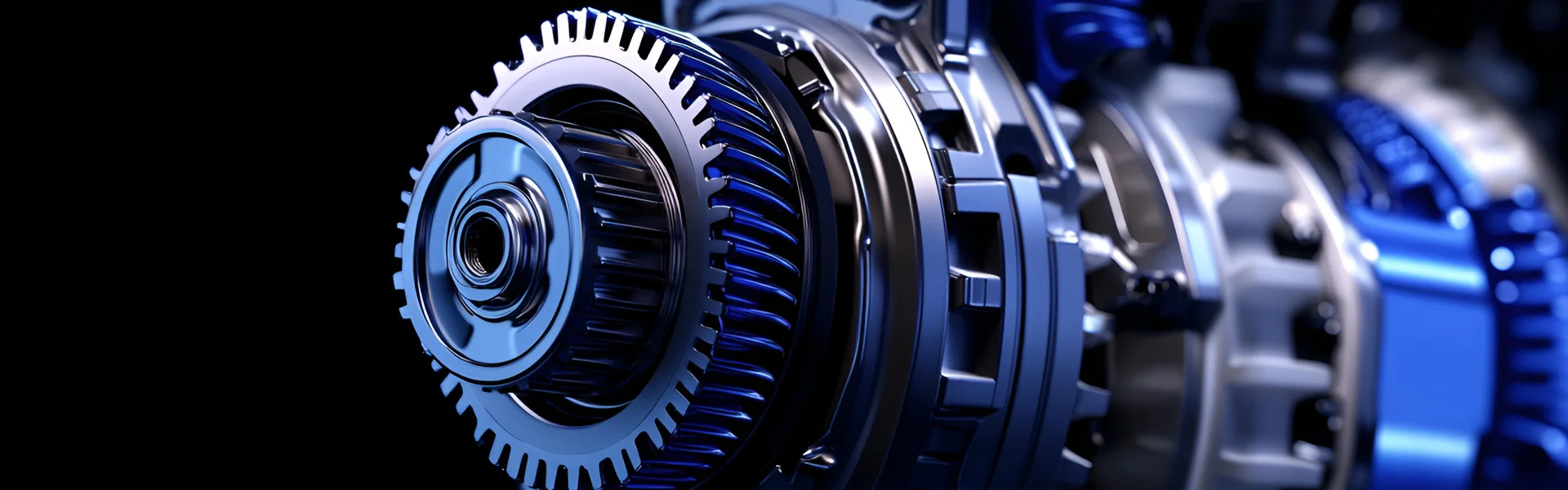
In modern mechanical transmission systems, speed, stability, and durability are no longer optional features but fundamental requirements. Across industries such as automation, medical devices, consumer electronics, and industrial equipment, manufacturers are constantly seeking gear solutions that can operate reliably under high rotational speeds while maintaining accuracy and long service life. This is where plastic gears have gained strong recognition in recent years.
At Raydafon Technology Group Co.,Limited, we have spent decades refining gear manufacturing technologies to meet the evolving needs of high-speed applications. Through continuous material optimization, precision tooling, and strict process control, our production experience allows us to deliver solutions that balance efficiency, durability, and cost performance. Our engineering team understands that selecting the right Precision Gear is not only about material choice but also about geometry, tolerance, and real-world operating conditions.
Material selection is the fundamental factor that determines whether plastic gears can operate reliably in high-speed environments. Unlike metal gears that depend primarily on hardness and mass, plastic gears rely on carefully engineered polymer formulations that balance strength, flexibility, wear resistance, and thermal stability. At Raydafon Technology Group Co.,Limited, our engineering team evaluates material performance based on real operating conditions rather than theoretical limits.
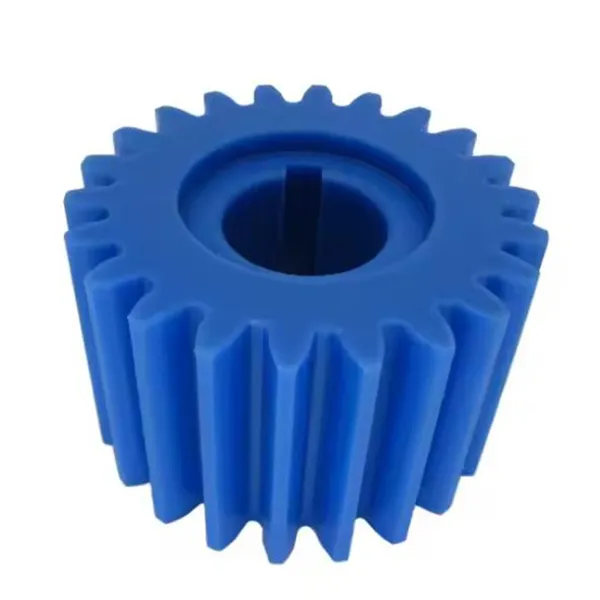
One of the most critical advantages of plastic materials is low density. Compared with steel or brass, plastic gears have significantly lower mass, which directly reduces rotational inertia. In high-speed systems, lower inertia enables smoother acceleration and deceleration, minimizing shock loads on shafts and bearings. This characteristic improves system stability and energy efficiency, especially in compact or continuously operating equipment. Our factory frequently applies this principle when developing high-speed drive components for automation and electronic assemblies.
Many engineering plastics naturally exhibit low friction coefficients, while others are compounded with internal lubricants. This self-lubricating behavior plays a key role in high-speed applications, where frictional heat can quickly accumulate. Reduced friction lowers surface wear on gear teeth and helps maintain dimensional accuracy over time. In practical applications, a well-designed Precision Gear made from self-lubricating polymers can operate smoothly with minimal maintenance, reducing overall system complexity.
High-speed rotation inevitably generates heat, making thermal stability a decisive performance factor. Plastic materials used in high-speed gears must resist deformation and creep under elevated temperatures. At Raydafon Technology Group Co.,Limited, material selection always considers both ambient temperature and internally generated heat. Our factory commonly works with the following materials:
| Material Type | Density | Thermal Resistance | High-Speed Suitability |
| POM | Low | Medium | Excellent for precision motion |
| Glass Fiber PA | Medium | Medium to High | Suitable for higher loads |
| PEEK | Medium | Very High | Ideal for extreme environments |
High-speed gear systems are exposed to continuous cyclic loading. Fatigue resistance is therefore essential to prevent micro-cracking or premature tooth failure. Reinforced polymer materials distribute stress more evenly across the gear profile, allowing plastic gears to maintain structural integrity over long service cycles. Our production experience confirms that when material properties are correctly matched to speed and load, a Precision Gear can deliver stable performance throughout its intended lifespan.
Compared with metal gears, plastic materials absorb vibration more effectively. This natural damping capability significantly reduces noise during high-speed operation. In applications such as medical devices, office equipment, and consumer electronics, acoustic comfort is a critical requirement. Raydafon Technology Group Co.,Limited integrates noise-reduction considerations into material selection to help customers achieve quieter and more refined products.
By combining low density, self-lubrication, thermal stability, fatigue resistance, and vibration damping, plastic materials provide a reliable foundation for high-speed gear systems. At Raydafon Technology Group Co.,Limited, our factory incorporates these material advantages into every Precision Gear design to ensure long-term performance under demanding operating conditions.
In high-speed gear systems, precision design is the link that transforms material advantages into real operational stability. Even high-performance plastic materials can fail to deliver expected results if gear geometry, tooth profile, or structural balance is not carefully engineered. At Raydafon, precision design is treated as a system-level process rather than a single calculation, ensuring that every Precision Gear performs reliably under dynamic conditions.
Tooth geometry directly affects how forces are transmitted during meshing. In high-speed applications, improper tooth profiles can cause impact loading, vibration, and accelerated wear. Precision design focuses on optimizing parameters such as module, pressure angle, and contact ratio to ensure smooth engagement. Our engineering team uses simulation tools to analyze load distribution across the tooth surface, reducing localized stress and improving long-term durability.
Backlash is necessary for thermal expansion and assembly tolerance, but excessive backlash becomes problematic at high speed. Too much clearance leads to noise, vibration, and positioning errors, while insufficient backlash increases friction and heat. At Raydafon Technology Group Co.,Limited, backlash values are carefully calculated based on material expansion characteristics and operating speed. Our factory verifies these values through prototype testing to achieve optimal balance.
As rotational speed increases, centrifugal forces magnify even small mass imbalances. Precision design addresses this by ensuring uniform material distribution and concentricity. Plastic gears offer unique design flexibility, allowing engineers to integrate ribs, hubs, and lightweight structures without compromising strength. This flexibility enables our factory to deliver well-balanced Precision Gear solutions that reduce vibration and extend bearing life.
One advantage of plastic gears is the ability to integrate multiple functions into a single component. Precision design allows features such as alignment guides, shock-absorbing elements, or mounting structures to be molded directly into the gear. This reduces part count, simplifies assembly, and minimizes cumulative tolerances. At Raydafon Technology Group Co.,Limited, our integrated design approach helps customers improve system reliability while lowering overall production costs.
High-speed operation accelerates wear if contact conditions are not optimized. Precision design strategies include:
These measures significantly reduce surface stress and slow wear progression. Our factory validates design performance through endurance testing, confirming that each Precision Gear maintains stability throughout its service life.
Through careful control of tooth geometry, backlash, structural balance, and functional integration, precision design plays a decisive role in high-speed gear stability. At Raydafon Technology Group Co.,Limited, our engineering expertise ensures that every Precision Gear is optimized not only for speed but also for reliability, efficiency, and long-term performance.
In high-speed gear systems, manufacturing accuracy is the final and decisive factor that determines whether design intent can be fully realized in real-world operation. Even with optimized materials and precision design, deviations introduced during production can lead to vibration, noise, heat buildup, and premature failure. At Raydafon Technology Group Co.,Limited, manufacturing accuracy is treated as a core quality standard throughout our factory processes.
High-speed rotation amplifies even minor dimensional errors. Inaccurate tooth profiles or eccentricity can cause uneven load distribution and dynamic imbalance. Tight tolerance control ensures consistent meshing between gears, reducing impact forces and minimizing vibration. Our factory maintains strict dimensional standards to ensure that every Precision Gear meets defined tolerance requirements across production batches.
For injection-molded plastic gears, mold quality directly determines final part precision. High-quality molds ensure consistent tooth geometry, surface finish, and concentricity. At Raydafon Technology Group Co.,Limited, mold design and maintenance are integral parts of our production system. Regular inspection and refinement of molds prevent wear-related deviations that could affect high-speed performance.
Manufacturing accuracy is not achieved by equipment alone but through stable and repeatable process control. Key parameters such as injection pressure, temperature, and cooling time directly influence part shrinkage and dimensional stability. Our factory monitors these variables in real time to ensure consistency. This level of control allows each Precision Gear to maintain predictable performance under high rotational speeds.
Post-processing techniques further enhance manufacturing accuracy, particularly for high-speed applications. Annealing is commonly used to relieve internal stress and stabilize dimensions after molding. This process reduces the risk of deformation during long-term operation. At Raydafon Technology Group Co.,Limited, post-processing is applied selectively based on material type and application requirements to maximize performance reliability.
Quality inspection is essential to verify that manufacturing accuracy meets design expectations. Our factory employs multiple inspection methods to ensure reliability:
| Inspection Item | Purpose | Impact on High-Speed Performance |
| Tooth Profile Measurement | Ensure smooth meshing | Reduces vibration and wear |
| Runout Inspection | Verify rotational balance | Improves stability at high speed |
| Material Verification | Confirm polymer consistency | Ensures predictable behavior |
By integrating tight tolerance control, high-quality tooling, stable process management, and rigorous inspection, manufacturing accuracy becomes a competitive advantage rather than a risk factor. At Raydafon Technology Group Co.,Limited, our factory ensures that every Precision Gear leaving production is capable of maintaining stable, efficient, and quiet operation even under demanding high-speed conditions.
Plastic gears have proven to be highly suitable for high-speed applications due to their low inertia, self-lubricating properties, noise reduction capability, and design flexibility. When combined with precision engineering and controlled manufacturing processes, they offer reliable performance that meets modern industrial demands. At Raydafon Technology Group Co.,Limited, our experience shows that selecting the right material, optimizing gear geometry, and maintaining strict production accuracy are the key factors behind successful high-speed gear solutions. Each Precision Gear produced in our factory reflects this integrated approach, delivering stability, durability, and efficiency.
If you are evaluating gear solutions for high-speed applications, our engineering team is ready to support your project with customized designs and reliable production capabilities. Contact us today to discuss how our expertise can help optimize your transmission system and enhance product competitiveness.
Q1: What makes plastic gears more suitable for high-speed operation than metal gears?
Plastic gears have lower mass, reduced friction, and better vibration damping, which allows smoother operation and less heat generation at high rotational speeds.
Q2: How long can plastic gears last in high-speed applications?
With proper material selection, precision design, and controlled manufacturing, plastic gears can achieve long service life comparable to metal gears under appropriate load conditions.
Q3: Are plastic gears strong enough for continuous high-speed use?
Yes, reinforced engineering plastics provide sufficient mechanical strength and fatigue resistance when designed correctly for the intended speed and load.
Q4: Do plastic gears require lubrication in high-speed systems?
Many plastic gears are self-lubricating and can operate without external lubrication, although specific applications may still benefit from additional lubrication.
Q5: How does manufacturing accuracy influence high-speed gear performance?
High manufacturing accuracy ensures uniform tooth engagement, reduces vibration, and prevents premature wear, which is essential for stable high-speed operation.
+86-574-87168065
Luotuo Industrial Area, Zhenhai District, Ningbo City, China