QR Code

Products
Contact Us


Fax
+86-574-87168065

Email

Address
Luotuo Industrial Area, Zhenhai District, Ningbo City, China


Industrial automation has reached a level of complexity where off-the-shelf components simply cannot keep pace with the precision, load capacity, and reliability demands of modern production environments. Custom hydraulic cylinders have emerged as one of the most decisive factors in determining whether an automated system performs at its full potential or falls short under real-world operating conditions. From heavy-duty steel presses to high-speed robotic assembly lines, the hydraulic cylinder is the muscle behind the motion, and customization is what makes that muscle fit perfectly into the system it serves.
At Raydafon Technology Group Co.,Limited, our engineering team has spent years working directly with manufacturers across automotive, aerospace, mining, and material handling sectors. What we have learned is consistent: the right hydraulic cylinder, engineered to exact application requirements, reduces downtime, extends service life, and directly improves production output. This article explores the full scope of why custom hydraulic cylinders are not optional extras but foundational components in any serious industrial automation strategy.
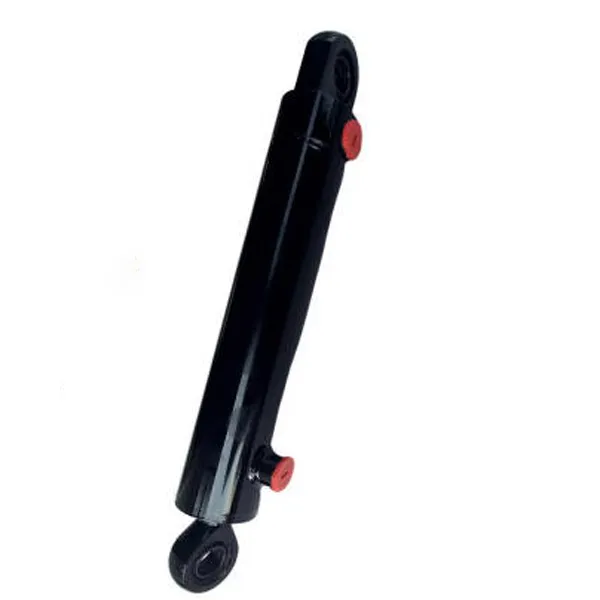
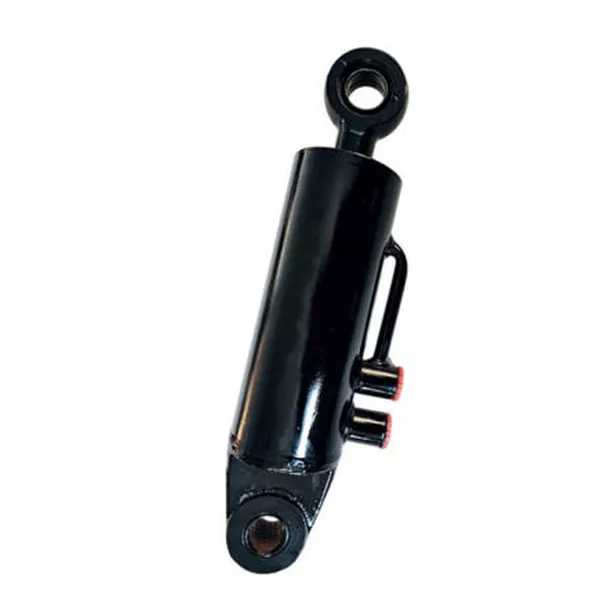
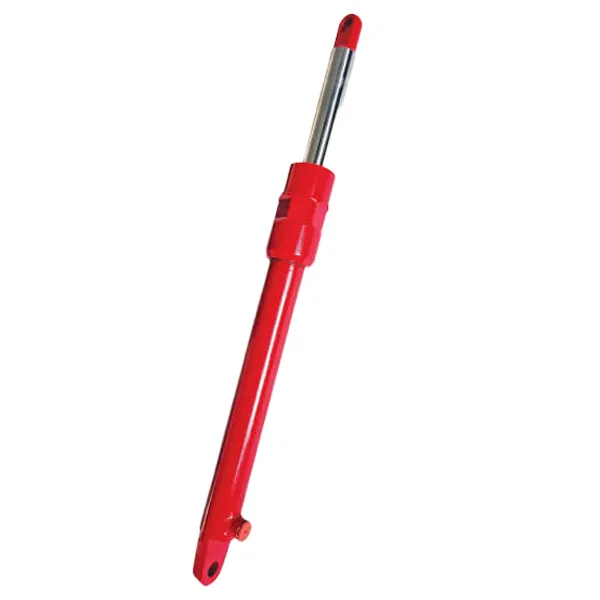
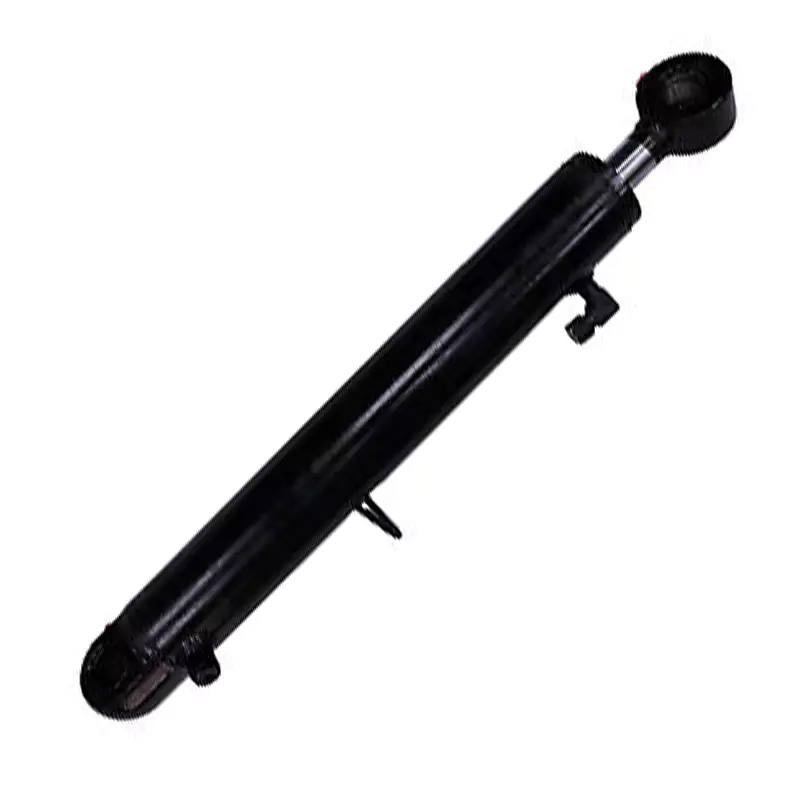
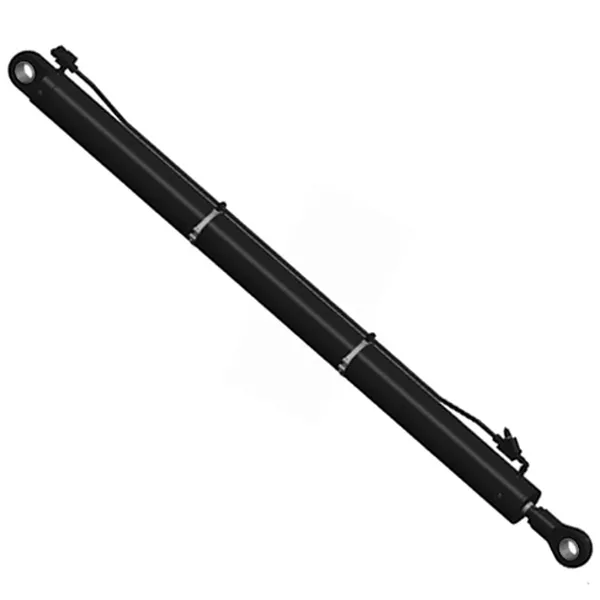
A hydraulic cylinder is a mechanical actuator that converts hydraulic energy into linear mechanical force and motion. Standard hydraulic cylinders are manufactured to fixed dimensional and pressure specifications, designed to serve general-purpose applications. While they are cost-effective for simple tasks, they are inherently limited in scope. A custom hydraulic cylinder, by contrast, is engineered from the ground up to match a specific set of performance requirements, installation constraints, and environmental conditions.
The distinction matters enormously in practice. Standard models require engineers to adapt their system design around the cylinder, often resulting in compromised performance, added mechanical complexity, and higher long-term maintenance costs. Custom units allow the cylinder to conform to the system, enabling tighter tolerances, more efficient force transmission, and longer service intervals.
Key differences between standard and custom hydraulic cylinders include:
Our factory at Raydafon Technology Group Co.,Limited applies a consultative engineering approach for every custom project. Our technical team reviews application data including cycle frequency, peak load, ambient temperature, and spatial constraints before proposing a cylinder configuration. This process ensures that every unit delivered is not just functional but optimized for performance and longevity within its specific operating context.
Understanding this foundational difference is the starting point for making informed decisions about hydraulic system design. In automation environments where precision and reliability are non-negotiable, custom engineering is the responsible choice.
Modern industrial automation systems are built around the principle of precision repeatability. Every actuator, sensor, and control component must work in exact harmony with every other element in the system. When a hydraulic cylinder is not precisely matched to the demands of its application, even minor deviations in force output, stroke accuracy, or response time can cascade into systemic inefficiencies, increased wear, and ultimately, unplanned downtime.
The demands placed on hydraulic cylinders in automated environments are fundamentally different from those in manually operated machinery. Automated systems run at higher cycle rates, often operating continuously across multiple shifts. They require consistent performance across thousands or millions of cycles. They must maintain accurate positioning under varying load conditions. And increasingly, they must integrate with digital control systems that demand precise feedback and response characteristics.
Standard cylinders are not designed for these conditions. Their tolerances are broader, their sealing systems are generalized, and their geometric specifications are fixed. In an automated production line, these limitations translate directly into performance gaps that cannot be compensated for through software or control system tuning alone.
The specific reasons why automation demands custom hydraulic solutions include:
Raydafon has supplied custom hydraulic cylinders to automated production systems across more than 30 countries. Our experience consistently demonstrates that investment in properly specified custom cylinders reduces total cost of ownership over the lifecycle of an automated system by minimizing unplanned maintenance, improving throughput consistency, and extending the interval between major overhauls.
The relationship between automation performance and hydraulic cylinder quality is direct and measurable. Cutting corners on cylinder specification in an automated system is not a cost saving. It is a deferred cost that arrives with interest in the form of downtime and lost production.
Technical precision is the foundation of every hydraulic cylinder we manufacture at Raydafon Technology Group Co.,Limited. Our engineering and production capabilities allow us to deliver cylinders across an extremely wide range of specifications, accommodating everything from compact automation actuators to large-bore heavy industrial units used in press and forming applications.
The following table summarizes the primary technical parameters of our custom hydraulic cylinder product range:
| Parameter | Specification Range | Notes |
| Bore Diameter | 20 mm to 500 mm | Custom intermediate sizes available |
| Stroke Length | 50 mm to 6,000 mm | Long-stroke designs include anti-buckling rod support |
| Operating Pressure | Up to 350 bar (5,076 PSI) | High-pressure series available up to 700 bar on request |
| Rod Diameter | 12 mm to 300 mm | Chrome-plated or induction-hardened surface standard |
| Cylinder Type | Single-acting, Double-acting, Telescopic, Differential | All types available in custom configurations |
| Barrel Material | Carbon steel, Stainless steel 304/316, Alloy steel | Selected based on operating environment and pressure class |
| Rod Material | 45# steel, 40Cr, 304/316 stainless steel | Chrome plating thickness 20-25 microns standard |
| Seal Material | NBR, PU, FKM (Viton), PTFE | Selected based on fluid type, temperature, and pressure |
| Mounting Style | Flange, Clevis, Trunnion, Foot, Eye end | Custom mounting geometries available on drawing |
| Surface Treatment | Painting, Powder coating, Zinc plating, Hard anodizing | Salt spray resistance up to 1,000 hours available |
| Operating Temperature | -40 degrees C to +150 degrees C | Seal compound selection adjusted per temperature range |
| Position Feedback | Magnetic, Linear encoder, LVDT transducer | Integrated sensor options for servo-hydraulic applications |
Beyond the parameters listed above, our factory is equipped to produce cylinders with internal cushioning at both end positions, adjustable flow control, integrated pressure relief, and dual-rod configurations for balanced force applications. Our design team works from customer-supplied drawings, specifications, or functional descriptions, translating application requirements into precise manufacturing documentation.
Choosing the correct materials is as important as dimensional accuracy. The following list outlines our standard selection logic for key material choices:
Every cylinder produced at Raydafon undergoes hydrostatic pressure testing at 1.5 times maximum operating pressure before shipment. Dimensional verification is performed on calibrated CMM equipment, and all test records are retained and available to customers on request.
The economic case for custom hydraulic cylinders is built on a straightforward principle: a component designed for its exact application performs better, lasts longer, and requires less maintenance than one adapted from a general-purpose design. In automated production environments where uptime is directly linked to revenue, this principle has significant financial consequences.
Efficiency gains from properly specified hydraulic cylinders manifest in several measurable ways. The most immediate is energy consumption. A cylinder sized precisely for its load and stroke eliminates the pressure drops and flow inefficiencies that occur when oversized or undersized cylinders are used. Studies across industrial hydraulic system applications consistently show that right-sized actuation reduces hydraulic system energy demand by 10 to 25 percent, depending on the application.
Maintenance cost reduction is the second major economic driver. Standard cylinders used in applications that exceed their design parameters experience accelerated seal wear, premature rod scoring, and barrel erosion. Each of these failure modes results in fluid leakage, reduced performance, and eventual replacement. Custom cylinders, designed with appropriate safety margins and correct material specifications, routinely achieve service lives two to three times longer than standard units in the same application.
The following table illustrates a comparative cost analysis across a five-year operating period for a typical automated press application:
| Cost Category | Standard Cylinder | Custom Hydraulic Cylinder |
| Initial Unit Cost | Lower | Moderate premium (typically 15-30%) |
| Seal Replacement Frequency | Every 12-18 months | Every 36-48 months |
| Unplanned Downtime Incidents (5 yr) | 4 to 6 incidents average | 0 to 1 incidents average |
| Energy Consumption Index | Baseline 100 | 75 to 88 (12-25% reduction) |
| Full Replacement Cycles (5 yr) | 1 to 2 replacements | 0 replacements typical |
| Total 5-Year Cost of Ownership | High | 25 to 40% lower overall |
Additional efficiency benefits that are often underestimated include:
Our customers at Raydafon Technology Group Co.,Limited regularly report that the total cost of ownership over a three to five year horizon for our custom hydraulic cylinders is significantly lower than the alternatives, even when the initial unit price is higher. This outcome reflects the compounding value of precision engineering over the operating life of the component.
Custom hydraulic cylinders serve a remarkably broad range of industries, but certain sectors derive particularly high value from the precision, durability, and application-specific design that custom engineering enables. Understanding where hydraulic cylinder customization has the greatest impact helps system designers and procurement teams recognize where investment in custom solutions is most justified.
Automotive production lines operate at extremely high cycle rates with tight tolerances on component positioning. Stamping presses, welding fixtures, assembly jigs, and final inspection stations all rely on hydraulic actuation that must be consistent across millions of cycles. Our factory has supplied hydraulic cylinders to Tier 1 and Tier 2 automotive suppliers across Asia, Europe, and North America, designing units specifically for the cycle frequency, load profile, and positional accuracy demands of automated automotive production.
Aerospace applications demand hydraulic cylinders that meet the most stringent standards for material certification, dimensional accuracy, and documentation traceability. Test rigs, structural loading systems, landing gear simulation equipment, and flight control testing platforms all require custom-engineered hydraulic actuation. Raydafon Technology Group Co.,Limited has the material certification capability and quality documentation processes to support aerospace-grade custom cylinder projects.
Mining environments subject hydraulic cylinders to extreme contamination, shock loading, and temperature variation. Standard cylinders deteriorate rapidly in these conditions. Custom designs incorporating reinforced barrel walls, heavy-duty rod support bearings, advanced seal systems, and hard-face rod coatings extend service life dramatically in mining applications including roof support systems, conveyor drives, and bucket actuation on large excavating equipment.
Hygienic process environments require hydraulic cylinders manufactured from food-grade stainless steel with sealing systems compatible with washdown chemicals. Standard industrial cylinders are entirely unsuitable for these applications. Our custom stainless steel hydraulic cylinder designs meet the surface finish and material requirements for direct and indirect food contact applications.
Wind turbine pitch control systems and solar tracking platforms rely on hydraulic actuation that must function reliably through extreme temperature cycles and extended service intervals in remote locations. Custom cylinders for these applications incorporate low-temperature seal compounds, internal corrosion protection, and extended lubrication systems designed for multi-year maintenance intervals.
The following summary table maps industry sectors to their most common custom hydraulic cylinder requirements:
| Industry | Primary Custom Requirements | Typical Application |
| Automotive | High cycle life, positional accuracy, compact envelope | Stamping press, welding fixture, assembly automation |
| Aerospace | Material certification, tight tolerances, full traceability | Structural test rigs, flight control simulation |
| Mining | Shock load resistance, contamination tolerance, hard-face rod | Roof support, excavator bucket, conveyor drive |
| Food and Beverage | Stainless steel, hygienic seals, washdown compatibility | Filling machines, portioning equipment, packaging lines |
| Renewable Energy | Low-temperature seals, corrosion protection, long service interval | Wind turbine pitch, solar tracker drive |
| Marine and Offshore | High corrosion resistance, pressure-rated sealing, compact profile | Deck equipment, hatch covers, crane actuation |
| Steel and Metals | High temperature resistance, scale protection, heavy load capacity | Rolling mill, hot forming press, continuous caster |
Quality assurance at Raydafon Technology Group Co.,Limited is not a final inspection step. It is a discipline embedded throughout every stage of the design, procurement, and manufacturing process. Our quality management system is certified to ISO 9001 standards, and our manufacturing processes are continuously monitored and documented to ensure that every hydraulic cylinder leaving our facility meets or exceeds its specified performance parameters.
Our quality assurance framework is structured around five core pillars:
Our factory investment in precision manufacturing equipment includes CNC deep-hole boring machines, precision rod grinding centers, honing machines, and coordinate measuring machines (CMM). This equipment capability allows us to consistently achieve bore tolerances of H7 and rod tolerances of f7 across our full size range, ensuring the dimensional accuracy that effective sealing and long service life depend on.
Customer feedback and field performance data are systematically reviewed by our engineering team as part of our continuous improvement process. When field issues are identified, root cause analysis is performed and design or process improvements are implemented and validated before deployment. This closed-loop approach to quality improvement has enabled Raydafon Technology Group Co.,Limited to maintain a customer return rate below 0.3 percent across our custom hydraulic cylinder product range over the past five years.
For customers with specific quality plan requirements, our team is experienced in preparing inspection and test plans (ITP), first article inspection reports (FAIR), and third-party inspection coordination. We work regularly with major international inspection bodies to support customer quality requirements on critical projects.
Custom hydraulic cylinders are not a premium option reserved for specialist applications. In modern industrial automation, they are the engineering-responsible choice for any system where performance, reliability, and total cost of ownership matter. The evidence across industries from automotive to renewable energy consistently shows that cylinders designed and manufactured to exact application requirements outperform standard alternatives in every meaningful metric: cycle life, energy efficiency, maintenance interval, and system integration quality.
The key points this article has established are clear:
Raydafon Technology Group Co.,Limited brings deep engineering capability, proven manufacturing processes, and genuine application experience to every custom hydraulic cylinder project. Our team works as an engineering partner, not just a component supplier, helping customers specify, design, and procure hydraulic actuation solutions that deliver measurable performance advantages over the life of their automated systems.
Our engineering team is available to review your application requirements and provide a tailored recommendation. Whether you are designing a new automated system or replacing underperforming components in an existing line, Raydafon Technology Group Co.,Limited has the technical depth and manufacturing capability to deliver the right solution.
Send us your application data, drawings, or functional specifications. Our team will respond with a detailed technical proposal within 48 hours. Contact Raydafon Technology Group Co.,Limited today and put 20 years of custom hydraulic cylinder engineering experience to work for your operation.
Request a Custom Cylinder Quote
+86-574-87168065
Luotuo Industrial Area, Zhenhai District, Ningbo City, China