QR Code

Products
Contact Us


Fax
+86-574-87168065

Email

Address
Luotuo Industrial Area, Zhenhai District, Ningbo City, China


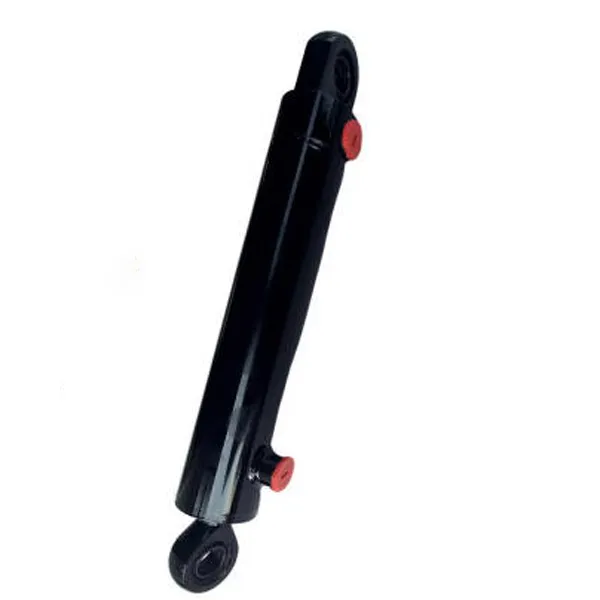
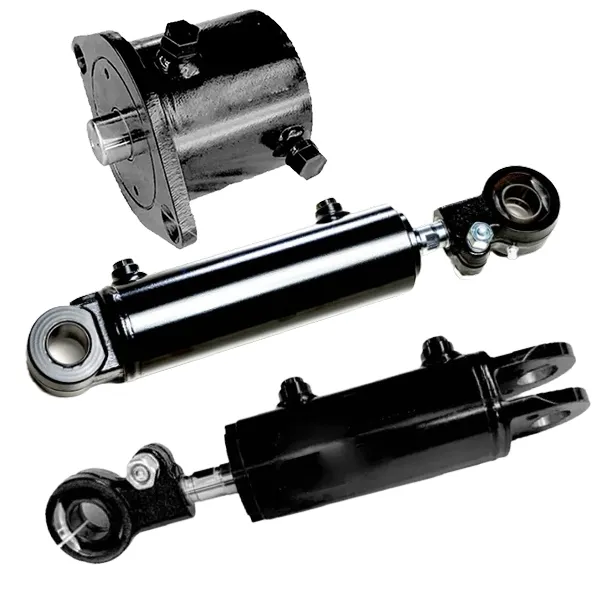
Marine deck operations demand absolute reliability. From cargo handling at open sea to anchor windlass systems under extreme load, every mechanical component aboard a vessel must perform without compromise. Hydraulic Cylinder technology sits at the heart of this demand, serving as the primary force-transmission medium across virtually every category of powered deck equipment. Raydafon Technology Group Co.,Limited has spent years engineering these critical components specifically for the marine environment, where saltwater corrosion, dynamic loading, and continuous duty cycles create conditions that no standard industrial product can withstand.
This article examines precisely what role a Hydraulic Cylinder fulfills across the full spectrum of marine deck equipment, why hydraulic actuation continues to outperform competing technologies at sea, and how our engineering approach at Raydafon Technology Group Co.,Limited translates into measurable performance advantages for vessel operators worldwide. Whether you are specifying equipment for a new build or evaluating retrofit options for an aging fleet, understanding hydraulic cylinder function in this context is foundational to every decision you make.
Marine deck equipment operates in one of the most unforgiving mechanical environments on the planet. Vessel motion introduces multi-axis vibration into every mounting point. Saltwater spray attacks seals, threads, and exposed metal surfaces around the clock. Temperature swings between the tropics and arctic routes span more than 80 degrees Celsius. Deck machinery must respond instantly at the precise moment an operator commands action, with no warm-up tolerance and no margin for sluggish response. Against this backdrop, the Hydraulic Cylinder emerges not merely as a preferred option but as the only practical power unit for heavy-duty marine deck applications.
The fundamental advantage of hydraulic actuation over electric or pneumatic alternatives is force density. A hydraulic cylinder producing 200 tonnes of linear force occupies a fraction of the envelope that an equivalent electric linear actuator would require. On a vessel where deck space is a premium commodity and weight distribution directly affects stability, this compact power-to-weight ratio is decisive. Our engineering teams at Raydafon Technology Group Co.,Limited have documented installations where switching from electric drive systems to hydraulic cylinder actuation reduced equipment footprint by 40 percent while simultaneously increasing peak force output.
Beyond raw force, hydraulic systems deliver something equally important in marine operations: controllability under variable load. Wind load on a crane boom changes second by second. The resistance on a mooring winch varies with vessel drift, tide, and line angle. A hydraulic cylinder accepts these variable load demands through the compressibility characteristics of hydraulic fluid and the precision of proportional control valves, maintaining smooth, predictable motion throughout the operating cycle. Electric motors, by contrast, struggle to maintain consistent torque at low speeds under fluctuating loads without sophisticated and expensive variable-frequency drive systems.
Key reasons why the hydraulic cylinder dominates marine deck equipment include:
Classification societies including DNV, Lloyd's Register, Bureau Veritas, and ABS recognize hydraulic cylinder actuation as the standard for marine deck machinery precisely because decades of operational data support its reliability in service. At Raydafon Technology Group Co.,Limited, our products are designed to meet or exceed the material, pressure, and testing requirements these bodies mandate, giving naval architects and vessel operators a compliant, well-documented solution from the earliest stages of project planning.
The breadth of marine deck equipment categories that depend on hydraulic cylinder actuation is wider than most operators realize. Our factory supplies cylinders into at least twelve distinct equipment categories, each presenting its own stroke length requirements, pressure ratings, mounting configurations, and duty cycle demands. Understanding how the cylinder performs within each application context helps procurement engineers specify the correct product and avoid costly mismatches between cylinder capability and application demand.
Hydraulic cylinders in marine crane applications serve the luffing function, controlling boom angle against gravitational and dynamic loads that shift continuously with vessel motion and suspended load weight. Our cylinders for this application feature:
Roll-on/roll-off vessels, bulk carriers, and container ships rely on hydraulic cylinder systems to open and close hatch covers that may weigh several hundred tonnes each. Raydafon Technology Group Co.,Limited engineers these cylinders with extended corrosion protection treatments because hatch cover cylinders are directly exposed to weather and wash-down operations throughout the vessel's working life. Synchronization accuracy across multiple cylinders operating simultaneously on a single hatch panel is critical to preventing binding and structural stress in the cover itself.
Hydraulic cylinders convert hydraulic ram pressure into the tiller arm movement that positions the rudder. This application demands absolute reliability since rudder failure at sea has catastrophic consequences. Our cylinders for steering gear applications are manufactured to classification society requirements for redundancy, material traceability, and pressure testing, with documentation packages available to support vessel certification processes.
While the primary drive in windlass systems is typically a hydraulic motor, hydraulic cylinders serve brake actuation, clutch engagement, and pawl control functions that are equally critical to safe anchor operations. Our compact cylinders for these applications are designed for infrequent but high-reliability duty cycles where slow response or seal failure could allow uncontrolled anchor movement.
Ro-Ro ferries and naval vessels use large-bore, long-stroke hydraulic cylinders to raise and lower vehicle ramps that must support axle loads exceeding 50 tonnes while providing smooth, controlled descent for driver safety. These cylinders see high cycle counts relative to other marine applications, making seal durability and wiper seal effectiveness against grit contamination particularly important design considerations.
| Equipment Category | Primary Cylinder Function | Typical Bore Range | Typical Stroke Range | Key Requirement |
| Marine Cranes | Boom luffing and knuckle articulation | 100mm - 320mm | 800mm - 6,000mm | Dynamic load cushioning |
| Hatch Cover Systems | Panel opening and closing | 80mm - 250mm | 500mm - 3,500mm | Synchronized multi-cylinder operation |
| Steering Gear | Tiller arm actuation | 150mm - 400mm | 300mm - 1,200mm | Redundancy and traceability documentation |
| Anchor and Mooring | Brake, clutch, and pawl control | 40mm - 120mm | 100mm - 600mm | High reliability, low cycle count |
| Deck Ramps | Ramp raising and lowering | 180mm - 450mm | 1,200mm - 5,000mm | Seal durability, high cycle count |
| Stabilizer Fins | Fin angle adjustment | 60mm - 160mm | 200mm - 800mm | Fast response, continuous duty |
| Lifeboat Davits | Davit arm positioning | 50mm - 130mm | 300mm - 1,000mm | Fail-safe under emergency conditions |
The word "marine-grade" is frequently used in equipment marketing but rarely defined with precision. At Raydafon Technology Group Co.,Limited, we define marine-grade through a specific set of measurable technical parameters that our cylinders must meet before leaving our factory. These parameters are not arbitrary internal standards. They align directly with the requirements published by major classification societies and derived from documented failure mode analysis across thousands of cylinder installations in marine service.
A cylinder that passes standard industrial qualification testing will fail prematurely in marine service for predictable reasons: inadequate surface protection leads to corrosion pitting that damages rod seals within months; standard carbon steel end caps develop galvanic corrosion at dissimilar metal interfaces; sealing compounds formulated for mineral oil compatibility fail when vessels transition to environmentally acceptable lubricants; and chrome plating thicknesses specified for land-based industrial equipment wear through within the first major service interval under marine duty cycle conditions.
Our technical specification framework addresses each of these failure modes systematically:
| Seal Position | Standard Material | EAL Fluid Compatible Material | Temperature Range | Pressure Rating |
| Primary piston seal | Polyurethane compact seal | HNBR compound | -30C to +100C | Up to 400 bar |
| Rod seal | Polyurethane U-cup with PTFE back-up | FKM compound | -30C to +100C | Up to 350 bar |
| Wiper seal | Polyurethane single lip | HNBR double lip | -40C to +80C | N/A (exclusion function) |
| Static port seals | NBR O-ring with anti-extrusion ring | FKM O-ring | -30C to +120C | Up to 420 bar |
| Guide ring | PTFE composite bearing strip | PTFE composite bearing strip | -50C to +200C | Load bearing, not pressure rated |
In a marine environment, every material selection is ultimately a corrosion management decision. The ocean does not merely rust steel. It drives electrochemical reactions between dissimilar metals, accelerates fatigue crack propagation through stress corrosion mechanisms, degrades polymer seal compounds through UV exposure and ozone attack, and introduces chloride ions that defeat most standard protective coatings within a fraction of their rated service life. Material selection for a marine hydraulic cylinder is therefore not a procurement cost optimization exercise. It is an engineering decision with direct consequences for operational reliability over a twenty-year vessel service life.
Raydafon Technology Group Co.,Limited approaches material selection through a systematic analysis of each cylinder's service environment, classified according to the IMO zones of corrosivity and the vessel's operational trade route. A cylinder installed in a sheltered machinery space on a river ferry operates in a fundamentally different corrosive environment than one mounted on an exposed deck on a North Sea offshore support vessel. Our specification process accounts for this difference at every level of the bill of materials.
The cylinder barrel, end caps, and mounting lugs must maintain structural integrity under combined bending, tensile, and compressive loads throughout the vessel's service life. Our default selection of 42CrMo4 for rod applications and ST52-3 for barrel applications reflects the balance between mechanical strength, weldability, machinability, and corrosion response that decades of marine service experience has validated. For cylinders in permanently wet or submerged zones, we specify 316L stainless steel throughout, accepting the higher material cost in exchange for the elimination of coating-dependent corrosion protection on structural components.
Hard chrome plating has been the marine industry standard for cylinder rod protection for decades, and remains our default recommendation for most applications. However, increasing regulatory pressure on hexavalent chrome processes is driving demand for alternative coatings. Our factory has qualified two alternatives for marine hydraulic cylinder rods:
The transition from mineral-based hydraulic oil to EAL fluids including synthetic esters and polyalkylene glycols is now well advanced in the marine industry. Standard polyurethane and nitrile rubber seals designed for mineral oil compatibility can swell, harden, or lose tensile strength when exposed to ester-based EAL fluids, leading to premature seal failure. Our marine hydraulic cylinder sealing systems are available in two configurations that address this:
Galvanic corrosion at fastener interfaces is one of the most commonly overlooked failure mechanisms in marine hydraulic cylinder installations. A standard zinc-plated carbon steel cap screw installed into a stainless steel mounting bracket creates a galvanic couple that will destroy the fastener within one to two seasons in a salt spray environment. Our hardware specification for marine cylinders requires:
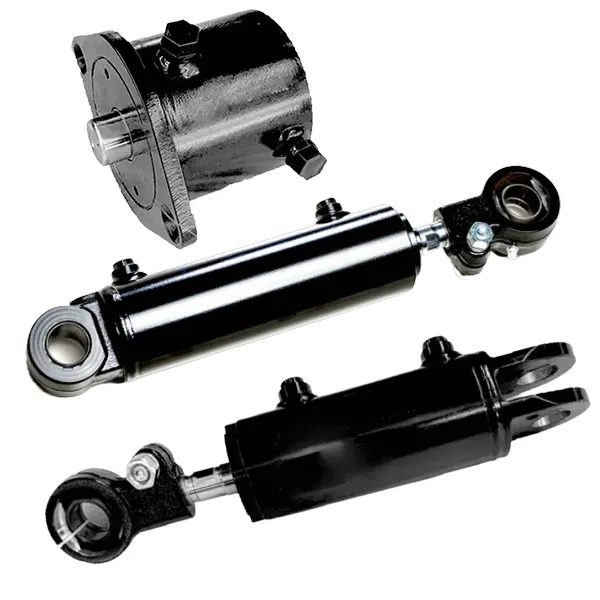
A hydraulic cylinder's service life at sea is determined not only by its design specification and material selection, but by the precision and consistency of the manufacturing process that converts those specifications into a finished product. Raydafon Technology Group Co.,Limited operates a dedicated manufacturing facility where marine hydraulic cylinder production is organized as a distinct process stream, separate from our industrial cylinder lines, with specialized tooling, inspection equipment, and quality documentation protocols that reflect the unique demands of marine classification society review.
Our factory engineering process is built around four core disciplines that collectively determine the quality and reliability of every Hydraulic Cylinder we ship to marine customers:
The internal bore of a hydraulic cylinder barrel must achieve a surface finish and dimensional tolerance that allows the piston seal to generate effective sealing pressure without generating excessive friction. For marine cylinders operating with EAL fluids, where seal materials have less inherent lubricity than mineral oil systems, bore finish quality becomes even more critical. Our factory machines cylinder barrels on dedicated CNC honing equipment that achieves:
End cap welds on large-bore marine cylinders are structural joints that must withstand millions of pressure cycles over the vessel's service life. Our welding procedures are qualified in accordance with EN ISO 15614-1, with welders individually certified to EN ISO 9606-1. All structural welds on cylinders destined for classification society inspection are subject to:
Hydraulic cylinder contamination during assembly is a leading cause of premature seal failure and control valve damage in service. Our marine cylinder assembly area is maintained as a controlled environment with:
Every marine hydraulic cylinder leaving our factory undergoes a structured factory acceptance test (FAT) that generates a traceable test record available for classification society review. The standard FAT protocol for Raydafon Technology Group Co.,Limited marine cylinders includes:
| Test Stage | Test Parameter | Acceptance Criterion | Documentation Generated |
| Material verification | Chemical composition and mechanical properties | Compliance with specified material standard | Mill certificates, 3.1 or 3.2 as required |
| Dimensional inspection | Bore, rod, stroke, mounting dimensions | Within drawing tolerances | Dimensional inspection report |
| Proof pressure test | 1.5 x MWP, 30 minutes static hold | No leakage, no permanent deformation | Pressure test certificate |
| Function test | Full stroke cycling at working pressure | Smooth operation, no stick-slip, no external leakage | Function test record |
| Internal leakage test | Piston seal leakage at MWP | Zero measurable leakage | Leakage test certificate |
| Paint film thickness | External coating DFT measurement | Minimum 250 micrometers DFT | Paint inspection report |
| Witness test option | Classification society surveyor attendance | Surveyor sign-off on test records | Classification society certificate |
Our quality management system operates under ISO 9001:2015 certification, with marine-specific procedures governing material traceability, calibration of test equipment, non-conformance management, and document control. For customers requiring third-party certification, Raydafon Technology Group Co.,Limited maintains active approval status with the major classification societies, enabling us to deliver cylinders with the documentation package required for vessel certification without delays that would impact project schedules.
The hydraulic cylinder is not simply a component within marine deck equipment. It is the defining technology that makes powerful, controlled, reliable deck operations possible in one of the world's most demanding environments. From crane luffing to hatch actuation, from steering gear to vehicle ramp systems, every critical movement on a working vessel depends on the hydraulic cylinder performing exactly as specified, every time it is called upon, for the full operational life of the vessel.
At Raydafon Technology Group Co.,Limited, our understanding of this responsibility shapes every decision we make in product development, material selection, manufacturing process design, and quality assurance. Our marine Hydraulic Cylinder product range is not a modified industrial product adapted for shipboard use. It is an engineered solution developed from the ground up for the marine environment, backed by our factory's manufacturing capabilities and our engineering team's specialized knowledge of marine hydraulic system requirements.
For vessel operators, naval architects, and equipment integrators who need a hydraulic cylinder supplier that understands the full scope of what marine service demands, we invite you to engage with Raydafon Technology Group Co.,Limited at the earliest stage of your project. Our technical team is available to review application requirements, propose optimized specifications, and develop documentation packages that support classification society approval.
Contact us today with your bore size, stroke, operating pressure, fluid type, and classification society requirements, and we will respond with a fully detailed technical and commercial proposal within 48 hours. Our team speaks your language, understands your specifications, and delivers on schedule. Get in touch with Raydafon Technology Group Co.,Limited now and put the right hydraulic cylinder at the heart of your marine deck equipment.
Marine crane luffing cylinders are typically rated for working pressures between 250 bar and 350 bar, with proof pressure testing conducted at 1.5 times the maximum working pressure. The exact rating depends on the crane's safe working load, boom geometry, and dynamic load factors applied by the classification society during design review. Our factory designs crane luffing cylinders with a burst pressure safety margin of at least four times the rated working pressure, accounting for the shock loads introduced by vessel motion and sudden load changes during lifting operations. For offshore crane applications subject to DNV or ABS review, we provide full calculation packages demonstrating compliance with the applicable design standard, typically EN 13135 or the relevant classification society rules for lifting appliances.
Seal replacement intervals for marine hydraulic cylinders depend on the fluid type, operating cycle count, and installation environment. For cylinders operating with mineral-based hydraulic oil in moderate cycle applications such as hatch cover systems, our recommended seal inspection interval is 8,000 operating hours or 36 months, whichever occurs first. For cylinders using environmentally acceptable lubricant fluids, the interval shortens to 6,000 hours or 24 months due to the more chemically aggressive nature of ester-based fluids on elastomer compounds. High-cycle applications including stabilizer fins and deck ramp systems may require inspection at 4,000-hour intervals. In all cases, any visual evidence of rod seal weeping, external contamination around the rod wiper, or measurable internal leakage should trigger immediate seal inspection regardless of the scheduled interval. Our factory supplies marine cylinder seal kits with full material certificates and installation instructions to support onboard maintenance by ship engineering crew.
The distinction between industrial and marine-grade hydraulic cylinders is significant and directly impacts service life in shipboard applications. A standard industrial cylinder is designed for protected indoor environments where humidity is controlled, ambient temperatures are moderate, and corrosive exposure is minimal. In marine service, these assumptions fail immediately. Chrome plating thickness on industrial cylinder rods is typically 8 to 15 micrometers, adequate for factory environments but insufficient to resist chloride-accelerated corrosion in a sea air environment. Standard carbon steel end caps without adequate coating systems begin to corrode within months of exposure to salt spray. Industrial seal compounds formulated for mineral oil compatibility degrade rapidly when vessels switch to EAL fluids mandated by MARPOL regulations. A marine-grade hydraulic cylinder addresses all of these failure modes through thicker chrome plating of 25 micrometers minimum, external coating systems with minimum 250 micrometers dry film thickness, EAL-compatible sealing options, and material selection that considers galvanic corrosion at all interfaces.
Hydraulic cylinders used in safety-critical marine deck equipment applications are routinely subject to classification society certification, and our factory is fully equipped to support this process. The documentation package required varies by classification society and application criticality but typically includes material certificates to EN 10204 Type 3.1 or 3.2 for all pressure-containing components, welding procedure qualifications, welder qualification records, non-destructive test reports covering any structural welds, dimensional inspection reports, factory acceptance test records including proof pressure and leakage test results, and coating inspection reports. For the highest criticality applications including steering gear and safety system actuators, classification society surveyors may attend factory acceptance testing in person, signing the test records as witness. Our factory maintains active approval status with DNV, Bureau Veritas, Lloyd's Register, ABS, and several other classification societies, which means surveyors are familiar with our facility and documentation system, streamlining the approval process for our customers. We recommend initiating classification society coordination at the purchase order stage to allow adequate time for surveyor scheduling without impacting delivery commitments.
Extended periods of inactivity are one of the most underappreciated causes of hydraulic cylinder deterioration in marine service. When a vessel enters lay-up, hydraulic systems are often left static for months or years in conditions that can be more corrosive than normal operation. The primary risks during inactivity are rod surface corrosion where the rod is extended beyond the wiper seal and exposed to atmosphere, seal compression set from remaining under static load, internal contamination from condensation introducing water into the hydraulic fluid, and external coating deterioration from lack of maintenance attention. Our recommended lay-up procedure for marine hydraulic cylinders includes retracting all rods to the fully retracted position where possible to maximize seal protection of the chrome surface, applying a corrosion-inhibiting grease or wax compound to any exposed rod surface that cannot be fully retracted, cycling each cylinder through its full stroke at minimum every three months to prevent seal compression set and redistribute protective fluid film across internal seal surfaces, verifying hydraulic fluid water content before returning to service and replacing if water contamination is detected, and conducting a full external inspection and touch-up of any coating damage before the vessel returns to active service.
+86-574-87168065
Luotuo Industrial Area, Zhenhai District, Ningbo City, China