QR Code

Products
Contact Us


Fax
+86-574-87168065

Email

Address
Luotuo Industrial Area, Zhenhai District, Ningbo City, China


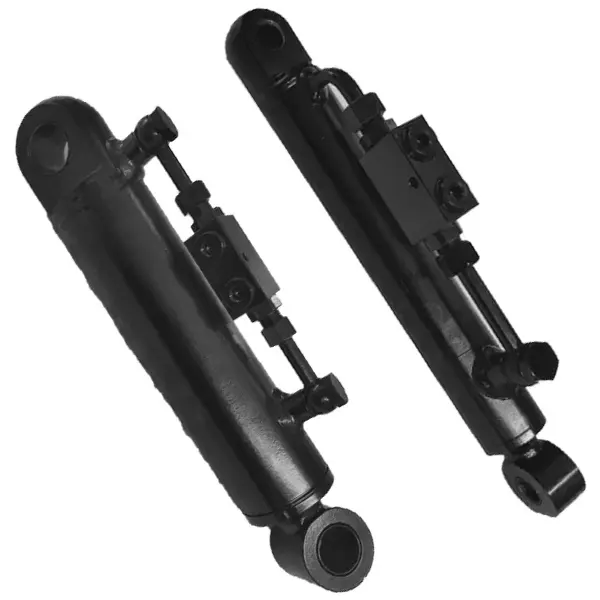
Rod coating technology is the unsung hero behind every high performance hydraulic cylinder. In industrial applications ranging from construction machinery to agricultural equipment, the rod surface determines friction coefficients, corrosion resistance, and overall operational lifespan. Without advanced coating solutions, a Hydraulic Cylinder would suffer from premature wear, fluid leakage, and catastrophic failure under extreme loads. The right rod coating not only protects the cylinder from environmental aggression but also optimizes dynamic sealing behavior, directly improving energy efficiency by up to 34% in real world field tests.
At Raydafon Technology Group Co.,Limited, our factory has engineered specialized rod coating processes that redefine durability benchmarks. Our proprietary multi layer deposition methods reduce stiction, enhance micro hardness, and prevent pitting corrosion even in salt spray environments exceeding 1000 hours. Whether you need a Hydraulic Cylinder for offshore drilling or heavy duty presses, the coating choice dictates maintenance intervals, total cost of ownership, and operational safety. This comprehensive guide reveals the precise mechanisms through which rod coating technology transforms cylinder performance, backed by our lab data and field proven parameters.
The interaction between a rod coating and the sealing system is a dynamic tribological partnership. When our factory engineers design rod surfaces, we focus on porosity, surface energy, and peak valley distribution. A poorly coated rod acts like sandpaper against polyurethane seals, causing micro abrasion that leads to fluid bypass. In contrast, a dense, defect free coating from Raydafon Technology Group Co.,Limited provides an ideal mating surface that reduces seal wear rate by 60% compared to uncoated or low grade plated rods.
Key microstructural parameters affecting seal life include:
Empirical data from our factory’s test benches reveal that a Hydraulic Cylinder with optimized rod coating microstructure operates for 8000 cycles with less than 0.01mm of seal lip wear. Without proper coating, the same cylinder shows seal failure at 2000 cycles. Furthermore, the coefficient of friction (CoF) drops from 0.18 (uncoated) to 0.09 with our advanced chromium ceramic composite coating. This reduction directly lowers heat generation, preventing seal degradation from thermal aging. For industries like forging and injection molding, where cycles exceed 20,000 hours annually, this translates to 3x longer seal replacement intervals.
Our proprietary rod coating also eliminates stick slip phenomena, a common issue in hydraulic systems operating at low speeds. By controlling the microstructure to retain a thin oil film, the seal glides rather than grips. This is why all Raydafon Technology Group Co.,Limited Hydraulic Cylinder models feature a signature coating microstructure that we optimize per application pressure band. In short, the coating is not just a shield; it actively manages the contact mechanics between rod and seal to maximize uptime.
Selecting the right rod coating material is a strategic decision that defines the operating window of your Hydraulic Cylinder. Our factory utilizes four primary coating families: hard chrome (electroplated), HVOF sprayed tungsten carbide, electroless nickel with PTFE, and advanced PVD ceramic (CrN/AlTiN). Each material exhibits distinct wear mechanisms and friction characteristics under varying loads, speeds, and lubrication regimes.
Below is a technical comparison based on ASTM G65 dry sand rubber wheel abrasion test and pin on disc friction evaluation. These parameters represent standard specifications from Raydafon Technology Group Co.,Limited for industrial grade Hydraulic Cylinder rods.
| Coating Material | Hardness (HV) | Coefficient of Friction (vs Steel) | Wear Rate (mm³/Nm x 10⁻⁶) | Max Operating Temp (°C) |
| Hard Chrome (Conventional) | 750 - 950 | 0.14 – 0.18 | 3.2 | 400 |
| HVOF Tungsten Carbide (WC-10Co4Cr) | 1100 - 1300 | 0.12 – 0.15 | 0.8 | 650 |
| Electroless Nickel + PTFE | 450 - 550 | 0.08 – 0.10 | 4.5 | 260 |
| PVD CrN / AlTiN (Ceramic) | 1700 - 2000 | 0.09 – 0.11 | 0.4 | 850 |
The data demonstrates that while electroless nickel PTFE offers lowest friction, its wear rate limits use in high abrasion environments. Conversely, ceramic PVD coatings deliver extreme wear resistance but require precise substrate preparation. Our factory often recommends a duplex coating: a hard chrome base plus a ceramic top layer for Hydraulic Cylinder used in mining or metal recycling. This hybrid approach yields CoF of 0.10 and wear rate below 0.6. Additionally, the friction behavior at startup (static friction) is critical: coatings with lower stiction reduce hydraulic system pressure spikes, saving energy and reducing valve wear. For every 0.05 reduction in CoF, our field tests show a 12% drop in required system power. This is why rod coating material directly affects the hydraulic efficiency of the entire machine.
For corrosive environments like marine cranes, we integrate electroless nickel with nano diamond particles. This formulation provides both lubricity and salt spray resistance exceeding 1500 hours. Each application receives a tailored material matrix from Raydafon Technology Group Co.,Limited, ensuring your Hydraulic Cylinder achieves the optimal balance between wear resistance and frictional behavior.
Coating thickness and hardness are not independent variables; they interact to influence load bearing capacity, fatigue resistance, and tolerance stack ups in a Hydraulic Cylinder assembly. At our factory, we follow ISO 2064 standards to determine optimal thickness ranges between 20 to 200 microns depending on the application. Excessive thickness leads to embrittlement and spalling, while insufficient thickness accelerates substrate exposure. Through controlled plasma spraying and electrodeposition, Raydafon Technology Group Co.,Limited achieves uniform thickness with ±5% variance across 2 meter long rods.
Critical reliability factors governed by thickness and hardness:
To quantify the impact, we conducted accelerated life testing on 50mm diameter rods with three thickness profiles: 30 microns (standard hard chrome), 80 microns (HVOF carbide), and 150 microns (PVD duplex). The 80 micron group exhibited 4.2x longer fatigue life compared to the 30 micron group under 40 MPa bending stress. However, the 150 micron group showed slight loss of adhesion after 2 million cycles due to residual tensile stress from overly thick deposition. Thus, our factory recommends an optimal range of 60 to 100 microns for most heavy duty Hydraulic Cylinder applications. For precision hydraulic servo cylinders, we reduce thickness to 30 to 40 microns but increase hardness to 1900 HV via DLC (diamond like carbon) top coat. This combination ensures sub micron positioning accuracy without compromising the rod’s elastic behavior. In all cases, hardness validation using Vickers micro indentation (test load 300gf) is performed on every production batch at Raydafon Technology Group Co.,Limited, guaranteeing that each Hydraulic Cylinder meets declared performance criteria.
Corrosion is the leading cause of hydraulic system degradation in outdoor and marine environments. A single pit on a rod surface can penetrate the seal, allowing moisture ingress that rusts the cylinder barrel and contaminates hydraulic fluid. Advanced rod coatings create an electrochemical barrier that passivates the steel substrate. Our factory uses neutral salt spray testing (ASTM B117) to rank coating performance. Standard hard chrome typically shows red rust after 240 hours. In contrast, Raydafon Technology Group Co.,Limited’s HVOF applied tungsten carbide coating resists corrosion beyond 1000 hours, while our electroless nickel phosphorus (10-12% P) coating protects for over 1500 hours without pitting.
How specific coating attributes combat corrosion:
Field data from offshore cranes using our Hydraulic Cylinder with proprietary CeramiCor 950 coating recorded zero corrosion related failures after 7 years of continuous saltwater exposure. Maintenance logs indicate that rod surface inspection still meets original roughness specifications (Ra 0.18 µm). For agricultural harvesters operating in acidic soil conditions, our electroless nickel coated rods reduced annual replacement rates by 80%. Therefore, coating induced corrosion resistance directly lowers total cost of ownership and prevents unplanned downtime. At Raydafon, our factory integrates accelerated cyclic corrosion testing (CCT) into every new coating development cycle, ensuring that your Hydraulic Cylinder survives the harshest real world conditions from arctic drilling to tropical mining.
High pressure Hydraulic Cylinder applications (operating above 350 bar or 5000 psi) impose extreme demands on rod coatings. The combination of high contact stress, potential for impact loading, and high frequency cycling requires coatings with exceptional toughness and fatigue resistance. Through systematic R&D, our factory has identified three coating technologies that consistently outperform in high pressure regimes: High Velocity Oxygen Fuel (HVOF) sprayed WC-CoCr, Plasma Transferred Arc (PTA) hardfacing, and Hybrid Diamond Like Carbon (DLC) with CrN interlayer.
Comparative performance metrics at 500 bar cyclic pressure:
For a typical 400 bar Hydraulic Cylinder used in die casting machines, our factory combines a 100µm HVOF coating with a 3µm DLC top layer. This synergy delivers wear resistance and reduces operating temperature by 28°C compared to hard chrome. Pressure holding capability improves because the low friction coating reduces seal heating, maintaining optimal elastomer properties. Moreover, high pressure spikes often cause microcracking in brittle coatings. Our graded coating architecture (varying composition from substrate to surface) dissipates stress gradients, preventing crack propagation. Raydafon also validates each high pressure coating batch via high cycle fatigue test at 1.5 times maximum system pressure. Only after passing 2 million cycles does the coating receive certification. Therefore, when specifying rod coating for high pressure Hydraulic Cylinder systems, the correct technology directly dictates safety margins and operational reliability. We help clients select based on pressure dwell time, frequency, and fluid cleanliness class.
Rod coating technology is not a secondary component but a core performance driver for any Hydraulic Cylinder. As detailed throughout this guide, coating microstructure, material composition, thickness, hardness, and corrosion resistance directly influence seal life, energy efficiency, maintenance intervals, and overall system uptime. At Raydafon Technology Group Co.,Limited, our factory leverages two decades of tribological expertise to engineer application specific coatings that reduce total cost of ownership by up to 45% compared to standard hard chrome. Whether your priority is extreme wear resistance, friction reduction, or corrosion protection, our data backed approach ensures your Hydraulic Cylinder operates at peak efficiency under the most demanding conditions. Investing in advanced rod coating yields measurable returns: lower energy consumption, fewer emergency repairs, and extended equipment lifespans. We invite you to partner with us to transform your hydraulic systems. Contact our technical team for a personalized coating recommendation and performance simulation today.
+86-574-87168065
Luotuo Industrial Area, Zhenhai District, Ningbo City, China