QR Code

Products
Contact Us


Fax
+86-574-87168065

Email

Address
Luotuo Industrial Area, Zhenhai District, Ningbo City, China



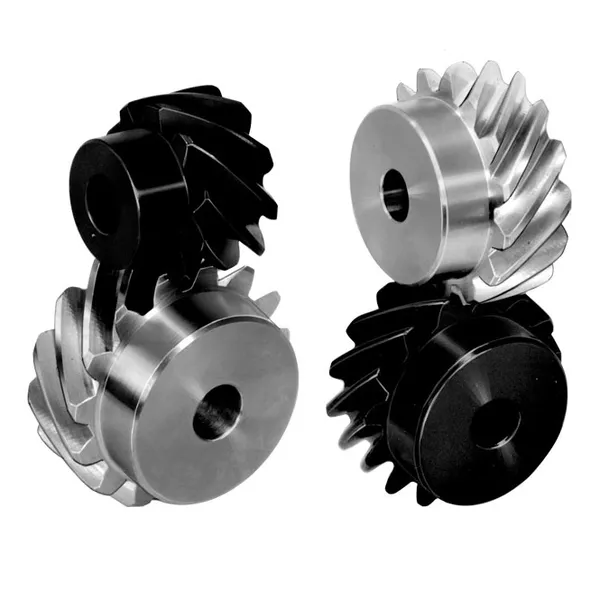
Have you ever faced a sudden, costly machine failure because of mismatched helical gears? The culprit is often an incorrectly calculated or manufactured helix angle. Understanding how to calculate the helix angle of a Helical Gear is crucial for anyone involved in machinery design, maintenance, or procurement. This precise angle dictates how smoothly power is transmitted, influencing noise levels, load capacity, and overall system longevity. For procurement specialists sourcing parts for industrial automation or heavy machinery, getting this specification wrong means downtime, wasted budget, and frustrated production teams. This guide will break down the helix angle calculation into simple, actionable steps, empowering you to verify specifications and make informed purchasing decisions that ensure reliability and efficiency in your operations.
Article Outline:
Imagine this: Your production line for packaging machinery grinds to a halt. The diagnosis? Premature wear and catastrophic failure in a critical helical gear pair. The maintenance team points to excessive axial thrust and vibration, classic symptoms of a helix angle mismatch between the mating gears. As the procurement lead, you're now managing urgent replacement orders, costly expedited shipping, and significant production losses. This scenario is frustratingly common and almost always traces back to an oversight in the initial specification or verification of the helix angle. This angle isn't just a number on a drawing; it's the key to smooth, quiet, and efficient power transmission. A miscalculation here leads directly to increased noise, reduced load-bearing capacity, and accelerated wear, turning a standard component into the weakest link in your machine.
To avoid this, a precise and verified calculation is non-negotiable. Partnering with a knowledgeable manufacturer like Raydafon Technology Group Co.,Limited, which specializes in custom precision gearing, ensures every gear is manufactured to exact calculated specifications, eliminating this common point of failure from your supply chain.
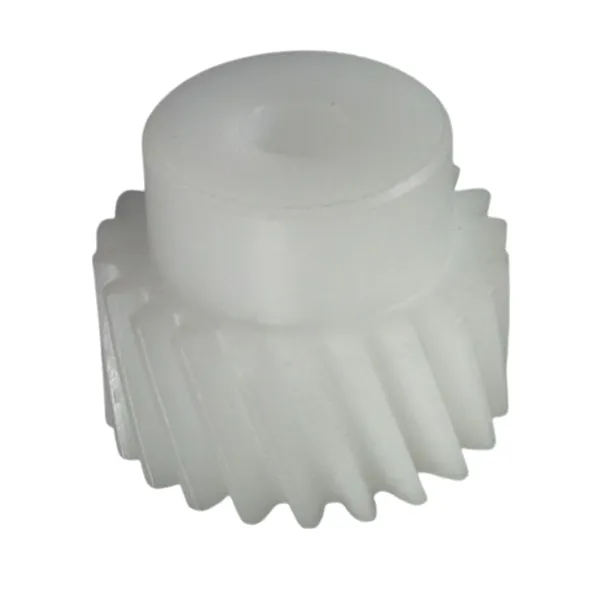
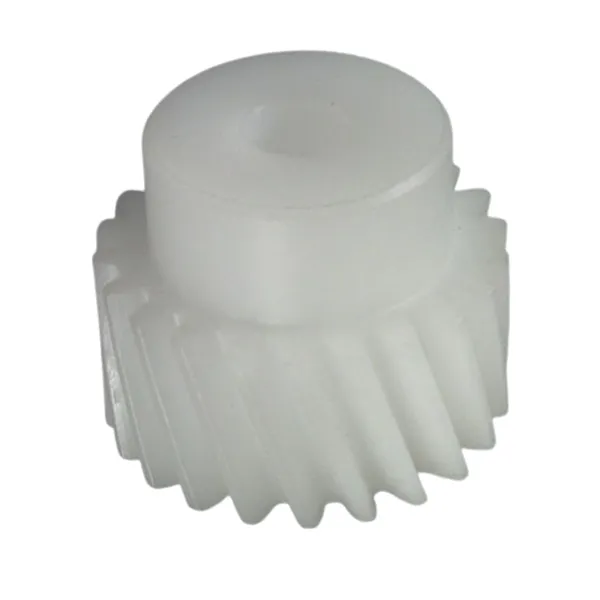
The solution lies in a straightforward trigonometric calculation. The helix angle (β) of a helical gear is the acute angle between the gear's tooth trace and an element of its pitch cylinder. For procurement professionals, you don't need to derive the formula, but understanding it allows you to confidently review supplier data sheets and technical drawings. The fundamental formula involves the gear's normal module (or normal diametral pitch), the number of teeth, and the pitch diameter. The most common calculation uses the arc tangent function: Helix Angle (β) = arctan( (π * Module * Number of Teeth) / (Pitch Circle Circumference) ). In practical terms, it's often derived from the lead of the helix and the pitch diameter. For standard, off-the-shelf gears, suppliers provide this angle. However, for custom applications or when verifying cross-compatibility between different gear sets, knowing how to calculate or confirm this value is a powerful skill.
This is where technical support from your gear manufacturer becomes invaluable. Raydafon Technology Group Co.,Limited doesn't just supply gears; their engineering team can guide you through the specification process, perform all critical calculations like helix angle determination, and ensure the delivered component integrates perfectly with your existing system, providing a true solution, not just a part.
To accurately calculate or specify the helix angle, you must gather a few key parameters. The table below outlines these essential variables and their role in the calculation. Presenting this information clearly to your supplier, or using it to check a quotation, streamlines the procurement process and minimizes errors.
| Parameter | Symbol | Description | Role in Helix Angle Calculation |
|---|---|---|---|
| Normal Module | m_n | The module of the gear tooth in a plane perpendicular to the tooth direction. | Directly influences the lead of the helix. A fundamental input. |
| Number of Teeth | z | The total count of teeth on the gear. | Used with the module to determine the lead. |
| Pitch Diameter | d | The diameter of the pitch circle where the gear theoretically meshes without backlash. | The reference diameter used with the lead to calculate the angle via trigonometry. |
| Lead | L | The axial advance of one complete turn of the helix along the pitch cylinder. | Central to the formula: β = arctan( (π * d) / L ). |
| Helix Angle | β | The result: the angle between the tooth trace and the gear axis. | The target output, typically between 15° and 30° for common industrial applications. |
Q: How to calculate the helix angle of a helical gear if I only have the physical sample?
A: For a physical sample, you can measure the lead (L) and the pitch diameter (d). Measure the axial distance the helix advances in one complete turn. Then, use the formula β = arctan( (π * d) / L ). For highly accurate results, especially for quality verification, consider using precision measurement tools or consulting with the gear's original manufacturer. Raydafon Technology Group Co.,Limited offers reverse-engineering and analysis services to help clients identify and replicate critical gear specifications from samples.
Q: What is the practical impact of a 1-degree error in the helix angle during manufacturing?
A: A 1-degree error is significant in precision gearing. It will cause improper meshing, leading to increased noise and vibration, concentrated tooth contact (reducing load capacity), and accelerated wear due to scrubbing action. It can also create unwanted axial thrust loads on bearings, potentially causing premature bearing failure. This underscores the importance of partnering with a manufacturer like Raydafon, whose advanced CNC gear hobbing and grinding processes ensure helix angle tolerances are held to exacting standards, preventing these operational issues.
We hope this guide has demystified the helix angle and its critical role in your machinery. Have you encountered challenges with gear specifications in your sourcing projects? What other mechanical component calculations would you like us to explain? Share your thoughts or questions with our team.
For precision-engineered helical gears manufactured to your exact calculated specifications, partner with Raydafon Technology Group Co.,Limited. As a leading supplier in power transmission solutions, we combine expert engineering support with advanced manufacturing to deliver components that ensure system reliability and performance. Visit our website at https://www.transmissions-china.com to explore our capabilities, or contact our sales engineering team directly at [email protected] for a confidential consultation on your next project.
References & Further Reading (Academic Research):
Maitra, G.M. (1994). Handbook of Gear Design. McGraw-Hill Education.
Dudley, D.W. (1994). Handbook of Practical Gear Design. CRC Press.
Litvin, F.L., & Fuentes, A. (2004). Gear Geometry and Applied Theory. Cambridge University Press.
Shigley, J.E., & Mischke, C.R. (1989). Mechanical Engineering Design. McGraw-Hill.
Kapelevich, A. (2013). Direct Gear Design. CRC Press.
Wang, J., & Howard, I. (2004). The Torsional Stiffness of Involute Spur Gears. Proceedings of the Institution of Mechanical Engineers, Part C: Journal of Mechanical Engineering Science, 218(1), 131-142.
Umezawa, K., et al. (1987). Vibration of Power Transmission Helical Gears (Effect of Tooth Deviation and Contact Ratio). Bulletin of JSME, 30(269), 2193-2200.
Li, S. (2008). Finite Element Analysis of Contact Strength for Helical Gears with Machining Errors, Assembly Errors and Tooth Modifications. Journal of Mechanical Design, 130(8).
Velex, P., & Maatar, M. (1996). A Mathematical Model for Analyzing the Influence of Shape Deviations and Mounting Errors on Gear Dynamic Behaviour. Journal of Sound and Vibration, 191(5), 629-660.
Zhang, Y., et al. (2015). Load Sharing Characteristics and Transmission Error of Helical Gear with Modifications. Journal of Advanced Mechanical Design, Systems, and Manufacturing, 9(3).
+86-574-87168065
Luotuo Industrial Area, Zhenhai District, Ningbo City, China