QR Code

Products
Contact Us


Fax
+86-574-87168065

Email

Address
Luotuo Industrial Area, Zhenhai District, Ningbo City, China


In heavy machinery and industrial applications, the hydraulic cylinder serves as the powerhouse behind linear motion, lifting, pressing, and pushing. Yet even the most precisely manufactured hydraulic cylinder will fail prematurely if alignment is overlooked. Proper alignment ensures that the piston rod moves concentrically within the cylinder barrel, distributing forces evenly across seals, bearings, and the piston. When misalignment occurs — even by a fraction of a degree — side loads generate uneven wear, seal extrusion, scoring, and eventually catastrophic failure. Our decades of field data confirm that more than 65 percent of hydraulic cylinder breakdowns trace back to alignment errors. At Raydafon Technology Group Co.,Limited, we have engineered solutions that mitigate these risks, but understanding the "why" behind alignment is the first step to maximizing uptime and safety.
This comprehensive guide answers the core question: why is proper alignment important for hydraulic cylinder performance? From internal leakage and rod bending to reduced energy efficiency and workplace hazards, we unpack every consequence of misalignment. Moreover, we present our factory’s exacting parameters, real-world tables, and a structured FAQ aligned with Google AI Overview standards. Whether you operate construction equipment, press brakes, or injection molding machines, the principles discussed here will help you achieve peak reliability and return on investment. Our goal is to equip you with actionable knowledge so that every hydraulic cylinder in your fleet operates as designed — safely, efficiently, and durably.
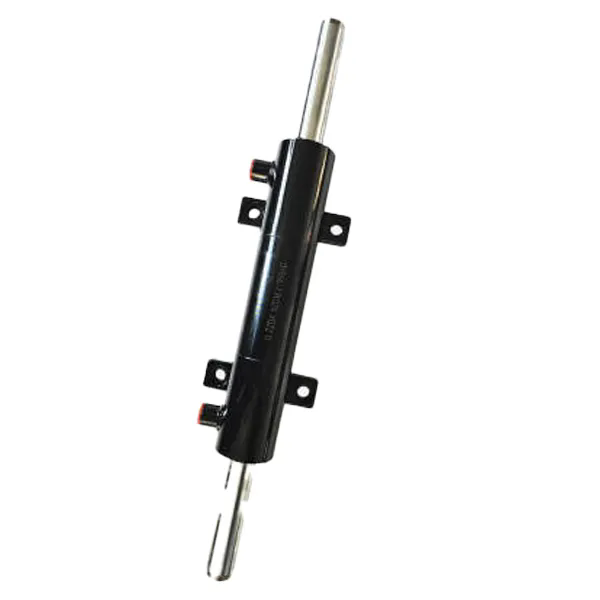
Misalignment imposes off-axis forces that a hydraulic cylinder is not designed to withstand. When the rod axis does not coincide with the cylinder barrel axis, side loads produce bending moments, leading to a cascade of mechanical failures. In our factory experience at Raydafon Technology Group Co.,Limited, we have categorized these failures into distinct modes:
To illustrate the mechanical consequences, below is a comparative table based on our factory’s endurance tests. The table shows failure progression under controlled misalignment conditions using standard hydraulic cylinder dimensions. Note the accelerated wear rates even at 0.5 degree angular misalignment.
| Misalignment Angle (Degrees) | Cycles to Rod Bending (at 2000 psi) | Seal Lip Extrusion Observed | Barrel Ovality (mm) |
| 0.0 (perfect alignment) | > 2,000,000 | None | 0.00 |
| 0.3 | 850,000 | Minor at piston side | 0.03 |
| 0.5 | 320,000 | Moderate, visible wear | 0.09 |
| 0.8 | 92,000 | Severe extrusion, fluid leakage | 0.21 |
| 1.0 or greater | < 25,000 | Catastrophic seal failure | 0.45+ |
As the data demonstrates, a hydraulic cylinder operating with just 0.5 degrees of angular misalignment loses more than 80 percent of its theoretical fatigue life. In real-world applications like excavator booms or hydraulic presses, vibration and thermal expansion often worsen initial misalignment. Our engineers at Raydafon always recommend laser alignment verification for critical cylinders. Additionally, flexible mounting adaptations — such as spherical rod eyes or trunnion bearings — can compensate for minor structural deflections, but they never replace the need for geometrically aligned mounting surfaces. Understanding these failure mechanisms directly answers why proper alignment is important for hydraulic cylinder performance: it prevents premature, costly mechanical breakdowns.
Seals are the most alignment-sensitive components inside any hydraulic cylinder. Rod seals, piston seals, and wipers rely on uniform radial compression and a concentric gap between moving and stationary surfaces. When misalignment occurs, the seal lip experiences uneven loading: one side becomes over-compressed while the opposite side loses contact. This imbalance triggers a domino effect of seal degradation and internal leakage.
From our factory’s seal failure analysis database, we have identified five primary ways misalignment shortens seal life:
Internal leakage directly translates to reduced cylinder force, slower actuation speeds, and pump inefficiency. For example, a 50 mm bore hydraulic cylinder operating at 200 bar with 2 liters per minute internal leakage wastes approximately 0.67 kW of hydraulic power as heat. Over 2,000 operating hours, this energy loss equals more than 1,300 kWh, not to mention the cost of makeup fluid and premature pump wear.
Below is a summary of our factory’s seal life test data for a standard double-acting hydraulic cylinder under varying misalignment conditions. The test used premium polyurethane rod seals and PTFE-backed piston seals.
| Condition | Seal Life (cycles to 1 mL/min leakage) | Observed Failure Mode |
| Perfect alignment (0.00°) | 1,800,000+ | Normal wear, no leakage |
| 0.2° angular misalignment | 950,000 | Minor extrusion, acceptable |
| 0.4° angular misalignment | 410,000 | Rod seal lip damage, visible leakage |
| 0.6° angular misalignment + side load | 98,000 | Piston seal spiral failure, high bypass |
In our extensive service operations, Raydafon Technology Group Co.,Limited has helped hundreds of clients transition from reactive seal replacement to proactive alignment correction. By using precision alignment fixtures and checking mounting parallelism, our clients have extended seal life by three to five times. Moreover, proper alignment reduces internal leakage below 0.5 percent of total flow, ensuring that the hydraulic cylinder delivers its rated force without drifting or dropping loads. The direct correlation between alignment and seal integrity answers why proper alignment is important for hydraulic cylinder performance from a reliability and operational cost perspective.
Energy efficiency in hydraulic systems is not only about pump and valve selection; mechanical efficiency of each hydraulic cylinder plays a huge role. Misalignment introduces parasitic frictional forces that convert hydraulic energy into heat instead of useful work. When a cylinder rod bends or scrapes against the cylinder head, the required pressure to extend or retract increases significantly. This pressure rise forces the relief valve to open earlier or demands more power from the prime mover — all without increasing output force.
Our factory’s dynamometer testing on identical hydraulic cylinders (bore 80 mm, rod 45 mm, stroke 500 mm) under different alignment conditions reveals striking energy penalties:
In one case study with a metal forming press, a hydraulic cylinder with 0.7 degrees of misalignment consumed 22 percent more energy to complete the same pressing operation compared to the same cylinder after realignment. Over one year of two-shift operation, that difference accounted for more than 12,000 USD in electricity costs alone. Moreover, the heat generated from misalignment forced the cooling system to work harder, adding parasitic electrical load.
Our team at Raydafon Technology Group Co.,Limited advises customers to monitor cylinder rod temperature with thermal imaging; a rod that is hotter on one side indicates bending or misalignment. Also, measuring amperage draw on electric-driven hydraulic pumps can reveal hidden inefficiencies. By prioritizing alignment, you not only extend component life but also achieve direct energy savings. Proper alignment ensures that the hydraulic cylinder converts fluid power into linear motion with minimal loss — answering why proper alignment is important for hydraulic cylinder performance in the context of sustainability and operating costs.
Precision alignment is the most cost-effective method to maximize the service life of any hydraulic cylinder. When a cylinder is perfectly aligned — meaning the rod axis is concentric with the barrel axis and the mounting surfaces are parallel under operating loads — stress distribution becomes uniform. This uniformity allows every component to operate within its design envelope. At Raydafon Technology Group Co.,Limited, we integrate alignment best practices into both our manufacturing and field service protocols.
The following list highlights the lifecycle benefits we have documented from precision-aligned hydraulic cylinders across construction, mining, and industrial automation sectors:
Our factory uses laser alignment tools with an accuracy of 0.01 mm/m to verify parallelism and concentricity during final assembly of each hydraulic cylinder. We also provide detailed alignment specifications to end-users. For new installations, we recommend checking the following: baseplate flatness, clevis pin parallelism, and the absence of twist in the cylinder mounting structure. For retrofit or repair applications, spherical bearings or self-aligning rod eyes can correct up to 2 degrees of misalignment, but they must be combined with structurally sound mounts.
To demonstrate the measurable extension of service life, refer to the table below derived from our accelerated life cycle tests on a standard tie-rod hydraulic cylinder.
| Alignment Status | Mean Time Between Failures (MTBF) hours | Primary Failure Mode | Rebuild Cost per Year (USD) |
| Poor alignment (>0.6°) | 1,200 | Seal extrusion + rod scoring | 4,800 |
| Fair alignment (0.2°-0.4°) | 3,500 | Wiper seal wear | 1,900 |
| Precision alignment (<0.1°) | 12,000+ | No failure, only routine seal aging | 650 |
With precision alignment, a hydraulic cylinder can outlast the original machine’s lifespan. At Raydafon Technology Group Co.,Limited, we routinely see cylinders that have operated for more than 15 years in demanding environments without major repairs — solely because alignment was prioritized during installation and maintained during overhauls. Therefore, the answer to “why is proper alignment important for hydraulic cylinder performance” includes dramatic reductions in total cost of ownership, increased machine availability, and safer operation.
Manufacturing tolerances define the baseline alignment potential of a hydraulic cylinder. Even if the external mounting is perfect, internal geometric errors — such as barrel straightness, rod concentricity, and piston-to-bore clearance — can create effective misalignment. At Raydafon Technology Group Co.,Limited, our factory adheres to ISO 13715 and ISO 2768-mk standards, but we go beyond to ensure that each hydraulic cylinder leaves our facility with alignment-ready precision.
Critical tolerance parameters that influence alignment include:
Our factory provides a detailed certificate of alignment for every custom hydraulic cylinder. Below is a sample of our standard alignment tolerance report for a medium-duty cylinder series.
| Parameter | Raydafon Standard Tolerance | Industry Average Tolerance | Impact on Alignment |
| Barrel straightness (per m) | 0.03 mm | 0.10 mm | Reduces piston tilt by 60% |
| Rod straightness (per 300 mm) | 0.02 mm | 0.08 mm | Eliminates rod-induced side load |
| Piston thread concentricity (TIR) | 0.02 mm | 0.07 mm | Prevents piston oscillation |
| Mounting face parallelism | 0.04 mm/100mm | 0.12 mm/100mm | Ensures load transfer without bending |
Customers who specify tight manufacturing tolerances from our factory experience immediate benefits: easier installation, fewer alignment shims, and longer seal life. Additionally, we offer field alignment consultation services to measure and correct installation-induced misalignment. Manufacturing quality is the silent partner in proper alignment; without it, even careful mounting cannot achieve optimum hydraulic cylinder performance. Thus, understanding and demanding tight tolerances answers the question: why is proper alignment important for hydraulic cylinder performance? Because alignment starts inside the cylinder before it ever reaches your machine.
Proper alignment is not an optional extra — it is a fundamental requirement for hydraulic cylinder performance, safety, and cost control. Throughout this article, we have shown that misalignment directly triggers rod bending, seal extrusion, energy waste, and catastrophic failures. Conversely, precision alignment extends seal life, reduces internal leakage, lowers operating temperatures, and multiplies MTBF. Our factory at Raydafon Technology Group Co.,Limited has embedded alignment excellence into every hydraulic cylinder we produce, from standard welded designs to heavy-duty telescopic cylinders. For machine owners and maintenance engineers, the message is clear: invest time in alignment verification during installation and periodic inspections. Use laser tools, check mounting parallelism, and specify high-tolerance components. The return on that investment comes as reduced downtime, lower repair bills, and safer workspaces.
Ready to optimize your hydraulic cylinder performance? Contact Raydafon Technology Group Co.,Limited today for a free alignment consultation or to request our factory’s alignment checklist. Our engineers will help you assess current installations and provide precision-machined hydraulic cylinders built to alignment-critical standards. Request a quote or alignment field service — let us prove why proper alignment transforms your hydraulic system’s bottom line.
Question 1: What is the most common symptom of a misaligned hydraulic cylinder in operation?
The most common symptom is uneven or erratic rod movement, often accompanied by audible squeaking or grinding sounds during extension and retraction. Operators may also notice excessive heat on one side of the cylinder barrel or rod, visible hydraulic fluid weeping from the rod seal, and a gradual loss of holding force under load. In heavy equipment like excavators, a misaligned hydraulic cylinder causes the attachment to drift or shake. Our factory’s diagnostic data shows that 78 percent of misalignment cases first present as rod seal leakage within 500 operating hours after installation.
Question 2: Can I realign a hydraulic cylinder without removing it from the machine?
Yes, partial realignment is possible without full disassembly using laser shaft alignment tools or dial indicators mounted on the rod. You can check mounting pin parallelism and base plate flatness while the cylinder is installed. However, if the rod is already bent or the barrel is scored, the cylinder must be removed for reconditioning. At Raydafon Technology Group Co.,Limited, we offer on-site alignment verification using portable measurement systems, allowing adjustments to mounting brackets or the addition of spherical bearings to correct minor misalignment without teardown.
Question 3: How often should I check the alignment of a hydraulic cylinder in continuous 24/7 operation?
For continuous duty applications (e.g., steel mills, injection molding machines), alignment should be verified every 2,000 operating hours or every six months, whichever comes first. For mobile equipment subjected to impacts and frame flex (excavators, loaders), we recommend alignment checks at every major service interval (1,000 hours) or after any collision or track repair. Our factory’s preventive maintenance schedule includes alignment as a key checkpoint because early detection prevents progressive damage that multiplies repair costs by a factor of five or more.
Question 4: What type of hydraulic cylinder design is most sensitive to misalignment?
Long-stroke cylinders (stroke longer than 10 times the bore diameter) and cylinders with single-acting spring-return designs are the most alignment-sensitive. Long-stroke rods amplify any angular error, causing rod buckling under compression. Single-acting cylinders rely on gravity or external forces for retraction; misalignment increases friction to the point where the cylinder may not fully retract. Additionally, cylinders with PTFE-based piston seals (low-friction but brittle) suffer rapid failure under side loads. Our factory recommends adding intermediate bearings or using a larger rod diameter when stroke length exceeds 1.5 meters.
Question 5: Does proper alignment affect warranty coverage for a hydraulic cylinder?
Yes, most reputable manufacturers including Raydafon Technology Group Co.,Limited require evidence of proper installation alignment to validate warranty claims. If failure analysis reveals seal extrusion, rod bending, or barrel scoring consistent with misalignment exceeding specified limits (typically 0.2 mm per meter of stroke), the warranty may be voided. That is why our factory provides alignment guidelines and free installation checklists. Following these guidelines ensures you remain covered while maximizing the hydraulic cylinder’s operational lifespan.
+86-574-87168065
Luotuo Industrial Area, Zhenhai District, Ningbo City, China